
20 min 03 sec
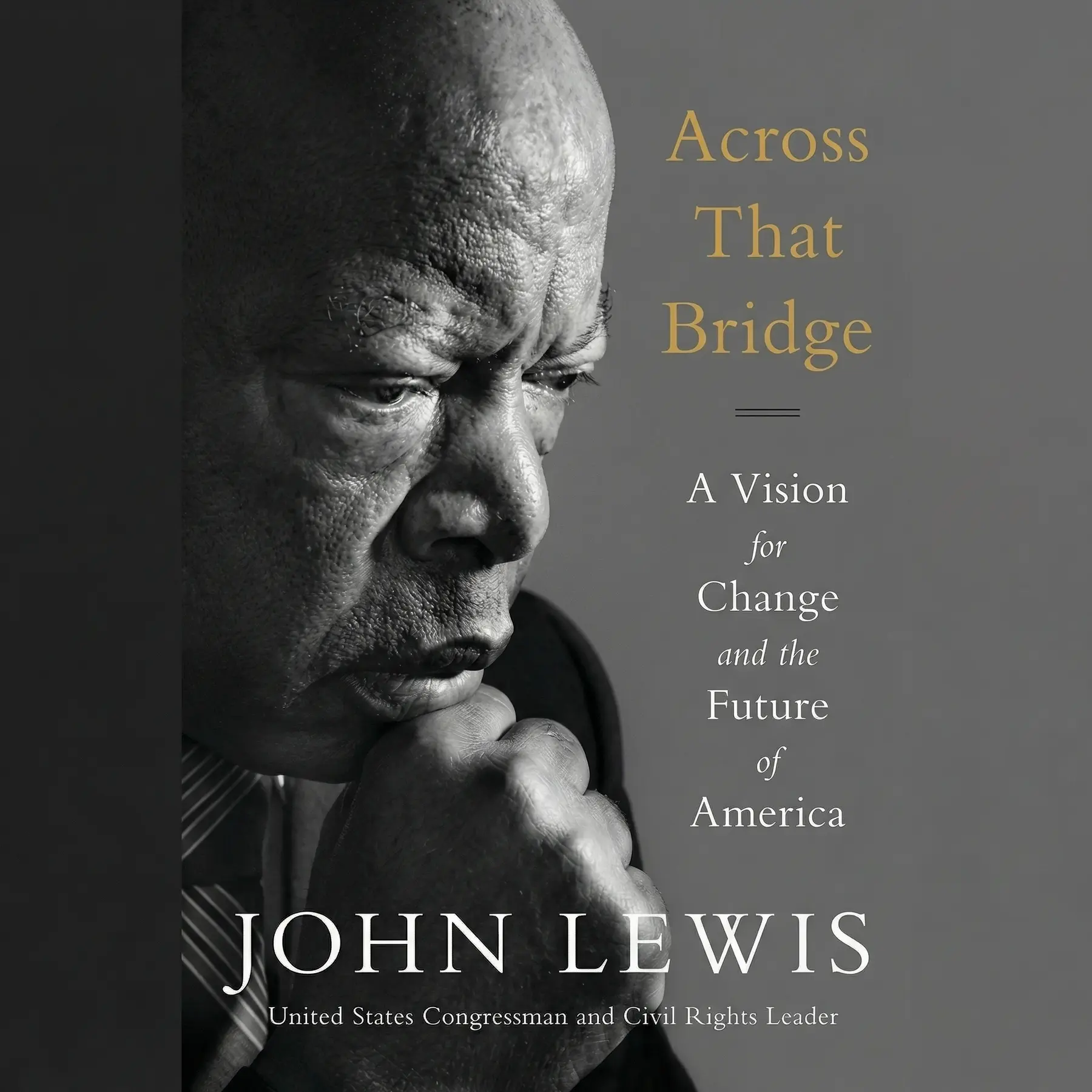
Across That Bridge: A Vision for Change and the Future of America
By John Lewis
A powerful exploration of the principles that guided John Lewis through the civil rights movement, offering a spiritual and strategic blueprint for achieving social justice through nonviolence, faith, and persistent love.
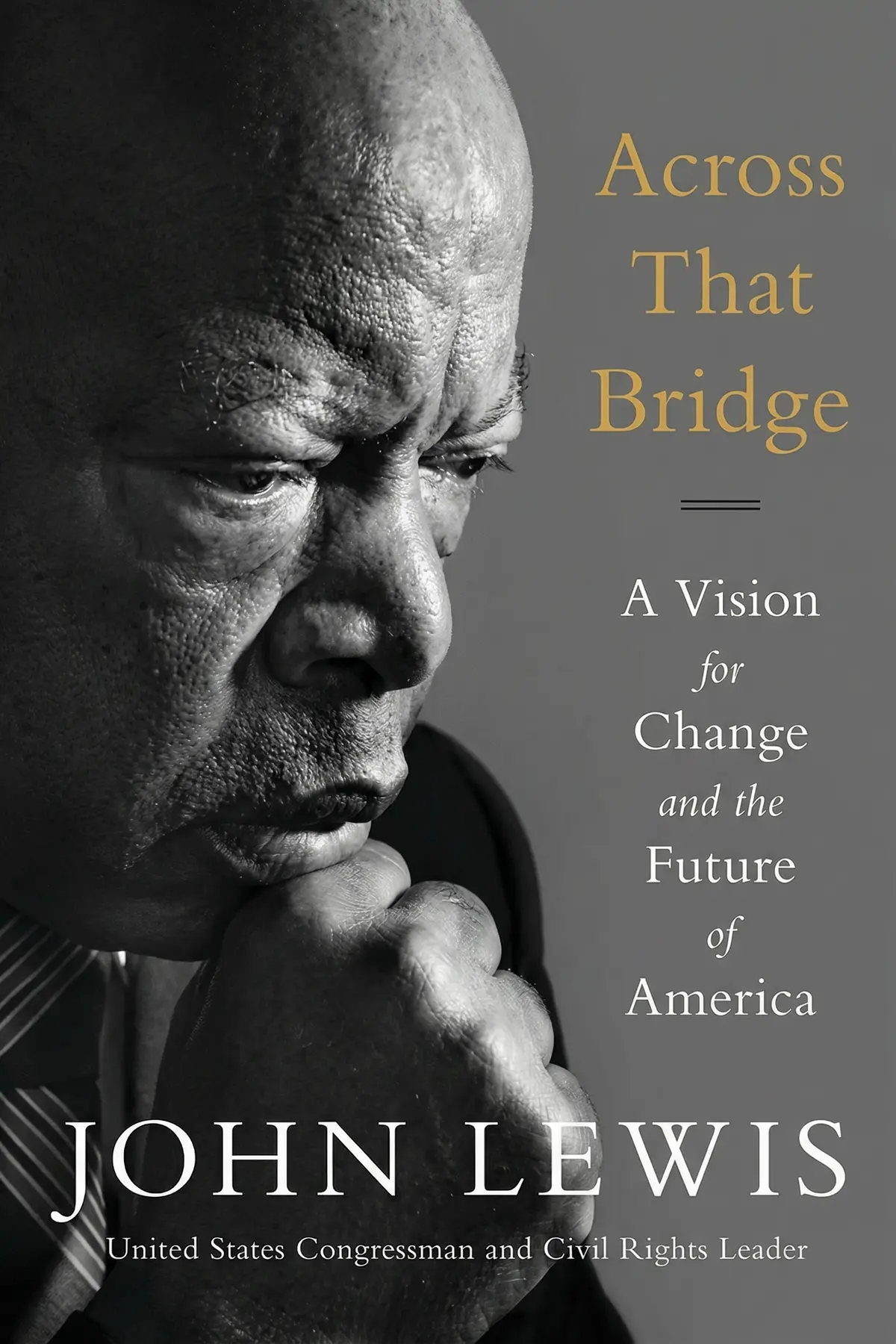
Table of Content
1. Introduction
1 min 42 sec
In the history of the American struggle for equality, few names carry as much weight as John Lewis. Born as the son of sharecroppers in the heart of the Jim Crow South, he didn’t just witness history—he molded it with his own hands and, quite literally, with his own body. As we embark on this exploration of his wisdom, we are looking at more than just a collection of historical anecdotes. We are looking at a blueprint for moral courage.
Think about the image of a bridge. For Lewis, a bridge was never just a structure of steel and concrete; it was a threshold between the past and the future, between oppression and possibility. When he stood at the crest of the Edmund Pettus Bridge in 1965, he wasn’t just leading a march; he was inviting a nation to cross over into a new way of being. Even in his final years, serving as a United States Congressman, he remained a guardian of that vision. At his funeral in 2020, former President Barack Obama noted that many Americans owe an unpayable debt to Lewis’s forceful vision of freedom.
This summary delves into that vision. We will explore the foundational tenets that Lewis believed every true activist must possess. In a modern landscape that often feels fractured and polarized, these lessons offer a stabilizing force. We will look at how he maintained a commitment to nonviolence even under the most brutal conditions, why he found himself fearless in the face of armed opposition, and how a legacy of love can bridge even a forty-year gap of hatred. This is a journey through the heart of the civil rights movement, distilled into a message for the world we live in today. It’s an invitation to understand the spiritual and practical discipline required to move a mountain of injustice.
2. The Enduring Power of Collective Determination
2 min 42 sec
Discover how the courage displayed on a bridge in Alabama serves as a permanent template for social change and national transformation.
3. The Power of Absolute Conviction
2 min 31 sec
Learn why deep-seated belief is the most effective shield against physical threats and how it can render an opponent’s weapons useless.
4. The Strategic Strength of Patience
2 min 20 sec
Explore why the ability to wait can be a radical act of defiance and how long-term persistence leads to historic legislative breakthroughs.
5. The Necessity of Intellectual Preparation
2 min 26 sec
Uncover how rigorous study and the pursuit of truth provide the essential roadmap for any successful social movement.
6. Manifesting Humanity Through Purposeful Action
2 min 17 sec
Understand why your actions must mirror the world you wish to create and how generosity can be a powerful political statement.
7. Nonviolence as the Ultimate Weapon of Love
2 min 21 sec
Discover how the radical choice to refrain from retaliation can transform both the oppressed and the oppressor.
8. The Responsibility of the Inner Light
2 min 12 sec
Explore the concept of the divine spark within every individual and how letting your light shine is a fundamental act of activism.
9. Conclusion
1 min 32 sec
As we look back across the bridge that John Lewis built throughout his life, the throughline of his message becomes clear: the work of creating a better world is a spiritual, intellectual, and physical discipline. It is not enough to simply wish for change; we must embody it through the radical application of love and the persistent use of nonviolence. Lewis’s life proves that while the road is long and the obstacles are many, the power of a committed group of people is more than a match for any system of injustice.
He has given us a template for modern activism that is as relevant today as it was in the 1960s. We are reminded that faith in our convictions makes us invincible, that patience is a strategic weapon, and that our actions must always mirror the humanity we are fighting for. Most importantly, he has challenged us to recognize the divine spark within ourselves and to use it to push back against the darkness of division.
The final takeaway from John Lewis’s life is one of profound hope. Even after witnessing the worst of humanity, he never lost his belief in our capacity for redemption and progress. He saw the ‘good trouble’ he caused as a necessary labor for the birth of a more just society. As we finish this exploration, the call to action is to find your own bridge to cross. Whether it is in your community, your workplace, or your own heart, the responsibility to move the world toward the ‘Beloved Community’ lies with each of us. In the end, the light we choose to shine today is the only thing that will illuminate the path for those who follow.
About this book
What is this book about?
Across That Bridge serves as both a memoir and a manifesto from one of America’s most revered activists and statesmen. John Lewis reflects on his journey from the cotton fields of Alabama to the halls of Congress, detailing the pivotal moments of the civil rights movement. He distills his decades of experience into core pillars: faith, patience, study, and nonviolence. The promise of the book is to provide contemporary readers with the moral and practical tools needed to continue the work of building a more just and equal society. It is a call to action that emphasizes that while the laws have changed, the spiritual struggle for the soul of the nation is ongoing and requires active participation from everyone. Through his personal stories, Lewis demonstrates how a committed group of people can transform the moral character of a nation.
Book Information
About the Author
John Lewis
John Lewis was one of the most influential American activists of the twentieth century. A close friend and colleague of Martin Luther King Jr., as well as one of the original 13 Freedom Riders, Lewis played a crucial role in ending legalized segregation in the South. He also ushered in vital civil rights legislation in the 1960s. He was elected to the US Congress in 1987 and served until his death in 2020.
Ratings & Reviews
Ratings at a glance
What people think
Listeners consider this work an outstanding piece of literature, with one listener describing it as essential reading for every American. They also value the motivational themes, as one review points out the deep-seated messages of determination and love. Furthermore, the content is educational and mentally stimulating, providing a superb retelling of the civil rights struggle. Listeners celebrate John Lewis as a remarkable hero and respect his principles regarding non-violent activism, while one review observes that the book melts even the most hardened hearts.
Top reviews
Lincoln
Wow. Reading this felt like sitting down for a private mentorship session with a literal giant of American history. John Lewis doesn't just recount the terrifying events at the Pettus Bridge; he meticulously dissects the spiritual armor required to face down those clubs without ever raising a hand in retaliation. It is an incredible look at how love can be weaponized for the sake of justice. While some secular readers might find the heavy Christian influence a bit much, you simply cannot deny the results of his conviction. His stories about Gandhi’s influence and the grueling 15-year struggle to get the National Museum of African American History built show a level of grit most of us can barely imagine. This isn't just a memoir; it’s a manual for anyone who feels overwhelmed by the polarized politics of our present moment. I left these pages feeling a sense of renewed purpose and a much-needed dose of optimism.
Show moreFrida
Finally got around to the audiobook version narrated by Keith David, and his voice adds such a resonant, soulful layer to Lewis’s words. There’s a specific story about a man who attacked him in Rock Hill who later came to apologize decades later—it moved me to tears. It perfectly illustrates Lewis’s philosophy that forgiveness isn't just for the forgiven, but for the spiritual health of the one doing the forgiving. Truth is, we need this kind of wisdom now more than ever given the emergence of modern movements for equality. The book serves as a vital bridge between the 1960s and the Black Lives Matter era, proving that the struggle for dignity is a continuous relay race. It’s informative, deeply spiritual, and exceptionally well-paced. If you want to understand the mental discipline required for non-violent protest, start here.
Show moreScarlett
Ever wonder how the Civil Rights leaders kept going when the entire world seemed set against them? Lewis breaks down the 'study' and 'discipline' required for non-violence, and it’s much more technical and rigorous than I ever realized. It wasn't just about showing up to a march; it was about a deep mental preparation that bordered on the superhuman. I found the parallels he draws between the Obama era and the subsequent shifts in the country to be very thought-provoking. Personally, I would have liked a bit more detail on his later time in Congress, as the book leans very heavily into the spiritual lessons of the 60s. Still, his persistence in submitting the museum bill for 15 years is the ultimate lesson in not giving up on your dreams. It’s a solid read that offers a lot of solace.
Show morePierre
Picked this up during a particularly stressful week of political news, and it was exactly the balm I needed for my soul. Lewis has this incredible way of speaking about 'The Beloved Community' that makes it feel attainable rather than like some distant, impossible utopia. He treats every person as part of one human family, even those who showed him nothing but hatred and violence. The way he describes the internal 'revolution of the heart' is just beautiful writing. It’s not just about politics; it’s about how you carry yourself in the world every single day. I found myself highlighting so many passages about the importance of 'staying in the struggle' even when results aren't immediate. This is a life-changing little book that I plan on gifting to several friends.
Show moreTaweesak
The chapter on faith alone makes this a must-read for anyone feeling burnt out by modern activism. John Lewis explains that faith isn't just about traditional religion, but about a 'ground of being' that allows you to see the humanity in your enemies despite their actions. Look, it’s not an easy path he’s describing—facing beatings and incarceration with love is a radical, almost frightening act. I was particularly struck by his relationship with Dr. King and how they utilized 'good trouble' to systematically dismantle a broken system. This book provides a roadmap for how to stay engaged without losing your soul to bitterness or cynicism. It’s short, punchy, and incredibly relevant to the current political climate. Everyone should have a copy of this on their shelf to revisit when things get dark.
Show morePridi
As someone who usually avoids the 'self-help' genre, I found this volume surprisingly grounded in the harsh realities of the civil rights struggle. Lewis walks the reader through six core pillars—including patience and study—that fueled the movement's success. Frankly, the section on patience hit me the hardest because we live in such an era of instant gratification and social media outrage. He spent decades fighting for bills that didn't pass for years, yet he never lost his cool or his faith in the legislative process. My only minor gripe is that the prose can feel a bit repetitive in the middle chapters, echoing the same 'love thy neighbor' sentiment quite frequently. However, hearing about his evolution from a sharecropper’s son to the 'Conscience of the Congress' is genuinely moving. It’s a slim volume, but it carries a massive weight.
Show moreCaleb
After hearing so much about John Lewis following his passing in 2020, I wanted to dive deeper into his actual philosophy beyond the standard news clips. This book is less of a chronological autobiography and more of a collection of philosophical essays. He focuses on how internal change must precede any societal revolution, which is a tough pill to swallow when you’re rightfully angry about injustice. I appreciate his total honesty about feeling paralyzing fear at Selma; he wasn’t a superhero, just a man with a plan and an unshakable heart. Sometimes the writing style feels a little too formal or 'preacher-like' for my personal taste, but the sincerity is undeniable. It’s a quick read that forces you to examine your own prejudices and internal judgments. It definitely makes you think.
Show moreWorawit
Not what I expected, but in a very good way. I initially thought this would be a standard memoir, but it's really more of a manifesto on how to live a life of integrity. John Lewis’s voice is so clear and persistent throughout the text, and you can tell he poured his heart into these essays. I’ll be honest, the religious angle is very strong, which might not be for everyone, but it’s essential to understanding why he didn't break under the pressure of Jim Crow. The stories about his childhood in rural Alabama really contextualize why he was willing to risk everything for a vote. It’s amazing to think about how much one person can accomplish with enough patience and determination. I gave it four stars only because some sections felt a bit brief, but as a spiritual guide, it’s top-tier.
Show moreTippawan
John Lewis was the 'Conscience of the Congress' for a reason, and this book proves it. His ability to build genuine friendships with Republican colleagues despite massive disagreements is a lesson in diplomacy we’ve sadly forgotten in the age of social media. This book is a masterclass in how to effect change through 'love in action' rather than just venting or performing. I loved the emphasis on how freedom is not a static state but an act that every generation must renew through participation. It’s empowering to realize that even the smallest person can contribute to a more just society if they have the courage to take the first step. This isn't just a book you read once; it’s one you keep nearby to ground yourself when the world feels like it’s falling apart.
Show morePriya
To be fair, this is a very important historical document, but it felt a bit repetitive to me as a long-time student of the movement. If you’ve read his other books like 'Walking with the Wind' or seen many of his interviews, a lot of the anecdotes about Selma and the lunch counters will feel familiar. I definitely respect the man and his mission—he’s a literal hero—but as a reader, I was hoping for more fresh insights into his later career and modern policy battles. The tone is very 'sermon-heavy,' which works for the theme but made my interest flag in the middle chapters. Look, his message of non-violence is something the world desperately needs right now, but I found the execution a little dry in spots. It's a decent introduction if you’re new to his story, but maybe not his most comprehensive work.
Show moreReaders also enjoyed
A River in Darkness: One Man’s Escape from North Korea
Masaji Ishikawa
A Spy Among Friends: Philby and the Great Betrayal
Ben Macintyre

A Biography of Loneliness: The History of an Emotion
Fay Bound Alberti
A Force for Good: The Dalai Lama's Vision for Our World
Daniel Goleman

A Year in the Life of William Shakespeare: 1599
James Shapiro


A Room of One’s Own
Virginia Woolf
AUDIO SUMMARY AVAILABLE
Listen to Across That Bridge in 15 minutes
Get the key ideas from Across That Bridge by John Lewis, plus 5,000+ more titles in English and Thai.
- 5,000+ titles
- Listen as much as you want
- 7-day free trial
- Cancel anytime







