

21 min 26 sec
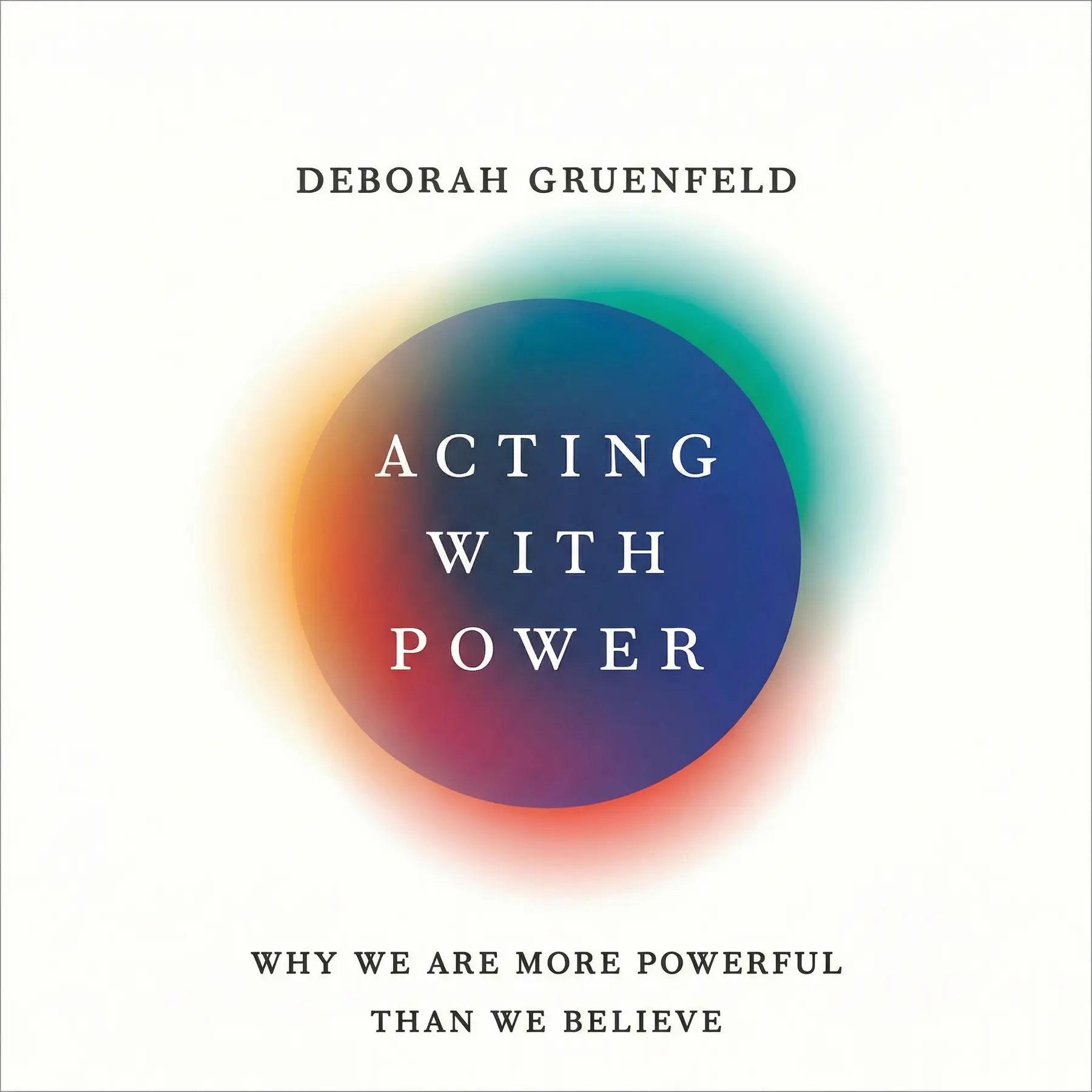
Acting with Power: Why We Are More Powerful Than We Believe
Acting with Power reveals how to navigate social hierarchies by treating authority as a performance. It teaches readers to balance assertiveness with humility to build trust and achieve collective goals.
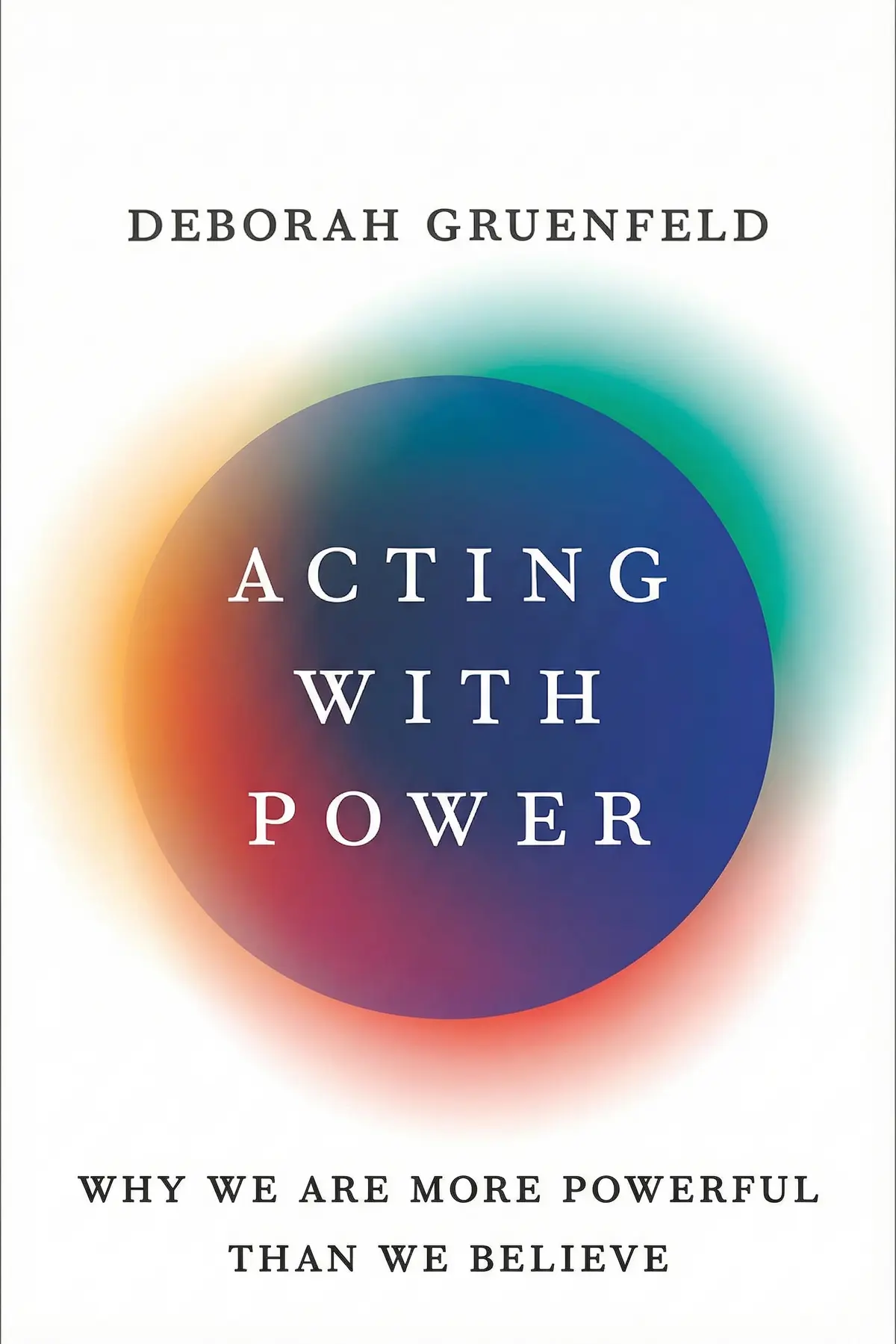
Table of Content
1. Introduction
1 min 35 sec
When we hear the word power, our minds often jump to images of CEOs in glass offices, politicians on podiums, or people with vast fortunes. We tend to view power as a commodity—something people either possess or lack. But what if power isn’t a possession at all? What if, instead, power is a performance we give on the stage of our everyday lives? In Acting with Power, we explore a revolutionary perspective: that power is an inherent part of every human relationship, and that we are all more powerful than we realize.
The core of this journey is the understanding that power is essentially about our role in other people’s lives. It’s about how much we depend on one another and how much influence we have over each other’s well-being. Whether you are a parent, a junior employee, a neighbor, or a high-ranking executive, you are constantly navigating power dynamics. The challenge isn’t just to gain power, but to learn how to use it responsibly and authentically.
Throughout this summary, we will look at power through the lens of a seasoned actor. We will see how “playing a part” isn’t about being fake; it’s about finding the right tools to serve the situation at hand. We’ll learn when to stand tall and command a room, and when to step back and let others lead. We’ll discover how to manage the nerves that come with new responsibilities and how to protect ourselves from those who abuse their influence. By the end, you’ll see that mastering power is about mastering the art of being human in a social world. It’s about recognizing that we are all on stage together, and the best performances are those that help the entire cast succeed.
2. The Relational Nature of Power
2 min 29 sec
Power isn’t a fixed asset like money or a title. Discover how power actually functions as a dynamic exchange within every social interaction and relationship you have.
3. The Utility of Playing Power Up
2 min 12 sec
Asserting authority isn’t always about ego. Learn why taking command and ‘playing power up’ is a vital skill for protecting your team and maintaining focus.
4. The Strategy of Playing Power Down
2 min 16 sec
Sometimes the most powerful move is to diminish your own status. Explore how ‘playing power down’ can break down barriers and build deep trust.
5. Techniques for Embodying New Authority
2 min 07 sec
Stepping into a bigger role can feel like wearing a costume that doesn’t fit. Learn how to use imagination and props to bridge the gap to your new self.
6. The Power Found in Supporting Roles
2 min 10 sec
You don’t need to be the lead actor to have significant influence. Understand why mastering a supporting role is the secret to long-term impact and trust.
7. Managing the Nerves of High-Stakes Performance
2 min 23 sec
High-pressure situations often trigger anxiety that can paralyze our influence. Learn the actors’ secrets for turning nervous energy into a focused presence.
8. Defending Against the Abuse of Power
2 min 23 sec
Bullies thrive on secrecy and reaction. Discover the practical steps for neutralizing toxic behavior and reclaiming your power in the face of mistreatment.
9. The Responsibility of True Leadership
2 min 13 sec
Being at the top isn’t about the perks; it’s about the stewardship of others. Explore the three key qualities that define an ethical and effective leader.
10. Conclusion
1 min 38 sec
As we close this exploration of Acting with Power, it’s worth reflecting on the central throughline: power is not a static thing you have, but a dynamic role you play. Mastering this role requires both skill and character. We have seen that you can “play power up” to provide direction and protection, or “play power down” to foster deep human connection and trust. Both are essential tools in your professional and personal toolkit.
The most important takeaway is that you don’t have to wait until you “feel” powerful to act with power. By using the techniques of actors—immersion, rehearsal, and focus—you can inhabit the roles that life demands of you, even when they feel unfamiliar or daunting. You have the ability to step onto the stage, face your anxieties, and contribute to something larger than yourself.
To put this into practice immediately, consider becoming what we call a “powerful upstander.” In your daily life, you will likely witness moments where someone else is being sidelined, ignored, or mistreated. It is often tempting to be a bystander, staying quiet to avoid personal risk. But true power is found in the choice to intervene. The next time you see a colleague being interrupted or a friend being treated unfairly, use your voice. Step into the role of the protector. By calling out bad behavior and supporting those who are vulnerable, you aren’t just helping others; you are mastering your own influence and proving that power, when used well, is a force that lifts everyone up.
About this book
What is this book about?
Have you ever felt like you didn't belong in a position of authority, or struggled to assert yourself when it mattered most? Acting with Power addresses the common misconception that power is a fixed trait reserved for the naturally dominant or the exceptionally wealthy. Instead, it posits that power is a social tool—a role we play in the lives of others. By understanding the dynamics of social status, we can learn to inhabit our roles more effectively and ethically. The book offers a roadmap for using influence to benefit the group rather than the individual. It explores the concepts of "playing power up" to protect others and "playing power down" to foster connection. Through a mix of psychological research and acting techniques, the narrative guides listeners on how to overcome performance anxiety, handle bullies, and lead with a sense of responsibility. The ultimate promise is that by changing how we act, we can change how we feel and how much impact we have on the world around us.
Book Information
About the Author
Deborah Gruenfeld
Deborah Gruenfeld is a distinguished professor at the Stanford Graduate School of Business. She serves as the co-director of the Executive Program for Women Leaders, bringing decades of insight to her work. For more than 25 years, Gruenfeld has dedicated her academic career to studying the complex psychology of power and influence. Her research has reached a wide audience through prestigious outlets such as the Wall Street Journal and the Washington Post, and she has contributed to major academic journals, cementing her reputation as an expert in organizational behavior.
Ratings & Reviews
Ratings at a glance
What people think
Listeners describe this book as an empowering must-read and value its high level of relevance. Feedback on the research is varied; while one listener views it as well-researched, another notes that it does not serve as an investigative text.
Top reviews
Michael
Finally got around to finishing this for my professional development group, and the message really hit home. Instead of viewing power as a dirty word or a tool for domination, Gruenfeld reframes it as a serious responsibility to those around us. The core idea is that we are all actors playing specific roles—whether as a boss, a parent, or a colleague—and effectiveness comes from knowing how to inhabit those roles with grace. I loved the emphasis on using your influence to serve others rather than just inflating your own ego. To be fair, some of the early sections are a bit dense with academic framing, but the payoff is worth the effort. It’s a truly empowering read that feels incredibly relevant in today’s shifting work culture where traditional hierarchy is constantly being challenged. This is a must-read for anyone who feels uncomfortable with the idea of 'authority' but still needs to lead effectively.
Show moreTantipat
This book is a total game-changer for anyone who feels like they have to 'fake it' to get ahead. Gruenfeld argues that authenticity doesn't mean staying stuck in one version of yourself, but rather learning to expand your range to meet the needs of the room. It’s an empowering perspective that turns the 'fake it till you make it' advice on its head. I found the research into how we perceive status to be incredibly well-documented and eye-opening for my own career growth. Not gonna lie, I was skeptical of the theater focus at first, but it turns out to be the perfect lens for understanding workplace hierarchy. It’s relevant, compassionate, and gives you permission to be both strong and fallible at the same time. I’ll definitely be reaching for this one again when I start my new management role next month.
Show moreElias
Wow, this really changed how I view my interactions with my team and my own supervisors. The most insightful takeaway for me was that playing 'low' isn't a sign of weakness, but a conscious choice to build connection and psychological safety. Most books on this topic are about 'crushing it' or dominating others, so this was a breath of fresh air. Gruenfeld explains that we are all fallible and powerful at the same time, and accepting that duality is where true authenticity comes from. It’s a very empowering read that makes the daunting concept of 'power' feel accessible and even kind. While it might not cover the entire spectrum of global politics, its focus on the 'room you are in' makes it incredibly practical for daily life. I’ve already recommended it to three colleagues this week.
Show moreKatya
As someone who has always struggled with 'imposter syndrome,' this book provided a much-needed psychological toolkit. Gruenfeld uses the metaphor of the stage to explain that power isn’t a character trait we possess, but a part we play in specific social contexts. The distinction between owning your status and simply being an 'actor' helped lower my anxiety about leading big projects. I particularly enjoyed the sections on how to 'play low' to make others feel more comfortable, which is a nuance many leadership books completely ignore. Look, it’s not a perfect manual—the scope is quite narrow and doesn't dive into the messy realities of systemic inequality or political maneuvering. However, as a guide for interpersonal dynamics, it’s one of the most practical things I’ve read lately. The writing is accessible, though the first few chapters were a bit heavy on the jargon.
Show moreFort
Ever wonder why some people command the room without saying a word while others struggle to be heard? This book breaks down those invisible cues in a way that feels both scientific and actionable. I’ve read a lot of business books, and many of them are just one idea stretched over 200 pages, but this felt like it had genuine substance. The advice on respecting boundaries as a power play was particularly insightful, even if it seems simple on the surface. My only real gripe is that it feels a bit sheltered from the real-world grit of politics or money-driven power struggles. It’s very much a 'clean' look at power within a corporate or social structure. Regardless, the actionable tips on body language and vocal tone are worth the price of admission. It’s a highly relevant text for the modern office environment.
Show moreOksana
Personally, I found the core message about 'authorship' of your own storyline to be the most moving part of the book. We often feel like victims of our circumstances or our bosses, but this reminds us that we have the agency to choose how we respond. The concept of 'playing high' when you feel small is a powerful tool for self-regulation in high-stakes environments. I liked that the author didn't just give a list of 'power moves' but instead focused on the ethics of how we use our influence. Some of the theater jargon in the beginning was a bit of a slog, but once the book gets into the practical applications, it really takes off. It’s not an investigative text, but it is a deeply thoughtful one. If you want to feel more grounded in your professional identity, give this a shot.
Show moreYaowaluk
The chapter on the 'purpose of power' was the highlight for me, though the rest of the book was a bit hit-or-miss. It starts off a little confusingly with a lot of academic terminology that felt unnecessary for a book aimed at a general audience. Once you get past the initial hump, the theater analogies start to make a lot of sense and give you a new way to look at your daily interactions. I found myself thinking about whether I was 'playing up' or 'playing down' in my morning stand-up meetings. Truth is, it’s a solid 3-star read because while the central thesis is interesting, the book feels a bit repetitive by the halfway mark. It’s concise, which I appreciate, but I think it could have been a long-form article rather than a full book. Still, it’s worth a skim if you're interested in the performance aspect of leadership.
Show moreBunyarit
After hearing so many people rave about this in my book club, I walked away feeling a bit underwhelmed. The writing style is definitely approachable and conversational, but I struggled with how narrow the focus felt. It ignores the bigger picture—things like power in racist systems, dictatorships, or even just the raw influence of money. The author focuses almost entirely on interpersonal status and 'acting,' which is fine, but it leaves out a lot of the structural reasons why people actually have power. In my experience, you can 'act' powerful all you want, but if the system is rigged against you, these techniques only go so far. To be fair, the 'playing low' concept was a new look for me and gave me something to chew on. It's a decent read for personal development, just don't expect a sociological masterpiece.
Show moreEleni
Not what I expected given the hype surrounding the Stanford GSB connection. To be perfectly honest, most of the 'insights' here felt like Captain Obvious took a sabbatical in the theater department. We are told that we should behave differently toward our superiors than our subordinates—is that really news to anyone who has held a job for more than a week? While the concepts of 'playing high' and 'playing low' are decent enough frameworks, they don’t exactly reinvent the wheel of social psychology. The book attempts to be a deeply researched investigative text, but it often lands in the territory of trite platitudes. If you want a truly rigorous look at how power is acquired and maintained, you might be better off looking at older, more cynical classics on the subject. It’s an okay primer for someone brand new to the workforce, but for mid-career professionals, it’s mostly fluff.
Show moreDek
Frankly, it’s hard to recommend this when books like 'Power: Why Some People Have It and Others Don’t' already exist and cover the ground so much better. I was expecting unique observations about the nature of influence, but I found the theater metaphor to be a bit of a stretch at times. The author clearly knows her stuff—she’s been at Stanford for years—but the translation from the classroom to the page feels a bit lost. Many of the anecdotes felt cherry-picked to fit the 'acting' theme rather than providing a balanced view of how power actually works in the wild. If you’re a fan of very light, 'rah-rah' style business books, you might enjoy it. But if you’re looking for something with more analytical teeth and less focus on playing roles, I’d suggest looking elsewhere.
Show moreReaders also enjoyed
A Year with Peter Drucker: 52 Weeks of Coaching for Leadership Effectiveness
Joseph A. Maciariello

All In: How Great Leaders Build Unstoppable Teams
Mike Michalowicz
AUDIO SUMMARY AVAILABLE
Listen to Acting with Power in 15 minutes
Get the key ideas from Acting with Power by Deborah Gruenfeld, plus 5,000+ more titles in English and Thai.
- 5,000+ titles
- Listen as much as you want
- 7-day free trial
- Cancel anytime







