A Bigger Prize: How We Can Do Better Than the Competition
Margaret Heffernan
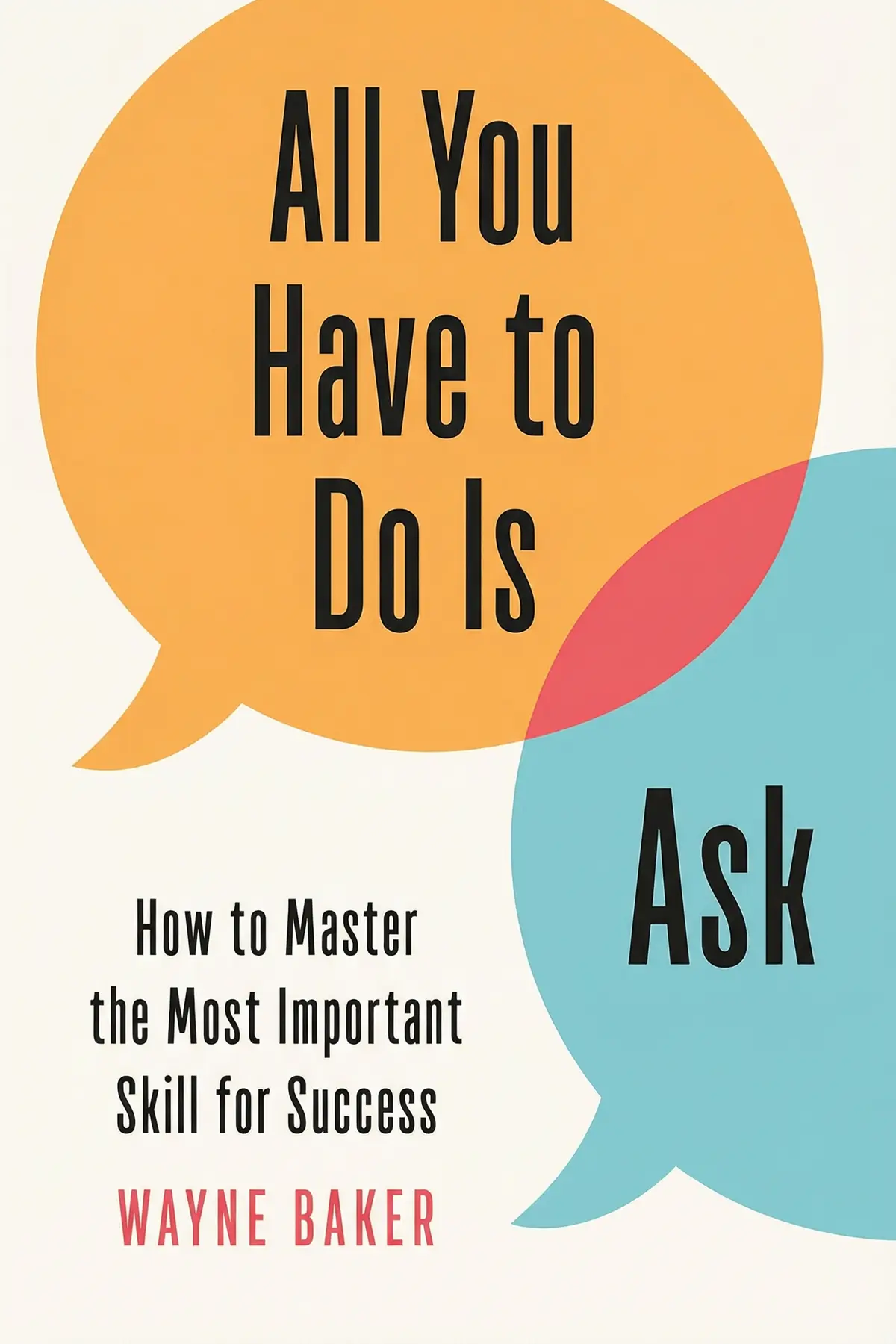
Master the essential skill of asking for help to unlock hidden resources and achieve success. Wayne Baker provides a practical framework for overcoming the psychological barriers that prevent us from requesting assistance.
1 min 42 sec
In the fast-paced world of professional achievement, we are often told that the keys to the kingdom are grit, individual talent, and an unshakable sense of self-reliance. We lionize the ‘self-made’ individual and celebrate those who seem to carry the weight of the world on their shoulders without ever breaking a sweat. But what if this narrative is actually holding us back? What if the most powerful tool in your arsenal isn’t what you know or how hard you work, but your willingness to admit when you don’t have all the answers? This is the central provocation of Wayne Baker’s insights.
At its core, success is rarely a solo endeavor. It is a collaborative process fueled by resources, information, and connections that exist outside of ourselves. However, a significant gap exists between the help we need and the help we actually receive. This gap isn’t caused by a lack of generous people in the world; rather, it’s caused by our own hesitation to speak up. We fear looking incompetent, we worry about being a burden, or we simply don’t know how to frame our needs in a way that invites a ‘yes.’
In the following exploration, we are going to deconstruct the art and science of making requests. We will look at why we consistently underestimate the kindness of strangers and colleagues alike. We will examine the organizational cultures that either stifle or stimulate collaboration, and we’ll learn a concrete framework for asking for what you need with clarity and purpose. By the end of this journey, the act of asking will no longer feel like a moment of vulnerability. Instead, you will see it as a strategic bridge—the shortest path between where you are now and where you want to be. Let’s dive into how you can start unlocking the hidden potential of the networks all around you.
2 min 22 sec
Discover how a simple request can overcome insurmountable odds, from medical miracles to complex engineering puzzles, by tapping into the hidden knowledge of those around us.
2 min 08 sec
We often assume people will say no, but psychological studies and global data suggest that the world is far more helpful than we believe.
2 min 20 sec
Learn why workplace environments often stifle the very collaboration they claim to value and how to identify the signs of a psychologically safe culture.
2 min 20 sec
Identify which of the four social archetypes you fall into and why the ‘Giver-Requester’ is the ultimate model for long-term success.
2 min 19 sec
Master the SMART criteria to ensure your requests are clear, compelling, and much more likely to yield a positive response.
2 min 03 sec
Explore practical tools like ‘stand-ups’ and ‘Reciprocity Rings’ that bake the habit of asking directly into the daily life of a team.
2 min 12 sec
Learn how innovative games and flexible budgeting can bridge the gaps between departments and unlock hidden potential within large organizations.
2 min 23 sec
Discover why rewarding the ‘asker’ is just as important as rewarding the ‘giver’ when building a culture of high performance.
1 min 46 sec
As we wrap up our look at the power of the ask, it’s worth reflecting on how much energy we often waste by trying to go it alone. We’ve seen that the resources we need are frequently closer than we think, hidden within the minds and networks of our colleagues, acquaintances, and even strangers. By shifting our perspective and viewing a request not as a surrender, but as a strategic maneuver, we open doors that would otherwise remain locked. We’ve explored the SMART framework for clarity, the importance of psychological safety, and the necessity of building routines that make asking a natural part of our daily lives.
The throughline of all these ideas is simple: your success is limited only by your ability to leverage the world around you. When you master the art of the ask, you become more than just an individual contributor; you become a hub of activity and progress. You help others by giving them the opportunity to contribute, and you help yourself by accelerating your path to your goals. It is a virtuous cycle that builds stronger relationships, more innovative teams, and a more fulfilling professional life.
As an immediate step, consider creating a ‘gratitude wall’ in your workspace. This can be a physical board or a digital space where team members post notes of thanks. But here is the key: don’t just thank people for the help they gave. Explicitly thank people for the help they *asked for*. Recognize the person who brought a difficult problem to the group’s attention. Appreciate the colleague who admitted they were overwhelmed and asked for a hand. By celebrating the ask, you reinforce the idea that we are all in this together. So, the next time you hit a wall or find yourself unsure of the next step, don’t hunker down. Reach out. The solution is already out there—all you have to do is ask.
We often view asking for help as a sign of weakness, yet it is actually the most efficient bridge to achieving our goals. In this summary, we explore the science and strategy behind making effective requests and building a culture of mutual support. You will discover why we routinely underestimate the willingness of others to help and how to overcome the social fears that keep us isolated. The book promises a transformative shift in perspective, moving from a mindset of self-reliance to one of strategic collaboration. By learning to formulate SMART requests and identifying the four social archetypes of giving and receiving, readers can improve their personal productivity and team dynamics. Whether you are navigating corporate silos or seeking personal growth, mastering the art of the ask is the key to unlocking the collective wisdom of your entire network.
Wayne Baker is a distinguished academic serving as the Robert P. Thome Professor of Business Administration and Professor of Management & Organizations at the University of Michigan’s Ross School of Business. He also holds the role of faculty director for the Center for Positive Organizations. An accomplished author, he has published six books and a wide array of scholarly articles throughout his career.
Listeners view Wayne Baker’s strategy for collaboration as a functional and perceptive guide for professional growth. Even though perspectives differ on whether the primary message could have been more briefly summarized, listeners value the hands-on resources offered, including the SMART criteria for formulating requests. They also find great worth in the group activities and the "Reciprocity Ring" method for encouraging team openness and psychological safety. Furthermore, they highlight how the content clarifies individual giving patterns, with one listener commenting that it provided a "shot in the arm" to help them get past their reluctance to ask for help.
Ever wonder why some people seem to get everything they want while you are stuck grinding away in silence? Baker’s book provides the blueprint for breaking that cycle of isolation and silence. For me, the standout was the discussion on creating a culture where admitting mistakes and asking for resources is encouraged rather than punished. The inclusion of statistics to back up the benefits of the Reciprocity Ring made the arguments feel academically grounded rather than just self-help fluff. I have already started using the SMART criteria for my emails, and the response rate has been noticeably better. Frankly, this should be required reading for every new hire in a corporate setting. It turns a soft skill into a measurable, repeatable process for success.
Show moreThis book is a game-changer for anyone who thinks they have to do everything themselves to be successful in life. Wayne Baker demystifies the art of the ask and shows that it is a skill that can be mastered, not a personality trait. I was surprised to learn that people help strangers much more often than we think, a fact backed up by his research. The Reciprocity Ring is a brilliant concept for fostering a culture where everyone feels safe to admit they do not have all the answers. Personally, I found the breakdown of the four types of givers and requesters to be the most helpful part of the text. It gave me the vocabulary to understand my own hesitation and the tools to overcome it. Highly recommended.
Show moreLook, we all know we should ask for help, but Baker explains exactly why we don't and how to fix that behavior. This was a much-needed shot in the arm for my professional development this quarter. I have always been an overly generous giver, often to the point of burnout, while never wanting to "bother" others with my needs. The author reframes asking as an act of generosity itself, because it allows others to contribute and feel valued. I particularly liked the concept of the fifteen-minute stand-up and the specific questions to ask: what did I work on, what is blocking me, and what help do I need? Some of the anecdotes felt a bit like monumental outliers, but the core strategy is very sound.
Show moreThe chapter on the "lone wolf" versus the "giver" really hit home for me during my morning commute reading. I have always prided myself on my independence, but Baker’s data suggests that lone wolves are actually the weakest link in a collaborative chain. That realization was a bit of a wake-up call for my current management style. The book is less about begging and more about creating a strategy for collective intelligence. Using the Reciprocity Ring in our last department meeting actually led to three immediate solutions for problems we had been sitting on for months. In my experience, the fifteen-minute stand-up format is the most low-friction way to implement these ideas. Even though some parts of the text are dry, the practical tools are worth the price.
Show morePicked this up on a recommendation from a colleague who noticed I was drowning in my current project. I was hesitant at first because I did not want to feel like a burden to my busy team. However, Baker argues that asking for help is as important as giving it because it builds psychological safety. The book provides a very clear framework to ensure your requests are specific and action-oriented, which helps reduce the guilt of asking. I especially liked the story about the baby in Romania; it was a touching way to illustrate how broad a network can truly be. While the vocabulary occasionally feels a bit academic, the overall message is incredibly empowering. It has definitely changed how I approach my daily interactions with my colleagues.
Show moreFinally got around to finishing this, and I have to say, the practical application is where it truly shines. Most business books are heavy on theory and light on how-to, but Baker flips that script. He provides specific group exercises that can be used to increase the efficiency and effectiveness of teams immediately. I have already implemented the "daily ask" in my personal life, and it is surprising how much people want to help when you give them a path. To be fair, the writing style is a bit utilitarian and lacks a certain poetic flair, but that is to be expected from a workbook hybrid. If you are looking for a strategy on asking questions that yields results, this is a great place to start.
Show moreAfter hearing a lot of buzz about the Reciprocity Ring, I finally decided to pick this up for my team. It is a solid, well-written guide that emphasizes the importance of psychological safety in the workplace. I found the section on different giving styles particularly illuminating; I realized I am a "lone wolf" who usually struggles to reach out. However, the book often feels more like a workbook or a classroom syllabus than a narrative-driven business book. The "SMART" acronym for requests is practical, though it is certainly nothing groundbreaking for anyone who has set goals before. Truth is, the most valuable parts are the specific group exercises suggested for teams. It is a useful tool for HR managers, but it is not exactly a page-turner.
Show moreAs someone who has always felt a bit guilty asking for favors, I went into this with a healthy dose of skepticism. While the book contains many cozy examples that highlight the benefits of reaching out, I still struggle with the idea of presuming upon relationships. Baker does a decent job addressing this mental block by focusing on the meaningful part of the SMART request. However, I am not entirely convinced everyone won't eventually resent the constant asking for help. The writing is clear, reminding me of a college textbook—informative but lacking that hook that keeps you reading late into the night. It is a well-rounded book that offers relevant lessons for those just starting their careers, but seasoned pros might find it repetitive.
Show moreThis book could have easily been condensed into a long-form blog post or a single magazine article. While Wayne Baker provides some decent framework for collaboration, the central thesis—that you should just ask for what you need—is repeated ad nauseam. I appreciated the SMART criteria for making requests, yet it felt like a rehashing of basic management training I received years ago. We all know that closed mouths don't get fed in this professional world. To be fair, the examples of the "Reciprocity Ring" were interesting from a sociological perspective, but they didn't justify the two hundred pages. It felt like a chore to push through the fluff to find the actionable nuggets. If you have a few hours to kill, maybe skim it, but do not expect a revolutionary breakthrough.
Show moreNot what I expected given the high praise I saw online recently. I found myself struggling to stay engaged because the narrative flow is constantly interrupted by workbook-style exercises. I appreciate the effort to make it practical, but it lacks the compelling storytelling found in modern business classics. The author suggests that if we do not ask, others will not understand our needs, which is quite obvious. Does that really require an entire book to explain? Not gonna lie, I felt annoyed by the repetition of the SMART acronym throughout almost every single chapter. It is a good example of a business book that probably should have remained a short podcast episode. Unless you have zero experience with team collaboration, you can safely skip this one.
Show moreAUDIO SUMMARY AVAILABLE
Get the key ideas from All You Have to Do Is Ask by Wayne Baker, plus 5,000+ more titles in English and Thai.