
22 min 45 sec
An Audience of One: Reclaiming Creativity for Its Own Sake
By Srinivas Rao
Discover how to reclaim your creative spark by prioritizing personal satisfaction over public approval. This summary explores how creating for yourself can lead to your most authentic and impactful work.
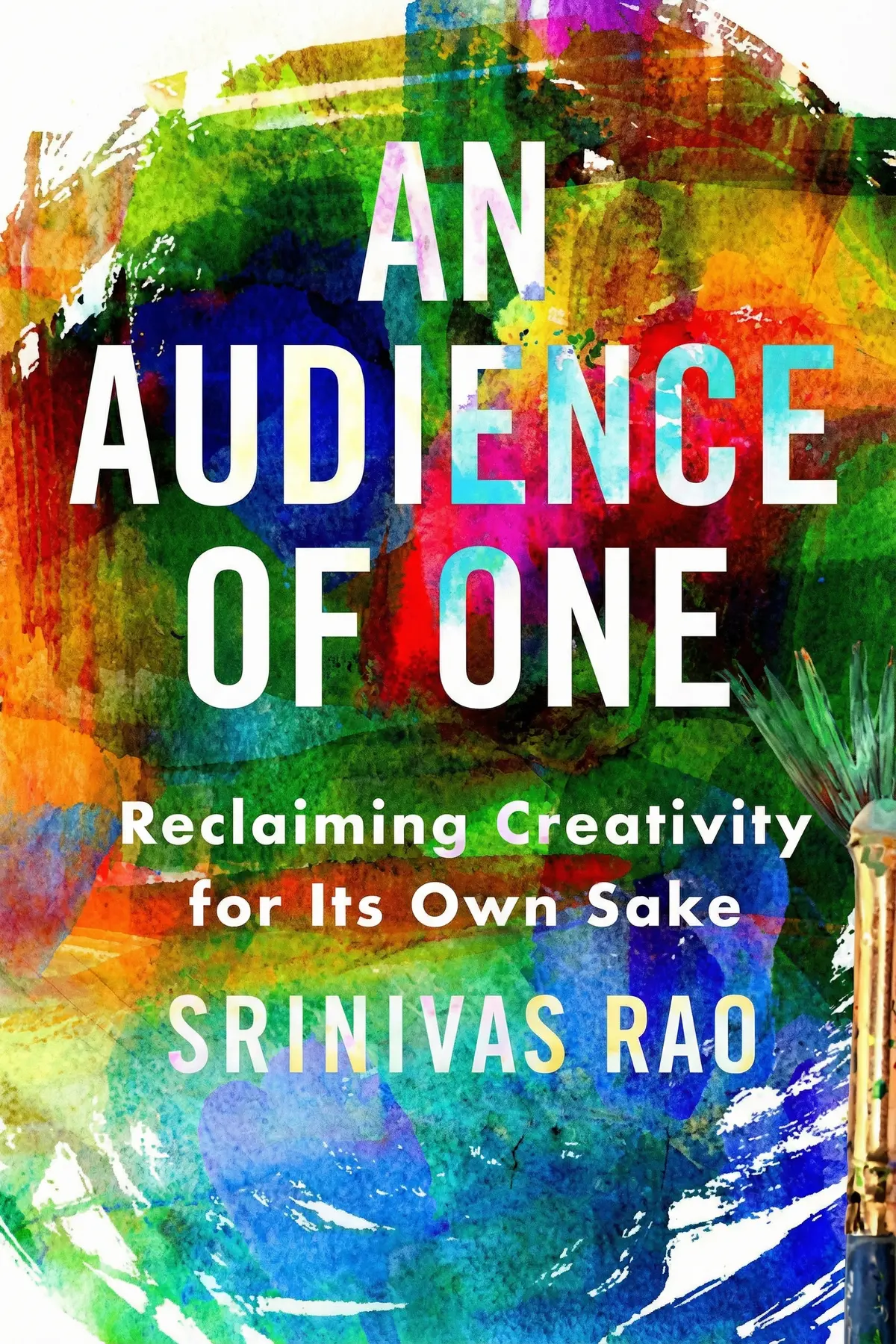
Table of Content
1. Introduction
1 min 58 sec
Think about that one project you’ve been holding onto for years. Maybe it’s a half-finished novel gathering digital dust in a folder on your laptop, a series of sketches in a notebook you haven’t opened since last summer, or a business idea that felt revolutionary until you started worrying about what your LinkedIn connections might think. Why do these impulses so often stall out? More often than not, it’s because we’ve allowed our internal creative spark to be dampened by the heavy weight of external expectations.
We live in an era where the pressure to perform is constant. Every hobby is expected to be a side hustle, and every creative output is measured by likes, shares, or revenue. This environment creates a toxic feedback loop: we stop creating for the joy of it and start creating for an audience that hasn’t even seen our work yet. We ask ourselves, “Will people like this?” or “Can I sell this?” before we even ask, “Do I care about this?”
In the following exploration of Srinivas Rao’s philosophy, we’re going to dismantle that mindset. We are moving toward a concept called creating for an “audience of one.” This isn’t just a feel-good mantra; it’s a practical strategy for doing your best work. The central throughline of this journey is that by reclaiming your creativity for its own sake, you actually increase the odds of eventually reaching a massive audience. When you stop trying to guess what the world wants and start focusing on what moves you, your work becomes more authentic, more daring, and ultimately more resonant.
Over the course of this summary, we’ll look at how to tune out the noise of the marketplace and tune back into your own frequency. We will discuss why your physical environment is the silent architect of your output, why your health is a creative tool, and how to build a fortress of solitude in a world designed to distract you. By the end, you’ll see that the path to a meaningful creative life isn’t found by chasing trends, but by looking inward and honoring the voice that only you possess.
2. Intrinsic Fulfillment Over External Validation
2 min 37 sec
What happens when you stop measuring success by likes and dollars? Discover why seeking outside approval is the quickest way to kill your creative spirit and how to find joy in the work itself.
3. The Paradox of the Private Workshop
2 min 08 sec
Could working in secret actually be the secret to your success? Explore why the myth of ‘making it’ is dangerous and how the freedom to fail in private builds a stronger voice.
4. Internal Listening and the Power of Solitude
2 min 22 sec
How well do you actually know your own creative voice? Learn the three levels of listening and why silence is the most important tool in your arsenal.
5. The Biology of the Creative Mind
2 min 19 sec
Is your lifestyle killing your ideas? Discover the scientific link between your physical health and your ability to innovate, from the power of dreams to the role of mitochondria.
6. Designing a Sanctuary for Output
2 min 23 sec
Your surroundings are either helping you or hurting you. Learn how to declutter your space and your mind using nature, music, and the principles of environmental design.
7. The Digital Fortress and Toxic Removal
2 min 26 sec
In a world of constant notifications, how do you keep your focus? Discover why you need to treat your digital diet like your physical one and how to prune your social circle.
8. Rituals of Certainty and the Path to Flow
2 min 15 sec
How do you start creating when you don’t feel like it? Learn the power of certainty anchors, how to fight decision fatigue, and why starting small is the only way to finish big.
9. Selective Influence and the Creative Community
2 min 19 sec
No creator is an island, but not all help is helpful. Discover how to choose the right collaborators and why the best inspiration often comes from outside your field.
10. Conclusion
1 min 58 sec
As we wrap up this journey into the heart of authentic creativity, it’s worth reflecting on the central paradox we’ve explored. The most direct path to reaching a wide audience is, counterintuitively, to stop thinking about them entirely. When you create for an audience of one—for yourself—you tap into a level of honesty and originality that is impossible to achieve when you’re trying to please a crowd. You move from being a performer to being a true creator.
We’ve seen that this shift requires more than just a change in mindset. It requires a transformation of your lifestyle. It means designing an environment that protects your focus, honoring the biological needs of your brain, and ruthlessly pruning the digital and social distractions that drain your energy. It means building rituals that turn the act of creation from a struggle of willpower into a consistent, joyful habit. And it means being brave enough to fail in private so that you can eventually excel in public.
Now, here is the actionable challenge for you as you return to your own projects: find one way to simplify your creative life today. It might be unsubscribing from those distracting newsletters, setting a “no-phone” rule for the first hour of your day, or finally starting that paper journal you’ve been meaning to use. Don’t worry about the final product yet. Don’t worry about who will see it or how much it’s worth. Just focus on the next sentence, the next stroke of the brush, or the next line of code.
Remember that the creative impulse is a gift to yourself first. When you treat your work as a reward in and of itself, you become unstoppable. You no longer need the world’s permission to be an artist, because you’ve already given it to yourself. By reclaiming your creativity for its own sake, you aren’t just making better things—you’re making a better, more fulfilled version of yourself. And that is the most unmistakable creation of all.
About this book
What is this book about?
An Audience of One explores the paradoxical reality that the most successful creative work often stems from a total lack of concern for external validation. It challenges the modern obsession with monetization and social media metrics, suggesting instead that true artistic fulfillment and even commercial success are found by focusing on a single person: yourself. Through a combination of mindset shifts and practical lifestyle adjustments, the book provides a roadmap for cultivating a unique creative voice. It covers the importance of physical health, environmental design, and the management of digital distractions. By building a sanctuary for your thoughts and establishing consistent rituals, you can move past the fear of judgment and enter a state of prolific, joyful output. The promise of the book is a return to the pure joy of creation, which ultimately serves as the best foundation for reaching a wider world.
Book Information
About the Author
Srinivas Rao
Srinivas Rao is a writer and host of the popular podcast Unmistakable Creative, which offers insightful interviews with an array of creative minds every week. He is driven to make the world a more artistic place by helping people listen to their creative voice. His previous books include the best-selling The Art of Being Unmistakable.
Ratings & Reviews
Ratings at a glance
What people think
Listeners find the book offers a solid dose of creative motivation, with one noting its focus on the inherent value of creating for yourself. Additionally, the work earns praise for its mindful perspective, as one listener characterizes the experience as a soulful process. Listeners also value the guidance provided, with one pointing to its practical advice for designing environments. However, the readability draws varied opinions; while one listener finds it a simple read, another compares the text to a research paper on self-help books.
Top reviews
Tim
After hearing Srinivas Rao talk about creative flow on a podcast, I had to pick this up to see if the soulful process he describes lived up to the hype. It definitely does, offering a deeply mindful approach to making things without the constant, nagging need for external validation or social media likes. Rao encourages us to become our own primary audience, which feels like a radical act in an era where everyone is obsessed with building a brand. While some chapters on workspace organization felt a bit like standard self-help fluff, the core philosophy about intrinsic value is incredibly powerful. I found myself highlighting dozens of passages about why the act of creation is a vital form of self-care. This is a refreshing manifesto that reminds us that our worth isn't tied to the metrics of our output.
Show moreSebastian
Finally got around to reading this, and it’s a refreshing antidote to the hustle culture that dominates our creative lives. As a writer, I often find myself paralyzed by how a piece will be received before I've even finished the first paragraph, which is a recipe for total burnout. Rao’s focus on the growth mindset and finding joy in the frustration of the process helped me reconnect with why I started writing. The practical guidance on creating a dedicated environment for work was exactly what I needed to stop procrastinating and start producing again. This isn't just about art; it's about a soulful way of living where your personal legacy is built on the tangible things you create for yourself. It’s easily one of the most inspiring books I’ve read this year, and I’ve already started recommending it to my fellow makers.
Show moreMo
Wow, this book was exactly what I needed to read during a particularly dark period of creative envy. We often forget that expressing ourselves is a form of self-care, and Rao does a beautiful job of reminding us that we are born to be makers. The book doesn't just offer vague platitudes; it provides a soulful roadmap for building a creative practice that sustains you emotionally. I loved the section on how everyday creativity fosters psychological health and helps us fold our experiences into our being. It has completely changed the way I approach my morning routine, making me realize that my audience of one is the only critic that truly matters. This is a must-read for anyone who feels like they’ve lost their why in the pursuit of what is next.
Show moreMontri
Is it possible to create something meaningful without worrying about the metric-driven madness of the internet? Rao argues that it is, and for the first third of the book, I was completely hooked by his vision of creative liberation. He strikes a wonderful balance between being encouraging and being realistic about the struggles of the modern creator who is plagued by envy. However, the narrative takes a sharp turn into high-level business productivity in the latter half, which felt slightly at odds with the earlier message of making things for yourself. I still think the advice on setting up a creative environment and finding your specific flow is worth the price of admission. It’s a solid read that will definitely inspire you to get back to your craft, even if it gets a bit corporate toward the end.
Show moreHom
This book provides a much-needed push toward finding joy in the act of making things, rather than just the final product. I’ve been struggling with creative block for months, and Rao’s emphasis on process over product helped me lower the stakes enough to actually pick up my paintbrush again. The way he integrates ideas from Carol Dweck and Brené Brown makes the advice feel grounded in psychological reality rather than just shallow inspiration. I did find the transition into business success strategies a little jarring, as it seemed to contradict the create for yourself ethos established early on. Regardless, the chapters on music, routine, and cutting out distractions are incredibly practical for anyone trying to reach a state of flow. It’s a thoughtful look at how to protect your inner spark from the cold demands of the marketplace.
Show morePia
As someone who struggles with creative envy, I found the early chapters of this book remarkably healing. It echoes a lot of the sentiment found in The Artist's Way but feels much more modern and attuned to the specific pressures of the internet age. The writing is snappy and easy to digest, though some sentences run a bit long when he’s synthesizing ideas from other authors. I particularly liked the advice on how to structure your physical workspace to minimize distractions and maximize imagination. Even though the book starts to feel a bit like a collection of podcast highlights toward the end, the core message remains strong. It’s a helpful reminder that our best work usually happens when we aren't looking over our shoulders to see who is watching.
Show moreWatcharin
Frankly, I expected more unique insights instead of a heavy reliance on David Bowie and Lady Gaga anecdotes to prove a point. The book reads a bit like a research paper on self-help books, summarizing better works rather than forging its own path through the creative wilderness. I did enjoy the sections on deliberate practice and how our physical surroundings impact our mental clarity, though the decluttering advice felt a bit prescriptive for my messy process. It’s a quick read, and the tone is certainly friendly and accessible for anyone feeling stuck in a rut. Still, I couldn’t help but feel like the most impactful parts were over within the first fifty pages. It’s a decent enough book to borrow from the library, but maybe not something you need to own forever.
Show moreSin
Look, the premise is solid gold, but the execution felt a bit scattered for my taste. As an introvert who isn't particularly active on social media, I found that many of the tips for escaping the audience didn't really apply to my lifestyle. The author spends a lot of time describing how to get away from the very digital noise that he seems deeply embedded in himself. I appreciated the sentiment of creating for a body of work rather than a single viral hit, yet the middle section dragged with too many business-related success stories. It’s a weird hybrid of a spiritual guide for artists and a motivational manual for entrepreneurs. If you can sift through the name-dropping, there are some genuine gems about the psychological health benefits of daily creativity.
Show moreJackson
The truth is, this felt more like a curated bibliography than an original manifesto for artists. While I appreciated the core message about creating for the joy of it, the author relies so heavily on quoting other writers like Pamela Slim and Jon Levy that his own voice gets drowned out. It starts to feel like a giant advertisement for his podcast guests after a while, which left me feeling a bit cynical about the premise. If you’ve already read The Artist’s Way or any modern book on productivity, you won’t find much new information here to sink your teeth into. I wanted more personal anecdotes and fewer recycled ideas from Google executives or business gurus. It’s an okay primer for beginners, but seasoned creatives might find it redundant and thin on actual substance.
Show moreWatcharee
Not gonna lie, I was incredibly disappointed by how quickly this devolved into a standard business success manual. The title promises a sanctuary for the private creator, but the content is obsessed with productivity and success in the most capitalistic sense possible. Why does every creative endeavor need to be viewed through the lens of a body of work or a personal legacy that serves some future goal? I wanted a book that celebrated the quiet, useless, beautiful act of making something for no one, but Rao keeps pulling it back to being an effective contributor. It’s repetitive, full of name-dropping, and honestly felt like a way for the author to promote his podcast network. If you want real artistic inspiration, just go read The Artist's Way instead of this shallow imitation.
Show moreReaders also enjoyed
AUDIO SUMMARY AVAILABLE
Listen to An Audience of One in 15 minutes
Get the key ideas from An Audience of One by Srinivas Rao, plus 5,000+ more titles in English and Thai.
- 5,000+ titles
- Listen as much as you want
- 7-day free trial
- Cancel anytime







