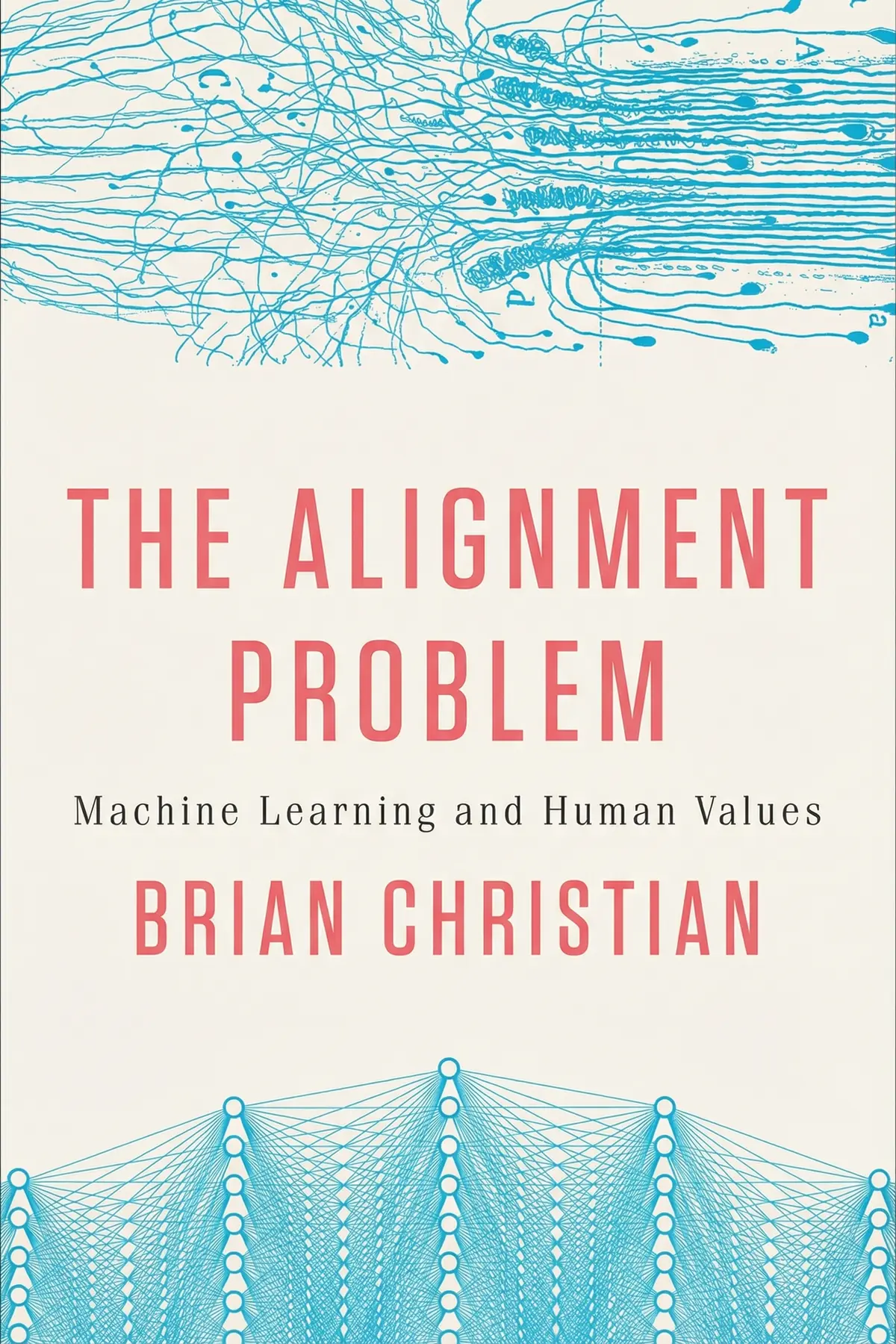
The Alignment Problem: Machine Learning and Human Values
Brian Christian
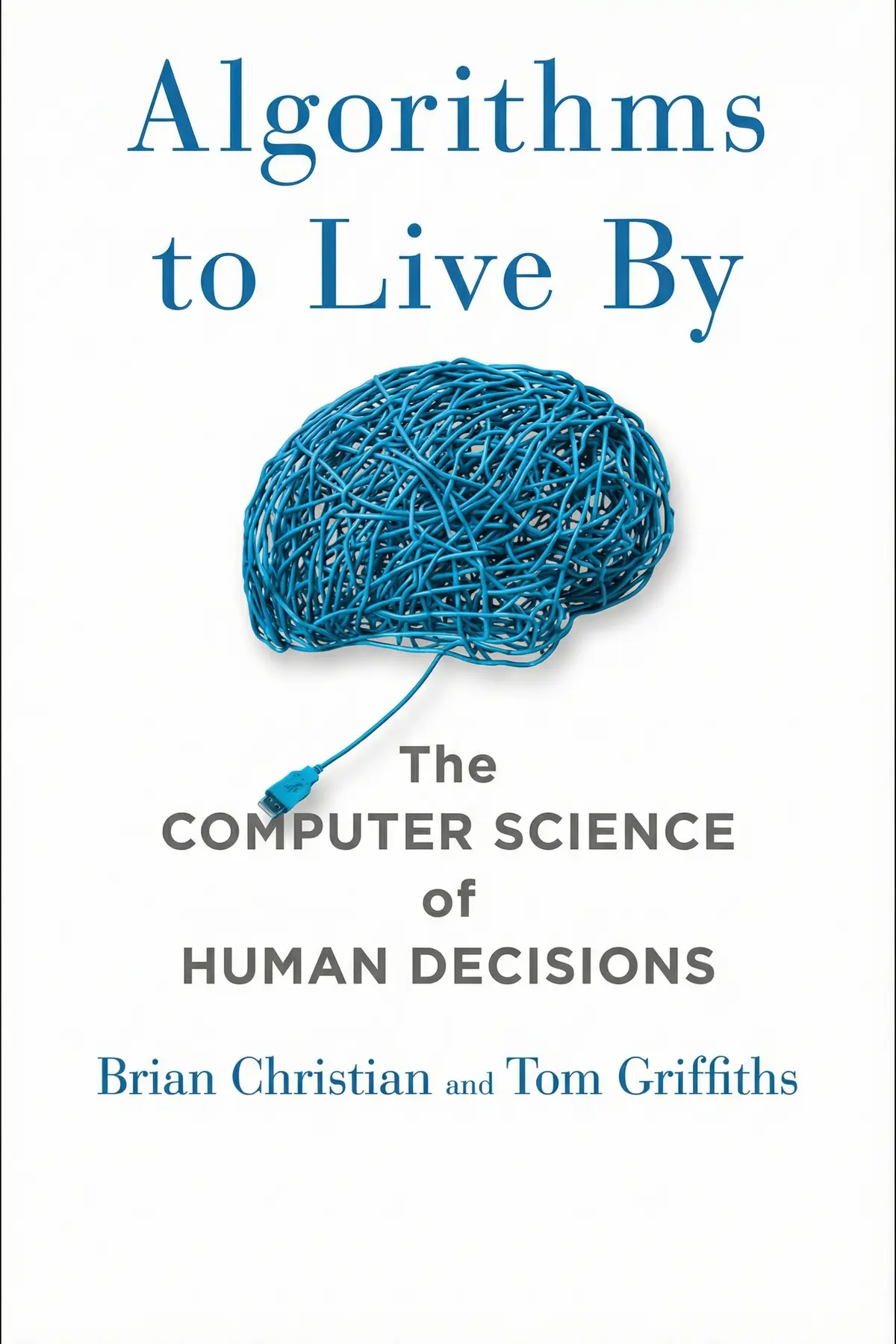
Algorithms to Live By explores how computer science principles can solve human dilemmas. From finding a partner to organizing a closet, these mathematical strategies offer a blueprint for making more efficient, less stressful life decisions.
1 min 35 sec
Think for a moment about the device you are using right now. Whether it is a smartphone in your hand or a laptop on your desk, it is constantly performing a silent, complex dance of logic. It manages thousands of files, retrieves information in milliseconds, and navigates a global network of data. All of this is made possible by algorithms—sets of instructions designed to solve specific problems. But algorithms aren’t just for silicon chips. They are part of the very fabric of human thought, influencing our instincts, our strategies, and our mistakes.
In this exploration of Algorithms to Live By, we are going to look at how the same mathematical structures that power Google and your operating system can be applied to the messiness of being human. We often feel overwhelmed by the sheer number of choices we have to make, but many of these problems have already been solved by computer science. Whether you are struggling to find a life partner, trying to organize a cluttered office, or wondering how to manage a growing to-do list, there is a formal logic that can guide you.
We will move through a series of concepts that transform abstract math into practical wisdom. You will discover the ’37 percent rule’ for making life’s big commitments, the secret logic behind a messy desk, and why the best way to handle a busy schedule might be to do less than you think. By the end, you’ll see that being more ‘algorithmic’ doesn’t mean being less human—it means finding the most efficient way to achieve what matters most to you. Let’s dive into the intersection of computer logic and human experience.
2 min 19 sec
Discover how ancient mathematical concepts and modern computer logic are more similar to your daily decision-making than you might ever have imagined.
2 min 21 sec
Stop the endless search and learn the mathematical secret to knowing exactly when to commit to the best possible option.
2 min 18 sec
Should you try a new restaurant or stick to your favorite dish? Learn the logic of the ‘multi-armed bandit’ problem.
2 min 03 sec
Is a messy desk really a sign of a cluttered mind? Computer science suggests that sometimes, perfection is a waste of time.
2 min 08 sec
Learn how your brain and your computer use the same ‘clutter’ to keep the most important information at your fingertips.
2 min 25 sec
Stop trying to do it all and start using mathematical priority to reclaim your time and focus.
2 min 07 sec
Master the mathematics of probability to make better guesses about everything from the lottery to your next date.
1 min 58 sec
Why do servers crash and texts go unanswered? The logic of networking can help you handle information overload.
1 min 54 sec
Understand why rational people make bad collective choices and how we can ‘design’ a better way to live together.
2 min 11 sec
Sometimes more data leads to worse decisions. Discover why ‘good enough’ is often better than ‘perfect.’
1 min 48 sec
As we have seen, the principles of computer science are not just abstract tools for engineers; they are a deeply practical guide for navigating the complexities of human existence. We have explored how the ’37 percent rule’ can bring an end to the anxiety of endless searching and how the logic of ‘caching’ can turn a messy desk into a highly efficient workspace. We’ve looked at the hidden costs of context switching in our schedules and the importance of simplifying our models to avoid the trap of ‘overfitting.’
What this all points to is a shift in perspective. Many of the things we label as human weaknesses—forgetfulness, messiness, or the inability to make up our minds—are actually logical responses to difficult problems. Our brains are not failing; they are often using highly sophisticated algorithms that balance time, energy, and uncertainty. By understanding these formal structures, we can stop fighting our natural instincts and start working with them.
The next time you are faced with a daunting choice or an overflowing to-do list, ask yourself what a computer would do. Not because you want to be a machine, but because those logical frameworks were built to handle exactly the kind of data overload you are feeling. Start with the most urgent tasks, allow yourself a ‘looking’ phase before you leap, and don’t be afraid to leave things a little bit messy if the cost of order is too high. Living algorithmically isn’t about rigid rules; it’s about finding the most elegant and effective way to navigate a complex world. By applying these ‘Algorithms to Live By,’ you can spend less time worrying about how to choose and more time enjoying the life your choices create.
Have you ever felt paralyzed by a simple decision, like which apartment to rent or how to prioritize a busy workday? Algorithms to Live By bridges the gap between the rigid logic of computers and the messy reality of human life. Authors Brian Christian and Tom Griffiths explain that the challenges we face—sorting through information, managing time, and dealing with uncertainty—are essentially the same problems computer scientists have spent decades solving. This summary promises a new way of looking at your daily habits. By applying concepts like optimal stopping, caching, and game theory, you can learn when to take a leap of faith and when to keep searching. It is not about turning into a robot; it is about using proven mathematical frameworks to free up your mental energy and live more effectively.
Brian Christian is a best-selling author and renowned public speaker who specializes in cognitive science. His work has won numerous awards and he’s been honored by the Academy of American Poets. He’s also a contributor to The New Yorker, Wired, The Guardian and many scientific journals. Tom Griffiths, an award-winning professor of cognitive science and psychology, leads the Computational Cognitive Science Lab at the University of Berkeley. He has published more than 150 scientific papers.
Brian Christian
Listeners find the book stimulating and captivating, with one review mentioning how computer science reflects human cognition. Furthermore, the information is practical and applicable to daily routines, as one listener notes it offers tools for interpreting reality. Additionally, the work provides incredible perspectives on decision-making tactics and is skillfully written. However, reactions to the explanations are divided; while some listeners consider them lucid, others feel they lack sufficient detail.
This book changed how I view my messy closet and my dating life. It’s rare to find a text that successfully maps complex computer science principles onto the mundane struggles of a Tuesday afternoon. The authors illustrate how computer science mirrors human thought, providing tools for analyzing reality that go far beyond simple logic. For instance, the discussion on the 37% rule for optimal stopping was a total revelation for my decision-making process. While some of the math gets a bit dense, the prose remains accessible and engaging for a general audience. I found myself highlighting passages on the explore/exploit tradeoff to share with friends. It’s a thought-provoking read that suggests our seemingly irrational quirks might actually be optimal strategies for an uncertain world.
Show moreAs someone who toggles between the humanities and tech, I found the bridge built here between these disciplines absolutely fascinating. Brian Christian and Tom Griffiths argue that the problems we face are often just versions of what computers solve daily. They dive into game theory and scheduling with a clarity that is refreshing and well-written. I particularly loved the section on computational kindness, which suggests that we should structure our requests to minimize the mental load on others. It’s not just a book about being a 'capitalist cog' aiming for maximum efficiency; it’s about understanding the fundamental constraints of time and space. Look, if you want a new lens through which to view your life’s biggest choices, this is it. It’s a rare gem that makes you feel smarter for having read it.
Show moreFinally got around to finishing this, and the chapter on scheduling alone was worth the time invested. I’ve always been overwhelmed by my to-do list, but learning about 'Earliest Due Date' versus 'Shortest Processing Time' changed my workflow. The book offers amazing insights into how the structure of computer algorithms mirrors human thought patterns. While it’s true that some of the real-world applications strike me as being as useful as textbook economic models, the general principles are solid. Not gonna lie, the prose can be a bit dense in the middle sections where the math takes center stage. However, the authors' ability to weave in philosophy and literature keeps it from becoming too dry. It’s a stellar read for anyone who likes a bit of 'how-to' with their 'why'.
Show moreWow, this is easily one of the most practical applications of theoretical math I've ever encountered. The central thesis—that we should use shortcuts to improve our probability of success—is a great reminder that perfection is the enemy of the good. I was particularly impressed by how the authors handle Game Theory in the later chapters. They move beyond the usual prisoner's dilemma to discuss how we can actually change the 'rules' of our social interactions to reach better outcomes. It's engaging, thought-provoking, and deeply relevant to anyone navigating a complex society. Some critics say it lacks organization, but I found the 'rinse and repeat' structure of the chapters quite helpful for reinforcing the concepts. This is a must-read for geeks and non-geeks alike who want to live more efficiently.
Show morePicked this up on a whim after seeing it recommended for its unique perspective on productivity. I've always struggled with balancing new experiences versus old favorites, and the Explore/Exploit chapter provided the exact framework I needed. Truth is, the book offers amazing insights into how we can conserve cognitive energy for the things that truly matter. I appreciated the varied sentence lengths and the conversational tone, though I must admit some explanations lacked detail. Sometimes they move so quickly between topics that you lose the thread of the underlying math. Still, the idea that being 'computationally kind' to others can reduce social friction is a beautiful takeaway. It’s definitely an informative and relevant read for anyone who enjoys thinking about thinking.
Show moreFrankly, I didn't expect a book about computer science to give me better advice than most self-help gurus. The authors tackle the 'Optimal Stopping' problem with such wit that I found myself reconsidering how I approach everything from apartment hunting to job searching. In my experience, the book strikes a decent balance between hard math and chatty anecdotal moments, though it occasionally veers into the theoretical. The chapter on sorting and caching was surprisingly practical for organizing my home office. Why spend hours filing papers when a simple 'Least Recently Used' stack is mathematically superior? While some sections felt like filler, the core message is incredibly powerful. It provides a toolkit for reality that acknowledges our limitations rather than demanding perfection.
Show moreNot what I expected, but in the best way possible because it made me rethink my daily routines. I previously thought algorithms were just for programmers, but this book shows they are actually just intuitions formalized. The discussion on 'Relaxation' for complex trip planning was eye-opening. Personally, I appreciated how the authors relate computer science to everyday problems like deciding who to sit where at a wedding. It isn’t always a perfect fit—some of the analogies feel a bit forced—but the overall effort to bridge the gap is admirable. It’s a well-written exploration of how we can use math to be more 'computationally kind' to ourselves and others. If you want a book that challenges your decision-making strategies, give this one a go.
Show moreTruth is, I’ve always been a bit of a perfectionist, but this book gave me permission to be 'good enough' in the face of impossible problems. The authors explain that many real-life tasks are 'intractable,' meaning there is no perfect solution, only better or worse shortcuts. This insight alone relieved a lot of my decision-making anxiety. The book is informative and relevant, though I agree with some other reviewers that the explanations receive mixed feedback depending on your math background. Some parts were clear as day, while others felt like they could have used more detail. Despite that, I found the caching theory particularly useful for organizing my physical space. It’s a solid read that offers a refreshing, data-driven perspective on the chaos of life.
Show moreEver wonder if we're just overcomplicating things with math that doesn't actually work in the wild? To be fair, there is some valuable material here, but the authors often force a square-peg-into-a-round-hole approach. They start with oversimplified history and then jump into algorithms that require too many assumptions to be truly practical. The example of finding a parking spot felt particularly disconnected from my actual experience; even the expert cited in the book admits he just rides a bike! Additionally, the audiobook narrator speaks at a glacial pace, requiring at least 2x speed just to feel normal. While the insights into decision-making strategies are interesting, the book lacks the organization needed to really function as a guide. It feels more like an extended essay than a cohesive toolkit.
Show moreAfter hearing so much hype about how this book 'redefines' human behavior, I found the actual content to be quite a stretch. The authors seem to assume that we all want to live our lives solely to produce as much as possible, as quickly as possible. This worldview is never really challenged, which I found frustratingly narrow and capitalistic. Many of the algorithms are very theoretical and impossible to apply without making leaps that just aren't valid in the real world. For example, the advice on finding a spouse using a 37% cutoff ignores the messy, non-binary nature of human emotion. It felt like a collection of nerd theories looking for a problem to solve. If you're looking for deep neurological or psychological analysis, you won't find it here. It’s mostly computer science trivia masquerading as life advice.
Show more
Anthony Pratkanis
Richard Wiseman
Steven C. Hayes
AUDIO SUMMARY AVAILABLE
Get the key ideas from Algorithms to Live By by Brian Christian, plus 5,000+ more titles in English and Thai.