

A Bigger Prize: How We Can Do Better Than the Competition
Margaret Heffernan
Learn to rescue your calendar from unproductive sessions. This guide provides actionable strategies for transforming chaotic meetings into streamlined, objective-driven collaborative tools that actually respect everyone's time and professional energy.
1 min 31 sec
We have all been there. You look at your calendar on a Monday morning and see a solid wall of color. Hour after hour is booked with meetings. By the end of the day, you realize you haven’t actually checked off any items on your to-do list because you spent the whole day talking about work instead of doing it. It’s a common paradox in the modern professional world: we use meetings to collaborate, yet they often feel like the biggest obstacle to getting things done. Many of us have come to accept bad meetings as an inevitable tax on our employment, but that doesn’t have to be the case.
Bad meetings don’t just happen because of a lack of effort; they happen because of a lack of intention. When we fall into a routine of meeting by default, we stop asking if the gathering is actually the best use of everyone’s time. We lose sight of the objective, we invite too many people, and we fail to guide the conversation toward a concrete conclusion. This summary explores how to break that cycle. We are going to look at the philosophy of Leigh Espy, who argues that productive meetings are a skill that can be mastered by anyone.
Through this exploration, we will discover how to evaluate the necessity of a meeting before it even hits the calendar. We will dive into the mechanics of preparation that ensure focus and the active facilitation techniques that keep a group on track. Finally, we will see why the work doesn’t end when the call disconnects. The goal here isn’t just to have fewer meetings—it’s to ensure that the ones we do have are powerful, respectful, and, most importantly, effective.
2 min 06 sec
Before you send that calendar invite, discover the critical questions that determine if a meeting is actually the best tool for the job or just a waste of time.
1 min 58 sec
Success in the conference room is determined long before the first person arrives. Learn how intentional planning sets the stage for flawless execution.
2 min 06 sec
A meeting needs a pilot, not just a passenger. Explore how to steer discussions, manage silence, and keep the group moving toward a decision.
2 min 12 sec
The meeting isn’t over when the door shuts. Discover why the follow-up process is the most vital step in ensuring your team actually makes progress.
2 min 12 sec
Not every meeting goes smoothly. Learn tactical ways to handle hijackers, multitaskers, and heated debates without losing your cool.
1 min 21 sec
In this exploration of Bad Meetings Happen to Good People by Leigh Espy, we have looked at a comprehensive strategy for reclaiming our time and productivity. We began by realizing that the best meeting is often the one that never happens, replaced instead by more efficient forms of communication. We then saw how the work done before a meeting—defining goals, crafting action-oriented agendas, and handling logistics—creates the foundation for everything else. During the meeting, we learned the importance of active facilitation: steering the ship, balancing voices, and keeping the focus on the target. Finally, we emphasized that a meeting’s success is measured by the action it produces, which requires disciplined follow-up and clear accountability.
The throughline of all these strategies is intentionality. Bad meetings are a choice, even if they feel like an accident. By choosing to be more deliberate about why we meet, who we invite, and how we follow up, we can transform our work culture. Meetings should not be a source of dread or a waste of energy; they should be the engine of progress. As you go back to your desk and look at your calendar, take a moment to look at the next meeting you have scheduled. Ask yourself: What is the one concrete outcome I need from this? If you can answer that, and if you follow the principles we’ve discussed, you are already on your way to ending the cycle of bad meetings for good.
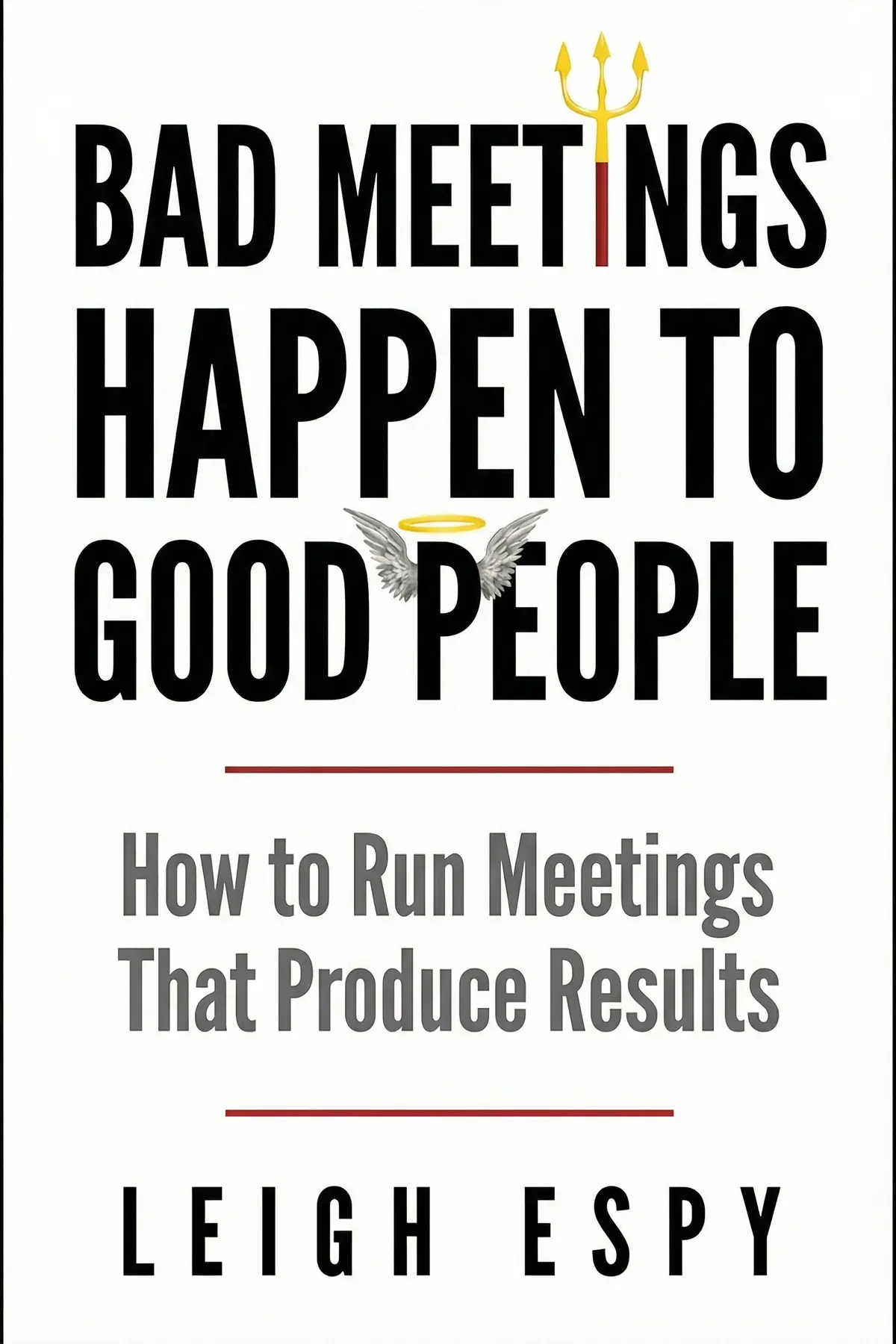
Have you ever sat through a meeting that felt like a slow-motion car crash? You aren't alone. Most professionals feel that meetings are the primary drain on their productivity. Bad Meetings Happen to Good People addresses this universal workplace frustration by offering a tactical roadmap for organizational efficiency. The book promises to turn the tide on meeting culture by shifting the focus from 'attendance' to 'accomplishment.' It breaks down the entire lifecycle of a gathering—from the initial decision to invite people, through the facilitation of the conversation, to the critical follow-up tasks. By implementing Leigh Espy's techniques, leaders and participants can ensure that every minute spent in a conference room or on a digital call results in tangible progress rather than just another scheduled update.
Leigh Espy is a project management and leadership coach with a background in both corporate and nonprofit settings. She has led large-scale international projects and worked closely with teams at all levels, from technical staff to senior executives. Bad Meetings Happen to Good People is her first book.
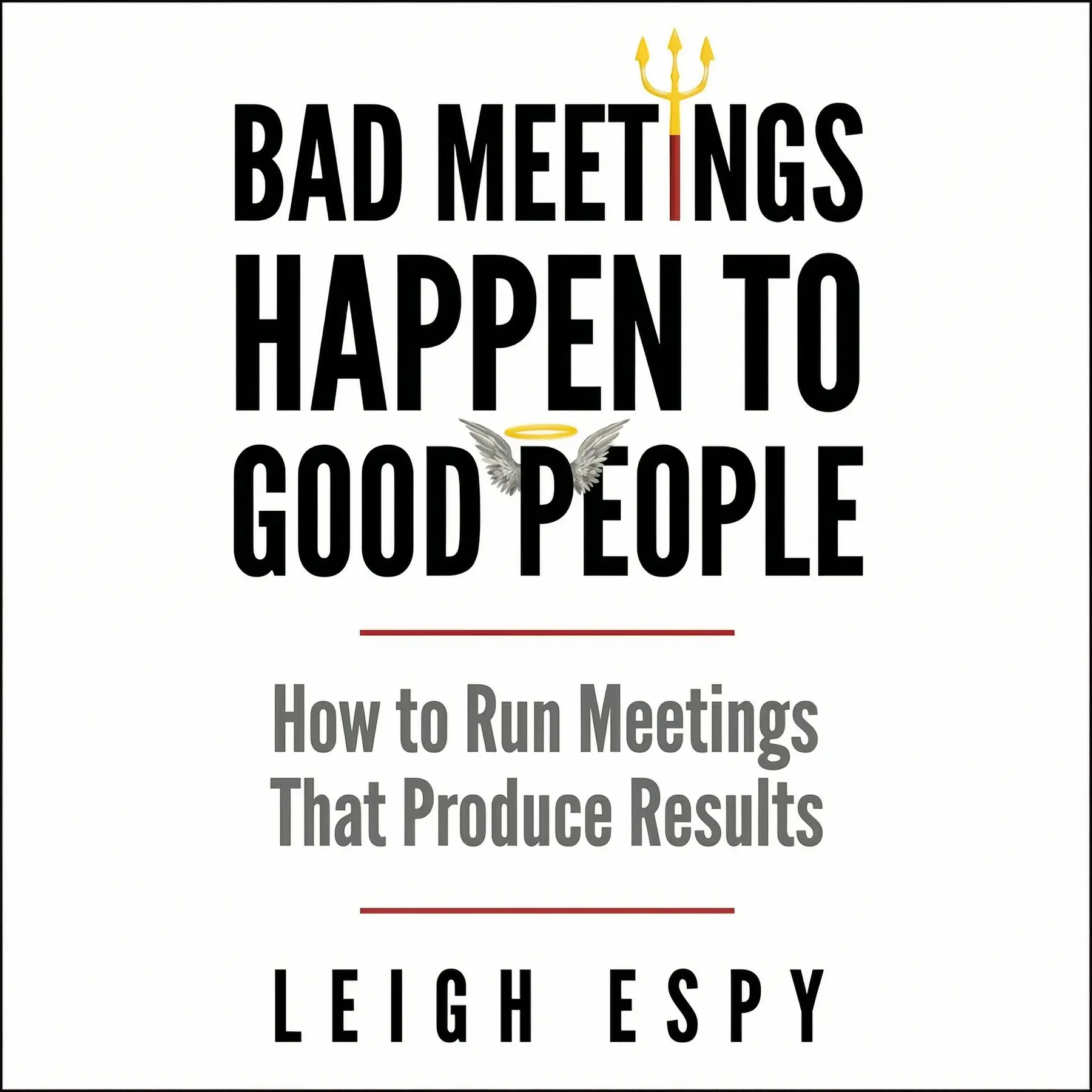
Listeners find that this guide delivers actionable advice using checklists and suggestions for every step, resulting in more productive meetings. They value the book as a helpful reference, with one listener noting it provides specific phrasing for handling tough situations. The writing is brief and direct, and they enjoy the overall formatting, with one listener highlighting the section on seven alternative meeting room configurations.
The chapter on meeting room configurations was a total eye-opener for me. I never realized how much the physical layout of a space could dictate the flow of conversation or contribute to attendee distractions. Espy provides seven alternative layouts that actually address the specific needs of different meeting types, which is genius. Beyond the physical setup, the book emphasizes that time and attention are our most valuable assets. I’ve started being much more selective about my attendee list to avoid inviting people who just want to 'observe.' It makes the decision-making process significantly faster when the room isn't crowded with unnecessary stakeholders. This is a must-read for anyone who wants to stop being a victim of a bloated calendar.
Show moreLeigh Espy has managed to distill years of project management wisdom into a concise, actionable guide that doesn't waste a single word. I love the focus on the 'why' behind every meeting—if there’s no clear goal, don't have the meeting. The practical tips on splitting larger groups into smaller teams to prevent dominant personalities from taking over were particularly helpful for my latest workshop. By keeping the dominators in one group, the other teams were finally able to have successful, balanced conversations. The templates are excellent and provide a great starting point for anyone nervous about facilitating for the first time. I highly recommend this for both beginners and those who have been facilitating for years but need a refresh.
Show moreThis book is a lifesaver for anyone drowning in calendar invites that lead nowhere. Leigh Espy cuts through the corporate fluff to provide a manual that is both concise and incredibly practical for the modern office. I particularly appreciated the checklists provided for each stage of the meeting process, as they make it easy to stay disciplined. Truth is, many of us run meetings on autopilot without realizing how much company time we are actually wasting. The author’s advice on using action verbs in agendas shifted how I approach my weekly syncs immediately. While some of the advice feels like common sense, seeing it organized into a coherent system is exactly what I needed. It is a solid resource that I plan to keep on my desk for quick reference.
Show moreAfter hearing so many coworkers complain about meeting fatigue, I decided to pick this up to see if there was a better way to facilitate. The writing style is refreshingly direct and doesn't drag on with unnecessary anecdotes. One of the biggest takeaways for me was the focus on clear results; you have to know exactly what items need to be addressed before you even start. I’ve started implementing the 'action verb' agenda style, and the difference in participation is already noticeable. To be fair, I did find the advice on active listening—like nodding and saying 'uh-huh'—a bit distracting in practice. Sometimes that can feel a bit forced or performative during a high-stakes discussion. Overall, it's a very helpful guide.
Show moreFinally got around to reading this, and I have to say the section on key phrases for difficult situations is worth the price alone. We've all been in those meetings where one person dominates the conversation, and Espy provides professional ways to pivot back to the agenda. The book reminds us that we are all works in progress and that failures in facilitation are just opportunities to grow. I liked the layout of the book, especially the way it breaks down the process from the initial invitation to the final follow-up. It's less of a narrative and more of a handbook, which I prefer for business topics. It’s a great tool for making meetings count instead of just making them happen.
Show moreNot what I expected from a standard business book, but the heavy focus on being selective with your guest list was a total game changer for my department. We used to invite everyone just to be 'inclusive,' but this book helped me realize that we were actually wasting people's time and company money. The author’s point about observers being a distraction is spot on. I’ve also started paying closer attention to how I layout the meeting room to minimize distractions, which has helped keep our sessions on track. My only minor gripe is that some of the sections felt a little repetitive, but perhaps that’s necessary to drive the points home. It is definitely a resource I will keep handy.
Show moreAs someone who facilitates remote and in-person workshops, I really appreciated the focus on the physical environment and the seven different room configurations. It’s rare to find a book that gets into the nitty-gritty of chair placement and how it affects power dynamics. The writing is very easy to understand, making it an accessible read for anyone transitioning into a management career. I’ve already started using the recommended 'results-oriented' agenda format, and it has cut our meeting times down by at least fifteen minutes. Even if you think you know how to run a meeting, there are definitely some gems in here that will help you improve. It's all about that discipline to follow through on the preparation.
Show moreEver wonder why you're sitting in a boardroom for an hour just to hear updates that could have been an email? This book addresses that exact frustration by forcing you to ask the hard questions before sending out an invite. Personally, I found the content to be a perfect fit for those just starting their careers in management. It covers the basics of landing a meeting and following up with precision. However, I was hoping for a bit more depth regarding 1:1 dynamics, which felt a little glossed over compared to the group session tactics. If you are a seasoned project manager, you might find some sections a bit too elementary. Still, the templates included at the end are quite useful for saving time.
Show moreLook, we all know that bad meetings are a plague on productivity, so a book like this is always going to be relevant. The author does a great job of highlighting why we need to be more selective with invites to avoid wasting company resources. I appreciated the reminder that the more people you include, the harder it is to reach a consensus. That being said, the tone is a bit dry at times, and I found myself skimming through the parts that felt like common knowledge. Not gonna lie, I was expecting a few more case studies or real-world stories to illustrate the points. It’s a decent overview, but it doesn't necessarily break new ground in the world of management literature.
Show moreFrankly, I found the advice in this book a bit too basic for anyone who has been in a corporate role for more than a year. Most of the suggestions, like having a clear goal or not inviting too many people, are things you learn through trial and error very early on. I also strongly disagreed with the suggestion to use verbal cues like 'uh-huh' to show you're listening. In my experience, that just interrupts the speaker's flow and makes the facilitator seem like they aren't actually processing the information. The book is very short and easy to read, but it lacks the psychological depth I was looking for in a leadership text. It might be a good gift for a fresh college grad, but not for an experienced leader.
Show moreMargaret Heffernan
Joseph A. Maciariello
Deborah Gruenfeld
AUDIO SUMMARY AVAILABLE
Get the key ideas from Bad Meetings Happen to Good People by Leigh Espy, plus 5,000+ more titles in English and Thai.







