
59 Seconds: Change Your Life in Under a Minute
Richard Wiseman
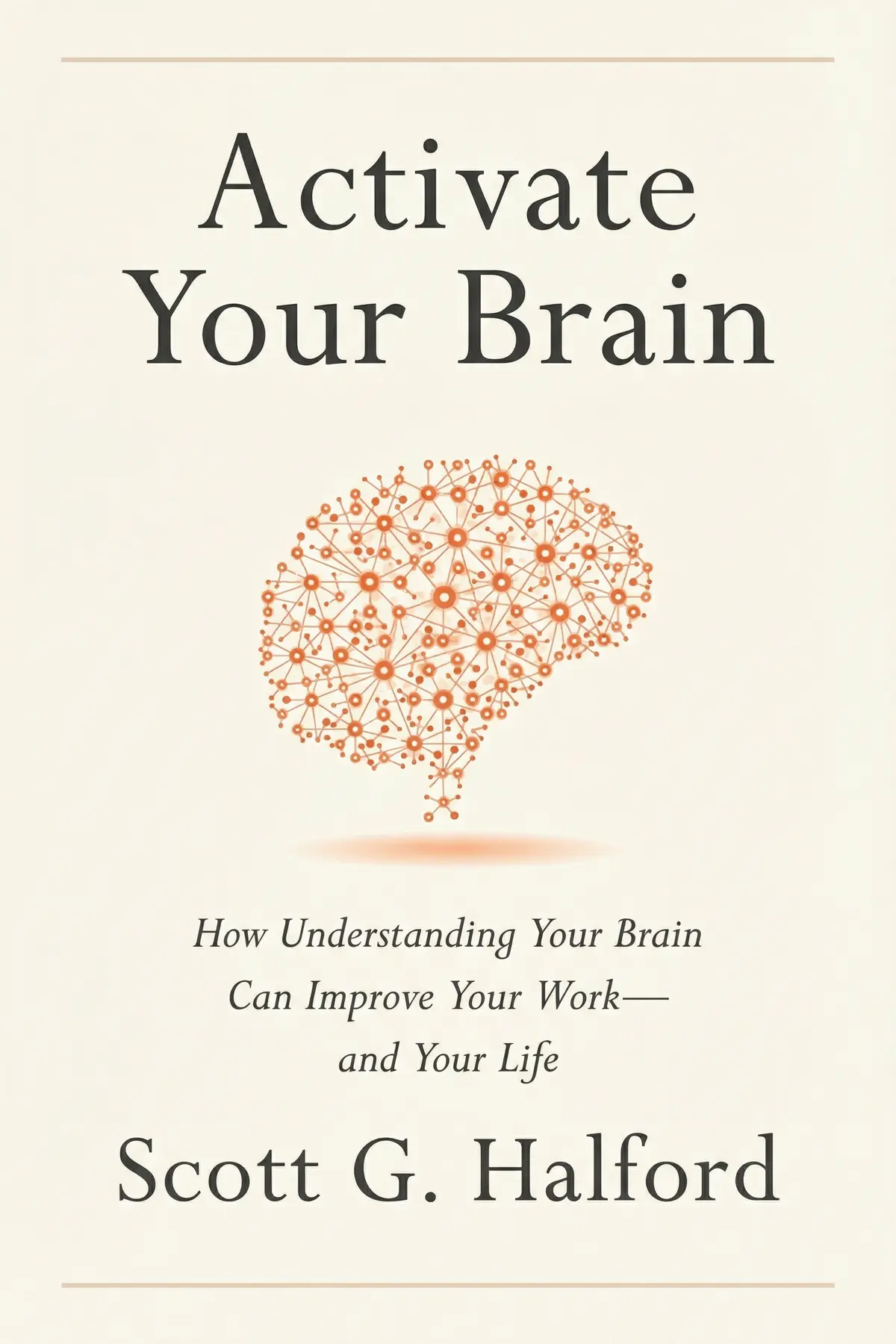
Activate Your Brain explores the intersection of neuroscience and daily performance, offering practical strategies to optimize focus, manage stress, and leverage brain chemistry for a more productive and fulfilling life.
1 min 51 sec
We often think of our brains as mysterious black boxes—complex machines that just happen to work, sometimes for us and sometimes against us. We experience moments of brilliant clarity where everything clicks, but we also face days of inexplicable fog, where even the simplest task feels like wading through molasses. You might wonder if you’re just not ‘wired’ for success or if there is some hidden trick to unlocking your full potential. The truth is far more encouraging. Your brain isn’t a fixed, unchangeable entity; it’s a dynamic organ that responds directly to how you treat it.
In this exploration of Activate Your Brain, we are moving away from the high-pressure world of ‘brain hacking’ that promises impossible results. Instead, we are looking at a grounded, scientifically backed manual for the most sophisticated tool you own. The goal here isn’t to turn you into a superhuman overnight, but to give you a clear understanding of the biological hardware running your life. By looking at the intersection of psychology and neuroscience, we can discover how tiny, manageable shifts in our daily routines—from the way we talk to our colleagues to the snacks we choose in the afternoon—can dramatically alter our mental output.
Throughout this journey, we will uncover the evolutionary legacy that still dictates our impulses today. We’ll learn why we share so much with our primate cousins and how we can use our unique human traits to keep those primal instincts in check. We’ll also dive into the ‘chemical soup’ of our emotions, discovering how to consciously influence the hormones that drive our motivation and stress levels. This isn’t just about working harder; it’s about working in harmony with your biology. Let’s get started by looking at the physical structure of the brain and how three distinct layers compete for control over your behavior.
2 min 27 sec
Discover how your mind is divided into three distinct evolutionary layers that often compete for control, from survival instincts to complex reasoning.
2 min 20 sec
Uncover how specific neurochemicals dictate your mood and motivation, and learn how you can consciously tilt the balance in your favor.
2 min 10 sec
Learn how your sense of agency directly impacts your happiness and how shifting your perspective can reduce anxiety and build lasting confidence.
2 min 10 sec
Examine the biological limits of your attention and why the popular idea of multitasking is actually sabotaging your brain’s productivity.
2 min 17 sec
Explore why the human brain is fundamentally social and how small gestures like high-fives can biologically improve team performance.
1 min 51 sec
Discover why ‘two heads are better than one’ is a biological reality and how to improve collective output through better communication.
2 min 05 sec
Learn how physical habits like exercise and nutrition provide the essential ‘Miracle-Gro’ your brain needs to repair and grow.
1 min 56 sec
Find out why doing nothing is actually one of the most productive things you can do for your mental clarity and problem-solving abilities.
1 min 34 sec
As we wrap up our journey through the mechanics of the mind, the central theme is clear: your brain is a remarkable, adaptive tool that functions best when you respect its biological boundaries. We’ve seen that we are essentially three-part beings, constantly balancing ancient survival instincts with modern logical goals. We’ve learned that our moods are not just random occurrences but the result of a chemical cocktail we can influence through our perspective and our lifestyle choices.
The takeaway is that you have more agency than you might think. By adopting an internal locus of control and focusing on small, manageable goals, you can trigger the reward systems that keep you motivated. By protecting your focus and avoiding the trap of multitasking, you can work more effectively while using less energy. And by prioritizing social connection, nutrition, and rest, you provide your brain with the optimal environment to thrive.
Start today with one small change. Maybe it’s drinking more water, or perhaps it’s setting a specific time to check your emails so you can stay in a ‘deep work’ state. Maybe it’s simply being more mindful of the ‘approach’ versus ‘avoidance’ mindset the next time a challenge lands on your desk. These aren’t just self-help tips; they are the user manual for your biology. When you understand how your brain works, you can stop fighting against yourself and start building the life and the performance you’ve always known you were capable of achieving. Your brain is ready to be activated—the rest is up to you.
Have you ever felt like you are working against your own mind? Many of us struggle with distractions, stress, and a lack of motivation without realizing that these are biological hurdles, not personal failures. Activate Your Brain serves as a comprehensive guide to understanding the mechanics of the human mind and using that knowledge to your advantage. It bridges the gap between complex neuroscience and everyday habit formation, showing how small shifts in behavior can lead to significant improvements in cognitive performance. The book promises a realistic path to self-improvement. Rather than suggesting overnight genius, it provides evidence-based tools for enhancing memory, boosting willpower, and fostering better social connections. By learning how the three main parts of the brain interact and how various chemicals dictate our moods, readers can take the driver's seat in their own lives. Whether it is through dietary changes, smarter goal-setting, or better rest, this summary outlines how to align your lifestyle with your brain's natural design to unlock a higher level of potential.
Scott G. Halford is an accomplished author and speaker specializing in achievement psychology, emotional intelligence, and critical thinking. An Emmy Award-winning producer, he was inducted into the National Speakers Association Hall of Fame in 2014. His expertise in the human element of performance is further showcased in his other published work, Be a Shortcut: The Secret Fast Track to Business Success.
Listeners find the material accessible and full of knowledge, with one individual pointing out that complicated details are shared concisely. Additionally, the text covers fundamental concepts regarding brain activation for daily use; one listener specifically notes it changed their outlook on everyday responsibilities. There is also praise for its engaging quality and usefulness across both career and home settings.
This book is a masterclass in making complex neuroscience actually useful for the average person. Scott G. Halford avoids the trap of being too academic, instead focusing on how our 'grey matter' dictates our daily successes and failures. I especially appreciated the sections on how to prevent mental decline through simple choices like better sleep and nutrition. It’s not just a collection of dry facts; it’s a practical guide to reclaiming your focus in a world designed to distract you. Personally, the way he explains the chemistry of the brain made me rethink my entire morning routine. If your brain feels like it's running on fumes by 3 PM, you need to read this. It’s succinct, highly informative, and surprisingly entertaining for a book about biology.
Show moreWow, I didn't think a book about the brain could actually be this relevant to my daily grind. I’m the kind of person who spends my evenings mindlessly browsing the internet because my brain feels totally exhausted after work. Halford explains exactly why that happens and how to fix it. The advice on 'brain-friendly' choices has honestly changed how I approach my afternoon slumps. Instead of reaching for more caffeine, I’m using the mental exercises he suggests. It’s rare to find a book that balances hard science with such easy-to-do steps. The way it’s written makes you feel like you’re actually in control of your biology. Highly recommended for anyone looking for a boost in energy and motivation.
Show moreAfter hearing a colleague rave about the productivity tips in here, I decided to give it a shot, and I’m so glad I did. The book is incredibly informative without being overwhelming. It covers everything from how to motivate a team during stressful times to the specific types of food that help fight off dementia. I found the focus on building trust through neurobiology particularly fascinating. It’s one thing to be told to be a good manager; it’s another to understand how trust affects the hormones in your employees' brains. It’s a practical, well-researched guide that has genuinely helped me improve my perspective on my career. This should be required reading for anyone in a high-pressure office environment.
Show morePicked this up because I wanted to understand the 'why' behind my procrastination and focus issues at work. To be fair, a lot of the advice—like breaking big tasks into smaller steps—isn't revolutionary, but the way Halford backs it up with brain science makes it stick better. He does a great job of explaining how the mammalian and reptilian brains fight for control over our decisions. It is a solid resource for managers trying to get the best out of their teams without causing burnout. The writing is clear, though it can get a bit heavy on jargon in the first few chapters before it settles into the real-world applications. It definitely helped me improve my perspective on daily tasks that used to feel overwhelming.
Show moreAs someone who constantly feels stressed, I found the foundation of this book incredibly grounding. Halford explains how the brain operates differently when it feels safe versus threatened, which explains so much about my workplace anxiety. The focus on 'brain-friendly' choices is a great way to frame habit building. I loved the practical tips on meditation and how specific foods can actually protect your brain cells from dementia. While some of the management advice felt like stuff I’ve read in relationship books before, applying it to a business environment was a fresh enough take. My only gripe is that it occasionally feels a bit too 'rah-rah' American self-help, but the underlying science is strong enough to keep it credible.
Show moreEver wonder why you make terrible decisions when you are tired? This book dives deep into that exact problem. It’s a very practical look at how we can use our biology to our advantage rather than fighting against it. Truth is, I’ve always known that exercise and sleep are important, but seeing the actual neurological impact of those choices was the kick in the pants I needed. The author does a great job of encouraging the reader without being overly cheesy. It’s especially relevant for anyone in a leadership role who wants to foster better collaboration and trust within their team. Some parts are a bit slow, but the overall takeaway is worth the time. It is a very informative read for your daily life.
Show moreFinally got around to reading this after seeing it recommended for office productivity, and it’s actually quite useful. The first part focuses heavily on willpower and confidence, which was exactly what I needed to hear. I like how Halford transitions from the 'nitty-gritty' science in the beginning to the very practical exercises in the second half. The section on how chemistry affects our brain was a highlight for me. It’s a detailed jumping-off point for anyone interested in why we act the way we do. Some of the 'real-life' examples felt a bit manufactured, but the actionable steps for meditation and focus are easy to implement. It’s a good travel companion that actually leaves you with something to think about.
Show moreNot what I expected when I saw the cover, as I was hoping for a lighter, more breezy self-help guide filled with quick motivational tricks. Instead, the book feels quite dense and plodding at times. I’m really not a fan of the common self-help trope where the author introduces a friend named 'Marie' to illustrate every single point. It feels a bit patronizing. However, the science isn't just 'mumbo-jumbo'—there is real substance here if you are willing to slog through the anecdotes. The bullet points at the ends of the chapters were my saving grace, allowing me to skim the fluff and get to the meat of the advice. It's a decent refresher course on common sense, but it didn't exactly blow my mind.
Show moreLook, the advice here is solid, but if you have read more than two self-help books in the last decade, you have heard most of this before. The 'brain activation' hook is mostly a way to frame standard advice on diet, exercise, and mindfulness. To be fair, the author is a good writer and he presents the information in a way that is very easy to understand for a layperson. I appreciated the emphasis on how small choices compound over time to create new behaviors. It’s a nice refresher, and the price is right for what you get. I’d recommend it to someone who is new to the genre, but seasoned self-improvement junkies might find it a bit basic.
Show moreGotta say, this felt like a lot of repackaged common sense hidden under a thin veneer of neuroscience jargon. Most of the advice is things we’ve all heard a million times: eat your veggies, get some sleep, and don't be a jerk to your coworkers. Just seems like the same old, same old pablum that gets churned out in the business self-help world every year. The author uses terms like 'reptilian brain' to make basic psychological concepts sound more scientific than they actually are. It’s a very light read if you skip the anecdotes, but I didn't find much here that I couldn't have found in a five-minute blog post. If you're looking for deep, cutting-edge science, keep looking. This is for beginners only.
Show moreRichard Wiseman


William B. Irvine
Andrew D. Thompson
Deepak Chopra
AUDIO SUMMARY AVAILABLE
Get the key ideas from Activate Your Brain by Scott G. Halford, plus 5,000+ more titles in English and Thai.







