
8 min 12 sec
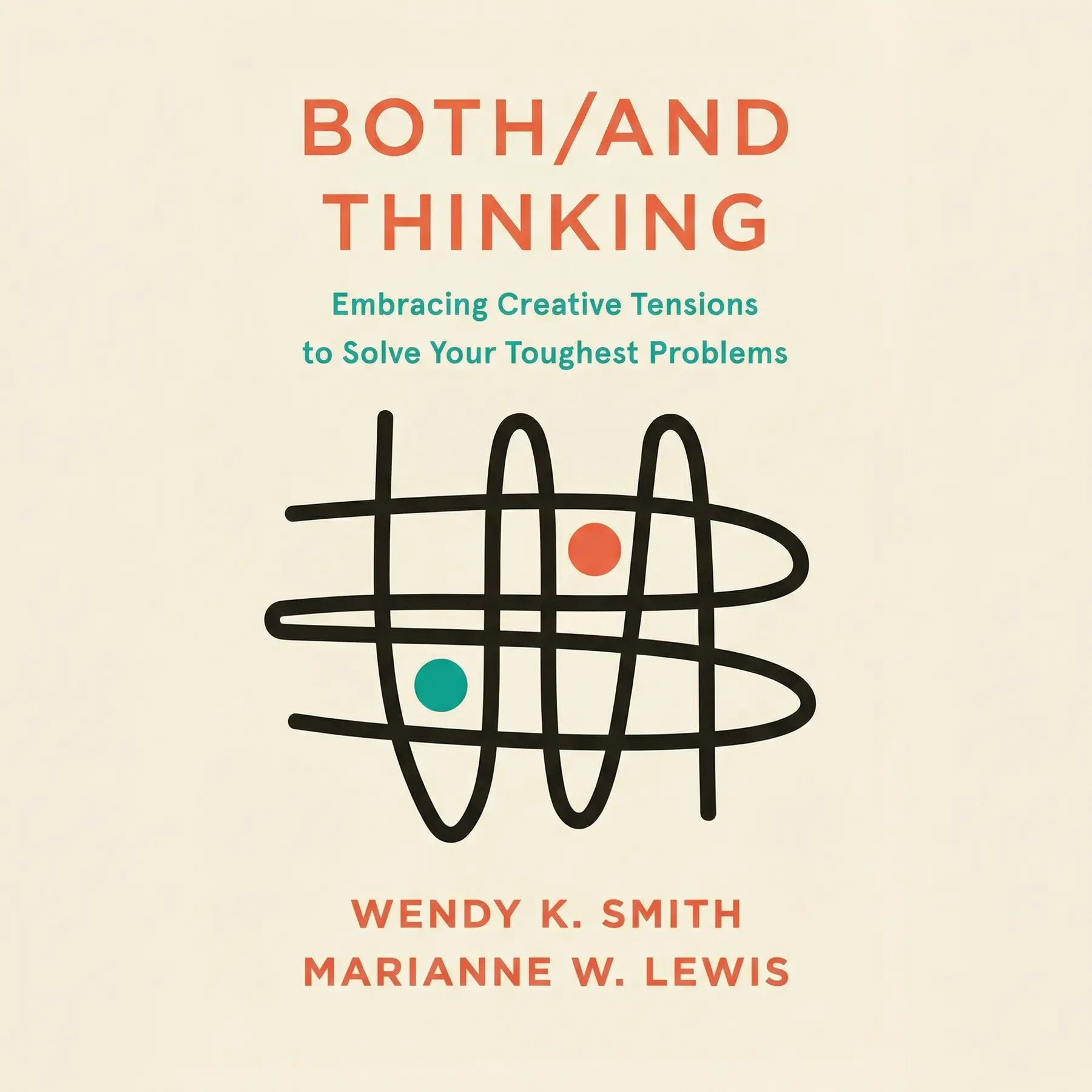
Both/And Thinking: Embracing Creative Tensions to Solve Your Toughest Problems
Discover how to navigate life’s most difficult dilemmas by moving beyond either/or choices and embracing the power of paradox to unlock creativity, sustainable growth, and personal fulfillment.
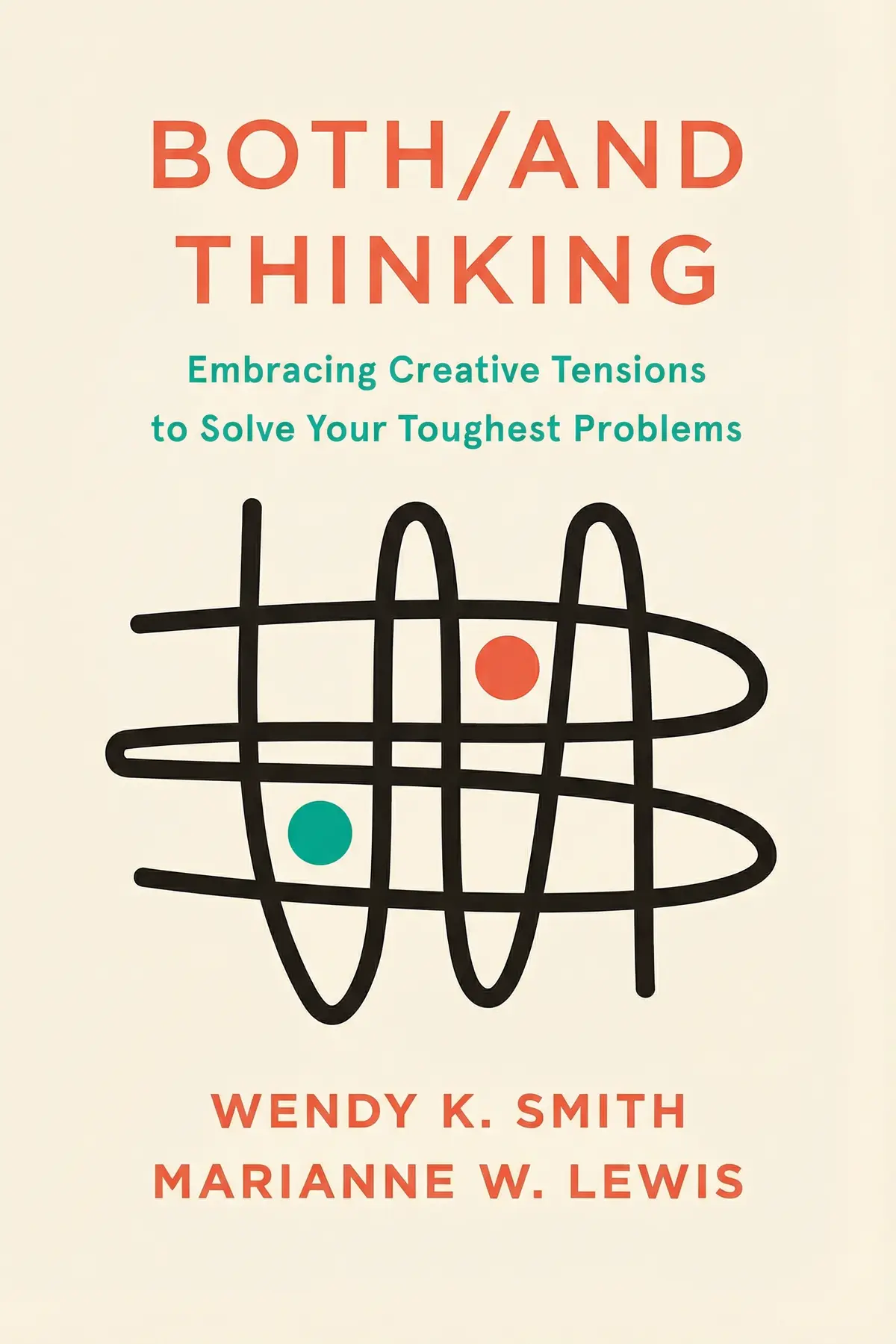
Table of Content
1. Introduction
1 min 07 sec
Have you ever felt like life is just one long list of impossible choices? Perhaps you’ve struggled to balance the demands of a high-pressure career with the desire for a meaningful home life. Or maybe you’ve been part of a business that had to decide between sticking to its traditional roots or pivoting toward a risky, innovative future. Usually, we treat these situations as dilemmas—forks in the road where we must pick one path and abandon the other. We call this either/or thinking. It’s a mental trap that makes us feel like every gain in one area must come at a cost in another.
But what if there was a third option? What if the very things that seem to be in conflict are actually two sides of the same coin? This is the heart of the throughline we are exploring today: the shift from viewing tensions as problems to viewing them as paradoxes. A paradox isn’t something to be fixed; it is a persistent reality to be managed. By learning to embrace these tensions, you can stop compromising and start creating. In the following sections, we will explore the mental frameworks and practical strategies that allow you to hold two opposing ideas at once, ultimately leading to more resilient and creative outcomes.
2. Strategies for Integration and Balance
1 min 53 sec
Explore two distinct mental models—the hybrid and the balancer—to help you navigate conflicting priorities without feeling like you’ve lost out on either side.
3. The Four Foundations of a Paradox Mindset
2 min 18 sec
Master the ABCDs of both/and thinking to transform how you perceive truth, set boundaries, and handle the discomfort of uncertainty.
4. Transforming Organizations Through Tension
1 min 51 sec
Learn how a global giant used the friction between profit and purpose to spark a corporate revolution and secure its future.
5. Conclusion
1 min 03 sec
In the end, moving toward a both/and mindset is about more than just solving a single problem; it’s about changing your relationship with reality. We often spend our lives waiting for the moment when everything finally balances out and the conflicts disappear. But as we’ve seen, those conflicts—those paradoxes—are where the growth happens. They are the friction that creates the spark.
Think of it like serendipity. We often view lucky breaks as random events, but they are frequently the result of being prepared to see a connection where others only see a mistake. When you stop trying to eliminate tension and start trying to use it, you become more observant and more creative. You begin to see opportunities for synergy in every challenge. So, the next time you feel caught between two impossible choices, take a breath. Don’t rush to pick a side. Instead, look for the mule or find your balance on the tightrope. By embracing both sides of the coin, you don’t just solve problems—you open up a world of new possibilities.
About this book
What is this book about?
We are often told that life is a series of trade-offs. We believe we must choose between profit and purpose, work and family, or stability and change. This book challenges that fundamental assumption, arguing that the most successful individuals and organizations don't choose—they embrace both. By shifting from an either/or mindset to a both/and perspective, we can stop seeing conflict as a problem to be solved and start seeing it as a source of energy and innovation. Through practical frameworks and real-world examples, this guide provides a roadmap for navigating the inherent tensions of the modern world. It promises to transform how you approach decision-making by teaching you how to hold competing ideas simultaneously. Instead of sacrificing one priority for another, you will learn to integrate them, finding creative solutions that honor the complexity of reality.
Book Information
About the Author
Wendy K. Smith
Wendy Smith serves as a professor of management at the University of Delaware, while Marianne Lewis is the dean of the Lindner School of Business at the University of Cincinnati. Both authors are recognized as leading experts in organizational paradox. Their extensive research focuses on how various entities, from major corporations to government bodies, can thrive by effectively managing paradoxical demands.
Ratings & Reviews
Ratings at a glance
What people think
Listeners find the text accessible and value its scholarly perspective, with one listener characterizing it as a must-read. They also find the content intellectually stimulating, with one noting it offers vital insights into navigating tensions. Feedback on the writing is split; some find it unengaging, while one listener mentions it is authored by business school professors.
Top reviews
Madison
Ever wonder why you feel trapped by impossible dilemmas where every choice seems like a compromise? Wendy Smith and Marianne Lewis offer a truly liberating path out of that trap by teaching us how to embrace paradox rather than fear it. This is a thought-provoking deep dive into mental flexibility that shifted my entire perspective on conflict. Not gonna lie, the pace can be a bit deliberate at times, but the depth of research makes every chapter feel essential. I especially appreciated the way they bridge the gap between academic theory and practical inclusionary thinking. It has made me a wiser, calmer leader who can now see the 'both/and' potential in situations that previously felt like dead ends. Highly recommend for anyone ready to upgrade their brain's operating system.
Show moreConnor
Wow, this really changed the way I approach conflict in my personal and professional life by offering a path out of the binary trap. Wendy Smith and Marianne Lewis have created something truly special here that goes beyond simple decision-making. I’ve gone from making swift, sometimes impulsive choices to pausing and finding the fascinating opportunities between the alternatives. In my experience, the 'Both/And' approach makes you a more inclusive thinker and a more resilient human being. The writing is deep, smart, and puts expertise to immediate use in a way that feels both practical and poetic. It’s rare to find a book that offers such essential lessons on addressing the tensions of the world while remaining so readable. Truly a game-changer.
Show moreAlice
Finally got around to reading this and it’s become essential for my management team as we navigate a very difficult transition. The chapters on convergent versus divergent thinking were particularly enlightening for us. I love how the authors brought the possibilities of 'both/and' to vivid life through their research. It’s helped me become calmer in the face of chaos, seeing impossible choices as chances for innovation instead of just problems to be solved. Frankly, I think every leader should have a copy of this on their desk. It’s accessible, well-researched, and provides a clear path forward when you feel stuck between two equally important priorities. This is the kind of book you’ll find yourself highlighting on almost every single page.
Show moreDen
As someone who struggles with 'either/or' decision fatigue, I found this quite refreshing and surprisingly practical for a book written by business school professors. The authors explore the science of the 'paradox mindset' in a way that feels both rigorous and accessible. Truth is, our minds crave consistency so much that we often shut down when faced with competing priorities, but this book gives you the tools to pause and find the middle ground. Some sections felt a little slow, and I can see why people might find the business focus a bit heavy. However, the insights on divergent thinking are gold. It’s not just for CEOs; it’s for anyone trying to navigate the messy realities of modern life. It’s an essential read for those looking to master the art of the 'and'.
Show moreZoe
After hearing about the 'paradox framework' in several circles, I finally dug into the source material and found it to be a very solid study. The authors do a nice job of explaining how to move from convergent to divergent thinking, which is crucial in today's chaotic environment. While the pace is a bit slow and the writing can feel a tad academic, the actual content is actionable if you're willing to put in the mental work. I loved the summaries at the end of the chapters because they really help distill the main points. Gotta say, it's not a light beach read, but it's an important one for anyone in a leadership role. It taught me essential lessons on how to sit with tension rather than rushing to a premature conclusion.
Show moreOrm
Look, I’ll be the first to admit that academic writing can be a slog, but the insights here are worth the effort for anyone facing complex dilemmas. This book is a fascinating study in mental flexibility that challenges our natural craving for simple answers. The authors use a mix of science and storytelling to illustrate how we can thrive by embracing contradictions. To be fair, some of the examples are ones I’ve seen before, but the way they are framed within the paradox mindset feels fresh. I found the section on inclusionary thinking to be particularly relevant in today’s polarized climate. It’s a thought-provoking read that requires patience, but it rewards you with a much more nuanced way of looking at the world.
Show moreEthan
Picked this up after hearing the authors on a podcast, and while the core idea is strong, the delivery is a bit hit-or-miss. Many of the examples they use—like the classic man in a gorilla suit experiment—have been quoted so many times in other books that they feel recycled. Frankly, I think Barry Johnson’s work on 'Polarities' offers a much more robust process for handling these kinds of systemic tensions. To be fair, Smith and Lewis do include his work, which shows they’ve done their homework, but the book often feels like a corporate-academic hype fest. The charts and summaries are useful for visualization, though the overall tone can be a bit pompous. It’s a decent enough starting point if you’ve never explored paradox, but experienced readers might find it redundant.
Show moreManee
The truth is, this is a solid business book that could have been a great general-interest one if it wasn't so narrowly focused. I wasn't sold on the beginning because it felt too geared toward corporate environments, which made it hard for me to relate as a non-leader. Still, the research is well-done and the conceptualization of conflict as a paradox is helpful. I just wish they had gone deeper into personal applications rather than sticking so close to the boardroom. Some of the stories felt a bit 'packaged' and lacked the punch of authors like the Heath brothers. It’s a bit of a mixed bag for me—valuable skills are definitely buried in here, but you have to wade through a lot of vague business speak to find them.
Show moreChon
This book feels like a missed opportunity because the authors bury their core message under a mountain of business school jargon. While the concept of 'Both/And' thinking is valid, the execution here is remarkably dry and repetitive. Personally, I found the stories failed to engage me, feeling more like forced corporate case studies than genuine human experiences. If you want insightful storytelling about decision-making, you are much better off sticking with something by Chip and Dan Heath or even Annie Duke. The authors keep insisting their solutions are revolutionary, but to be fair, they mostly just describe the tensions without giving clear, actionable steps to resolve them. It was a frustrating experience that left me feeling like I’d just sat through a very long, very expensive lecture.
Show moreGabriel
Not what I expected at all, and I found the entire experience quite grating. The book claims to provide solutions for complex problems, but it mostly just circles around vague academic concepts without ever landing on anything concrete. Look, if you’re a fan of business school buzzwords and circular logic, you might enjoy this, but for me, the term 'paradox' started to feel like a bludgeon by the end. I listened to the audiobook version and the narrator’s tone was extraordinarily pompous, which only highlighted how self-important the writing felt. I’d much rather read Malcolm Gladwell if I wanted engaging stories that actually lead somewhere. This just felt like a collection of boring observations packaged as a groundbreaking framework. Save your time and your money.
Show moreReaders also enjoyed
7 Powers: The Foundations of Business Strategy
Hamilton Helmer

A Bigger Prize: How We Can Do Better Than the Competition
Margaret Heffernan
A Year with Peter Drucker: 52 Weeks of Coaching for Leadership Effectiveness
Joseph A. Maciariello
AUDIO SUMMARY AVAILABLE
Listen to Both/And Thinking in 15 minutes
Get the key ideas from Both/And Thinking by Wendy K. Smith, plus 5,000+ more titles in English and Thai.
- 5,000+ titles
- Listen as much as you want
- 7-day free trial
- Cancel anytime







