


17 min 54 sec
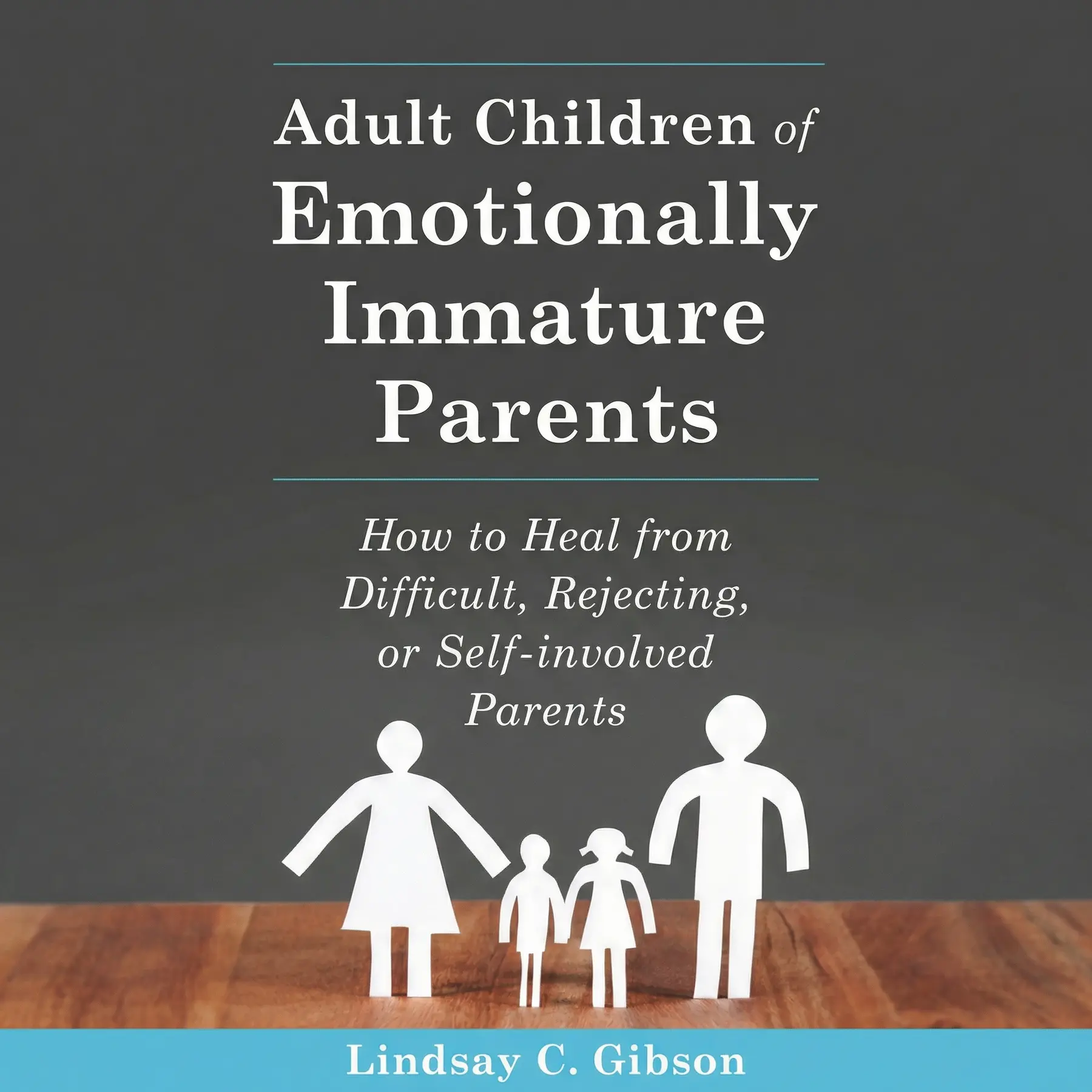
Adult Children of Emotionally Immature Parents: How to Heal from Difficult, Rejecting, or Self-involved Parents
Discover why growing up with emotionally distant parents leads to adult loneliness. This guide provides tools to identify immature behaviors, set boundaries, and build authentic, fulfilling relationships beyond childhood trauma.
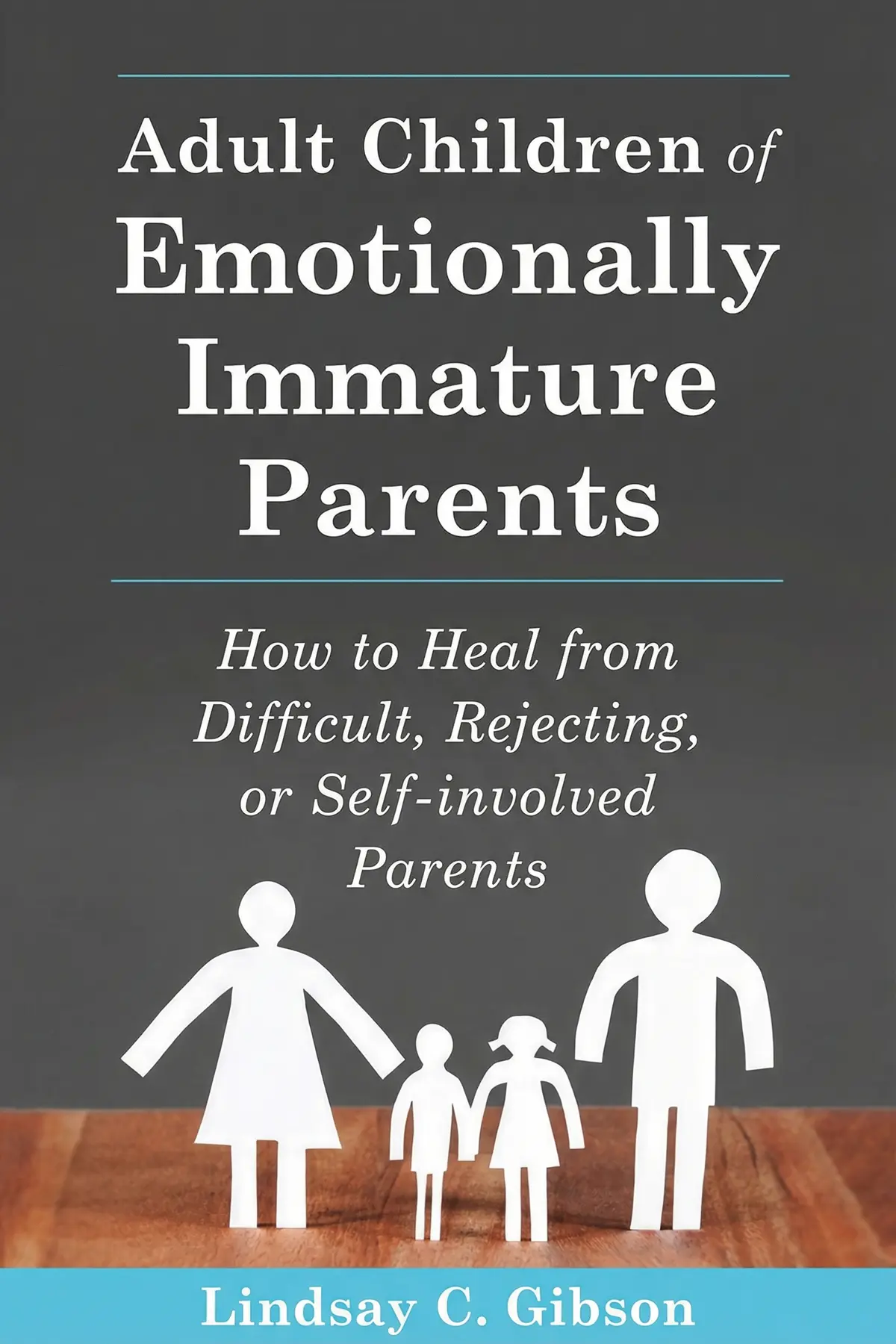
Table of Content
1. Introduction
1 min 49 sec
We often grow up with the unquestioned belief that maturity is a natural byproduct of aging. We assume that by the time someone becomes a parent, they have developed the emotional tools necessary to nurture a child’s inner world. But for many, this assumption is a painful myth. There are countless adults who were raised by parents who, despite their chronological age, remained stuck in a state of emotional adolescence. These parents might have been excellent providers of food, clothing, and shelter, yet they were completely out of their depth when it came to providing emotional safety and intimacy.
When a child is more emotionally perceptive than their caregiver, a strange and lonely dynamic takes hold. The child learns early on that their deepest feelings are a burden or an inconvenience. This creates a hidden wound—a sense of emotional loneliness that can persist long into adulthood, influencing everything from career choices to romantic partnerships. The tragedy is that these adult children often feel guilty for their unhappiness, wondering why they feel so empty despite having ‘everything they needed’ on paper.
In this exploration of the work of clinical psychologist Lindsay C. Gibson, we are going to pull back the curtain on the silent epidemic of emotional immaturity. We will look at why some parents are incapable of empathy, how children adapt to this neglect through specific personality types, and, most importantly, how you can begin to heal. This isn’t just about understanding the past; it’s about developing a new way of relating to your parents and yourself. We’ll learn how to stop being the family’s emotional caretaker and start building a life defined by your own authentic needs. Let’s begin by looking at the core of the problem: the profound isolation that comes from a lack of emotional closeness.
2. The Root of Emotional Loneliness
2 min 04 sec
Ever wonder why you feel alone even in a room full of family? We explore the hidden impact of emotional loneliness and why identifying its source is the first step toward reclaiming your peace.
3. The Architecture of Emotional Immaturity
2 min 14 sec
Is it just stress, or is it a personality pattern? Discover the core traits shared by emotionally immature parents, from their deep-seated narcissism to their inability to acknowledge their own mistakes.
4. The Four Profiles of Parental Immaturity
2 min 16 sec
From the volatile ‘Emotional’ parent to the distant ‘Rejecting’ one, we break down the four distinct parenting styles that leave children feeling unsupported and how each leaves its own unique mark.
5. Internalizers and Externalizers
2 min 13 sec
Are you an internalizer or an externalizer? Learn how your childhood survival mechanisms dictated how you handle stress today and why your natural sensitivity might be your greatest strength.
6. The False Self and Healing Fantasies
2 min 01 sec
We often create mental escapes and false identities just to cope with neglect. Discover how ‘healing fantasies’ and ‘role-selves’ keep us trapped in the past and how to start living authentically.
7. The Maturity Awareness Approach
1 min 57 sec
Learn the three-step ‘maturity awareness approach’ to transform your interactions with difficult parents. It’s time to stop reacting and start observing so you can protect your inner peace.
8. Finding Real Connection
1 min 50 sec
Breaking the cycle means knowing what real maturity looks like. We identify the hallmarks of emotionally healthy people, helping you build a future filled with genuine connection and mutual respect.
9. Conclusion
1 min 30 sec
The journey of an adult child of emotionally immature parents is one of moving from confusion to clarity. For a long time, you may have felt like there was something fundamentally broken within you, simply because you couldn’t find the connection you needed with the people who were supposed to love you most. But as we’ve seen, the problem was never your worth; it was the limited capacity of your caregivers. They simply didn’t have the tools to meet your emotional needs, and that reality—while painful—is the truth that sets you free.
Healing isn’t about achieving a perfect relationship with your parents. Sometimes, the healthiest choice is to maintain a respectful, distant relationship managed through observation. Other times, it may mean setting firm boundaries that the parent may never understand. The real victory is reclaiming your authentic self. It’s about letting go of the role you were forced to play and the fantasy that someone else will finally ‘fix’ your childhood.
As you move forward, remember that your sensitivity and your desire for connection are your greatest strengths, not your weaknesses. You have the power to break the generational cycle of emotional neglect. By seeking out mature relationships and honoring your own feelings, you are creating a new legacy—one of intimacy, self-awareness, and genuine peace. You are no longer defined by what you didn’t receive; you are defined by the life you are now choosing to build for yourself.
About this book
What is this book about?
Many adults carry a persistent, unnameable sense of isolation that stems from a childhood where their emotional needs were neglected. While their parents may have provided physical necessities, they lacked the maturity to offer true connection. This summary explores the profound psychological impact of being raised by individuals who are emotionally unavailable, self-involved, or volatile. By categorizing the different types of emotionally immature parents and the coping mechanisms children develop—such as becoming an 'internalizer' or creating a 'role-self'—the guide offers a path toward clarity. You will learn how to shift from a reactive state to one of calm observation, allowing you to manage difficult family dynamics without losing your sense of self. The ultimate promise is one of liberation: moving past old fantasies of parental change to find genuine intimacy with others who are capable of meeting you as an equal.
Book Information
About the Author
Lindsay C. Gibson
Lindsay C. Gibson, PsyD, is a clinical psychologist who specializes in psychotherapy for adult children of emotionally immature parents. She is also the author of Who You Were Meant to Be and contributes a monthly wellness column to Tidewater Women magazine.
Ratings & Reviews
Ratings at a glance
What people think
Listeners find this work both educational and simple to grasp, with one listener highlighting that it is written in Lehman terms. They value the transformative insights that assist in identifying emotions and healing from old wounds, as one listener remarked that it saved them 10 years of therapy. This title receives praise for its useful guidance and its capacity to guide audiences toward deeper connections, with multiple listeners labeling it a must-read.
Top reviews
Marco
This book acts like a mirror for anyone who felt 'off' in their childhood but couldn't pinpoint why. Lindsay Gibson breaks down the concept of emotional immaturity in a way that feels incredibly validating, almost as if she’s been a fly on the wall during your most awkward family dinners. I finally understand the difference between being physically cared for and being emotionally seen. The sections on internalizers really hit home for me. It’s a lot to process, and some of the realizations are painful, but it feels like I’ve skipped ten years of wandering in the dark. If you’ve ever felt like your parent was a child in an adult’s body, this is required reading.
Show moreMats
Picked this up after a recommendation from my counselor, and frankly, it changed the trajectory of my life. For the longest time, I thought I was the problem, but seeing the 'four types of emotionally immature parents' listed out allowed me to categorize my experiences objectively. The author writes with immense empathy, which makes the hard truths much easier to swallow. It isn’t just about blaming your parents; it’s about realizing why you seek out certain unfulfilling relationships as an adult. The language is simple, clear, and avoids unnecessary jargon. I’m already planning to re-read the sections on setting boundaries next week.
Show moreBua
The chapter on the 'driven' parent was a total revelation for me because it challenged my definition of what a 'good' parent looks like. We often think that as long as a parent is providing and pushing for success, they are doing their job, but Gibson shows the hollow center of that dynamic. This book is written in what I’d call 'layman's terms,' making it incredibly easy to digest during a commute or before bed. It doesn't shy away from the reality that some parents will never change. Accepting that fact is the first step toward actual freedom. It’s a must-read for anyone feeling stuck in old family patterns.
Show moreNarong
As someone who spent most of their childhood trying to be invisible to avoid conflict, this book felt like a professional finally putting words to my silence. Gibson’s tone is incredibly compassionate, almost like a warm therapist sitting across from you. She helps you navigate the 'guilt trap' that often comes with setting boundaries with aging parents who haven't grown up emotionally. I loved how she highlighted that internalizers are often the ones who seek out therapy because they believe they can fix things from the inside out. It’s a profound shift in perspective. Honestly, I think every adult child should have a copy of this on their shelf.
Show moreTitiluck
Truth is, I was skeptical about the 'easy to understand' praise, but Gibson manages to explain complex attachment patterns without sounding condescending or clinical. She identifies that vague sense of loneliness that many high-functioning adults carry around and traces it back to its source. The advice on 'observation' rather than 'engagement' when dealing with immature parents is a game-changer for holiday visits. It’s not a magic cure-all, but it sets you on a path to more meaningful, reciprocal relationships. I’ve recommended this to three friends already because it’s just that insightful. It truly is a life-changing piece of literature for the right person.
Show moreLeila
Ever wonder why you feel like an island in a sea of people who don't quite understand your emotional depth? Gibson explores the 'internalizer' personality type with such precision that it’s almost spooky. While the book is quite clinical in its theories, the writing remains accessible to the average reader. My only real gripe is that it focuses so heavily on identifying the problem rather than providing a step-by-step manual for the solution. To be fair, she does offer some strategies for interacting with difficult parents, but they feel a bit high-level compared to the diagnostic parts. Still, it’s a foundational text for anyone starting their healing journey.
Show moreJonathan
After hearing so much about how this book 'saved' people, I went in with very high expectations. For the most part, Gibson delivers by shining a light on the subtle ways emotional neglect manifests in adulthood. I appreciated the deep dive into how 'externalizers' and 'internalizers' clash, though I think the book is a bit biased against the former group. Personally, I found the checklists to be the most helpful part of the entire experience. They helped me realize that my parent’s inability to handle my feelings wasn’t a reflection of my worth. It’s a heavy emotional lift, but definitely worth the effort for the peace of mind it brings.
Show moreDylan
Finally got around to reading this staple of the self-help world, and it mostly lived up to the hype. The framework for understanding emotional maturity is genuinely freeing, and I’ve already started using some of the communication techniques she suggests. My only complaint is that the book doesn't spend enough time on how to stop yourself from repeating these same immature behaviors with your own kids. You spend so much time looking backward that you might miss the ways you’ve picked up those same defenses. Regardless, it’s a solid 4-star read for the clarity it provides on childhood wounds. It's informative without being overly dense.
Show moreRohan
Wow, talk about a polarizing read that makes some heavy assumptions. I found the descriptions of emotional immaturity to be a bit vague and subjective at times, almost like a personality quiz where every answer leads to the same conclusion. Gibson argues that your current unhappiness is directly linked to your parents' limitations, but the evidence feels anecdotal rather than strictly scientific. Look, there are definitely 'useful morsels' scattered throughout the chapters, especially regarding how to protect your own energy. However, the methodology feels a bit shaky if you're looking for something rooted in peer-reviewed data. It’s helpful if you just want validation, but read it with a grain of salt.
Show moreTang
Not what I expected from a clinical psychologist, especially given the way it categorizes people into such rigid, almost 'Buzzfeed-style' boxes. While I see why people find it validating, I felt the book was overly harsh toward those it labels as 'externalizers.' To be fair, it seems to conflate externalizing behaviors with being an abuser, which ignores a lot of nuance regarding neurodivergence and trauma responses. It also assumes that the reader is always the 'virtuous internalizer' victim. If you’re looking for a nuanced, research-heavy look at family systems, this might feel a bit too simplistic and biased. It lacks the neutrality needed for such a complex topic.
Show moreReaders also enjoyed
Alcoholics Anonymous
Alcoholics Anonymous World Services
A Liberated Mind: How to Pivot Toward What Matters
Steven C. Hayes
AUDIO SUMMARY AVAILABLE
Listen to Adult Children of Emotionally Immature Parents in 15 minutes
Get the key ideas from Adult Children of Emotionally Immature Parents by Lindsay C. Gibson, plus 5,000+ more titles in English and Thai.
- 5,000+ titles
- Listen as much as you want
- 7-day free trial
- Cancel anytime







