
1929: Inside the Greatest Crash in Wall Street History--and How It
Andrew Ross Sorkin
Explore the dramatic intersection of extreme wealth and systemic corruption in Brazil. This summary uncovers the lives of the nation’s elite and the precarious foundations of an economy built on patronage.
2 min 02 sec
When many people think of Brazil, their minds immediately drift toward the vibrant energy of Carnival, the iconic silhouette of the Christ the Redeemer statue overlooking Rio, and the rhythmic sway of samba. It is a country that occupies a massive space in the global imagination as a land of sunshine and celebration. But behind this polished exterior lies a much more complicated and often turbulent story. As the fifth-largest nation in the world and a dominant force in the Southern Hemisphere, Brazil holds a unique position. In the early 2000s, it was hailed as a rising star, a member of the elite group of emerging economies known as the BRIC nations. Alongside China, India, and Russia, Brazil was expected to redefine the global balance of power.
Yet, while other members of that group continued to climb, Brazil’s trajectory took a sharp and painful turn. The optimism of the early millennium was replaced by a landscape of scandal, economic contraction, and social unrest. To understand how a nation with such immense natural resources and human potential could find itself in such a mess, we have to look at the people at the very top. We have to look at the ‘Brazillionaires’—the handful of individuals who control the lion’s share of the nation’s wealth and, by extension, its destiny.
In this exploration, we will move past the tourist clichés to examine the structural forces that define Brazilian life. We will see how a history of patronage and a labyrinth of bureaucracy have created a system where success is often more about who you know than what you build. We will trace the story of the country’s most famous billionaire, whose rise and fall serves as a perfect metaphor for the nation’s economic rollercoaster. By the end, you’ll see that the story of Brazil’s elite isn’t just about money; it’s a window into the soul of a country caught between a bright future and a heavy past.
2 min 45 sec
Discover the staggering reality of daily life in Brazil, where citizens must navigate a maze of red tape and crumbling public services just to survive.
2 min 24 sec
Uncover how Brazil’s history of royal titles and military alliances created a modern culture where business success is tied to government connections.
2 min 20 sec
Explore the shocking disparity in the Brazilian justice system, where the powerful use loopholes to avoid accountability while the poor face immediate punishment.
2 min 34 sec
Step into the world of Brazil’s once-richest man, who built a multibillion-dollar empire on charisma, promises, and ‘prospective’ oil.
2 min 21 sec
Witness the dramatic collapse of Brazil’s economic confidence as Eike Batista’s empire crumbled and a presidential impeachment shook the nation.
1 min 48 sec
The story of the ‘Brazillionaires’ is ultimately a cautionary tale about the dangers of concentrated wealth and institutionalized corruption. We have seen how a nation with every natural advantage—from vast oil reserves to a strategic global position—can still be held back by the weight of its own history. The transition from the optimism of the BRIC years to the reality of economic collapse and political scandal reveals a fundamental truth: a country’s success cannot be sustained by a handful of individuals at the top if the foundation beneath them is crumbling.
As we’ve explored, the daily lives of most Brazilians are defined by a struggle against a Kafkaesque bureaucracy and a lack of basic services. Meanwhile, the elite have historically operated in a world of patronage and legal double standards, where connections matter more than competence. The spectacular rise and fall of Eike Batista serves as the ultimate metaphor for this era—a period where image was often mistaken for substance, and where the promise of the future was sold to hide the rot of the present.
However, the story of Brazil is not yet finished. The very fact that these scandals have come to light and that powerful figures have faced accountability suggests a nation in the midst of a painful but perhaps necessary reckoning. The throughline of this narrative is that true prosperity requires more than just high commodity prices; it requires transparent institutions, a fair legal system, and an investment in the people who live in the favelas, not just those in the boardrooms. As Brazil looks toward the future, the challenge will be to dismantle the old systems of patronage and build a country where hope is not just a slogan for the wealthy, but a reality for everyone.
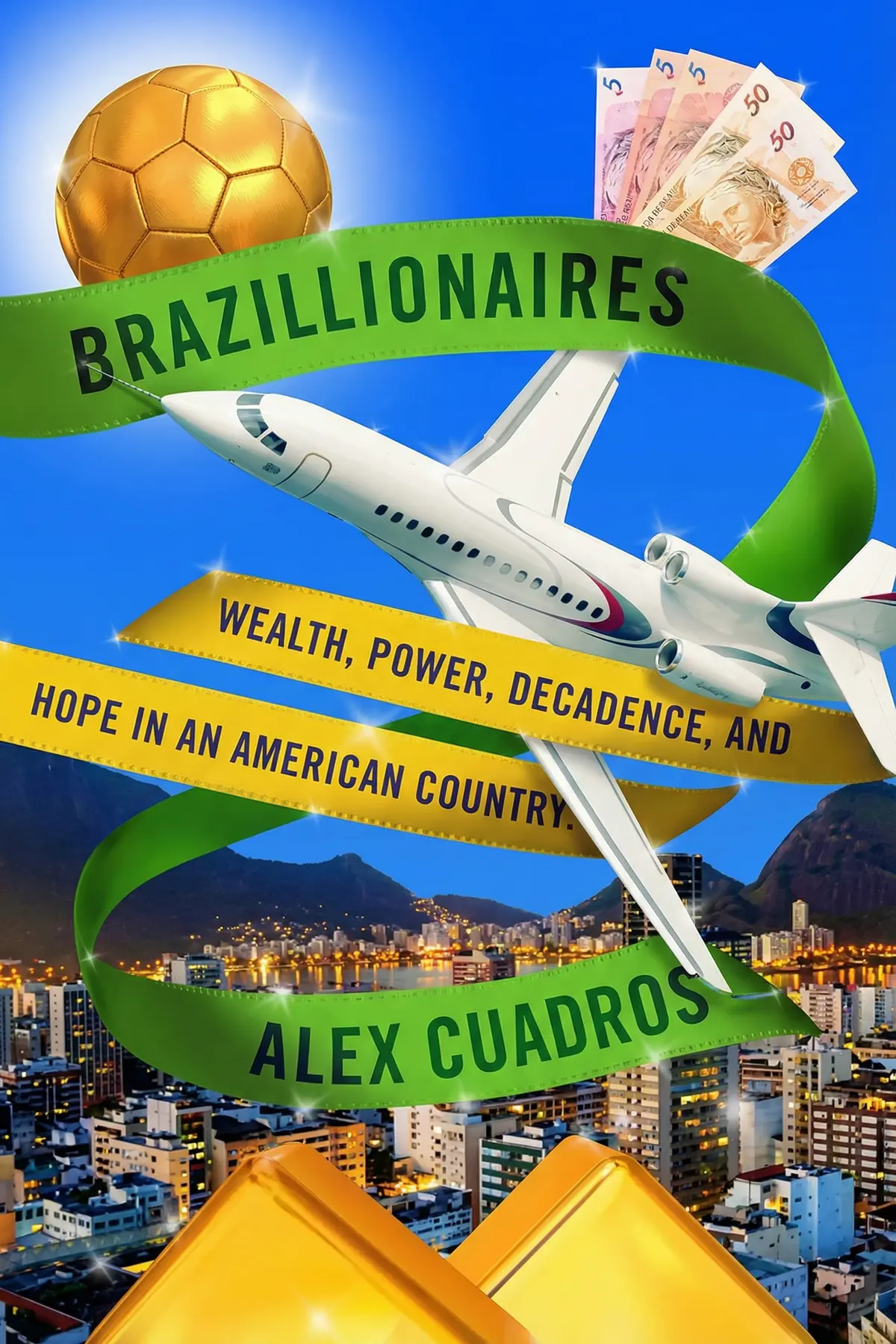
Brazillionaires offers an eye-opening journey into the hidden world of Brazil’s ultra-wealthy elite. While the world often views Brazil through the lens of vibrant festivals and scenic beaches, this narrative pulls back the curtain on a far more complex reality. It traces the rise of the country’s most powerful figures, revealing how their massive fortunes are often inextricably linked to a deep-seated culture of political favoritism and historical patronage. The book explores the startling contrast between the lives of the super-rich, who control iconic global brands, and the everyday struggles of ordinary citizens navigating a broken bureaucracy. Through the spectacular rise and catastrophic fall of figures like Eike Batista, readers gain a profound understanding of why the Brazilian economic miracle eventually faltered. Ultimately, it provides a sobering look at how systemic inequality and institutionalized corruption can create a fragile economic bubble, offering a cautionary tale about the true cost of concentrated power in an emerging global powerhouse.
Alex Cuadros is a distinguished journalist whose writing has been featured in major publications such as the New York Times, the Washington Post, Bloomberg Businessweek, Mother Jones, and the Nation. To report on the complex world of the Brazilian elite, he lived in São Paulo for over five years, conducting extensive research for his debut book, Brazillionaires.
Listeners find this work both engaging and educational, highlighting the superior prose and succinct language. They enjoy the storytelling approach, which one listener characterized as a "gripping history of Brazil's recent problems." The title earns praise for its depictions of intimacy, with one review noting how these moments offer "true insights into Brazilian society." However, both the caliber of the narration and the quality of the imagery draw varied responses from listeners.
Wow. This is easily one of the most compelling business histories I’ve picked up in years. Cuadros manages to take the dry subject of net-worth calculations and turn it into a high-stakes drama that feels more like a prestige TV show than a news report. The focus on Eike Batista is brilliant because he serves as the perfect avatar for the country's own boom-and-bust cycle. You get everything here: the flashy sports cars, the influence-peddling, and the tragic arrogance of the ultra-wealthy. I was particularly struck by the descriptions of the 'helicopter class' literally flying over the grinding poverty of the favelas. It’s a gut-punch of a book that stays with you long after the final page because of its raw, narrative power.
Show moreAfter hearing so much about the BRIC nations, I realized I knew almost nothing about the 'B' in that acronym beyond soccer and carnival. This book was a total eye-opener. It isn't just about money; it's about the soul of a country trying to find its footing on the global stage while tied down by old habits. The writing is incredibly concise, yet it manages to capture the humidity and the chaotic energy of Rio and São Paulo. Cuadros has a gift for describing the absurdity of the ultra-rich, like the billionaires who tithe to evangelical churches as a 'prosperity' investment. It’s funny, tragic, and deeply informative all at once. Anyone interested in global politics or the psychology of wealth needs to read this.
Show moreThe truth is, very few books can make macroeconomics feel this personal and urgent. Cuadros has written a masterpiece of reportage that exposes the rot and the beauty of the Brazilian dream. By focusing on the 'Brazillionaires,' he manages to tell the story of an entire society’s aspirations and its deepest fears. The contrast between the high-tech boardrooms and the bulletproof cars in the streets below is handled with a deft touch. It’s an essential read for understanding how power actually works in a developing superpower. Even if you aren't a 'business person,' the human drama alone is enough to keep you turning pages late into the night. It's informative, evocative, and completely absorbing.
Show moreAs someone who follows emerging markets, I found Cuadros’s deep dive into the upper crust of Brazilian society both enlightening and deeply frustrating. The book functions like a long-form Bloomberg feature, weaving the meteoric rise and subsequent implosion of Eike Batista into a broader tapestry of national ambition. It’s a vivid portrait of 'crony capitalism' where government loans and personal connections often matter more than actual balance sheets. While the prose is sharp and the pacing is generally quick, some of the middle chapters drag as they delve into more obscure tycoons. I would have appreciated a bit more data to back up some of the broader sociological claims made throughout the text. Still, it provides a necessary window into why Brazil remains the 'country of the future' and never quite the country of today.
Show moreEver wonder how a single man can lose $30 billion in less than a year? This book answers that question while providing a stark look at the massive inequality gap that defines modern Brazil. Cuadros does an excellent job showing the proximity between the business elite and the political machinery in Brasília. The story of Thor Batista’s car accident was a particularly haunting inclusion, serving as a microcosm for the different sets of rules that apply to the rich. My only real gripe is that the book focuses so heavily on a few key players that it ignores the broader middle class entirely. It’s a world of extremes, which makes for a great story but perhaps a slightly skewed perspective on the nation as a whole.
Show moreFinally got around to reading this, and it’s a solid 4-star experience for anyone who enjoys investigative journalism. The author spent years on the ground in Brazil, and it shows in the small, authentic details he includes about office culture and social etiquette. I appreciated the way he linked the military dictatorship's infrastructure projects to the modern-day corruption scandals. It helps explain the 'Brazil cost'—why everything is so expensive and inefficient despite the country's vast resources. A few sections felt a bit repetitive, especially when hammering home the theme of 'developmentalist' ideals. However, the insights into companies like AmBev and the global reach of Brazilian capital were well worth the price of admission.
Show moreNot what I expected, but in a good way. I thought this would be a dry list of the wealthiest people in Brazil, but it’s actually a gripping history of the country’s recent systemic failures. Surprisingly, the book even includes some gritty insights into the personal lives and 'sex scenes' of the elite that provide a shocking look at Brazilian high society. It’s fascinating to see how easily billions of dollars can be conjured out of thin air through hype and political favor. While the narrative quality is high, the physical image quality in the plate section of my copy was a bit lacking. If you want to understand why Brazil’s economy seems to constantly trip over its own feet, this provides a lot of the missing pieces.
Show moreFrankly, I have mixed feelings about this one. On one hand, the subject matter is undeniably fascinating and Cuadros clearly knows the Brazilian landscape better than most Western journalists. On the other hand, the narrative feels a bit disjointed at times, jumping between historical context and anecdotal potshots at various billionaires. The author’s personal biases are frequently on display, especially when he discusses the political maneuvers of the Workers Party. It often reads more like an extended op-ed than a rigorous historical or economic analysis. If you want a fun, gossipy look at the global elite, you’ll enjoy it. If you’re looking for a sober academic study of the Brazilian economy, you might find yourself rolling your eyes at the superficiality of certain arguments.
Show moreTo be fair, the writing style is very engaging, but I struggled with the author's tone throughout the later chapters. There's a certain cynicism that permeates the book, with Cuadros taking frequent swipes at his subjects that sometimes feel a bit unearned. He spends a lot of time on Eike Batista—perhaps too much—while leaving other fascinating figures like the Marinhos or Edir Macedo as mere side notes. The book sits in an uncomfortable middle ground between a business biography and a social critique. It’s definitely entertaining, but I left feeling like I’d watched a very long, very biased documentary rather than having gained a balanced understanding. It’s a good starting point for novices, but seasoned observers might find it one-sided.
Show morePicked this up hoping for a clear explanation of Brazil's economic rise, but I ended up putting it down after two hundred pages. The sheer volume of names, companies, and acronyms became an impenetrable soup that was nearly impossible to keep straight. I constantly found myself flipping back to see which billionaire owned which mining conglomerate or media empire. It’s written with a specific journalistic flair that prioritizes 'color' and anecdotes over a coherent, easy-to-follow structure. While the initial chapters on Batista were engaging, the book eventually loses its way in a thicket of business deals that all start to sound the same. It’s a rare case where the individual stories are interesting, but the overall execution fails to hold the reader’s attention.
Show moreAndrew Ross Sorkin
James Comey

Ha-Joon Chang

Niall Kishtainy
Barack Obama

Masaji Ishikawa
AUDIO SUMMARY AVAILABLE
Get the key ideas from Brazillionaires by Alex Cuadros, plus 5,000+ more titles in English and Thai.







