
All About Love: New Visions
bell hooks
Explore the profound intersections of racial and gender oppression in this analysis of Black womanhood. This summary examines how history, patriarchy, and exclusionary activism have shaped the unique struggles for equality.
1 min 32 sec
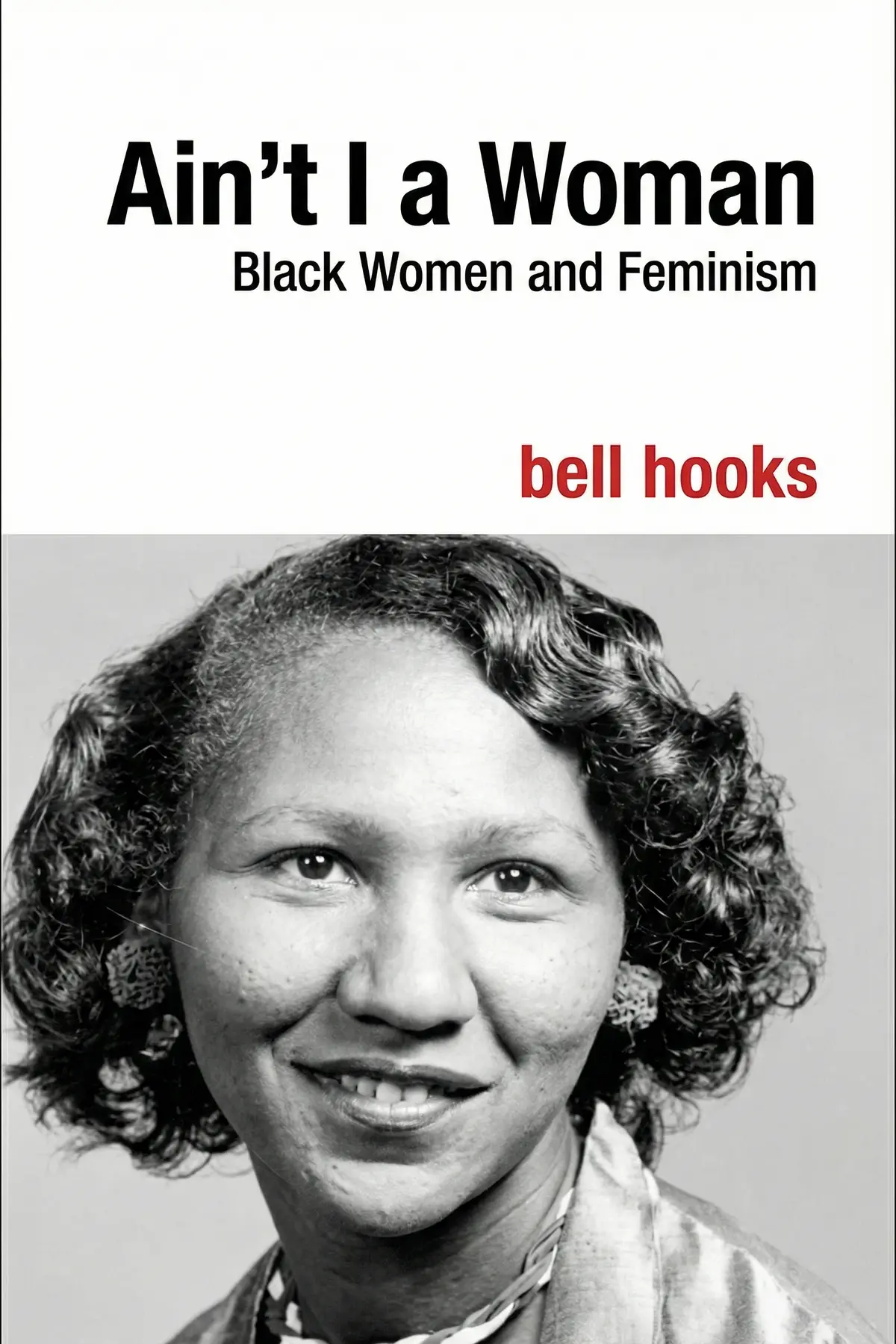
In 1851, a woman named Sojourner Truth stood before a crowd and asked a question that would echo through the centuries: “Ain’t I a woman?” That moment remains one of the most powerful calls for recognition in history. It wasn’t just a question about gender; it was a challenge to a society that conveniently ignored the existence and the humanity of Black women while debating the rights of white women and Black men. Decades later, bell hooks took that question and turned it into a foundation for a radical critique of American society.
Published in 1981, this work serves as a vital map for understanding how various forms of prejudice—specifically racism and sexism—overlap and create a unique type of hardship for Black women. To understand the world as it is today, hooks argues that we have to look backward at the forces that placed Black women at the very bottom of the social hierarchy. It isn’t just about listing grievances; it’s about uncovering the mechanisms of power that have allowed white men, white women, and even Black men to contribute to a system of exclusion.
As we walk through this analysis, we’ll see how the very definitions of femininity were crafted to exclude Black women, how the fight for the vote was sometimes used as a tool for white supremacy, and how even movements for liberation can inadvertently leave people behind. The goal here isn’t just to learn history, but to find a throughline that leads to a future where equality actually means everyone. Whether you are well-versed in social theory or just beginning to explore these topics, this journey provides a comprehensive look at the intersectional struggle for justice.
2 min 22 sec
Discover how the early American social order used sexual stereotypes to justify the brutal exploitation of enslaved Black women.
2 min 11 sec
Even after the end of slavery, harmful myths and the ‘matriarch’ label continued to deny Black women true social and political power.
1 min 58 sec
Explore how the adoption of traditional gender roles created deep tensions and sparked violence between Black men and women.
2 min 00 sec
Understand why the early fight for women’s rights often aligned with white supremacy, leaving Black women without a political home.
2 min 08 sec
Black women have historically been forced to choose between racial and gender equality, often sacrificing their own needs for both movements.
2 min 01 sec
Hooks proposes a new brand of feminism that seeks to eliminate all forms of domination, not just gain power within the existing system.
1 min 30 sec
In the end, bell hooks reminds us that the struggle for equality is not a series of separate battles, but a single, interconnected fight against a system of domination. By tracing the history of Black women from the auction block to the modern era, we see that their specific marginalization wasn’t an accident—it was a structural requirement for a society built on hierarchies of race, class, and gender. We have seen how stereotypes were weaponized, how the promise of suffrage was selectively applied, and how even movements for liberation could replicate the very sexism they should have been fighting.
The throughline of this work is clear: any movement for justice that doesn’t account for the most marginalized among us is destined to fail. To achieve true liberation, we must move beyond the desire for individual power and instead work toward a collective transformation. This involves challenging ourselves to see where we might be complicit in these systems and daring to imagine a world where the ‘ideology of dominance’ is a relic of the past.
Black women, having stood at the intersection of these various forms of oppression, have the most to gain from this change—and the most to teach us about how to lead it. The path forward requires courage and a willingness to dismantle old foundations, but the result is a society that finally honors the humanity of every individual. As we move out into the world, the question isn’t just ‘Ain’t I a woman?’ but rather: ‘How can we build a world where that question never needs to be asked again?’
This summary explores the historical and social forces that have marginalized Black women in America. It traces the roots of this oppression from the era of slavery through the suffrage movement and into the modern feminist and civil rights eras. By examining how racism and sexism work in tandem, the text reveals why standard historical narratives often overlook the specific experiences of women of color. The promise of this work is a radical rethinking of what liberation looks like. It challenges readers to move beyond a narrow focus on individual rights and instead look toward a complete overhaul of the systems that allow one group to dominate another. It serves as both a historical critique and a visionary guide for a more inclusive, truly transformative approach to social justice and equality.
bell hooks was a prolific feminist author, intellectual, and social activist. Her writings focused on systems of oppression shaped by the intersection of race, class, and gender.
bell hooks
Listeners describe the book as a remarkable and deeply enlightening work, with one listener observing that every sentence is packed with facts. They value the author's contribution, and one listener specifically points out the exploration of how racism and sexism intersect.
This book is essentially the blueprint for modern discourse on the overlapping nature of oppression. While many of us are now familiar with intersectionality, reading the raw source material reveals a level of grit that later academic works often lose. bell hooks brilliantly argues that the unique struggles of Black women cannot be subsumed under general 'feminism' or 'anti-racism' alone. It’s a dense read, packed with historical facts that challenge the popular status quo. Despite being written decades ago, the core message remains incredibly relevant to our current political climate. Personally, I found her breakdown of how 19th-century capitalism reshaped gender roles to be the most enlightening section. It is a necessary read for anyone who wants to understand why certain movements fail to achieve true solidarity. You will walk away from this feeling like your eyes have been opened to a history that was purposely obscured.
Show moreWow, the weight of the historical analysis here is staggering. Hooks manages to unpack the 19th-century transition of white women from 'temptresses' to 'virtuous' icons, a shift that left Black women entirely behind. This book is a very informative journey through the hierarchical caste system that defines so much of the American experience. I found myself highlighting almost every page because every sentence is packed with facts. Not gonna lie, the descriptions of the slave ship experience were brutal to read, but they were necessary to ground her arguments. She exposes the contradictions of white liberal feminism with a surgical precision that is both impressive and uncomfortable. This isn't just a book about the past; it's a mirror reflecting our current social failures. If your feminism isn't intersectional, it simply isn't feminism, and hooks proves that point again and again.
Show moreEver wonder why mainstream feminism often feels like it's missing a huge piece of the puzzle? bell hooks answers that by dissecting how the movement has historically prioritized white women's issues while ignoring the dual burden of Black women. This is a one-of-a-kind mind at work. She methodically unearths the sexism within Black male anti-racist movements and the racism within white feminist circles. The truth is, this book should be required reading in every high school history class. It is radical yet accessible, providing a crash course in social analysis that feels both urgent and timeless. I loved how she linked the domestic labor of enslaved women to modern economic structures. It’s an amazing read that packs more punch in 200 pages than most books do in 500. Rest in peace to a woman who changed how we see the world.
Show moreThe chapter on the legacies of slavery really gutted me. Hooks doesn't hold back when describing the additional sexism faced by Black women in both field labor and domestic spaces. She challenges the idea that enslaved people were 'happy' upon arrival, instead showing their relief at surviving the horrific Middle Passage. This book is an amazingly informative resource that demands your full attention. Every sentence is packed with facts that force you to re-evaluate what you thought you knew about American history. I particularly appreciated the focus on how capitalism uses feminism as a psychological tool to normalize tedious labor. It’s a principled and challenging work that avoids being a cynical armchair revolutionary text. Instead, hooks pushes us to struggle through contradictions to find real progress. This book is a masterpiece of intersectional thought that everyone needs to engage with.
Show morePicked this up because I wanted to understand the link between capitalism and women's status. Hooks makes a brilliant case that shifts in the economy, rather than pure feminist activism, often dictated the status of women in the workforce. This insight alone makes the book worth reading. She also explores the conflict between white liberal feminism and Black male anti-racism with incredible nuance. It’s a brutal historical journey from colonial times to the modern era. I found the section on the 'virtuous' white woman versus the 'sinful' Black woman to be particularly eye-opening. It explains so much about the current racial dynamics in our society. The book is brief but every page is dense with information and sharp social critique. It really is a necessary read for anyone interested in the intersection of race, class, and gender.
Show moreNot what I expected in terms of prose style, but the content is undeniably dense with facts. Hooks has a way of striking at the core of an issue without any unnecessary fluff. This book focuses on the mixture of sexism and racism in a way that feels totally revolutionary for its time. Honestly, it’s amazing how much of our current conversation about 'intersectionality' started right here in these pages. I especially liked her critique of the tendency to evade struggle for the sake of being 'liberal' or popular. She reminds us that progress only comes from resolving deep contradictions. It is an accessible and important book about an often overlooked topic in mainstream history. Even if you think you know everything about feminism, this book will prove you have more to learn. It is a brilliant, intense, and necessary addition to any library.
Show moreAfter hearing so much about intersectionality, I finally decided to go back to the source. It is truly fascinating to see how hooks was laying this groundwork back in the early eighties. She offers a radical, principled critique that still manages to maintain a sense of big-picture solidarity. To be fair, the book does show its age occasionally, particularly with the complete absence of LGBTQ+ issues. However, hooks was a pioneer and we can hardly blame her for not covering every modern nuance in her first major publication. I appreciated her methodical unravelling of the 'Black Matriarchy' myth, which was popularized by the Moynihan Report. The prose is accessible yet sharp, making it a great intro for those who find academic tomes too dry. It is a vital piece of the puzzle for understanding American history and gender politics.
Show moreFinally got around to reading this foundational text and I feel like I've just downloaded years of missing history. It's like that scene in The Matrix where Neo suddenly knows everything all at once. Hooks provides an amazing in-depth look at how racism and sexism work in tandem to marginalize Black women. I was particularly struck by her analysis of how the capitalist economy has a greater impact on women's status than the actual feminist movement. Frankly, it’s a bit of a reality check for those who think activism exists in a vacuum. The only reason I'm giving it four stars is that some sections felt a bit repetitive towards the end. But the rawness of the writing is beautiful and shows her early struggle for self-actualization. It is an intense, sometimes painful, but ultimately rewarding reading experience for any serious student of sociology.
Show moreLook, bell hooks was a total pioneer, and you can see the raw roots of her genius in this debut. While some of the language feels a bit dated and there’s a noticeable lack of LGBTQ+ perspectives, the core of the book remains vital. She was one of the first to talk about how changes in the American capitalist economy impacted women more than the movement itself. That kind of materialist analysis was marginal back then but is so common now. The book is an indicator of her own struggles to be a free and independent woman. Gotta say, the way she deconstructs the 'Black Matriarchy' myth is still the best analysis I've ever read on the subject. It’s a bit of a difficult read because of the heavy subject matter, but it's essential. I'm glad I finally made time for this classic work.
Show moreTo be fair, it’s a bit of a difficult slog due to how repetitive the core arguments feel today. This is largely because hooks was so successful—her once-radical ideas are now common knowledge for anyone in social justice circles. While the book is groundbreaking, it can feel like she’s hammering the same point home a bit too often in such a slight volume. I also found the lack of attention to queer identities a bit jarring, even considering the time it was written. Still, you cannot deny her importance as a pioneer who drew links between wealth, capital, and liberalism early on. The writing is very raw and lacks the polish of her later works like 'All About Love.' It’s an important historical document, but perhaps not the most engaging read for a modern audience already familiar with these concepts. I respect the work, but I didn't love the reading experience itself.
Show more
Jessica Valenti
Johny Pitts
bell hooks

Fay Bound Alberti
Daniel Goleman
Virginia Woolf
AUDIO SUMMARY AVAILABLE
Get the key ideas from Ain’t I a Woman by bell hooks, plus 5,000+ more titles in English and Thai.







