
21 min 05 sec
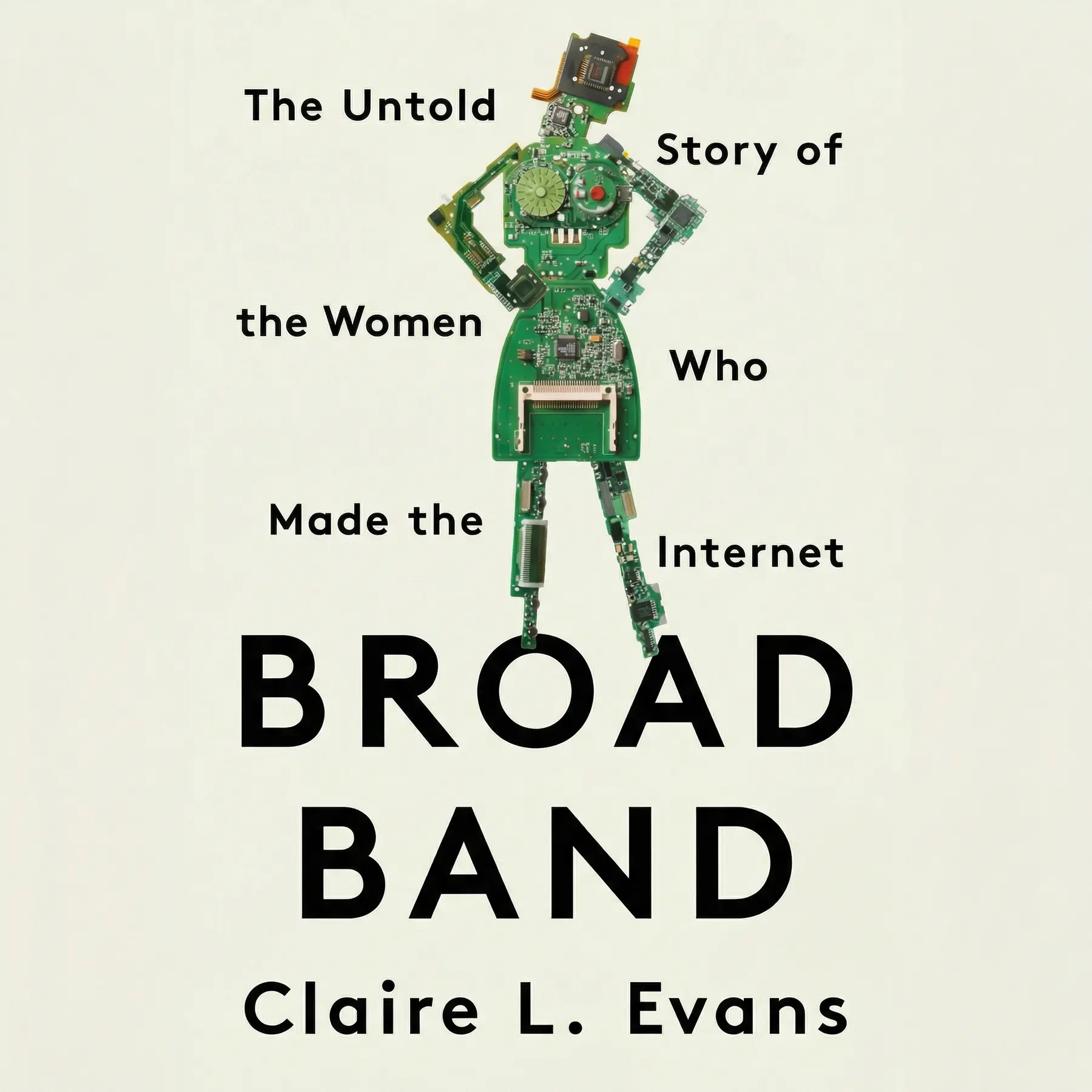
Broad Band: The Untold Story of the Women Who Made the Internet
Broad Band reveals the hidden history of the women who pioneered the digital world, from the first computer programs to the foundation of social networks and the visual web.
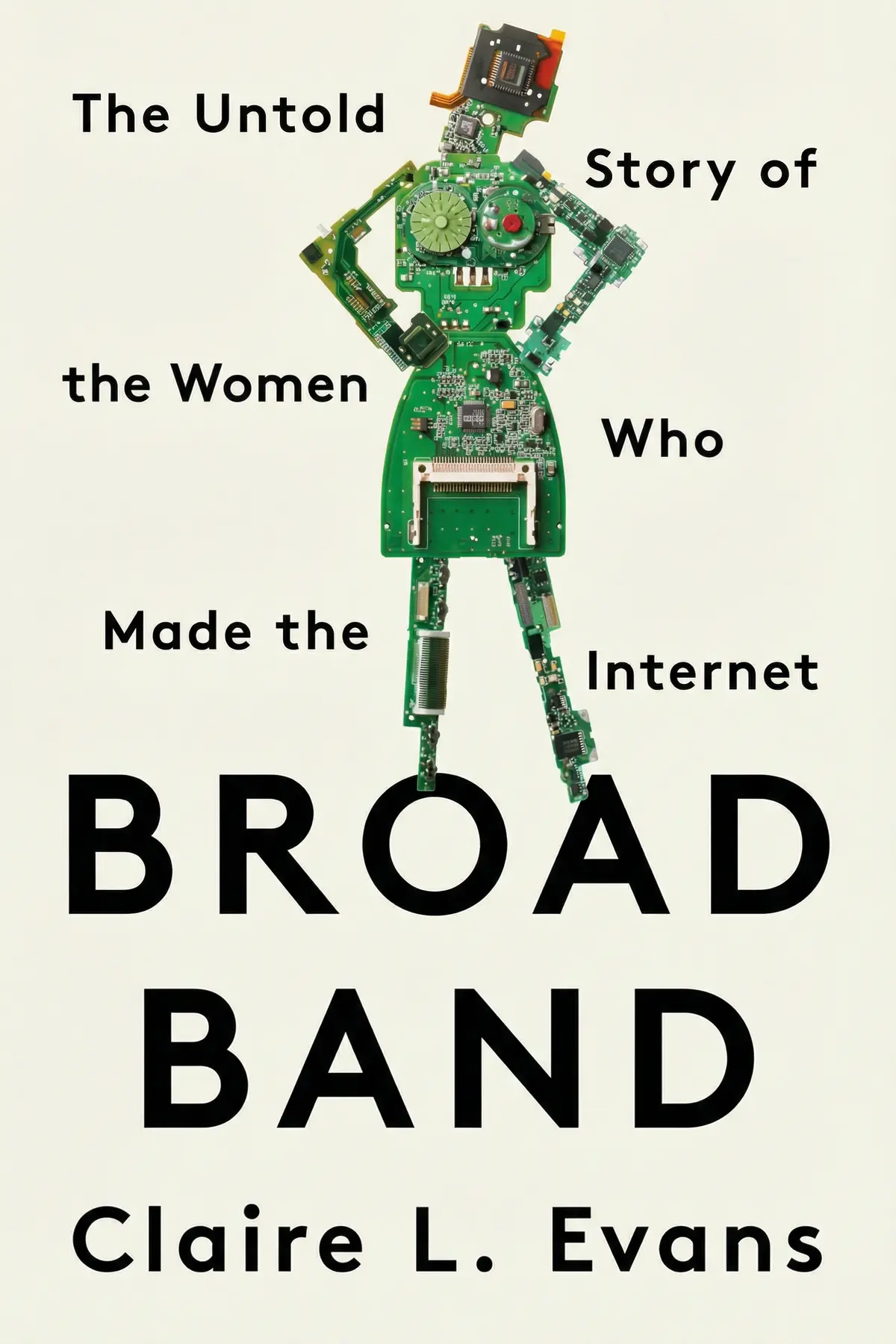
Table of Content
1. Introduction
1 min 58 sec
When we think about the architects of the digital age, a very specific image often comes to mind. It usually involves men in garages, Silicon Valley titans, or brilliant hackers hunched over glowing monitors. But this common narrative is missing a massive, fundamental piece of the puzzle. The truth is that the history of computing is not just a story of men; it is a story built on the mental labor, creativity, and foresight of women. From the very beginning, women have been at the forefront of every major shift in how we interact with technology. They weren’t just participating; they were the ones defining what a program was, how a network should function, and how a community could thrive online.
Yet, if you look at most history books, these names are frequently absent. Their contributions were often categorized as mundane clerical work or simply overshadowed by the male engineers who built the physical machines. This erasure has led to a skewed perception of computer science as a male-dominated field, when in reality, the early pioneers were often female. The shift we’re exploring today is about putting those missing pieces back into the picture. We are going to look at the women who saw the potential of the computer long before it became a household object.
In this journey, we’ll move from the drawing rooms of 19th-century England to the high-stakes laboratories of World War II, and eventually to the scrappy warehouses of the early internet boom. We will see how these women didn’t just follow the rules—they wrote them. They taught themselves to operate machines that came with no instructions, and they envisioned a world where technology was about more than just numbers—it was about connection, expression, and social change. By the end of this summary, you’ll see the internet not just as a series of cables and servers, but as a legacy of female brilliance that was nearly lost to time. Let’s dive into the untold story of the women who truly made the internet.
2. The First Coder
2 min 17 sec
Centuries before the first physical computer was ever built, a young woman envisioned a machine that could process more than just numbers.
3. Human Computers and the ENIAC Six
2 min 27 sec
Before computers were made of silicon and circuits, they were made of flesh and blood—and they were almost entirely female.
4. Grace Hopper and the Language of Machines
2 min 18 sec
One woman’s refusal to accept that computers should only speak in numbers revolutionized the way we interact with technology forever.
5. The Network Organizers
2 min 17 sec
Before there was a search engine to find anything, there was a woman with a phone book and a vision for an organized digital world.
6. Tech for the People
2 min 02 sec
In the shadow of the 1960s counterculture, a group of activists proved that computers could be tools for community and social justice.
7. Creating Virtual Communities
1 min 59 sec
Long before Facebook or Twitter, a pioneer in New York City was building the first digital hangouts and defining the role of the influencer.
8. The Architecture of the Web
2 min 01 sec
While one man is credited with the World Wide Web, a female scientist was developing a much more sophisticated way to link human knowledge.
9. Digital Graffiti and the Visual Web
2 min 04 sec
A punk-rock enthusiast turned coder brought style and attitude to the early internet, proving that the web could be a work of art.
10. Conclusion
1 min 42 sec
The history we have walked through today is one of hidden brilliance and quiet revolutions. From Ada Lovelace’s poetic mathematics to Jaime Levy’s digital graffiti, the thread that connects all these women is their ability to see the human potential within the machine. They didn’t just accept the technology as it was; they reimagined it as a tool for communication, community, and social good. They were the ones who realized that a computer could be more than a calculator—it could be a library, a post office, an art gallery, and a town square.
The ‘Broad Band’ of this story isn’t just about high-speed connections; it’s about the broad spectrum of female talent that made those connections possible. These women faced immense obstacles, from societal expectations to outright erasure from historical records, yet they persisted. They taught themselves languages that didn’t exist and built networks out of sheer willpower. Their legacy is the very fabric of our modern lives. Every time you send an email, visit a website, or connect with a friend online, you are participating in a world that was shaped by their hands.
As we look to the future of technology, the lesson from these pioneers is clear: innovation is not just about hardware and code; it’s about the people who use it. We must continue to support and elevate diverse voices in tech, ensuring that the next generation of pioneers is as varied and visionary as the women who started it all. By remembering their names and celebrating their work, we don’t just correct the past—we inspire a more inclusive and creative future. Let this history serve as a reminder that the digital world is a human project, and it belongs to all of us.
About this book
What is this book about?
Broad Band is a necessary corrective to the male-dominated narrative of technology history. It traces the lineage of the internet back to the brilliant women who often did the heavy lifting behind the scenes. Starting with the visionary mathematical insights of Ada Lovelace and moving through the manual labor of the ENIAC programmers, the book shows how female intuition and labor built our digital architecture. Beyond just hardware and code, the book explores how women shaped the social and cultural aspects of the web. It highlights the developers of early community networks, the creators of the first hypertext systems, and the digital publishers who treated the web as a canvas for art. The promise of this summary is a deeper understanding of the internet not just as a series of technical inventions, but as a human project heavily influenced by female innovators who were often forgotten by history.
Book Information
About the Author
Claire L. Evans
Claire L. Evans is a journalist and the lead singer of the Grammy-nominated pop duo YACHT. She is the founding editor of Terraform, Vice’s science-fiction vertical, and contributes to a variety of publications including Vice, the Guardian, Wired, the Los Angeles Review of Books, and Quartz. Evans is also a graduate advisor at ArtCenter College of Design in Pasadena, California.
Ratings & Reviews
Ratings at a glance
What people think
Listeners find this work to be a captivating experience with deeply investigated material that offers an excellent journey through the history of the internet. The narrative is driven by storytelling, and listeners value the emphasis it places on the contributions of women to the field of computer science. Additionally, the quality of the prose receives favorable mentions.
Top reviews
Phu
Picked this up on a whim and was immediately sucked into the lives of Radia Perlman and Elizabeth 'Jake' Feinler. Before reading this, I had no idea that a woman was essentially the human version of Google and WHOIS during the early days of the NIC. Evans has a gift for taking dense, technical concepts and turning them into a compelling, story-driven narrative. The book is fascinating because it doesn't just focus on the hardware; it looks at how women pioneered the social and community aspects of the web. Frankly, it’s about time someone acknowledged that the 'soft' side of computing—the applications and the human connection—is exactly what made the internet take off. The prose is sharp, the research is top-notch, and I felt like I was getting a secret tour of a history I only thought I knew.
Show moreMaja
Claire L. Evans writes with a passion that is absolutely contagious. This isn't just a dry list of names and dates; it's a vibrant, story-driven journey through the 'fringe' areas of tech like hypertext and community building that women claimed as their own. I was particularly moved by the sections on the ENIAC Six and how they had to teach themselves how to program the machine by studying logic diagrams. The truth is, women have been the backbone of computing since Ada Lovelace first saw the potential in Babbage’s engine. This book is a fascinating read for anyone who wants to understand the human side of the internet. It’s well-researched and filled with wit. Evans manages to make even the most technical milestones feel like high-stakes drama. I couldn't put it down.
Show moreRod
Not what I expected at all, in the best possible way. I thought this would be a technical slog, but it’s actually a beautiful, story-driven account of the women who shaped our world. From the manual labor of rote calculation during the war to the million-dollar IPOs of the 90s, Evans paints a vivid picture of resilience and innovation. The way she links Ada Lovelace's poetic science to the modern web is just brilliant. It reminded me why I fell in love with technology in the first place, before it all became about venture capital and data mining. The prose is elegant, the research is exhaustive, and the stories are deeply human. This is an important book that deserves a spot on every tech enthusiast's shelf. Truly a wonderful tour of the untold side of history.
Show moreTakeshi
Broad Band offers an illuminating perspective on the evolution of digital spaces, moving far beyond the typical 'men in garages' trope. Claire L. Evans writes with a lyrical quality that you rarely see in technical histories, making the stories of Ada Lovelace and Grace Hopper feel vibrant and immediate. I particularly appreciated the deep dive into the ENIAC Six; it’s staggering how their contributions were reduced to mere clerical work in the history books. To be fair, the narrative flow does stumble slightly when transitioning from the mechanical era to the 90s web. While the early chapters are tightly paced, the later sections on social networks feel a bit more anecdotal and less structured. However, the prose remains engaging throughout. It’s a well-researched tour of internet history that successfully reclaims the narrative for the women who were there at every turning point.
Show moreAhmed
As someone who spent the late 90s tinkering with HTML, reading about the transition from manual rote calculation to software engineering felt like a revelation. Evans does a wonderful job explaining how programming was initially viewed as 'women's work' because it was seen as menial, only for men to push them out once it became a high-status profession. The chapter on Brenda Laurel, the 'Combat Epistemologist,' was a standout for me. It’s a poignant reminder of the creative potential that was lost during the dot-com collapse. My only real gripe is that the book ignores much of what has happened in the last twenty years. The internet has changed so much since the early 2000s, and ending the story there feels like leaving the job half-finished. Still, the writing is evocative and the historical sections are incredibly well-researched.
Show moreCee
Finally got around to reading this, and the chapter on Grace Hopper alone is worth the price of admission. Evans has a way of framing history that makes you realize how much has been intentionally omitted from the standard tech narrative. I loved learning about how women dominated the field of 'computing' when it was still a human-centered task involving mechanical calculators. The shift to the Silicon Valley 'bro' culture is handled with a balanced hand, avoiding histrionics while still making a clear point about how the industry has lost talent by being unwelcoming. The prose is sophisticated and the book is clearly a labor of love. It’s an essential tour of internet history for anyone who thinks the web was built solely by men in black turtlenecks.
Show moreSuda
The truth is, we’ve been fed a very male-centric version of the internet’s birth for decades. Broad Band corrects that by focusing on the social architects and the software pioneers. The section on Radia Perlman and her networking protocols was a highlight, as was the discussion of early hypertext systems like Microcosm. Evans is a journalist, and it shows in her crisp, engaging writing style. My only complaint is that she spends a bit too much time on the 'riot grrl' era of the web, which felt like a very narrow slice of the female experience online. I would have loved to see more diversity in the types of women profiled. Regardless, it’s a fascinating read that provides much-needed context for how we arrived at our current digital landscape.
Show moreChanikarn
While the research is undeniably thorough, the narrative felt a bit disjointed in the second half. Evans is a fantastic writer, but her presence in the book is sometimes a distraction. She frequently inserts herself into interviews, using phrasing like 'Nancy told me this' or 'I saw that,' which pulled me out of the historical moment. I would have preferred the subjects to speak for themselves without the authorial filter. Additionally, the focus seems heavily weighted toward a specific counterculture, riot grrl aesthetic. This is fine if you resonate with that vibe, but it makes the book feel like it’s only telling one specific type of story rather than a universal history of women in tech. It’s an interesting read for the hypertext and ECHO sections, but I found myself skimming the repetitive dot-com office stories toward the end.
Show moreMichael
Look, I really wanted to love this more than I did. The first half is spectacular—Evans brings the early days of computing to life with such clarity. But once the focus shifts to 90s online communities, the momentum just dies. I found the stories about various dot-com offices and cyberfeminist groups to be quite repetitive and, frankly, a bit snobbish. It felt like the author was more interested in the 'scene' than the technology or the lasting impact of these women. Each person felt discussed for just a bit too long, covering the same points about gender dynamics without moving the history forward. I think a 'highlights' version of this would have been much more effective. It’s a decent library checkout, but it’s too dry in the middle to be a five-star read for me.
Show moreThanakorn
Ever wonder why certain histories feel curated through a very specific political lens? This book starts strong with the pioneers like Grace Hopper, but it quickly devolves into a niche celebration of the feminist riot grrl scene. Look, I understand that the author identifies with that subculture, but it felt like she was trying to force every woman in the history of computing into that same mold. The chapter on Purple Moon was particularly frustrating. Instead of exploring how women are currently navigating the toxic culture of modern gaming or discussing the fallout of Gamergate, Evans spends pages on a company that reinforced gender stereotypes and eventually went bust. To be honest, the book gets bogged down in boring details about short-lived social ventures and cuts off abruptly at the dot-com bust. It’s a dry read that misses the mark on modern relevance.
Show moreReaders also enjoyed


AI 2041: Ten Visions for Our Future
Kai-Fu Lee

A Splendid Exchange: How Trade Shaped the World
William J. Bernstein


A Spy Among Friends: Philby and the Great Betrayal
Ben Macintyre
AUDIO SUMMARY AVAILABLE
Listen to Broad Band in 15 minutes
Get the key ideas from Broad Band by Claire L. Evans, plus 5,000+ more titles in English and Thai.
- 5,000+ titles
- Listen as much as you want
- 7-day free trial
- Cancel anytime







