
A Higher Loyalty: Truth, Lies and Leadership
James Comey
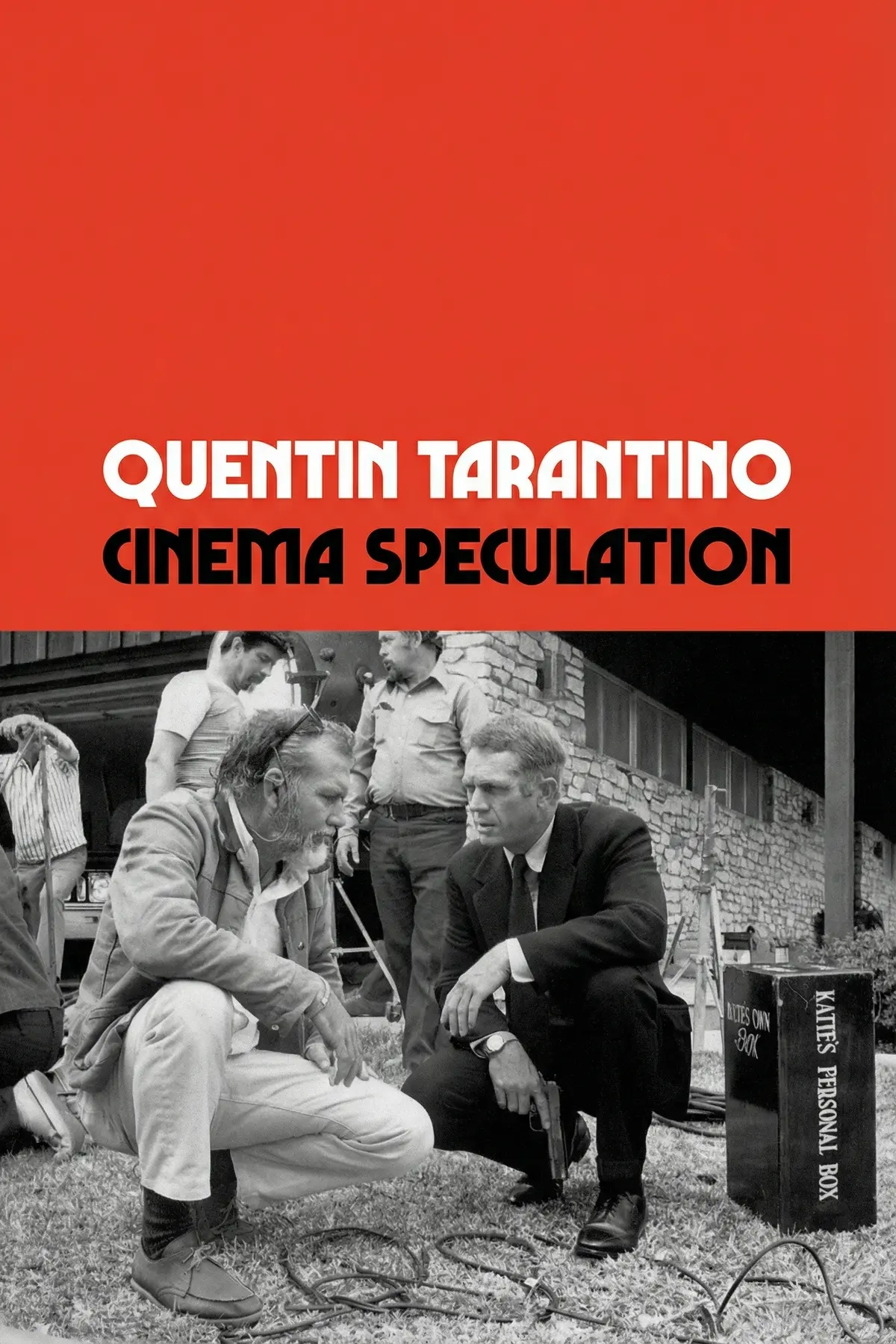
Explore the cinematic landscape of the 1970s through the eyes of a master filmmaker. This summary dives into the formative movies and personal history that shaped Quentin Tarantino’s unique artistic vision.
1 min 34 sec
Step into the flickering light of a 1970s movie house, where the air smells of popcorn and the screen is filled with the gritty, unfiltered reality of a changing America. For many, the cinema is a place of escape, but for a young Quentin Tarantino, it was a classroom, a sanctuary, and the birthplace of a creative obsession. To understand the mind of one of modern cinema’s most celebrated and controversial geniuses, we have to look back at the films that built him. This isn’t just a list of credits or a dry analysis of box office numbers. Instead, we are embarking on a journey through a pivotal decade in Hollywood history, viewed through a lens that is uniquely Tarantino’s.
In this exploration, we’ll see how a seven-year-old found humor in the darkest corners of adult drama and how a teenager found his voice in the shouting crowds of a grindhouse theater. We will dissect the impact of legendary directors who treated violence not as a stunt, but as a visceral language. We’ll also engage in the fascinating game of ‘cinematic speculation,’ imagining alternate realities where classic films were helmed by different hands. Through it all, a throughline emerges: the idea that a movie is never just what is on the screen; it is a combination of the director’s intent, the actor’s presence, the political climate of the day, and the energy of the people sitting in the dark beside you. By the end, you’ll see the 1970s not just as a decade of the past, but as a living, breathing influence that continues to shape how stories are told today. So, settle in, adjust your focus, and prepare for a deep dive into the heart of filmmaking.
2 min 35 sec
Discover how a young boy’s exposure to complex adult films at the Tiffany Theater created a unique foundation for his future as a boundary-pushing filmmaker.
1 min 54 sec
Explore the profound impact of the ‘Black cinema’ atmosphere on a young mind and how it shaped a lifelong pursuit of visceral audience engagement.
2 min 02 sec
Examine how director Don Siegel transformed the action genre with Dirty Harry, creating a new kind of brutal realism and a legendary screen icon.
2 min 18 sec
Analyze the deep parallels between Taxi Driver and classic Westerns, revealing the hidden layers of one of cinema’s most complex characters.
2 min 04 sec
Speculate on how a different director’s vision could have completely reimagined Taxi Driver, from casting choices to the film’s moral compass.
1 min 57 sec
Discover the power of visual storytelling in Escape from Alcatraz and the legendary partnership that defined a generation of tough-guy cinema.
1 min 54 sec
As we pull back from the flickering screens and the dusty archives of 1970s Hollywood, we are left with a profound appreciation for the forces that shape a creative mind. Quentin Tarantino’s journey through cinema speculation is more than just an act of nostalgia; it is a recognition of the mentors, the environments, and the ‘what-ifs’ that fuel artistic fire. One of the most touching revelations is the influence of a man named Floyd, a roommate who lived with Tarantino and his mother during his turbulent teenage years. Floyd was more than just a lodger; he was a fellow film enthusiast who shared his own screenplays with a young Quentin.
While Floyd’s actual scripts may have been lost to time, their essence lived on. The dream of an epic Western with a Black hero at its center—a dream Floyd discussed for hours—eventually found its way into the heart of Django Unchained. This reminds us that no creative spark is ever truly wasted. The conversations we have, the movies we watch in crowded, shouting theaters, and even the films we imagine in our heads all contribute to the tapestry of our work.
The 1970s was a decade of transition, violence, and bold experimentation, and by looking at it through Tarantino’s eyes, we see how those elements become the building blocks of storytelling. The takeaway is clear: to be a great creator, one must first be a great observer. We must pay attention to the technical skill of the masters, the political undercurrents of our time, and the raw, unpredictable energy of the audience. By understanding the past and speculating on the possibilities of the present, we can find the inspiration to create something entirely new. So, the next time you find yourself in a darkened theater, remember that you aren’t just watching a movie—you are participating in a legacy that spans generations, and you might just be witnessing the birth of the next great story.
Cinema Speculation is more than just a history of Hollywood; it is a deep, personal exploration of the films that defined an era and a director. Quentin Tarantino blends film criticism, theory, and personal memoir to examine the gritty, groundbreaking movies of the 1970s. He moves beyond the surface level of plot and performance to analyze the political undercurrents, the technical innovations of directors like Don Siegel and Martin Scorsese, and the cultural shifts that allowed these stories to resonate with audiences. Listeners will discover how Tarantino's unconventional childhood experiences in movie theaters shaped his storytelling instincts. The book offers a unique 'what if' perspective, speculating on how classic films might have changed under different directors or casting choices. Ultimately, it provides a masterclass in movie-watching, promising to change the way you see the silver screen by revealing the hidden mechanics of cinema and the powerful influence of the viewing environment.
Quentin Tarantino’s infamous 1992 film Reservoir Dogs was his directing debut. The ever popular Pulp Fiction followed two years later and won him an Oscar for Best Screenplay. Then came several other highly acclaimed films such as Kill Bill: Volume 1 and 2 and Django Unchained, which won him his second Oscar for Best Screenplay. His ninth film, Once Upon a Time in Hollywood, was released in 2019. Tarantino has also written a work of fiction based on Once Upon a Time in Hollywood. Cinema Speculation is his first foray into nonfiction.
Listeners find this work highly entertaining and enjoyable to experience, with a prose style that captures Tarantino's distinct personality. It provides exceptional perspective on film history, specifically centered on 1970s cinema, and listeners value the author's passion for movies as an art form. They appreciate the wealth of information; one listener notes the thorough technical breakdowns, while another mentions the insights into actors and production history. Listeners describe the title as educational, humorous, and a superb resource for movie lovers.
This book is essentially a five-hundred-page transcript of Tarantino’s brain firing on all cylinders. He writes exactly the way he talks, which means you’re getting a fast-paced, foul-mouthed, and incredibly infectious history of 1970s cinema. Truth be told, I haven’t seen half the movies he discusses, but his sheer enthusiasm makes you want to track down every single obscure grindhouse flick mentioned. The biographical asides about 'Little Q' watching adult movies with his mom and her boyfriends add a personal layer that most dry academic film books lack. It’s not just criticism; it’s a love letter to the communal experience of the theater. Whether he’s breaking down the technical brilliance of a chase scene or speculating on alternate directors for Taxi Driver, the energy never flags. If you love movies, or just love watching a master of his craft geek out, this is required reading.
Show morePicked this up on a whim and ended up watching a dozen 70s movies within the same week. Tarantino has this incredible ability to break down the mechanics of a film without losing the magic of why we watch them in the first place. His writing style is punchy and conversational—almost like reading Steinbeck if Steinbeck was obsessed with Steve McQueen’s 'cool' and blood-soaked revenge plots. The chapter on Floyd, the man who lived with his family and sparked his interest in black cinema, was particularly moving and provided a great backstory for projects like Django Unchained. It’s rare to find a book that is this informative while remaining so genuinely entertaining. He doesn't just review movies; he reconstructs the era they were born in. For anyone who grew up in theaters or worked in a video store, this is going to feel like home.
Show moreFinally got around to reading this, and frankly, it's the most fun I've had with film criticism in years. Tarantino’s analysis of Robert Forster in Alligator was a highlight for me, especially knowing how it led to his casting in Jackie Brown years later. The book is filled with these little 'aha!' moments where you see the seeds of his own films being planted. He doesn't get bogged down in technical jargon for the sake of it, but when he does offer analysis, it's sharp and illuminating. His memory for the specific theaters he visited and the crowds he saw movies with makes the whole thing feel incredibly vivid. It’s a brilliant resource for anyone who wants to understand the context of 70s cinema. He makes a compelling case for why that decade was the greatest in movie history, and by the end, you’ll probably agree with him.
Show moreWow. I didn't expect to be so moved by a book about grindhouse movies and 70s action stars. The final chapter about Floyd is a masterpiece of memoir writing, and it brought a whole new perspective to his career. Tarantino writes with a level of passion that is honestly rare in modern criticism; he doesn't just watch movies, he consumes them. The way he discusses the communal experience of a packed theater in the 70s makes you mourn for a type of cinema culture that barely exists anymore. Whether he's defending the ending of Rocky or trashing the 'anti-establishment' auteurs, his arguments are always backed by a deep understanding of the craft. This isn't a dry textbook; it's a loud, proud, and brilliant exploration of the movies that made him. I sincerely hope he has more of these in him, because his voice as a writer is just as compelling as his voice as a filmmaker.
Show moreAfter hearing so much buzz about QT's first non-fiction venture, I was surprised by how much heart is tucked between the heavy film theory. The sections about his childhood—specifically his relationship with his mother Connie and a guy named Floyd—really grounded the more technical breakdowns. It’s fascinating to see how a ten-year-old kid watching Dirty Harry or The Getaway eventually became the director we know today. Look, the book isn't perfect; it can get a bit bogged down in lists of actors from the seventies that only the most hardcore cinephile would recognize. However, the chapter speculating on Brian De Palma directing Taxi Driver is a masterclass in 'what if' storytelling. He has this way of making even the most obscure production backstory feel like a high-stakes thriller. It’s a fun, rowdy, and deeply informative ride that makes me hope he keeps writing long after he retires from directing.
Show moreThe truth is, reading this feels less like a dry academic tome and more like sitting in a dive bar with a very caffeinated genius. Tarantino’s voice is so distinct that you can practically hear his staccato delivery on every page. He tackles the transition from 'Old Hollywood' to the 'Movie Brats' with a level of detail that puts most film degrees to shame. I loved the technical breakdowns of how certain shots were achieved, even if the language gets a bit colorful at times. My only real gripe is that he occasionally spends too much time on movies that aren't actually very good, trying to find greatness in the mundane. Still, his take on the 'Pod People' in Body Snatchers as a positive rebirth was a wild perspective that I’m still thinking about. It's a chunky, dense, and vibrant piece of film history that demands your attention.
Show moreGotta say, the chapter speculating on Brian De Palma directing Taxi Driver is worth the price of admission alone. It’s such a unique way to approach film criticism—not just looking at what exists, but imagining how the DNA of a movie would change under a different auteur. Tarantino's knowledge of production history is staggering. He remembers the specific scripts, the casting near-misses, and the studio politics that shaped every frame. While his enthusiasm is infectious, I did find the sections on The Outfit and The Funhouse a little too niche for my tastes. Sometimes the list of names becomes a blur of 1970s character actors that I just couldn't place. However, the funny anecdotes and his 'Little Q' persona keep the narrative moving whenever it threatens to get too academic. It’s a great, messy, passionate book for people who truly live and breathe movies.
Show moreIs it possible to be too knowledgeable about a subject? Tarantino is a walking encyclopedia of film, but sometimes this book feels more like a private conversation between him and a few elite historians than a book for the general public. While his passion is undeniable, the constant name-dropping of obscure character actors and second-string directors often made my head swim. I found myself googling every three pages just to keep up with the references. To be fair, when he focuses on the big hits like Bullitt or Deliverance, the insight is brilliant and genuinely funny. I especially enjoyed the 'Second-String Samurai' essay where he pays tribute to critics like Kevin Thomas. It’s a solid resource for film enthusiasts, but be prepared for a very narrow focus on a specific, violent era of Hollywood. If you aren't already obsessed with the 1970s, parts of this might feel like a chore.
Show moreAs someone who appreciates the New Hollywood era, I found Tarantino’s deep dives both illuminating and exhausting. On one hand, you have brilliant technical breakdowns of films like Deliverance and Rolling Thunder that offer insights you won't find anywhere else. On the other hand, the book is so densely packed with obscure references that it can feel exclusionary to the casual reader. Personally, I enjoyed the biographical sections the most because they provided a human element to his otherwise relentless analysis. His mother Connie sounds like a fascinating woman, and her 'it’s just a movie' philosophy clearly shaped his worldview. However, the writing style is so repetitive and aggressive that I had to take breaks every twenty pages. It’s an informative resource, but it lacks the polish and structure of a traditional history book. Recommended primarily for die-hard QT fans and 70s junkies.
Show moreNot what I expected from a 'cinema history' book. I honestly struggled with the tone; it’s incredibly self-indulgent and the constant swearing felt unnecessary after the first few chapters. While I respect Tarantino’s filmography, this felt like an unfiltered brain dump that needed a much firmer editor to trim the fat. He focuses almost exclusively on violent 1970s exploitation and action films, completely ignoring other important genres or international movements from the same era. If you’re not a fan of Brian De Palma or hyper-masculine revenge flicks, there isn’t much here for you. To be fair, the production backstories are detailed, but they are buried under layers of ego and niche references. It felt more like a long-winded podcast transcript than a structured book. I was hoping for something more balanced and less focused on his own childhood nostalgia.
Show moreJames Comey
Philip Freeman
Jonathan Eig
J. Craig Venter

Ishmael Beah

James Herriot
Barack Obama
AUDIO SUMMARY AVAILABLE
Get the key ideas from Cinema Speculation by Quentin Tarantino, plus 5,000+ more titles in English and Thai.







