

1929: Inside the Greatest Crash in Wall Street History--and How It
Andrew Ross Sorkin
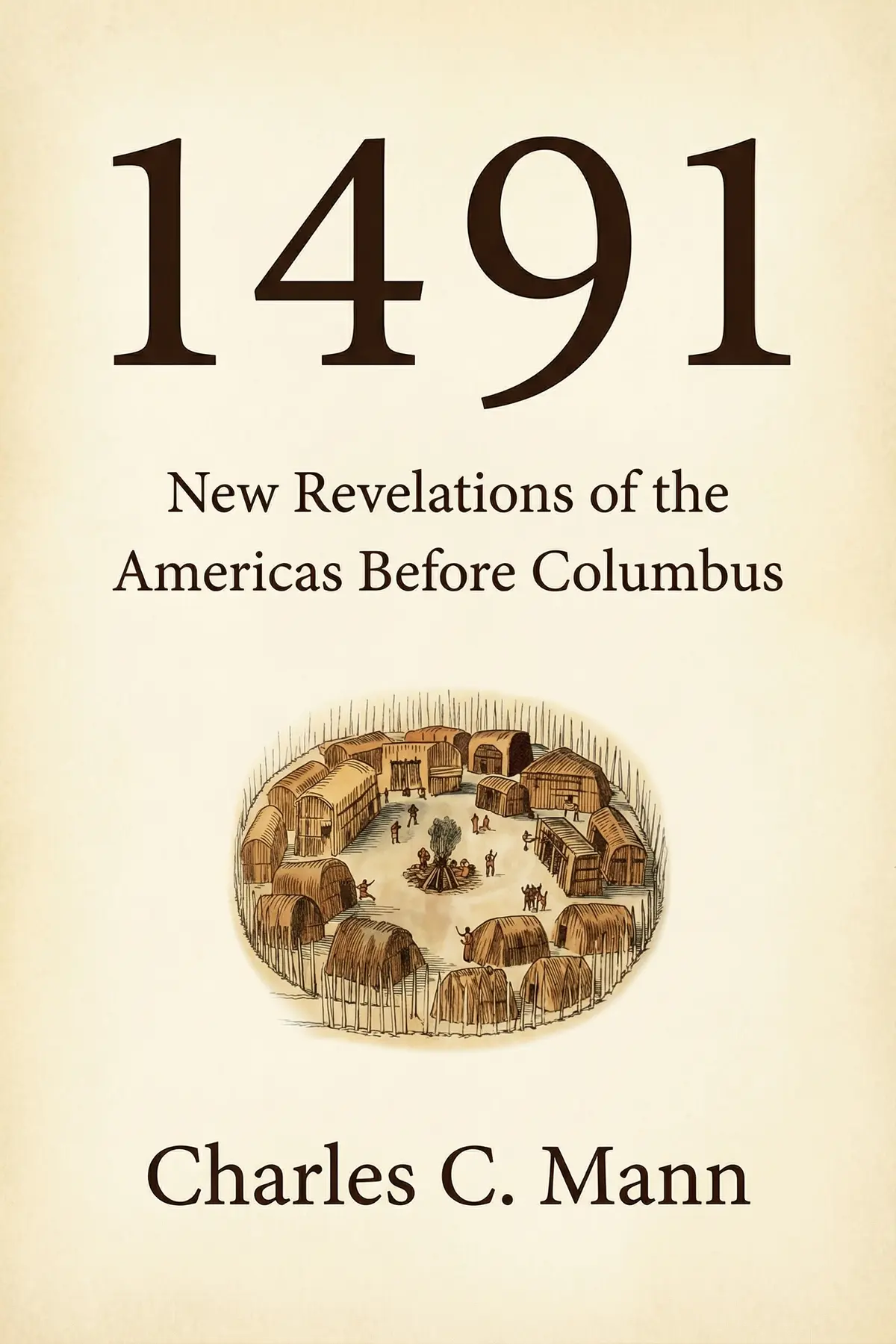
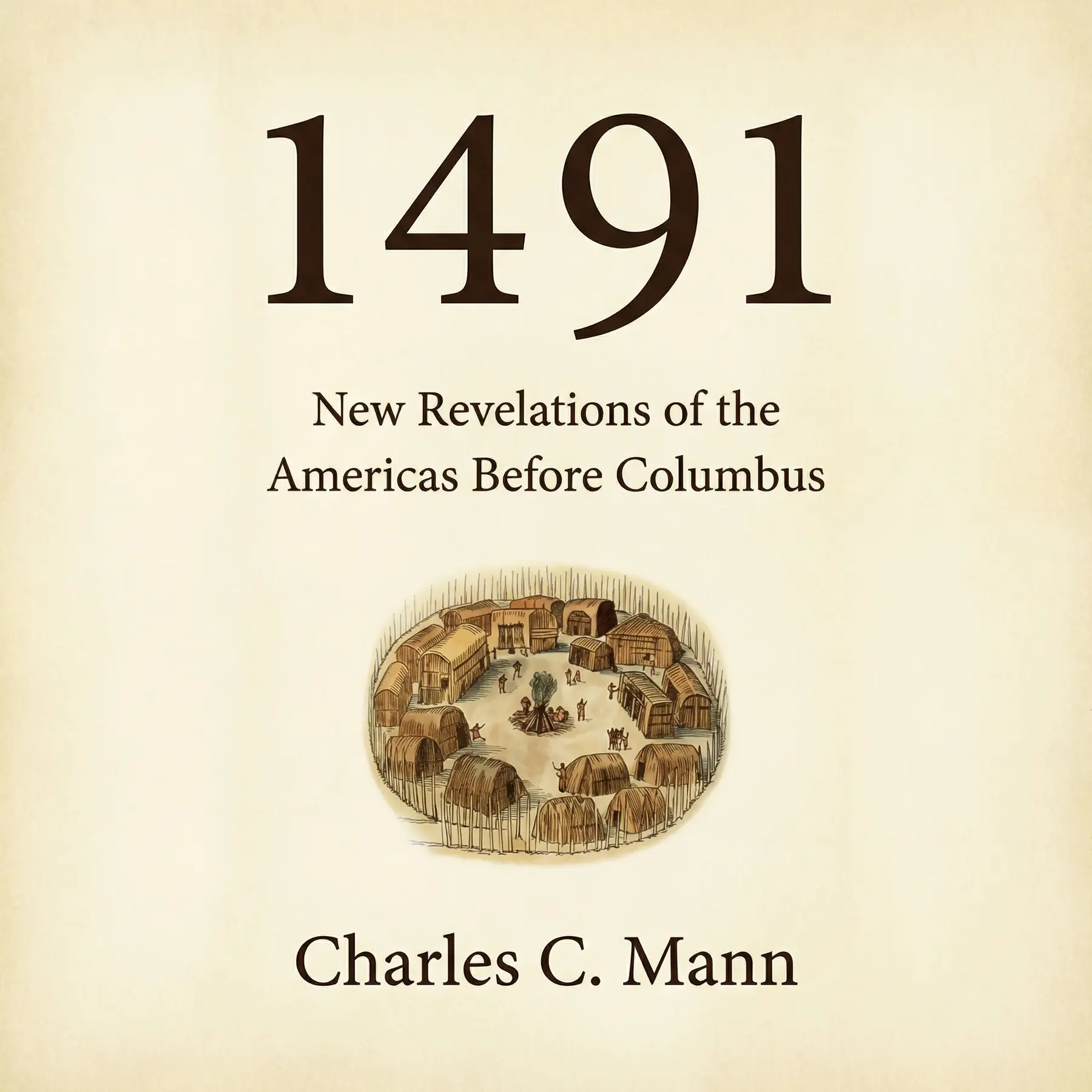
A paradigm-shifting exploration of the Americas before Columbus, revealing that Indigenous civilizations were far more populous, technologically advanced, and ecologically influential than traditional history books have ever suggested.
2 min 03 sec
When we think about the year 1492, most of us picture a vast, silent wilderness. We imagine endless forests, untouched plains, and perhaps a few scattered groups of people living a simple, nomadic existence. This is the version of history many of us were taught in school—the idea that the Americas were a ‘New World,’ a pristine garden waiting to be discovered and ‘tamed’ by European settlers. But what if that entire narrative is fundamentally wrong? What if the wilderness Europeans encountered wasn’t a natural state, but a recently abandoned cemetery? This is the central provocation of Charles C. Mann’s work.
In this journey, we are going to peel back the layers of myth and misunderstanding that have clouded our vision of the Western Hemisphere for centuries. We will discover that before Columbus ever set foot on these shores, the Americas were home to some of the most populous, technologically advanced, and environmentally influential civilizations on the planet. From the sophisticated irrigation systems of the Andes to the sprawling urban centers of Mesoamerica and the engineered forests of the Amazon, the ‘New World’ was actually an incredibly old world, bustling with activity and innovation.
We’ll see how the arrival of European diseases triggered a collapse so sudden and so total that it erased the memory of these cultures from the very land they inhabited. When the first settlers finally moved inland, they mistook the ruins of a shattered civilization for a ‘state of nature.’ By looking at the latest evidence from archaeology, linguistics, and ecology, we can begin to reconstruct the true story of 1491. It is a story of human agency, of people who didn’t just live on the land, but who reinvented it to suit their needs. As we walk through these revelations, you’ll start to see that the history of the Americas is not a story of a vacuum being filled, but of a vibrant world that was temporarily silenced—and is only now being heard again.
2 min 32 sec
An anthropologist’s 1948 study of a supposedly ‘primitive’ tribe missed the tragic reality: he wasn’t looking at an ancient culture, but at the traumatized survivors of a recent societal collapse.
2 min 29 sec
In the floodplains of Bolivia, massive earthen mounds and arrow-straight causeways reveal a society that mastered a challenging environment through monumental engineering projects.
2 min 25 sec
For centuries, the world saw Indigenous Americans as ‘noble savages’ who left no mark on the land, but the reality is a story of intentional, large-scale environmental transformation.
2 min 29 sec
Indigenous groups in the North used fire as a sophisticated tool to create ‘park-like’ forests and vast bison pastures, effectively farming wild game on a continental scale.
2 min 24 sec
The catastrophic loss of 90 percent of the Indigenous population didn’t just end civilizations; it actually altered the Earth’s atmosphere and cooled the global climate.
2 min 21 sec
New research suggests the Amazon isn’t the ‘wet desert’ scholars once thought, but rather a sophisticated agricultural site where people thrived by working with the forest.
2 min 26 sec
Discover ‘Terra Preta,’ an ancient, human-made soil that remains incredibly fertile for centuries, offering a potential solution to modern agricultural challenges.
2 min 23 sec
The creation of corn from a tiny wild grass is one of the greatest feats of genetic engineering in human history, changing the global diet forever.
2 min 35 sec
New evidence suggests the Americas were home to upwards of 100 million people, meaning the ‘New World’ was actually more crowded than Europe at the time.
2 min 00 sec
As we’ve explored the revelations of the Americas before Columbus, one truth stands out above all others: the history we were once taught is only a small, distorted fragment of the reality. For centuries, we looked at the Western Hemisphere and saw a ‘wilderness’ because we didn’t know how to read the landscape. We saw empty forests and didn’t realize they were abandoned orchards. We saw ‘primitive’ nomads and didn’t realize they were refugees. We saw a ‘pristine’ state of nature and didn’t realize it was a recently overgrown garden.
Charles C. Mann’s work doesn’t just add new facts to our history; it changes the very framework through which we see the world. It teaches us that human beings have always been a transformative force. Whether it’s the genetic engineering of corn in Mexico, the fire-managed plains of North America, or the ‘black earth’ of the Amazon, the story of the Americas is a story of profound agency and innovation. These civilizations didn’t just adapt to their environments; they invented new ways for humans to live on this planet, many of which were more sustainable and sophisticated than the methods we use today.
Today, as we face global challenges like climate change and soil depletion, the lessons of 1491 are more relevant than ever. The ancient techniques of the Amazon and the managed forests of the North offer us a different vision of how humans can interact with nature—not as conquerors or as passive observers, but as conscious, creative stewards. By recovering the true history of the Americas, we don’t just honor the memory of the millions who lived there before us; we gain a richer, more complex understanding of what humanity is capable of. The ‘New World’ was never new; it was always a testament to the enduring power of human ingenuity. And by listening to its story, we might just find new ways to build our own future.
The standard narrative of the pre-Columbian Americas often depicts a vast, untouched wilderness inhabited by small, nomadic bands living in harmony with nature. Charles C. Mann’s 1491 shatters this myth, drawing on recent archaeological and anthropological evidence to reveal a continent teeming with complex societies. From the massive earthen structures of the Amazon to the genetic engineering of maize in Mexico, the book shows that the 'New World' was actually an old, bustling world of empires and innovations. This summary explores the sophisticated ways Indigenous people managed their environments, the true scale of the population collapse following European contact, and the lasting impact these civilizations had on the global landscape. It promises to change how you see the history of the Western Hemisphere, replacing the image of a 'pristine' wilderness with one of a carefully managed and highly developed human habitat that existed for millennia before 1492.
Charles Mann is a journalist and author with a special interest in Native American societies and scientific subjects. He is a regular contributor to the Atlantic, Science, Wired, the New York Times, and National Geographic. His writing has received awards from the American Bar Association, the American Institute of Physics, and the Alfred P. Sloan Foundation.
Listeners find this book to be a vital read, full of intriguing new insights about the pre-Columbian Americas. The prose is well-suited for a general audience, and listeners value the all-encompassing perspective, with one listener noting it provides a detailed summary of current science. It is frequently called eye-opening, with one listener highlighting how it challenges readers to want to know more, while another mentions how it offers a fresh understanding of life.
I honestly had no idea how much of a 'managed' landscape the Americas were before 1492. Mann does a fantastic job dismantling the myth of the 'noble savage' living in an untouched wilderness. The section on the Amazon being essentially a giant, man-made orchard was mind-blowing to me. It really makes you rethink everything you learned in high school history. Sometimes the technical parts about carbon dating or soil composition (terra preta!) got a bit dense, but the overall narrative is so compelling I couldn't put it down. It feels like essential reading for anyone living in the Western Hemisphere who wants to understand the ground they’re standing on. It’s eye-opening and deeply researched.
Show moreThis book blew me away. I taught history for years and even I wasn't aware of the scale of Cahokia or the complexity of the Wari empire. Mann challenges the 'Bering land bridge' theory in a way that feels both scholarly and exciting. The most impactful part for me was the discussion of how 'wilderness' is actually a product of the indigenous population collapse—that the 'pristine' woods the Pilgrims saw were actually overgrown gardens. It’s a tragic but necessary perspective shift. My only minor gripe is that he occasionally wades into political philosophy and 'guilt vs responsibility' which felt a little underdeveloped compared to the hard science. Still, it's a massive, eye-opening achievement.
Show moreTruly essential reading. It’s a bit of a commitment because it covers so much ground—archaeology, linguistics, biology—but it’s written in a way that stays interesting for a general audience. The detail about how smallpox cleared the way for the Pilgrims was a 'muffled howl of rage' moment for me. It really changes how you view the 'founding' of the colonies. It might be a little long-winded in the middle sections, but the payoff is worth it. Mann captures the sheer ingenuity of people who bred corn from a tiny wild grass. Just incredible stuff. I feel like I finally have a grasp on the complexity of this hemisphere.
Show moreThis book changed the way I think about history. It’s not just a list of dates; it’s a vivid reconstruction of a world that was lost. I appreciated how Mann handled the 'smallpox' narrative—not as a simple tragedy, but as a biological cataclysm that paved the way for a complete misunderstanding of these civilizations. It’s well-researched and covers a massive scope, from the Maya to the Haudenosaunee. It’s a lot to take in, and some of the chapters feel more like independent articles, but the central argument is so strong it holds together. It left me wanting to know more about the Moche and the Olmecs. Highly recommended for any history buff.
Show moreA really solid, well-researched summary of current archaeological thinking. I appreciated how Mann highlights the controversies—like the massive population die-off from smallpox—without necessarily preaching one side as absolute truth. It’s written for a general audience, so it’s accessible, though it does jump around quite a bit between the Andes and New England for no logical reason sometimes. Personally, I felt some of the comparisons to European history were a little forced at times, almost like he was trying too hard to prove a point about 'sophistication.' Still, the information about the Triple Alliance and the sheer scale of Tenochtitlan is just fascinating. It provides a fresh understanding of life before the 'New World' was even a concept.
Show moreMann provides a comprehensive look at the Americas that feels long overdue. I was particularly struck by the concept of 'Holmberg's Mistake'—the idea that we viewed native cultures as static and unchanging simply because we met them after they had been decimated by disease. It’s a powerful lens. The writing is generally very engaging, though some of the deeper dives into maize genetics or Mexica philosophy might not be for everyone. I found it fascinating, even if the author occasionally exaggerates the 'richness' of certain philosophies to make a point. It’s a massive undertaking that mostly succeeds in humanizing a history we've ignored for too long. Definitely worth the read.
Show moreThis is an eye-opening read that really challenges your worldview. Before reading 1491, I pictured pre-Columbian America as sparsely populated by nomadic tribes. Mann proves just how wrong that is, describing urban centers that dwarfed European cities of the same era. The maps and photos are super helpful for visualizing the 'terraforming' he talks about. I did find the sections on 'American Indian concepts of freedom' a bit speculative, but they were definitely thought-provoking. It’s a thick book and takes some commitment, but it’s a fresh understanding of life that I think everyone should experience at least once. It challenges you to want to know more about our continent's real past.
Show moreI really enjoyed the majority of this. It’s a fantastic overview of what we’ve learned about the Americas in the last few decades. The bits about the Incan road systems and the sheer variety of cultures in South America were my favorite. I do think he overstates the military equality between the Europeans and the natives a bit—powder weapons were definitely an advantage, even if they were clunky. And like others have mentioned, the writing style can be a bit flowery and metaphorical at times (the cow-catcher train metaphor was... a lot). But for a general overview that isn't a dry textbook, this is probably the best thing out there.
Show moreI have mixed feelings about this one. On one hand, the factoids are incredible—like the idea that the Amazon rainforest might be a human artifact. But the organization is just a mess. The chapters don't seem to follow a logical timeline, and I found myself flipping to the index constantly to figure out what certain acronyms meant. Mann is a journalist, not an academic, and it shows in how he prioritizes 'the big reveal' over clear methodology. Also, those 20-line sentences? A bit much. It’s an interesting survey of the Americas, but it's a bit of a slog to get through if you're looking for a coherent, chronological narrative. Might not be for everyone, especially if you prefer a strict timeline.
Show moreI honestly don't get the hype. The book is incredibly repetitive and the author's tone can be quite condescending toward anyone who doesn't subscribe to his specific revisionist views. He spends pages and pages arguing about Aztec philosophy being as deep as the Greeks, which felt like a massive stretch and totally belabored. Plus, the organization is all over the place; one minute you're in the 1500s, the next you're 10,000 years in the past. It’s more of a collection of essays than a cohesive book. If you want a clear history, this probably isn't it. The aerial photos were the only highlight for me. It's too fragmented to be taken seriously as a definitive work.
Show moreAndrew Ross Sorkin
Pankaj Mishra

Fay Bound Alberti

Ben Macintyre
Ron Chernow
Philip Freeman
Michael Axworthy
AUDIO SUMMARY AVAILABLE
Get the key ideas from 1491 by Charles C. Mann, plus 5,000+ more titles in English and Thai.







