
A Year with Peter Drucker: 52 Weeks of Coaching for Leadership Effectiveness
Joseph A. Maciariello
Competition Demystified offers a streamlined approach to business strategy, arguing that sustainable success relies almost entirely on identifying and maintaining barriers to entry rather than simply outperforming rivals through operational efficiency.
1 min 56 sec
In the fast-paced world of modern commerce, we are often told that the key to winning is to be faster, leaner, and more innovative than everyone else. We watch companies pour billions into research and development or massive global marketing campaigns, all in an effort to stay one step ahead of the pack. But what if most of that effort is actually a distraction? What if the secret to enduring wealth and stability isn’t about how hard you run, but about the structure of the ground you’re standing on?
This is the provocative starting point for Competition Demystified. Authors Bruce Greenwald and Judd Kahn suggest that much of what we call ‘strategy’ is actually just ‘operational efficiency.’ In other words, most businesses are simply trying to do the same things as their rivals, only slightly better. While that might keep you in the game, it rarely leads to the kind of dominance that produces exceptional returns over decades. True strategy, they argue, only begins when you have a protected space where competitors cannot easily follow.
Throughout this exploration, we are going to look at why the traditional way of thinking about competition is often too broad and too complicated. We’ll see why being the biggest player in the world is frequently a disadvantage compared to being the undisputed leader of a small, local market. We will also break down the specific types of advantages that actually keep competitors at bay—things like customer habits and the physics of local logistics—rather than the fleeting advantages of a slightly better product design.
By the end of this journey, you’ll have a new lens through which to view the business world. You’ll understand why giants like Walmart and Coca-Cola really win, and you’ll see why so many ambitious expansions end in failure. Whether you are an entrepreneur looking for a niche, an investor trying to spot a ‘moat,’ or a leader aiming to steer your company toward safer waters, the throughline here is clear: strategy is about creating and defending barriers. Without them, you are just running a race that never ends. With them, you have the power to define your own future.
2 min 39 sec
Discover why working harder isn’t the same as working smarter, and why most businesses are trapped in a cycle of efficiency rather than true strategic advantage.
2 min 50 sec
Learn about the specific structural forces that prevent rivals from stealing your customers and eroding your profit margins over time.
2 min 40 sec
Discover the counterintuitive truth about business growth: expanding too far often weakens a company’s most important strategic defenses.
2 min 27 sec
Uncover the real secret behind one of the world’s most successful retailers and why its victory was built on geography rather than just low prices.
2 min 21 sec
Understand how to deal with rivals when no single company has a total monopoly, and why cooperation can be better than conflict.
2 min 25 sec
See why the shift from manufacturing to services is actually good news for companies seeking a lasting strategic edge.
1 min 37 sec
As we wrap up our look at Competition Demystified, the primary message is one of focus and clarity. We’ve seen that in the complex, noisy world of business, most of what we do is simply keeping up with the competition. Operational efficiency is the price of admission, but it is not a winning strategy on its own.
To truly succeed, you must look for the structural advantages that create barriers to entry. Whether it is through the ‘lock-in’ of customer captivity, the clever use of proprietary technology, or the raw power of local economies of scale, your goal is to find a place where you can be the undisputed leader. Remember that being global is often a distraction; the most profitable companies are usually those that have mastered their own local ‘backyard’—whether that’s a physical neighborhood or a narrow category of specialized products.
If you are evaluating a business today, ask yourself the hard questions: If this company disappeared tomorrow, would its customers find it easy to switch? Is there a mathematical reason a new competitor would struggle to match its costs? If the answer is no, then the company is just a runner in a race that anyone can enter. But if the answer is yes, you have found the holy grail of business: a sustainable competitive advantage.
The actionable takeaway here is to resist the urge to grow for growth’s sake. Instead, grow in a way that reinforces your existing strengths. Build density, deepen your relationships with your customers, and always keep an eye on the barriers that protect your profits. In the end, strategy isn’t about doing everything; it’s about doing the right things in a place where no one else can reach you.
The world of business strategy is often cluttered with complex frameworks and endless lists of competitive forces. Competition Demystified sweeps this complexity aside to present a radically simplified view: there is only one force that truly dictates long-term profitability, and that is the existence of barriers to entry. Bruce Greenwald and Judd Kahn explain that without these barriers, any competitive advantage is temporary, as rivals will eventually move in and erode profits. This summary explores how firms can identify true advantages—such as customer loyalty and economies of scale—and why the most successful companies often dominate local or niche markets rather than trying to conquer the entire globe. It provides a roadmap for leaders to move beyond the daily grind of operational competition and into the realm of true strategic planning.
Bruce Greenwald is the Robert Heilbrunn Professor of Finance and Asset Management at Columbia Business School. He is a highly regarded academic whose strategy courses are a staple for aspiring business leaders. Beyond this work, he is well-known for co-authoring the definitive text Value Investing. Judd Kahn is a partner at Davidson Kahn Capital Management and holds a doctorate in history from UC Berkeley. Before his career in finance, he served as an academic historian, and he has collaborated with Greenwald on multiple influential business titles.
Listeners describe the book's analysis as top-tier, with one noting that it delivers practical mental models for judging corporate strategy. Additionally, the text provides a straightforward take on strategy that is quite accessible, as one listener draws attention to its comprehensive examination of Porter's 5 forces. Listeners also value the book’s clarity, readability, and value for the price, while giving high marks to its focus on barriers to entry and sustainability.
If you’re tired of wading through the dense, academic jargon of Michael Porter, this book is a breath of fresh air. Greenwald successfully strips away the complexity of the Five Forces and hones in on what actually matters: barriers to entry. I found the emphasis on customer captivity and local economies of scale particularly illuminating for my own portfolio analysis. While some of the case studies feel a bit dated now—it was written in 2006, after all—the underlying logic remains incredibly sound. The prose is clear, direct, and avoids the usual 'consultant-speak' that plagues most business literature. It provides a solid mental model that helps you identify whether a company's high returns are sustainable or just a fluke. Truth is, most 'moats' are just illusions, and this book helps you spot the difference.
Show moreWhy does strategy always have to be so complicated? Greenwald and Kahn argue that it doesn't have to be, and they prove it by demystifying the competitive landscape. I loved the breakdown of how local dominance can often trump global scale; the Wal-Mart and Coors examples were eye-opening. This isn't just a book for CEOs; it's a toolbox for anyone who needs to assess the health of a business. The writing style is punchy and accessible, making a potentially dry subject feel like a page-turner. To be fair, some might find the heavy focus on ROIC a bit repetitive, but it’s a necessary drum to beat. This has earned a permanent spot on my 'must-read' list for business strategy.
Show moreFinally got around to reading this classic after years of hearing it mentioned in earnings calls and investor letters. It’s a masterclass in clarity. The way it simplifies Porter’s 5 Forces into a single, coherent focus on entry barriers is just brilliant. I found the section on 'customer captivity'—the search and switching costs—to be the most useful part of the entire text. It helps you understand why some mediocre companies stay profitable for decades while innovative ones go bust. Sentence lengths are varied, making it a surprisingly easy read for a business book. It definitely provides a superior mental model for anyone looking to evaluate corporate strategy without getting lost in the weeds.
Show moreGreenwald managed to distill the essence of competitive advantage into a single, actionable variable: barriers to entry. This book is an essential bridge between academic theory and practical investing. I’ve read a lot of business books, and few provide this level of clarity without descending into fluff. The focus on 'Big where it counts' is a game-changer for understanding why local players can often beat out global giants. It’s readable, insightful, and provides a much-needed reality check on the 'first-mover advantage' myth. If you want to understand why some businesses consistently print money while others struggle despite having a great product, read this. It’s a comprehensive guide that actually lives up to its title.
Show morePicked this up on a recommendation from a value investing forum, and I have to say the framework is surprisingly easy to follow. The authors argue that strategy really boils down to just one thing: the presence or absence of entry barriers. Everything else is just operational efficiency, which is important, but not a true strategic advantage. I did find the game theory sections in the middle a bit tedious and overly theoretical for my taste. Also, the analysis of Apple’s 'failure' in the early 2000s is hilariously wrong in hindsight, which might make some readers skeptical of the overall methodology. Still, if you can look past the age of the examples, the core message is vital for anyone trying to understand long-term profitability.
Show moreThe chapter on local economies of scale changed how I look at regional businesses forever. Most people assume that bigger is always better, but Greenwald demonstrates that it's density and local market share that truly drive margins. I appreciated the distinction between 'strategy' and 'operational efficiency'—it's a mistake I've seen countless managers make. The book is well-structured, with theory followed by practical case studies, though the writing can occasionally veer into 'textbook territory.' It’s a bit of a mixed bag because the game theory stuff feels a little disconnected from the reality of a messy business world. However, the insights on M&A and the flaws of DCF valuation are worth the price of admission alone.
Show moreAs someone who works in corporate development, the section on M&A was surprisingly grounded in reality. The authors rightly call out the 'synergy' myth and explain why most acquisitions fail to create actual value for shareholders. I did find the heavy reliance on historical data a bit limiting at times, especially when looking at fast-moving tech companies. For instance, their take on Intel vs. Apple shows a bit of a surface-level understanding of the actual tech involved. But the core concepts—the 'search, switch, and habit' costs—are spot on. It’s a dense read in some spots, and you’ll need to pay attention, but the payoff is a much sharper eye for competitive advantages.
Show moreLook, the game theory portions are a bit of a slog, but the rest of the content is gold. Greenwald has a knack for taking complex economic concepts and making them feel intuitive. I especially liked the emphasis on how differentiation is often overrated; a brand is only a barrier if it actually influences customer behavior and switching costs. Most 'brands' are just expensive labels that don't provide a real edge. The book is a bit old-fashioned in its examples, which can be a turn-off if you're looking for insights on modern SaaS models, but the fundamental economics don't change. It’s a solid 4-star read that will definitely make you think harder about 'moats.'
Show moreIs it perfect? No. But it’s one of the few strategy books that actually feels applicable to the real world. Many authors just throw buzzwords at you, but Greenwald provides a rigorous, quantitative framework. I found the discussion on 'Return on New Invested Capital' (RONIC) particularly useful for weeding out growth-trap stocks. It's true that the book feels a bit like a collection of Harvard Business School case studies, which can be hit or miss depending on the industry. Some of the generalizations are a bit sweeping, yet the overall focus on sustainable competitive advantage is exactly what most managers are missing. It’s a thorough breakdown that rewards multiple readings.
Show moreNot what I expected given the high praise from the Columbia crowd. Frankly, I found parts of this book so excruciatingly dry that it was a struggle to get through the middle chapters. While the central thesis about barriers to entry is strong, it feels a bit like the authors are trying to fit the entire world into a very small box. If you've read Hamilton Helmer’s '7 Powers,' this book might feel like a step backward or at least a less complete version of the same ideas. The case studies are thorough, but their lack of in-depth knowledge in certain tech industries leads to some sweeping generalizations that don't hold up under scrutiny. It's okay as a historical piece of literature, but there are better, more modern resources available now.
Show moreJoseph A. Maciariello
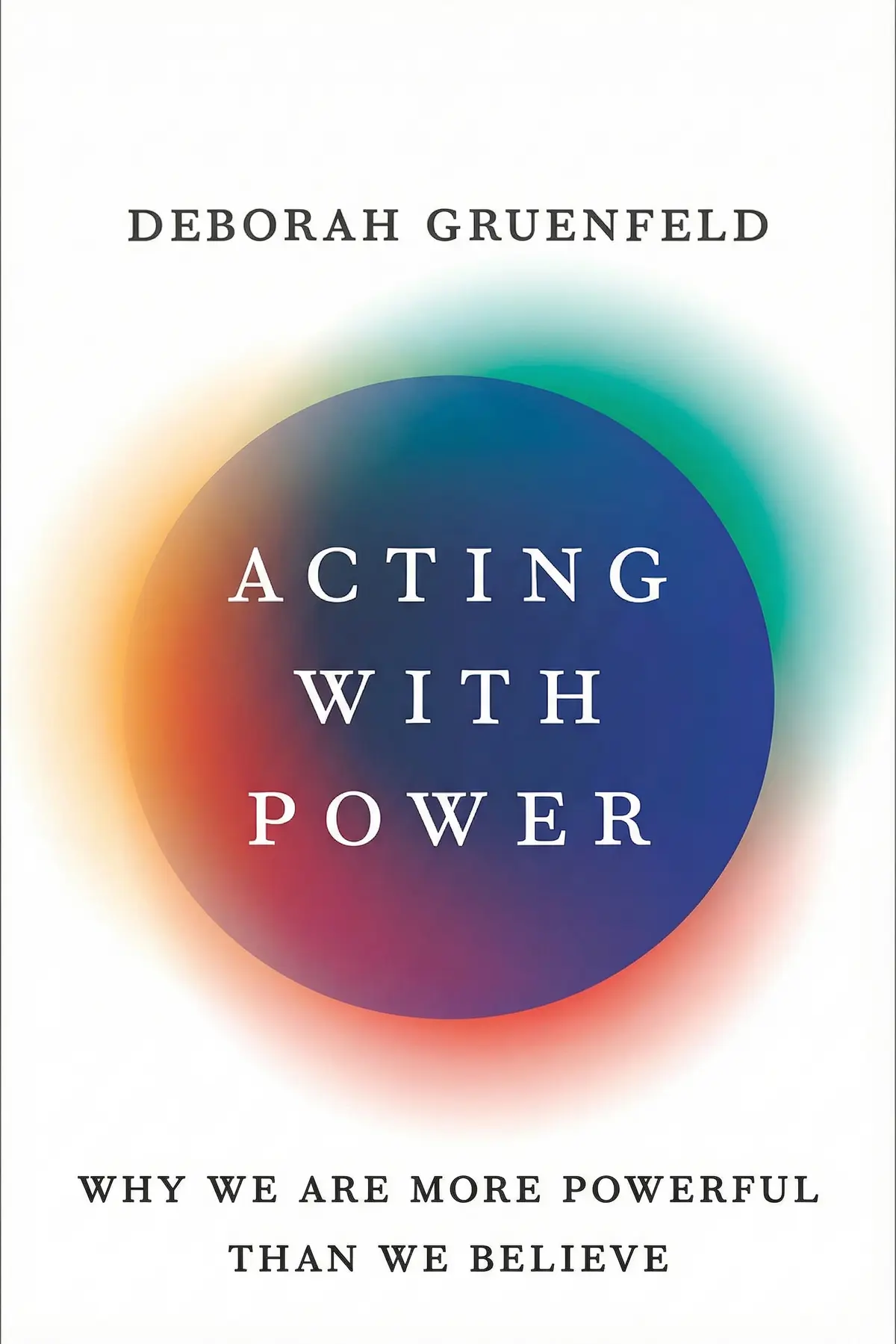
Deborah Gruenfeld
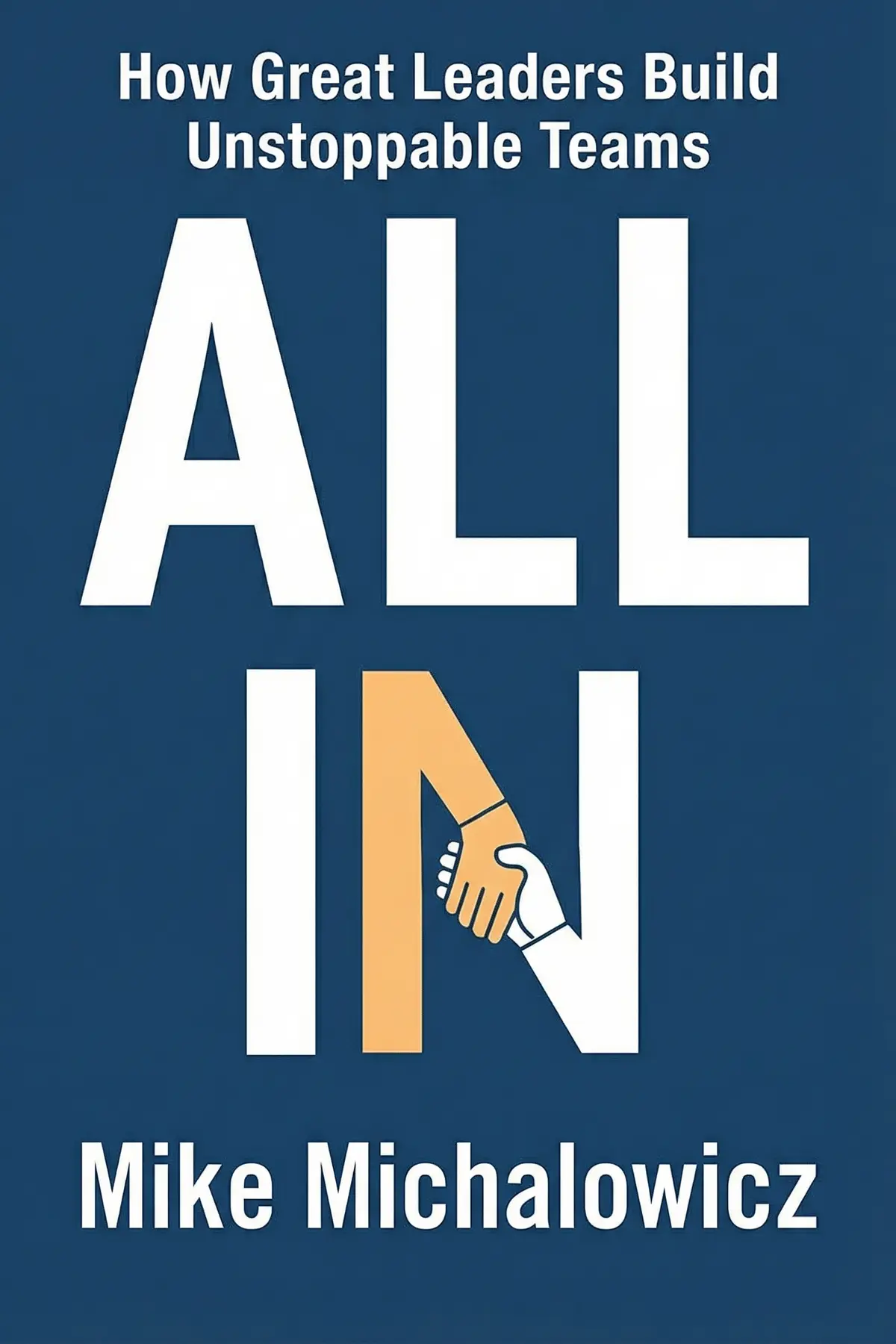
Mike Michalowicz
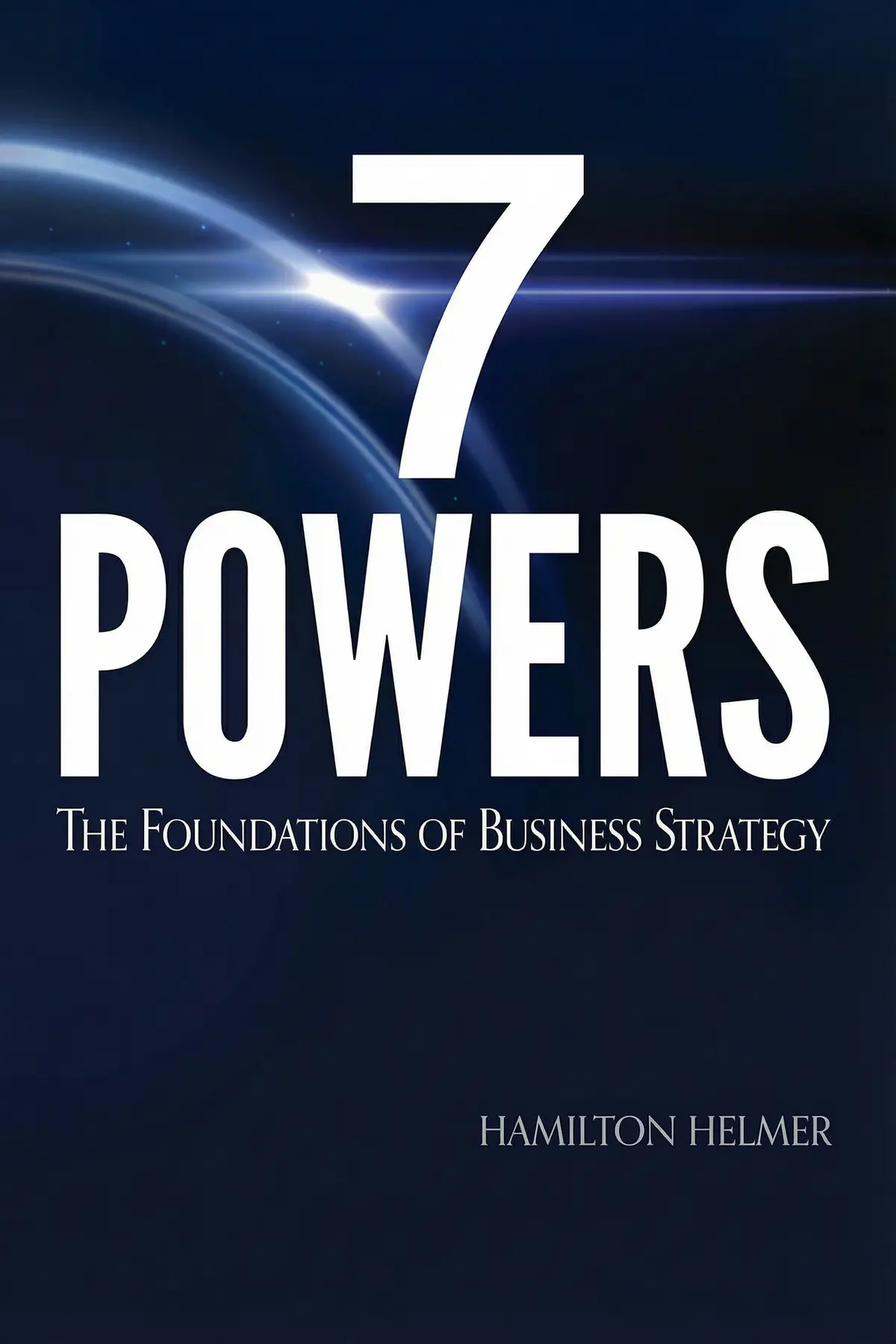
Hamilton Helmer

Margaret Heffernan
AUDIO SUMMARY AVAILABLE
Get the key ideas from Competition Demystified by Bruce C. N. Greenwald, plus 5,000+ more titles in English and Thai.







