

18 min 02 sec
Creative Confidence: Unleashing the Creative Potential Within Us All
Unlock your hidden innovative potential by overcoming the fear of judgment and embracing a bias toward action, proving that creativity is a skill anyone can master to transform their work and life.
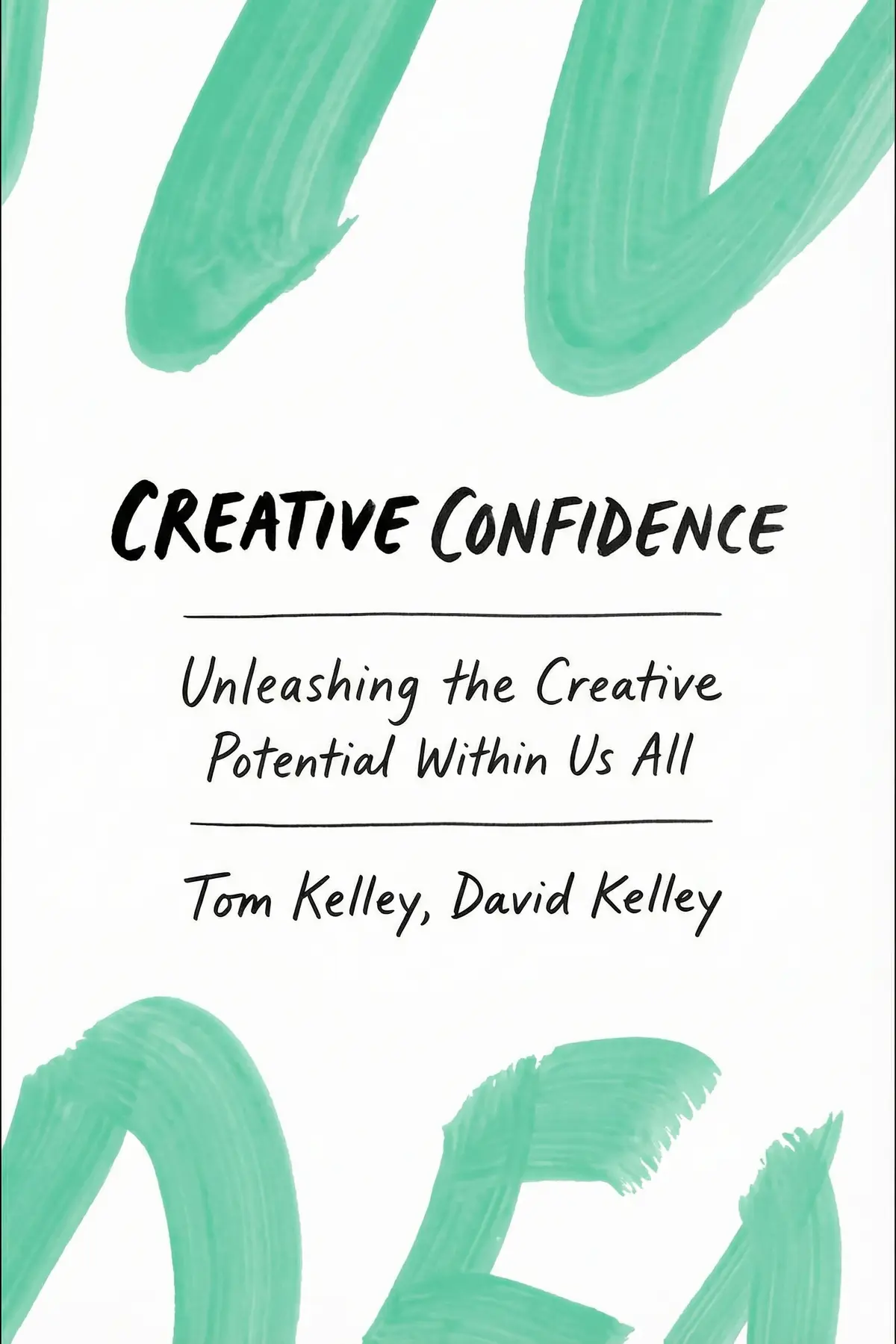
Table of Content
1. Introduction
1 min 42 sec
Think back to your early school days. You might remember a time when your primary focus was on the vibrant colors of a finger painting or the imaginary world of a backyard fort. But for many of us, that era came to an end when the adults in the room told us to put away the crayons and get to work on what they called the serious subjects. We were taught that math, history, and science were the priorities, while artistic expression was a hobby for the few. This creates a lasting impression that the world is divided into two camps: the creative types and the analytical types.
However, this division is a myth that limits our potential. In reality, every human being is born with an innate capacity for innovation. It isn’t a fixed trait you either have or you don’t; it is more like a muscle that can become weak through neglect but can also be strengthened through deliberate practice. In the modern world, this skill is more important than ever. Companies are no longer looking for people who can simply follow instructions; they are searching for individuals who can think differently and find novel solutions to complex problems.
This exploration is about reclaiming that lost part of yourself. We will look at how to move past the fear of being judged, how to find inspiration in the most mundane places, and how to bridge the gap between having a good idea and actually making it happen. By the end, the goal is to show you that creativity is not just for painters or musicians—it is a tool that can transform your career, your relationships, and the way you see the world every single day. The journey to creative confidence starts with the realization that your imagination is still there, waiting for you to give it permission to play.
2. Redefining Creativity Beyond the Arts
2 min 24 sec
Discover why innovation is a universal human trait that belongs as much in the boardroom or the laboratory as it does in an artist’s studio.
3. The Economic Shift Toward Innovation
2 min 07 sec
Learn how the global business landscape has evolved to prioritize creative leadership over traditional, purely analytical management styles.
4. Overcoming the Fear of Judgment
1 min 55 sec
Explore the psychological barriers that prevent us from sharing our ideas and how a growth mindset can help us push through them.
5. The Necessity of Productive Failure
1 min 57 sec
Discover why failing early and often is actually a prerequisite for long-term success and how to reframe your mistakes as progress.
6. Gaining Inspiration Through New Perspectives
2 min 04 sec
Learn how to break out of your routine and use the power of observation to spark fresh ideas in your daily life.
7. The Power of Creative Collaboration
2 min 04 sec
Find out why the myth of the lone genius is outdated and how working with a supportive team can amplify your imaginative output.
8. Bridging the Gap Between Knowing and Doing
2 min 12 sec
Understand the importance of a bias toward action and how to move past the paralysis of analysis to achieve your goals.
9. Conclusion
1 min 37 sec
As we reach the end of this journey, the core message remains clear: the creative potential you felt as a child has never left you. It is a fundamental part of who you are, regardless of your job title or your educational background. We have seen that creativity is a universal tool for problem-solving, that it is highly valued in the modern economy, and that the biggest thing standing in your way is often just the fear of being wrong. By embracing a growth mindset, looking at the world with the curiosity of a traveler, and leaning into collaboration, you can begin to rebuild your creative confidence one step at a time.
Remember that innovation is a process of iteration. You don’t need to be perfect on the first try; you just need to start. Whether you are redesigning a workflow at the office, trying to find a better balance between your financial needs and your passions, or simply looking for ways to make your daily routine more engaging, your imagination is your greatest asset. The gap between knowing what you want and actually achieving it can only be closed through action.
So, as you step back into your daily life, take one small, creative risk today. Don’t wait for the perfect moment or the perfect plan. Ask ‘why’ about something you usually take for granted. Share a rough idea with a colleague. Start that project you’ve been putting off. By consistently flexing your creative muscle, you will find that you are more capable and more resilient than you ever imagined. You have the power to shape your world and to find innovative solutions to any challenge that comes your way. The world needs your unique perspective—so go out and use it.
About this book
What is this book about?
Creative Confidence explores the idea that creativity is not a rare gift bestowed upon a few artistic individuals, but a universal human capacity that can be reclaimed and strengthened. The authors argue that many people lose touch with their creative side due to early criticism and the fear of failure, leading them to believe they are strictly analytical. Through a series of compelling stories from the design firm IDEO and the Stanford d.school, the book provides a roadmap for rebuilding this essential muscle. It covers practical strategies such as design thinking, collaborative brainstorming, and the importance of taking immediate action. The promise of the book is that by regaining your creative confidence, you can find more innovative solutions in the workplace, achieve a better balance between your passions and your career, and approach your personal life with a sense of renewed wonder and agency.
Book Information
About the Author
Tom Kelley
David Kelley is the founder of IDEO, one of the world’s leading innovation and design firms, as well as the founder of Stanford University’s Institute of Design, commonly known as the d.school. His brother, Tom Kelley, is also a partner at IDEO and the author of the bestselling books The Art of Innovation and The Ten Faces of Innovation. In addition, Tom serves as an executive fellow at the University of California, Berkeley’s Haas School of Business.
Ratings & Reviews
Ratings at a glance
What people think
Listeners find this book exceptionally accessible and functional, praising its lucid prose and effectively articulated ideas. Furthermore, it outlines a methodical approach to creative thinking and features detailed real-world examples that educators find especially useful. Listeners also value the inspiring nature of the material; one listener mentions it encourages a reassessment of life’s various facets, while another describes it as an excellent primer on the principles of design thinking.
Top reviews
Valentina
This book completely shifted my perspective on how I approach problem-solving in my daily life. Instead of viewing innovation as some mysterious lightning strike, Tom and David Kelley break it down into a repeatable, practical process. Personally, I found the chapter on 'failing forward' to be incredibly liberating because it reframes mistakes as necessary data points rather than personal failures. The writing style is approachable and energetic, making it a very quick read despite the depth of the concepts. It doesn’t just focus on business; it’s about regaining that childhood sense of play and curiosity that most of us lose by adulthood. If you’re looking for a roadmap to unlock your latent potential, this is definitely it. It's highly motivational without being overly cheesy.
Show moreKevin
As someone who works in the classroom, I found the case studies in this book to be an absolute goldmine for student engagement. The authors provide a clear, step-by-step framework that is perfect for teaching young minds how to tackle complex challenges without fear. It’s not just for CEOs; the principles of empathy and rapid prototyping are just as relevant for a middle school science project as they are for a tech startup. Gotta say, the emphasis on 'human-centered' design really resonated with my educational philosophy. The book is highly readable and manages to stay optimistic without feeling overly naive or unreachable. I’ve already started implementing some of the brainstorming exercises with my staff, and the results have been fantastic. It really helps you reevaluate your approach to teaching.
Show moreHassan
Picked this up during a career rut and it was exactly the spark I needed to start looking at my work differently. The authors successfully argue that creativity is a choice, not a trait, which is a very empowering realization for anyone stuck in a routine. Truth is, I found myself reevaluating several aspects of my personal life as well as my professional goals after finishing it. The emphasis on empathy and understanding the 'end user' is a game-changer for anyone in a service-oriented role. It’s a beautifully written, motivational guide that manages to be both inspiring and actionable. The case studies are rich and well-explained, making the concepts easy to grasp. Definitely worth the read if you feel like your innovative spark has dimmed lately.
Show moreThitima
Wow, what a refreshing perspective on innovation in a world that usually prioritizes logic and spreadsheets above all else. This book provides a much-needed bridge between the world of 'serious' business and the playful, messy world of creative exploration. The step-by-step process for design thinking is explained in such a simple, non-intimidating way that it makes you wonder why we don't work like this all the time. I particularly liked the focus on 'empathy maps' and how they can be used to solve real problems for real people. It’s a high-energy read that makes you want to go out and make something immediately. Every leader who thinks they 'aren't the creative type' should have a copy of this on their desk. It is both practical and deeply transformative.
Show moreSirichai
Finally got around to reading this after seeing it on every 'must-read' list for years. The Kelley brothers present a really compelling case that creativity isn't a rare gift but a muscle we can all strengthen. Truth is, the step-by-step methodologies for design thinking are laid out so clearly that even the most 'un-creative' person in accounting could find a way to apply them. I particularly appreciated the 'Creative Confidence To Go' section at the end for its actionable exercises. My only minor gripe is that it can feel a bit like a highlight reel for IDEO and the Stanford d.school at times. However, the core message about overcoming the fear of judgment is powerful enough to make those marketing moments easy to overlook. It’s a solid, practical introduction for anyone feeling stuck in a rigid corporate mindset.
Show moreFatou
The way the Kelley brothers weave together storytelling and practical advice makes for a very engaging experience. It’s rare to find a business-adjacent book that actually feels human and empathetic rather than cold and analytical. While some critics argue it’s too corporate, I think the real-world examples help ground the more abstract concepts in reality. Not gonna lie, I was skeptical about the whole 'everyone is creative' mantra at first, but the evidence presented here is hard to ignore. The book functions as a great introduction to the IDEO mindset, providing a clear path for those who feel blocked by a fear of failure. It’s an easy read that leaves you feeling energized and ready to tackle your next big project with a fresh set of tools.
Show moreSudarat
Ever wonder why we stop being 'creative' as we get older? This book dives deep into that question and offers a practical way to reclaim our lost confidence. The authors focus heavily on the 'do' part of creativity, encouraging readers to stop overthinking and start building low-fidelity prototypes immediately. In my experience, this bias toward action is exactly what most teams are missing when they get bogged down in endless meetings. The writing is clear and the layout is visually inviting, which matches the creative spirit of the content perfectly. It might be a little light on the academic side, but for a motivational boost and a step-by-step guide to design thinking, it hits all the right notes. It's definitely changed how I view my own potential.
Show moreAisha
To be fair, I expected a bit more substance and a few less anecdotes about how amazing their own projects are. While the central premise is inspiring, a lot of the advice feels like a collection of common-sense design principles: talk to users, use sticky notes, and prototype quickly. For someone already working in a creative field, many of these 'revelations' will feel like old news or even slightly redundant. It often reads like a long recruitment brochure for the d.school, which gets a bit tiresome after the third or fourth chapter. That said, the specific activities in the final section are quite useful for breaking out of a rut. It’s a decent motivational tool for beginners, but veterans of the design world might find it a bit fluffy and corporate.
Show moreChatchai
After hearing so much hype about this title, the reality was a bit of a mixed bag for me. On one hand, the core message is incredibly positive and the authors are clearly experts in their field. On the other hand, the constant name-dropping of d.school and big-name corporate clients makes it feel a bit like a long sales pitch. To be fair, the 'Move' chapter at the end provides some concrete activities that saved the book for me. It’s a great 'Design Thinking 101' for someone who has never heard of it, but it doesn't offer much new for anyone with a design background. It's essentially a well-written cheerleader for a very specific methodology. Useful, but ultimately a bit repetitive and relentlessly focused on business success.
Show moreRapee
Look, if you’ve ever worked in a modern office, you’ve heard every single one of these corporate buzzwords before. I was hoping for deep insights into the psychology of creativity, but what I got was mostly 'business blah-blah' and success stories about billions of monies made. The authors seem more interested in promoting their consulting firm than providing actual, rigorous techniques for generating new ideas. It follows that classic bad self-help formula where one simple idea is stretched across hundreds of pages using confirmation bias and long-winded examples. Frankly, you could probably get the same value from a ten-minute summary online. Unless you are brand new to the concept of design thinking, skip this and find something with more meat on the bones. It's essentially a high-priced brochure.
Show moreFeatured in
Readers also enjoyed


AUDIO SUMMARY AVAILABLE
Listen to Creative Confidence in 15 minutes
Get the key ideas from Creative Confidence by Tom Kelley, plus 5,000+ more titles in English and Thai.
- 5,000+ titles
- Listen as much as you want
- 7-day free trial
- Cancel anytime







