
18 min 03 sec
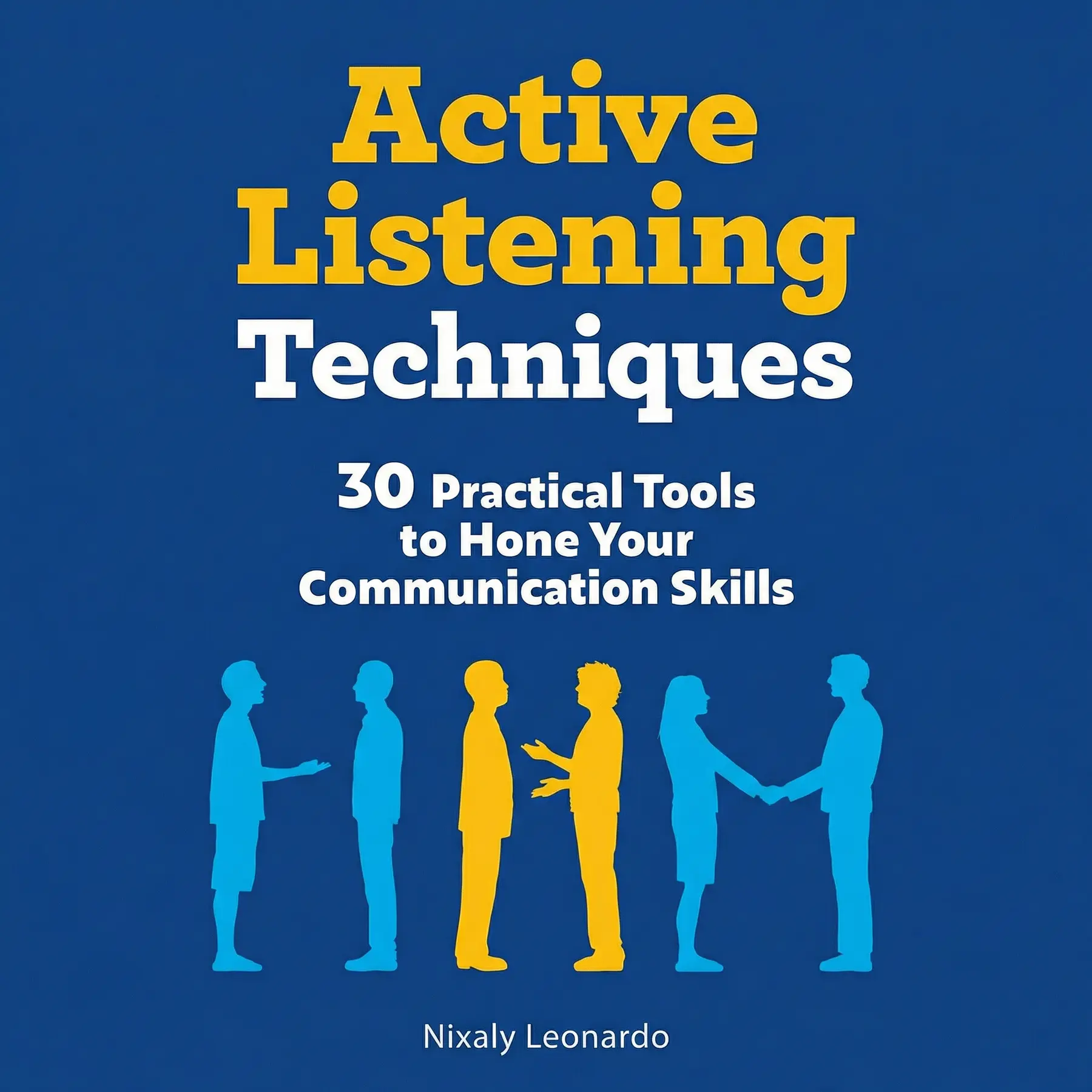
Active Listening Techniques: 30 Practical Tools to Hone Your Communication Skills
Active Listening Techniques offers thirty transformative tools to refine communication. Licensed clinical social worker Nixaly Leonardo shares strategies to dismantle misunderstandings, manage emotional triggers, and foster deeper, more empathetic connections in every interaction.
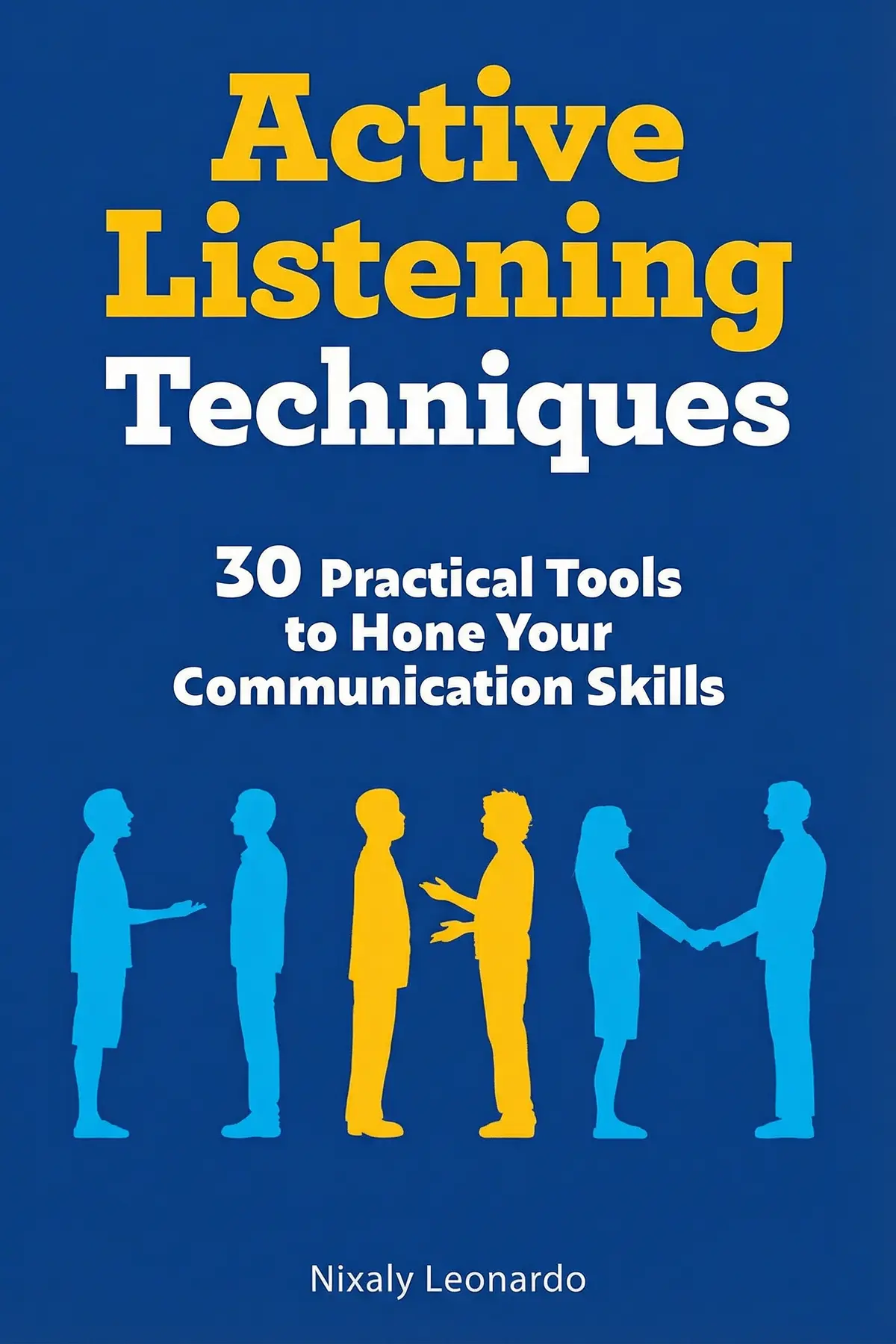
Table of Content
1. Introduction
1 min 31 sec
We often think of communication as the words we choose to say, the arguments we build, or the stories we tell. But the most vital half of the equation—listening—is frequently neglected or misunderstood. Have you ever walked away from a conversation feeling like you were speaking a different language than the other person? Or perhaps you’ve found yourself reacting with unexplained anger to a simple suggestion? These moments reveal that listening is not a passive act; it is a complex, active skill that requires self-awareness, patience, and a specific set of tools.
In this summary of Active Listening Techniques by Nixaly Leonardo, we are going to explore how to bridge the gap between merely hearing words and truly understanding the person behind them. We will look at thirty practical tools designed to sharpen your communicative edge. This isn’t just about nodding your head while someone else talks. It’s about recognizing the hidden filters in your own mind that distort what you hear. It’s about learning how your body’s physical state dictates your emotional responses. And it’s about discovering the profound power of silence and validation.
Whether you are navigating a high-stakes professional negotiation, trying to mend a strained family relationship, or simply wanting to be a better friend, these techniques provide a clear path forward. By the end of this journey, you’ll have a toolkit to transform conflict into connection and confusion into clarity. Let’s dive into the essential shifts that turn an average communicator into an exceptional, active listener.
2. Challenging Cognitive Distortions
2 min 13 sec
Our past experiences act like invisible filters that can warp our current reality and cause us to misread the intentions of the people we love most.
3. The Role of Physical and Vocal Awareness
2 min 00 sec
Communication isn’t just a mental exercise; it is a physical one, where your body’s hidden signals can either build bridges or burn them down.
4. The Art of Strategic Questioning
1 min 54 sec
The right question can open a mind, while the wrong one can slam it shut; learn the shift from interrogation to supportive inquiry.
5. Harnessing the Power of Silence
1 min 48 sec
Silence is not a void to be filled, but a sacred space that allows the speaker to feel truly seen and heard.
6. Navigating Sensitivity with Respect
1 min 44 sec
Sharing unpopular or delicate opinions doesn’t have to lead to conflict if you lead with transparency and respect for the other person’s perspective.
7. Choosing Words That Build Bridges
1 min 52 sec
The difference between a successful resolution and a hurt feelings often comes down to the subtle choice between ‘you’ and ‘I’.
8. Validating and Normalizing Emotions
1 min 49 sec
To feel heard, a person must first feel that their emotions are seen as legitimate and understandable, regardless of the facts.
9. Mastering the Art of De-escalation
1 min 46 sec
When a conversation starts to spiral into conflict, you can use specific vocal and structural tools to bring the temperature back down to a productive level.
10. Conclusion
1 min 26 sec
Mastering the art of active listening is not something that happens overnight. It is a lifelong practice of turning toward others with curiosity instead of judgment. Throughout this summary, we’ve explored thirty tools that range from the internal work of identifying cognitive distortions to the external work of de-escalating a heated argument. We’ve seen how silence can be more communicative than words, how ‘I’ statements can dismantle defensiveness, and how validating someone’s emotions can be the key to long-term conflict resolution.
The throughline of Nixaly Leonardo’s work is clear: communication is not just about the exchange of information; it is about the preservation of connection. When we listen actively, we are telling the other person that their reality matters to us. We are moving from a world of ‘me versus you’ to a world of ‘us against the problem.’
As you move forward into your next conversation, try to pick just one of these tools. Perhaps you’ll start by being more aware of your vocal tone, or maybe you’ll try to use a five-second pause before responding to a difficult question. Small, intentional shifts in how you receive others will eventually create a profound ripple effect in your relationships. By honing these techniques, you become more than just a listener—you become a builder of bridges, a smoother of tensions, and a more empathetic presence in the lives of everyone you meet.
About this book
What is this book about?
Communication is often treated as a one-way street of speaking, but the true depth of any relationship lies in how we listen. Active Listening Techniques addresses the psychological and physiological barriers that prevent us from truly hearing others. It explores how our past experiences create cognitive distortions that color our perception, and how simple physical states like hunger or fatigue can derail a productive conversation. Nixaly Leonardo provides a roadmap for moving beyond passive hearing. The book promises to equip readers with practical tools—from the strategic use of silence to the art of non-confrontational questioning. By mastering these techniques, you can de-escalate heated arguments, validate the emotions of those around you, and build a foundation of trust and empathy that transforms personal and professional dynamics alike.
Book Information
About the Author
Nixaly Leonardo
Nixaly Leonardo is a licensed clinical social worker with extensive experience in mental health counseling and communication skills training. Her expertise lies in helping individuals and organizations enhance their interpersonal relationships through effective communication. She is also known for her contributions to the field of emotional intelligence and conflict resolution, her other work including Anger Management Journal and The CBT Workbook for Anger Management.
Ratings & Reviews
Ratings at a glance
What people think
Listeners find this book beneficial for enhancing their ability to listen, as it offers excellent illustrations for particular communication obstacles. Furthermore, the text is simple to digest, and one listener pointed out that it acts as a fantastic primer.
Top reviews
Patcharaporn
Finally got around to finishing this guide, and I’m convinced it deserves a permanent spot on my reference shelf for years to come. Nixaly Leonardo does a fantastic job of breaking down 30 practical tools that are immediately applicable to both personal relationships and professional environments. To be fair, I went into this expecting a dry textbook, but I was pleasantly surprised by the clear scenarios and the straightforward writing style. The chapter on navigating emotionally charged situations was particularly enlightening, offering polite responses that I actually feel comfortable using in real-life heated moments. I love that each section is compact enough to read during a lunch break, yet brimming with enough actionable advice to keep me busy for weeks. It’s rare to find a 'how-to' book that is this digestible without sacrificing the quality of the insights. I’ve already recommended it to several colleagues who struggle with maintaining focus during meetings.
Show moreScarlett
Ever wonder why your conversations always seem to hit a brick wall no matter how hard you try to listen? This book provides the answers by highlighting the obstacles to listening that we often overlook, such as our own distortions and preconceived expectations. I found the section on persuasion tools to be surprisingly deep for such a compact volume, and the 30 practical tools offer a great roadmap for growth. Each chapter feels like a mini-lesson that encourages you to step back and analyze your own behavior rather than just blaming the other person for the misunderstanding. Personally, I found the writing to be incredibly encouraging, making the daunting task of changing lifelong habits feel manageable and even exciting. It’s one of those rare books that you’ll want to read and then re-read every few months to make sure the skills are actually sticking. It truly deserves a spot in any reference library for anyone who wants to foster more meaningful connections.
Show moreSamroeng
This book is like a mirror that forces you to examine your own distortions and expectations during a conversation before you try to change others. Leonardo provides a comprehensive list of tools that address both verbal and non-verbal cues, making it a holistic guide for anyone looking to improve. I especially loved the section on de-escalating emotionally charged situations, as it gave me several phrases that have already helped me at home. To be fair, some of the techniques are common sense, but having them organized into 30 clear tools makes them much easier to practice intentionally. I plan to re-read this again starting tomorrow to make sure I’ve fully internalized the lessons on empathy and rapport. It is exactly the kind of reference book that provides more value every time you return to its pages. If you communicate with other humans in any capacity, you should probably own a copy of this.
Show moreMo
Truth is, I struggled with keeping my focus during long conversations, so I picked this up to find some concrete ways to improve my daily interactions. The 30 practical tools are clearly defined, and I particularly appreciated the focus on non-verbal cues and how to interpret them without jumping to conclusions. While some parts felt a little repetitive, the examples provided were realistic enough to help me visualize applying the skills in my own life. It emphasizes empathy and respect as the foundation for everything, which is a refreshing change from books that focus only on 'winning' the conversation. I did feel that a few of the techniques were a bit haphazardly disconnected from one another, making it hard to follow a logical progression through the chapters. Despite that small gripe, the writing is accessible and the advice is actionable enough for a quick self-improvement win. I’ll likely keep it around to reference the specific sections on de-escalating conflict.
Show moreHunter
Leonardo’s guide is essentially a survival kit for anyone who feels overwhelmed by the complexities of modern communication in a fast-paced world. The strength of this book lies in its simplicity, offering digestible nuggets of wisdom that don't require a psychology degree to understand or apply immediately. I was especially surprised by the latter half of the book, where the author addresses 'incendiary remarks' that actually made me shout out loud at the screen. The polite, measured responses she provides are exactly what I wish I could say when things get heated at work or home. Not gonna lie, some of the techniques are very basic, like simple nodding or basic eye contact rules, which might bore more experienced readers. However, as a quick refresher or a gift for someone just starting their career, it is an invaluable and highly practical resource. The layout makes it easy to flip to a specific tool whenever you need a quick boost of confidence before a big talk.
Show moreKasemsan
After hearing several people recommend this for workplace friction, I decided to give the 30 tools a shot to see if they could help my team. The author does an excellent job of covering the basics of empathy and respect, which are often the first things to go out the window during a stressful project. I found the scenarios to be the most useful part of the text, as they provide a clear bridge between theory and actual practice. To be fair, the book is quite brief, and those looking for an academic deep dive into communication theory will definitely be left wanting more. It’s a very practical guide that focuses on actionable advice rather than abstract concepts, which makes it perfect for busy professionals. My only real complaint is that some of the sections felt a bit rushed, leaving me to wonder how to apply the techniques in more nuanced situations. Still, for a quick read that delivers immediate value, it’s a solid choice.
Show moreFatou
As a professional who spends most of my day in high-stakes negotiations, I found the techniques presented here to be a bit too elementary for my specific needs. I listened to the audiobook version and only made it through the first twenty minutes before realizing that many of these 'tools' are just common sense for any functional adult. For instance, being told to maintain eye contact and offer full attention is great for a beginner, but I was looking for advanced psychological leverage. To be fair, the book does get more interesting toward the end when the author introduces more complex scenarios involving cultural nuances. Some of the suggested responses to incendiary remarks were quite clever, even if they felt slightly scripted and unrealistic for a fast-paced environment. It is a solid primer for students or those new to the workforce, but don't expect a deep masterclass in persuasion or high-level sales tactics.
Show moreLucas
In my experience, books on communication usually stick to a cohesive framework, but this one felt slightly fragmented and disconnected in its application. While the tips are certainly helpful and the examples are clear, I had a hard time remembering more than a few tools after putting the book down. The writing is polite and professional, yet it lacks that 'punch' that makes a self-help book truly memorable or life-changing for the reader. I did appreciate the discussion on cultural nuances regarding eye contact, as that’s a detail many other authors tend to ignore in favor of universal rules. However, the tone often shifts into what feels like relationship therapy for people who are already quite bitter, which wasn't exactly what I signed up for. It serves as a decent introductory primer, but it won't replace a more comprehensive study of interpersonal dynamics or negotiation strategies. It’s okay, but just realize you are getting a very high-level overview of the subject.
Show moreAmelia
The title is a bit of a misnomer in my opinion, as I expected a deep dive into auditory processing rather than what feels like a relationship self-help book for bitter people. While the author provides 30 specific tools, many of the techniques felt haphazardly disconnected and lacked a cohesive narrative thread that would make them easy to memorize. Frankly, I found the advice to be overly basic, making it more of a primer for someone who has never considered how their own tone affects a conversation. It covers the foundations of eye contact and empathy, but for anyone who has already studied communication, there isn't much new ground here. I wanted something that focused strictly on the mechanics of listening to understand complex problems, not a manual on how to be polite to a spouse. If you are a beginner, this might serve its purpose, but seasoned professionals will likely find it lacking in substance.
Show moreNoah
Look, I was hoping for deep psychological insights into auditory processing, but what I got was more of a relationship-saving manual. The techniques presented are incredibly basic, such as maintaining eye contact and nodding, which most people should have learned in elementary school. It felt like the book was written for someone who has absolutely no social skills or is dealing with a very high-conflict partner. The author’s polite responses to incendiary remarks are a bit too 'perfect' to ever work in a real-world argument without sounding like a robot. I also found the organization of the 30 tools to be somewhat haphazard, making it difficult to find a specific tip when I actually needed it. If you are a complete beginner or feel like your communication style is totally broken, you might get something out of this. For me, it was a disappointing read that didn't live up to the promise of its title.
Show moreFeatured in
Readers also enjoyed
AUDIO SUMMARY AVAILABLE
Listen to Active Listening Techniques in 15 minutes
Get the key ideas from Active Listening Techniques by Nixaly Leonardo, plus 5,000+ more titles in English and Thai.
- 5,000+ titles
- Listen as much as you want
- 7-day free trial
- Cancel anytime







