
A Life Decoded: My Genome: My Life
J. Craig Venter
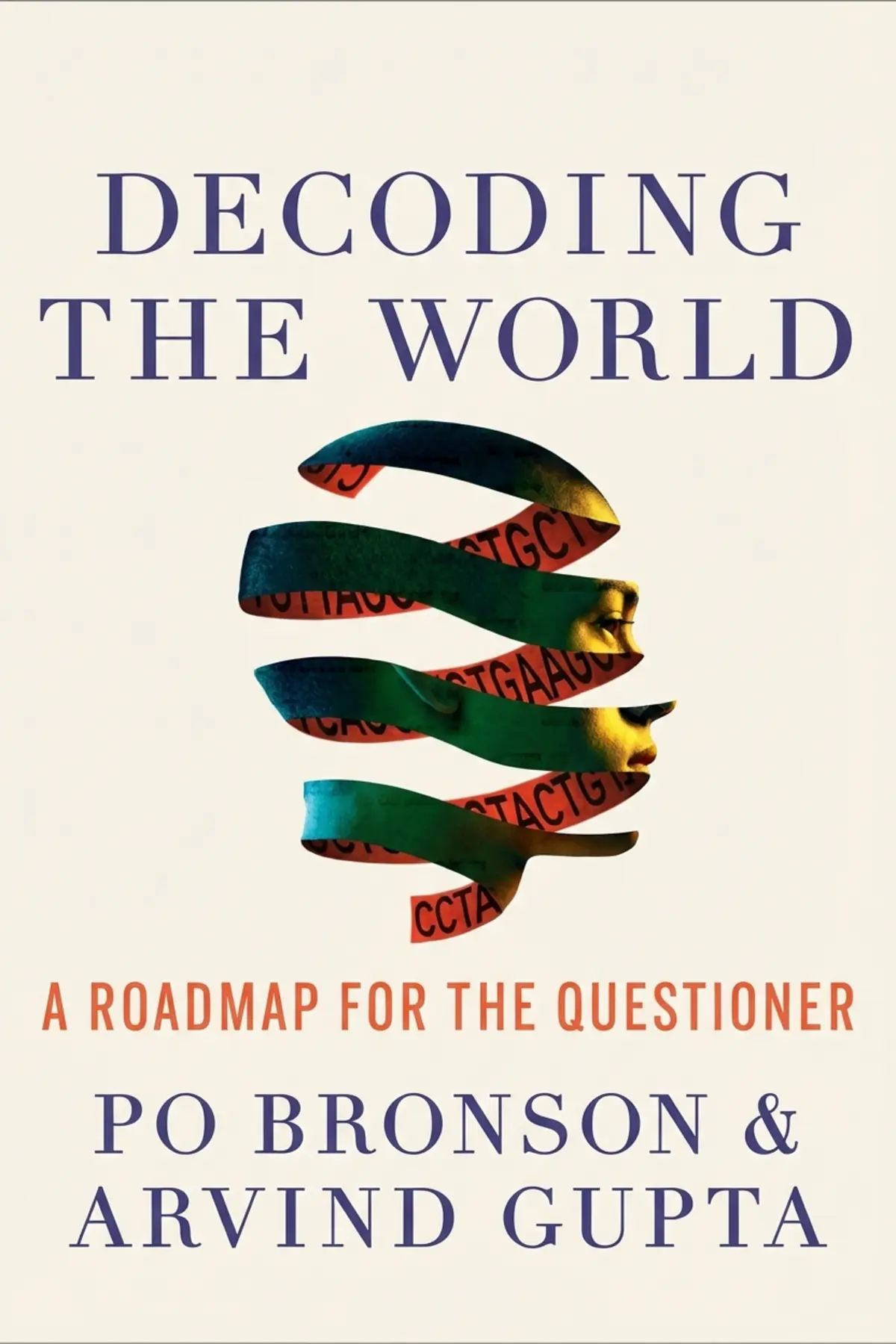
Decoding the World explores how biotechnology and venture capital can solve global crises. From reversing climate change to curing disease, it offers a visionary roadmap for a more sustainable, high-tech future.
1 min 28 sec
We live in an era that feels increasingly unpredictable. When we look at the headlines, we see a world grappling with massive, interlocking challenges: the lingering effects of a global pandemic, the accelerating reality of climate change, and the dizzying rise of artificial intelligence. It often feels like we are reacting to these events rather than shaping them. But what if we could decode the underlying systems of our world to build a better future? This is the central question explored by Po Bronson and Arvind Gupta, two leaders at the forefront of the biotechnology revolution. Through their work at the venture capital firm IndieBio, they have seen firsthand how small, innovative ideas can grow into world-changing solutions.
In this exploration, we are going to look at how we can move past the fear of the unknown and start using the tools of science—specifically genetics and machine learning—to solve the problems that once seemed insurmountable. We will see how a sense of purpose can literally improve our physical health and why the way we think about the planet needs to shift from a mindset of crisis to one of engineering. By looking through the lens of a venture capitalist who thinks like a scientist, we can begin to see a roadmap for the future that is both pragmatic and hopeful. This journey will take us from the laboratories of Silicon Valley to the melting glaciers of Iceland and the massive factories of China, all to understand how we can transition from being passive observers to active participants in the decoding of our world.
2 min 44 sec
When the world stopped in early 2020, a group of scientists didn’t just wait for a vaccine—they began exploring radical, out-of-the-box solutions to a global threat.
2 min 50 sec
Innovation doesn’t happen in a vacuum—it is shaped by global power dynamics and a massive industrial engine that most of us barely understand.
2 min 44 sec
Even when we have the solutions to save our planet, a hidden force often prevents us from taking the final step toward change.
2 min 25 sec
Our fears about genetic engineering often come from science fiction, but the reality is far more subtle—and far more useful—than we realize.
2 min 38 sec
From the way we breathe to the way we store memories, science is uncovering hidden mechanisms within our bodies that could extend our lives.
2 min 34 sec
The entire world is made of just a few basic building blocks. By learning to rearrange them, we can solve the planet’s biggest resource problems.
2 min 39 sec
Innovation isn’t just about better gadgets; it’s about asking deep questions about what makes a product truly ‘perfect’ for the world.
2 min 15 sec
Our personal health and the health of the Earth are more connected than we think, requiring a unified approach to our future survival.
1 min 23 sec
In the end, Decoding the World reminds us that the future is not a predetermined destination, but a landscape we are actively building. Through the stories of IndieBio and the many startups it supports, we see that biotechnology is not a cold, mechanical process, but a deeply human endeavor fueled by curiosity and a desire to heal. We have explored how understanding our genetic expression can replace fear with precision medicine, how the ‘mass transfer’ of carbon can stabilize our climate, and how even the smallest bacteria can be our greatest allies in creating a sustainable economy.
The throughline of this journey is the bridge between scientific discovery and ethical responsibility. Whether it is rethinking the way we dye our clothes or how we produce our food, the goal is to align our technological capabilities with our values. As we face the challenges of the twenty-first century, we are encouraged to move beyond inertia and embrace the risks necessary for progress. Our personal health and the health of our planet are one and the same, and by taking a proactive, engineering-based approach to both, we can ensure a world that is not only habitable but thriving. The tools to decode and rebuild our world are within our reach; the question is whether we have the courage and the purpose to use them.
What does it take to fix a broken planet? Decoding the World takes you inside the high-stakes world of IndieBio, a venture capital firm dedicated to using biotechnology as a tool for global transformation. Authors Po Bronson and Arvind Gupta argue that we are currently at a crossroads where genetics, artificial intelligence, and environmental science intersect. By understanding these systems, we can move beyond mere survival and begin to actively engineer a better reality. The book promises a deep dive into the innovations that are already reshaping our world, such as lab-grown meat, 3D-printed materials, and genetic editing. It explores the philosophical and practical challenges of bringing these technologies to life, including the societal inertia that often stands in the way of progress. By the end, listeners will gain a clearer sense of how scientific breakthroughs are not just abstract concepts but actionable solutions to the most pressing issues of our time, from the COVID-19 pandemic to the melting of the polar ice caps.
Arvind Gupta is the visionary founder of the venture capital firm IndieBio, a role he held until 2020. With a background in genetic engineering, he is also known for his adventurous spirit as a former BASE jumper. Po Bronson serves as IndieBio’s managing director and is a celebrated, award-winning science journalist. His previous works include the highly acclaimed book What Should I Do With My Life?
Listeners find the book to be an excellent source of information. They value the high quality of the writing, with one listener noting it is an essential read for the modern age.
Ever wonder how the future actually gets built? Bronson and Gupta provide a fascinating look behind the curtain of biotechnology and venture capital. While some chapters are definitely dense, the optimism here is infectious. I particularly loved the breakdown of RNA and how it's being used to tackle everything from viruses to food security. It’s a must-read for anyone who feels overwhelmed by the negative headlines we see every day. The authors have a way of taking complex biological concepts and making them feel like tools for positive change. Truth is, we need more thinkers who aren't afraid to be bold about science.
Show moreWow, this book really shifted my perspective on the intersection of biology and our global future. The way the authors break down the "War on Truth" alongside genetic breakthroughs is nothing short of brilliant. I often had to pause and re-read sections just to wrap my head around the scale of the innovations they are describing. It’s not just about the science; it’s about the philosophy of how we perceive risk and progress in an era of rapid change. Some might find the tone a bit too "Silicon Valley," but the underlying data and the clear metaphors make the complex subjects accessible. Decoding the World is an ambitious project that mostly succeeds in making the future feel like a place we want to live in.
Show moreDecoding the World offers a rare, optimistic glimpse into the minds of people trying to solve the planet's messiest problems. Instead of the usual doom and gloom associated with climate change and global health, Bronson and Gupta provide actionable ideas and a sense of agency. The prose is incredibly readable, avoiding the dense jargon that usually plagues science books of this caliber. I loved the exploration of lab-grown food and the potential for "decarbonizing our diets" as a real solution. It’s a book that encourages you to keep an open mind to possibilities that seemed like magic only a few years ago. Truly an excellent introduction to the wild frontier of bioengineering for any curious reader.
Show moreAs someone who follows science news religiously, this was a refreshing way to digest complex global issues. The format is unique; they take a current headline and use it as a springboard into deep-dive discussions on things like genetic engineering and the climate crisis. I appreciated the chapter on the COVID-19 vaccine development because it highlighted the speed of innovation when humanity is truly pressed. Some parts feel a bit scattered, jumping from Bond villains to illegal sand trading, which can make it hard to find a through-line. However, Gupta and Bronson are clearly experts in their field. Their prose is clear enough for a layperson while remaining intellectually stimulating for those with a background in bioengineering.
Show moreFinally got around to reading this, and I’m struck by how it bridges the gap between lab science and venture capital. The authors don't just talk about theories; they talk about the actual companies and people trying to scale these solutions through IndieBio. It’s fascinating to see how they view the world as a series of problems waiting for a biological hack. While I wasn't a fan of the casual text message interludes—they felt a bit forced—the core information about lab-grown meat and climate mitigation is top-notch. It left me feeling a lot more hopeful about the next decade. If you like the style of magazines like Wired or Popular Science, you’ll likely find this right up your alley.
Show moreAfter hearing about the work Arvind Gupta has done with biotechnology startups, I was eager to see his take on our planetary challenges. This book delivered a high-energy look at how bioengineering might solve the climate crisis and improve human longevity. The writing style is punchy and direct, which helps when they are explaining something as complicated as CRISPR or AI-driven genetics. I did find the "Bond villain" comparisons a bit strange, but they served their purpose in making the ethical stakes clear. It’s a very "now" book that feels relevant to every headline we're seeing in the news today. It’s definitely not for everyone, but if you’re a tech-optimist, you’ll find plenty of fuel for your fire here.
Show moreTo be fair, I wasn't sure if I'd like the conversational style and the text message headers, but they actually grew on me as I got deeper into the book. It makes the authors feel more like human beings rather than just distant experts lecturing from an ivory tower. The scope of the material is incredibly broad—covering everything from COVID vaccines to cryptocurrency—which keeps the pace moving quickly. I would have liked a bit more proof for some of their more "out there" opinions, but the sheer volume of ideas makes up for it. It’s a smorgasbord of biotechnology and social commentary that hits more often than it misses. Highly recommended for fans of speculative non-fiction.
Show moreThe chapter on healthcare reform was a bit of a slog, but the rest of the book generally holds your attention with its fast-paced ideas. I went into this expecting a straightforward science book, but it’s much more of an "opinion book" focused on how technology might save us. Bronson and Gupta trade essays back and forth, which creates a conversational tone that sometimes works and sometimes feels a bit condescending. I found the section on "DNA hacking" to be the most compelling part of the entire experience. It’s a smorgasbord of topics, and honestly, you might be better off reading the chapters that interest you most rather than going cover-to-cover. It’s an okay read if you want a broad overview of the tech frontier.
Show moreThis book is a bit of a mixed bag for me, depending on which chapter I was currently reading. At its best, it offers mind-blowing insights into RNA and the future of medicine that feel like they belong in a sci-fi novel. At its worst, it feels like a collection of disjointed blog posts that don't quite cohere into a central argument. I found the constant switching between Bronson and Gupta to be a bit jarring at times, though their distinct voices do eventually become familiar. The authors are clearly brilliant, but they sometimes veer into topics where their expertise feels a bit thin, like universal healthcare. It’s a decent choice if you want to stay updated on current tech trends, but don't expect a deep academic study.
Show moreNot what I expected when I picked this up based on the sleek cover and the promising subtitle. While I appreciate the work IndieBio does, this book felt more like a series of disjointed op-eds than a cohesive scientific exploration. The "tech-bro" vibe is strong here, often feeling like I was being lectured by two guys at a cocktail party who think they have the solution to every global problem. I found the inclusion of their personal text messages to be quite gimmicky and distracting from the actual content. To be fair, some of the biotechnology insights are interesting, but they are buried under layers of personal anecdotes and unverified opinions. It just lacked the academic rigor I was looking for in a science book.
Show moreJ. Craig Venter
Yuval Noah Harari
Carl Zimmer

Bill Bryson
Jeff Hawkins
Kai-Fu Lee
AUDIO SUMMARY AVAILABLE
Get the key ideas from Decoding the World by Po Bronson, plus 5,000+ more titles in English and Thai.







