

34 min 25 sec
A Short History of Nearly Everything
By Bill Bryson
A sweeping exploration of the universe’s greatest mysteries, from the Big Bang to the microscopic building blocks of life. Bill Bryson navigates the complex history of scientific discovery with curiosity and wit.
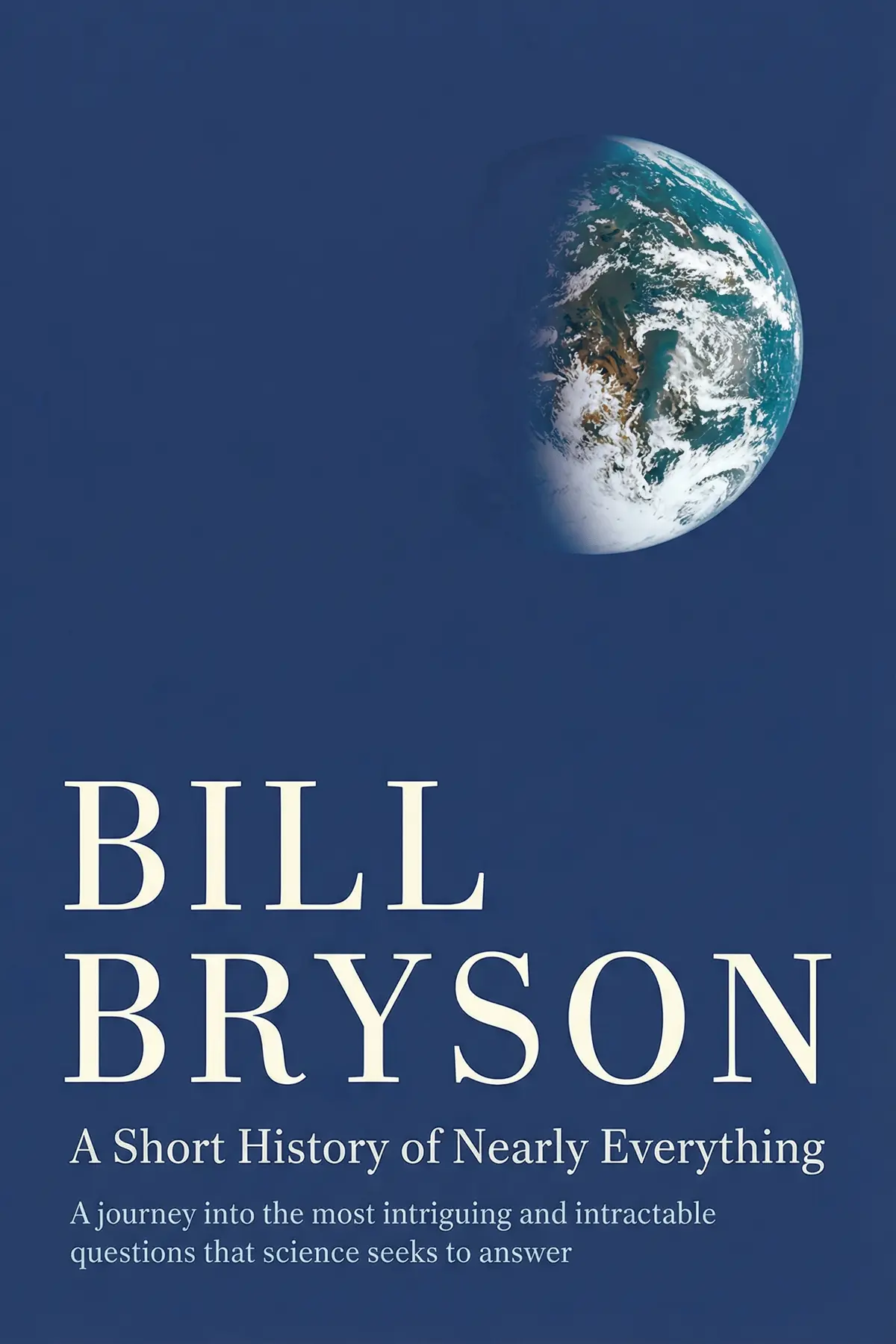
Table of Content
1. Introduction
2 min 11 sec
Have you ever paused to look at the world around you and wondered how any of it actually exists? It’s a question that can feel overwhelming when you really sit with it. We live on a spinning rock in the middle of an incomprehensible void, surrounded by a dizzying variety of life forms, governed by invisible forces that keep everything from flying apart. For thousands of years, the brightest minds in human history have dedicated their lives to pulling back the curtain on these mysteries, trying to figure out where the universe came from and what, exactly, it’s made of.
Yet, for most of us, the answers to these questions often feel locked away in textbooks full of dense jargon and intimidating equations. This is where we begin our journey today. We are going to embark on a guided tour through the history of, well, almost everything. We aren’t just looking at cold facts; we’re looking at the story of human curiosity. It’s a story populated by eccentric geniuses, accidental breakthroughs, and a realization that the more we learn, the more we see how much remains hidden in the shadows of the unknown.
In the coming segments, we’ll explore the explosive birth of the cosmos and the strange, quiet hum it left behind—a sound you can actually hear in your own home. We’ll look at the incredible scale of space, a place so vast that being alone is almost statistically impossible, yet so large that we may never find company. We’ll dive into the world of the very small, where bacteria are the true rulers of the Earth, and the subatomic level, where the rules of reality seem to bend and break.
We’ll also look at the thin line we walk every day. Our existence depends on a series of perfect conditions—the right distance from the sun, the presence of a loyal moon, and the luck of not being hit by a wandering asteroid. From the depths of the unexplored oceans to the genetic code we share with fruit flies and bananas, this is a narrative about how we got here and why our presence is nothing short of a miracle. So, let’s begin at the absolute beginning, at a moment before time even had a name.
2. The Birth of the Cosmos
2 min 52 sec
Discover how two astronomers accidentally stumbled upon the echo of creation while trying to clean an antenna, proving the universe began with a rapid, massive expansion.
3. The Immensity of Space
2 min 26 sec
Take a moment to visualize the sheer scale of the universe, where billions of galaxies and trillions of stars suggest that we are likely not the only residents.
4. Newton and the Laws of Motion
2 min 11 sec
Explore the eccentric life of Isaac Newton, whose groundbreaking work on gravity and physics redefined our understanding of how planets and objects move.
5. The Mystery of Earth’s Age
2 min 34 sec
Trace the journey from biblical guesses to the precision of radioactive dating as scientists struggled to determine exactly how long the Earth has existed.
6. Einstein and Special Relativity
2 min 22 sec
Learn how a humble patent clerk revolutionized our understanding of time, proving that it doesn’t flow at the same rate for everyone.
7. Spacetime and Gravity
2 min 25 sec
Uncover the connection between mass and energy, and how gravity is actually a curve in the fabric of space and time.
8. The Strange World of Quantum Theory
2 min 12 sec
Enter the subatomic realm where traditional physics fails, and discover the uncertainty principle that defines the behavior of particles.
9. The Goldilocks Planet
2 min 19 sec
Understand the four specific and unlikely conditions that had to align perfectly for life to thrive on Earth.
10. The Deep Unexplored Frontiers
2 min 11 sec
Explore the mystery of the Earth’s oceans, a vast abyss that remains less understood than the surface of Mars.
11. The Microscopic Rulers
2 min 06 sec
Meet the bacteria that dominate the planet, surviving in the most extreme environments and making human life possible.
12. The Spark of Life
2 min 12 sec
Investigate how organic chemicals spontaneously combined to create the first self-replicating organisms, leading to the oxygen-rich world we know.
13. The Unity of All Living Things
2 min 02 sec
Explore the profound genetic connections shared by all species, from the common ancestor of all life to our shared DNA with bananas.
14. A Precarious Existence
2 min 14 sec
Consider the existential threats facing our planet, from wandering asteroids to the massive supervolcano sleeping beneath Yellowstone.
15. Conclusion
2 min 08 sec
As we reach the end of this journey through the history of nearly everything, it’s worth reflecting on the path we’ve traveled. We began with the explosive birth of the universe from a single point of nothingness, a moment that set the stage for everything that would follow. We explored the vastness of space, the precision of gravity, and the deep time required to form the ground beneath our feet. We met the eccentric scientists who, through persistence and sometimes pure accident, began to map out the rules of reality.
We’ve seen that life is both incredibly resilient and remarkably fragile. It survived for billions of years as simple bacteria, slowly reshaping the atmosphere to make room for more complex creatures like us. We discovered that we carry the history of the universe in our very cells, sharing a genetic language with every other living thing on this planet. Yet, we also acknowledged the looming shadows—the asteroids, the shifting tectonic plates, and the sleeping volcanoes that remind us how lucky we are to be here at all.
The throughline of all this is curiosity. The history of science is not just a collection of facts; it’s a story of human beings refusing to be satisfied with ‘we don’t know.’ It’s the story of people cleaning pigeon droppings off antennas, staring at the sun until they go blind, and descending into the crushing pressure of the deep sea just to see what’s there. This drive to understand is what has allowed us to peel back the layers of the cosmos and see the machinery underneath.
The ultimate takeaway is one of profound appreciation. In a universe that is mostly empty, cold, and chaotic, we have found ourselves on a beautiful, blue world that is perfectly suited for us. We are the witnesses of the universe, the part of the cosmos that has developed the ability to look back at itself and ask ‘why?’ While there is still so much we don’t know—from the mysteries of the deep ocean to the clashing theories of physics—the journey of discovery is far from over. Our job is to keep looking, keep asking, and never lose that sense of wonder for the nearly everything that makes up our world.
About this book
What is this book about?
A Short History of Nearly Everything is an ambitious attempt to explain the world from its most fundamental level. It traces the trajectory of the universe from a single, infinitely dense point to the sprawling, complex reality we inhabit today. Along the way, it delves into the eccentric personalities of the scientists who unlocked the secrets of gravity, time, and biology, often through sheer obsession or accidental discovery. The book promises a journey through the vastness of space and the deep stretches of geological time, bridging the gap between daunting scientific theories and our everyday understanding. It tackles everything from the formation of the Earth and the evolution of life to the hidden dangers that lurk in the solar system. By the end, listeners gain a profound appreciation for the interconnectedness of all living things and the incredible series of coincidences that make our existence on this planet possible.
Book Information
About the Author
Bill Bryson
Bill Bryson is an American best-selling author who writes on topics as diverse as the English language, science, and travel. He is also well-known for his humorous portrait of Great Britain in Notes From a Small Island, voted by BBC4 Radio listeners as the book most representative of their country.
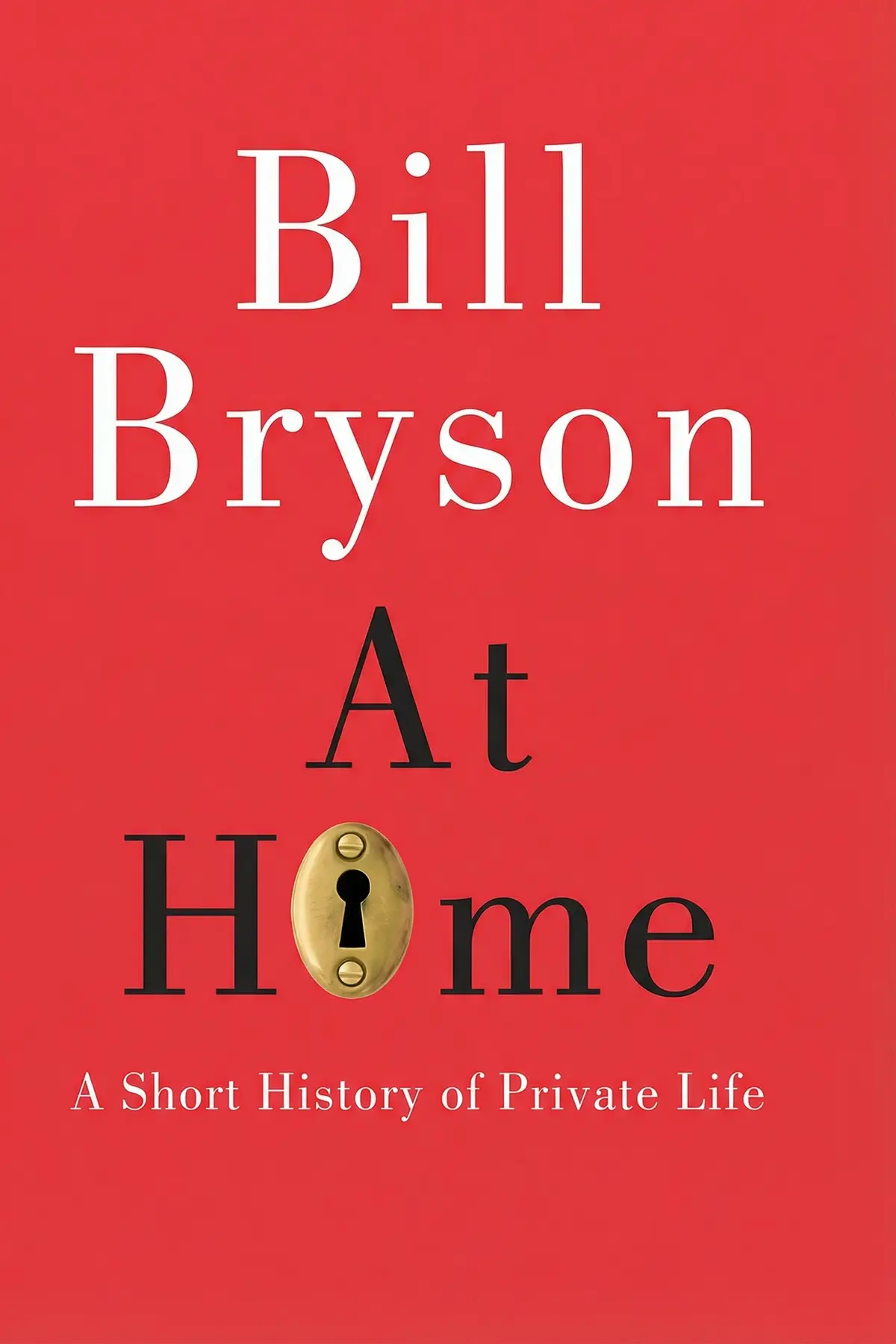
At Home: A Short History of Private Life
Bill Bryson
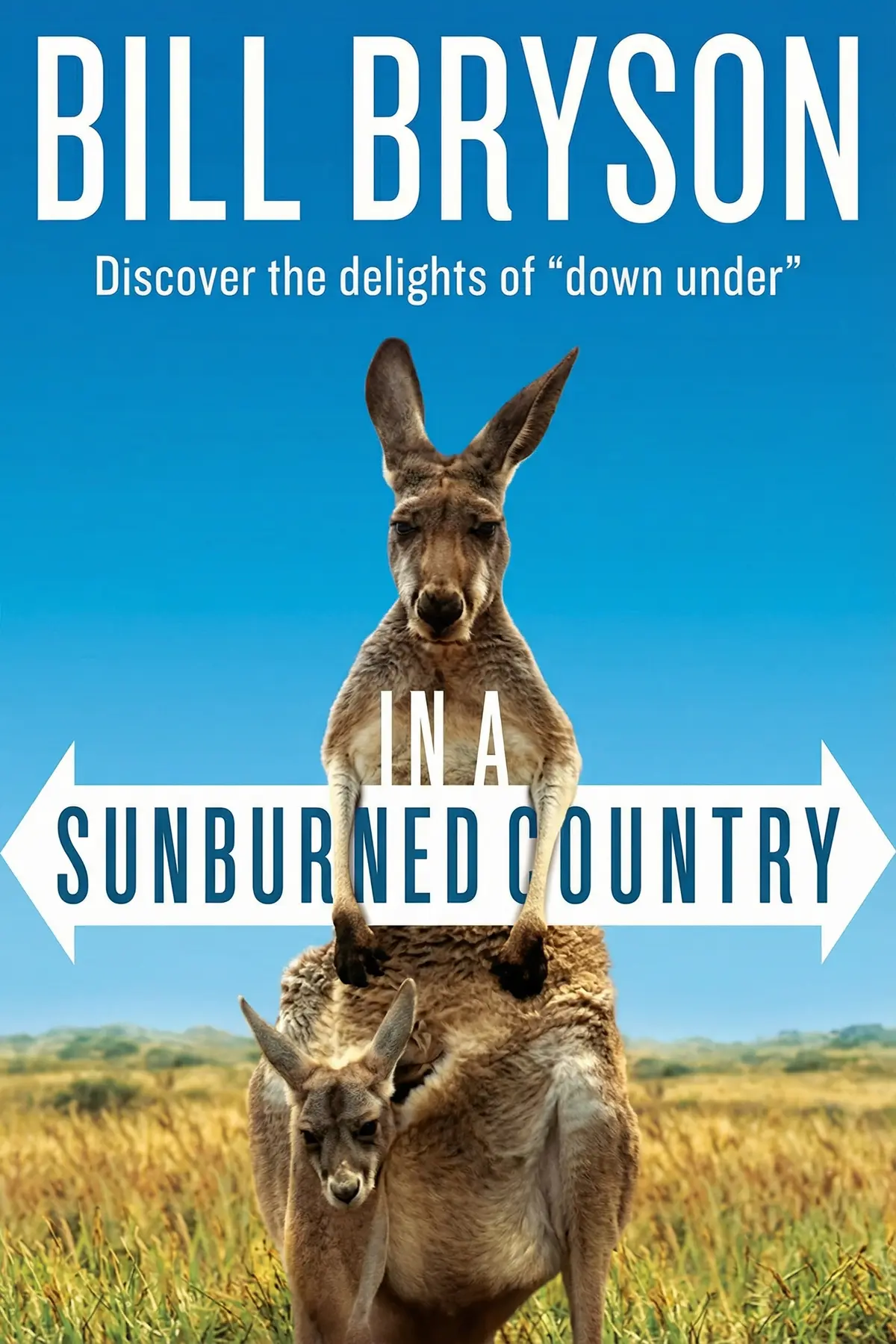
In a Sunburned Country
Bill Bryson
One Summer: America, 1927
Bill Bryson
The Body: A Guide for Occupants
Bill Bryson
Ratings & Reviews
Ratings at a glance
What people think
Listeners find this work remarkably captivating and simple to navigate, highlighting the meticulous research and superb clarifications that make difficult topics accessible. The narrative voice is absorbing and intuitive, packed with humorous tales that ensure an enjoyable experience. Listeners value its instructional quality as a premier scientific overview and its extensive survey of scientific development, ranging from the cosmos to biological existence.
Top reviews
Ivan
Ever wonder how you can fit the entire history of the universe into a few hundred pages without losing your mind? Bryson manages to distill the most complex scientific theories—from the Big Bang to the intricacies of microbiology—into prose that is surprisingly user-friendly and incredibly engaging. I particularly loved the way he describes protons as having identity and electrons having personality; it makes the invisible world feel tangible. Truth is, I walked away with a profound sense of awe for how many things had to go right just for us to exist today. While some might find his conversational tone a bit much, I found it refreshed my curiosity in a way no textbook ever could. It is a masterpiece of research that stays grounded.
Show moreKanokwan
This book is a massive undertaking that manages to be both comprehensive and accessible, covering everything from the vacuum of space to the evolution of life on Earth. Bryson’s research is clearly thorough, yet he writes with a compelling lightness that keeps the pages turning quickly. I was particularly struck by the realization of how much we still don't know, which is a humbling perspective to take away. In my experience, most science books either talk down to you or fly way over your head, but this one hits the sweet spot perfectly. It is truly a masterpiece of popular science writing that deserves a spot on every bookshelf. You'll find yourself constantly sharing random facts with anyone who will listen, much to their potential annoyance.
Show moreRod
As someone who slept through high school science and dreaded every lab session, this book was a total revelation for my adult brain. Bryson has this incredible knack for breaking down terrifyingly complex theories into essential messages that actually make sense to the rest of us. He doesn't just tell you what happened; he explains the 'why' and the 'how' with a sense of wonder that is infectious. I spent most of the time thinking about how different my life would be if my teachers had used anecdotes like these. The writing style is approachable and funny, making it feel more like a conversation at a pub than a lecture. It’s easily the best primer on the natural world I’ve ever come across.
Show moreFord
The chapter on the history of physics alone is worth the price of admission, especially the stories about Isaac Newton’s legendary eccentricities. I had no idea he made his 'Principia' intentionally difficult just to keep amateurs from bothering him with questions. It’s these kinds of specific details that make the book feel so authentic and lived-in, rather than just a dry recitation of facts. Bryson’s ability to weave together the lives of these brilliant, flawed humans with the massive scale of the universe is nothing short of masterful. The truth is, I felt like I learned more in a week of reading this than in four years of formal schooling. It’s a brilliant, educational, and often hilarious journey through our collective past.
Show morePia
Wow, just wow. This is the sort of book that changes how you look at the world around you, from the dirt under your feet to the stars above. Bryson’s prose is poetic and insightful, particularly when he discusses the sheer statistical improbability of any of us even being here. I was mesmerized by the descriptions of our 'pertinent ancestors' surviving against all odds just to pass on their genetic material. It’s a humbling, exhilarating experience to realize how interconnected everything in the universe truly is. While it might be a bit of a 'reader's digest' version for experts, for the rest of us, it is an essential guide to existence. I cannot recommend it highly enough to anyone with even a passing interest in why we exist.
Show moreClaire
After hearing endless praise for this title, I finally dove into Bryson’s 'Short History' and found myself genuinely entertained by the human side of discovery. It’s less of a dry timeline and more of a collection of brilliant, often bizarre, personality sketches that make the scientists feel like real people rather than names in a glossary. The anecdote about Halley being paid in copies of 'The History of Fishes' instead of money is absolutely hilarious and typical of the book’s charm. Frankly, it leans heavily into biography, which might annoy those looking for hard data, but for the casual reader, it’s a goldmine. It serves as a fantastic introduction to the history of science without the intimidating jargon of a formal education.
Show moreSophia
Picked this up as an audiobook and it turned out to be the perfect companion for a long road trip across the country. The narrator does an excellent job capturing Bryson’s witty and occasionally smirky tone, though you really have to pay attention to avoid missing crucial details. While it covers a lot of ground, it does feel a bit wordy in places, especially when the author goes off on long tangents about 19th-century geologists. Personally, I found the section on the formation of the Earth the most fascinating, as it contextualizes our tiny existence within a vast timeline. It’s an informative, fun ride that occasionally suffers from being a bit too ambitious for its own good. Definitely worth the time if you like learning through storytelling.
Show moreNong
Finally got around to reading this classic and it’s easy to see why it remains a staple of the popular science genre. It manages to be fun even while delivering a massive amount of information at a rapid-fire rate that can occasionally feel overwhelming. I appreciated the user-friendly approach to topics like thermodynamics and cell biology, which usually make my eyes glaze over instantly. Some of the science feels a bit dated since it was published in 2003, but the historical context remains solid and incredibly valuable. It’s the kind of book that requires a second read to fully digest everything, but the first pass is a blast. A solid four stars for making me feel smarter without making me work too hard for it.
Show moreLuke
To be fair, Bill Bryson is a talented writer who knows how to keep an audience engaged with his trademark humor and curiosity. However, there were moments where his 'smirky know-it-all' persona became a trifle wearing over the course of five hundred pages. The book meanders through random scientific endeavors with a focus on quirky personalities that sometimes overshadows the actual scientific breakthroughs. I also noticed a few glitches in the details, such as the omission of key figures in the development of the Big Bang theory. It’s a decent kicking-off point for beginners, but it lacks the depth required for anyone with a moderate background in the subjects. It’s good for a one-time read, but maybe not the definitive history it claims to be.
Show moreNan
Look, I wanted to love this because the reviews were glowing, but I found the factual inaccuracies hard to ignore even for a layman. The author admits he isn't a scientist, and it shows in his shaky grasp of cosmology and certain fundamental principles regarding gravity. It’s a bit frustrating when a book aiming to educate gets basic concepts wrong, like the description of the universe's expansion or the Drake Equation's probability. Not gonna lie, the focus on quirky biographies felt like a distraction from the actual history of discovery I was promised. If you want light trivia and a few laughs, this works, but don't treat it as a reliable reference for your next exam. It’s more of a 'reader's digest' version of science that feels a little dated in parts.
Show more
Readers also enjoyed
A Life Decoded: My Genome: My Life
J. Craig Venter
A Planet of Viruses
Carl Zimmer
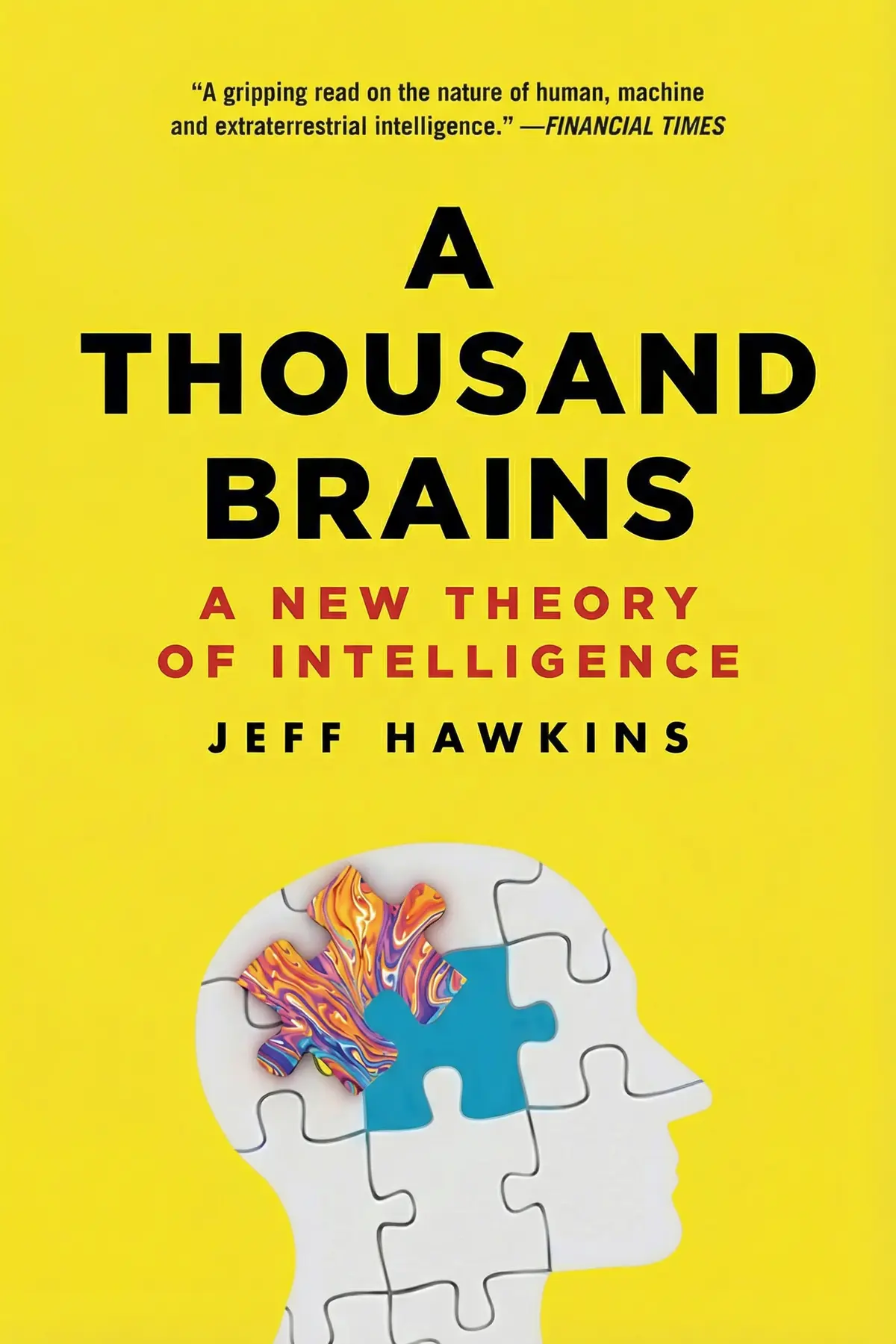
A Thousand Brains: A New Theory of Intelligence
Jeff Hawkins
AUDIO SUMMARY AVAILABLE
Listen to A Short History of Nearly Everything in 15 minutes
Get the key ideas from A Short History of Nearly Everything by Bill Bryson, plus 5,000+ more titles in English and Thai.
- 5,000+ titles
- Listen as much as you want
- 7-day free trial
- Cancel anytime







