

7 Powers: The Foundations of Business Strategy
Hamilton Helmer
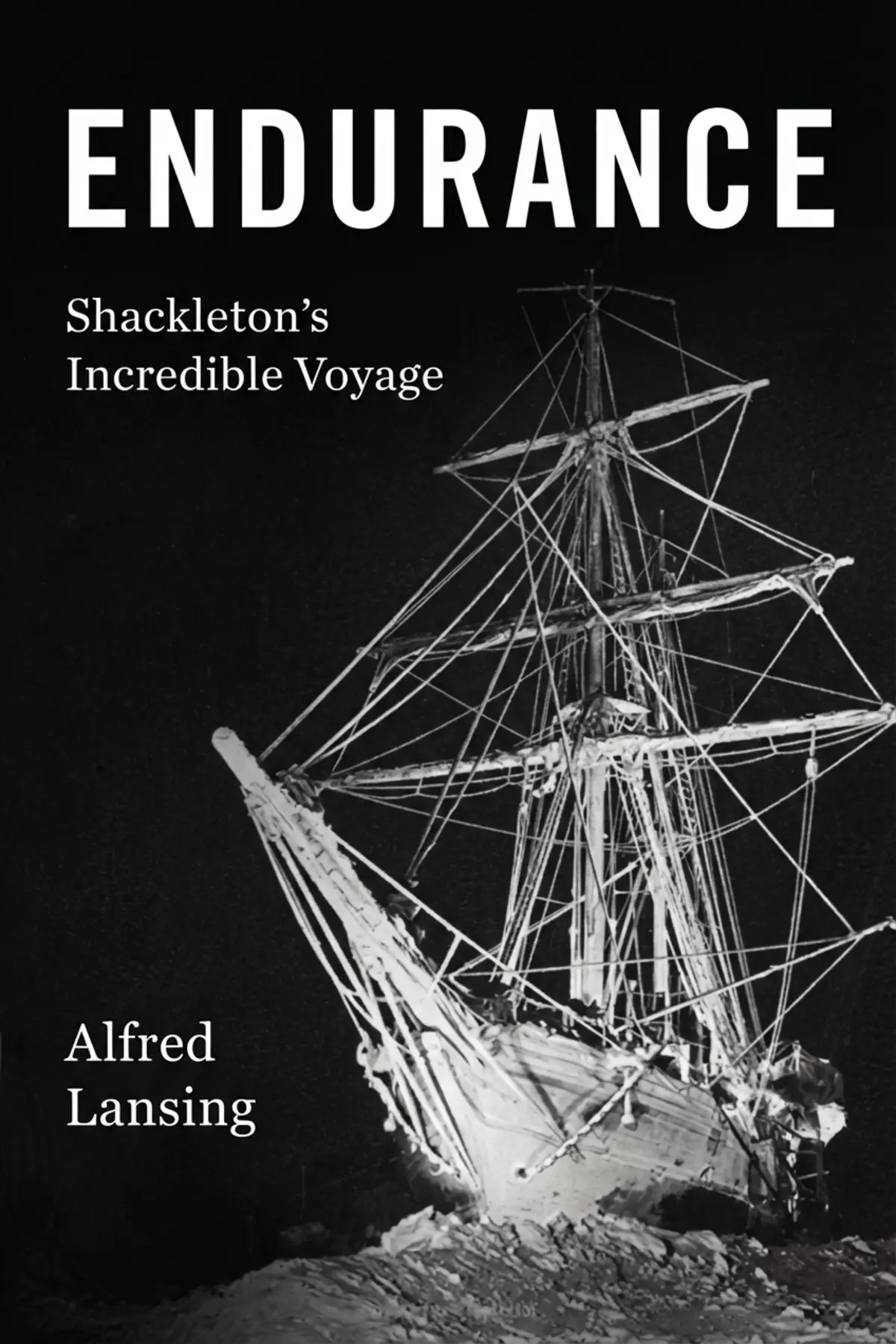
Follow the legendary survival story of Ernest Shackleton and his crew as they navigate the destruction of their ship and the frozen wilderness of Antarctica in an epic quest for life.
1 min 24 sec
There are historical events that remain etched in our collective memory not because of their success, but because of the sheer scale of the struggle they represent. The story of Sir Ernest Shackleton and his ship, the Endurance, is perhaps the greatest example of this. It began as an ambitious attempt to cross the Antarctic continent—the last great journey of the heroic age of exploration. Instead, it became a saga of survival so unlikely that it sounds like fiction.
In this exploration of Alfred Lansing’s classic account, we aren’t just looking at a timeline of dates and coordinates. We are witnessing the limits of human capability. Imagine being thousands of miles from the nearest human soul, with no radio, no means of calling for help, and watching your only home—a wooden ship—be slowly pulverized by millions of tons of ice. This is the throughline of Shackleton’s journey: that when the mission fails, the leader’s only job is to ensure his people survive.
What makes this story so enduring is Shackleton’s psychological brilliance. He understood that in the face of nature’s most brutal forces, the greatest enemy wasn’t the cold or the hunger; it was the loss of hope. As we walk through these events, notice how every decision, from the daily routine on the ice to the final, desperate rescue mission, was calculated to keep the spark of human resilience alive. It is a story about the transition from the glory of discovery to the raw, visceral reality of endurance.
1 min 58 sec
Before the first piece of ice ever touched the hull, Shackleton envisioned a journey of unprecedented scale across the most hostile environment on Earth.
1 min 54 sec
As the Antarctic summer waned, the Endurance found itself increasingly surrounded by a landscape of white that refused to yield.
2 min 01 sec
Surviving the Antarctic winter required more than just warmth; it required a leader who understood the fragility of the human mind in total darkness.
1 min 59 sec
The moment every sailor dreads arrived as the Endurance’s hull finally buckled under the relentless pressure of the moving pack.
1 min 56 sec
Cast away on a moving floor of ice, the crew had to adapt to a life of constant motion and dwindling resources.
1 min 47 sec
When the ice finally gave way, the crew faced their most terrifying challenge yet: the violent, frigid waters of the Southern Ocean.
2 min 00 sec
Realizing that rescue was impossible from Elephant Island, Shackleton embarked on a 800-mile journey across the most treacherous ocean on the planet.
1 min 48 sec
After nearly two years of struggle, the saga of the Endurance reached its conclusion in a moment of pure triumph.
1 min 22 sec
The story of the Endurance is more than a survival tale; it is a blueprint for leadership in times of crisis. Sir Ernest Shackleton didn’t achieve his goal of crossing Antarctica, but he achieved something far more profound. He maintained the integrity of his team under conditions that should have broken them. He showed us that resilience is not a fixed trait, but a practice—a combination of routine, optimism, and the willingness to pivot when reality changes.
As you reflect on this journey, consider the moments where Shackleton chose to let go of his pride for the sake of his men. He let go of the ship, he let go of the mission, and he even let go of the dogs he loved, all to keep the singular goal of survival in focus. In our own lives, we often face ‘ice packs’—situations where our plans are crushed and our path is blocked. Shackleton’s legacy reminds us that while we cannot always control our environment, we have total control over our response to it.
Ultimately, the ‘Endurance’ wasn’t just the name of a ship; it was the defining characteristic of the men who sailed her. Their story teaches us that as long as there is a plan, a bit of humor, and a leader who cares, the human spirit is virtually indomitable. No matter how dark the polar night or how high the mountain, there is always a way home.
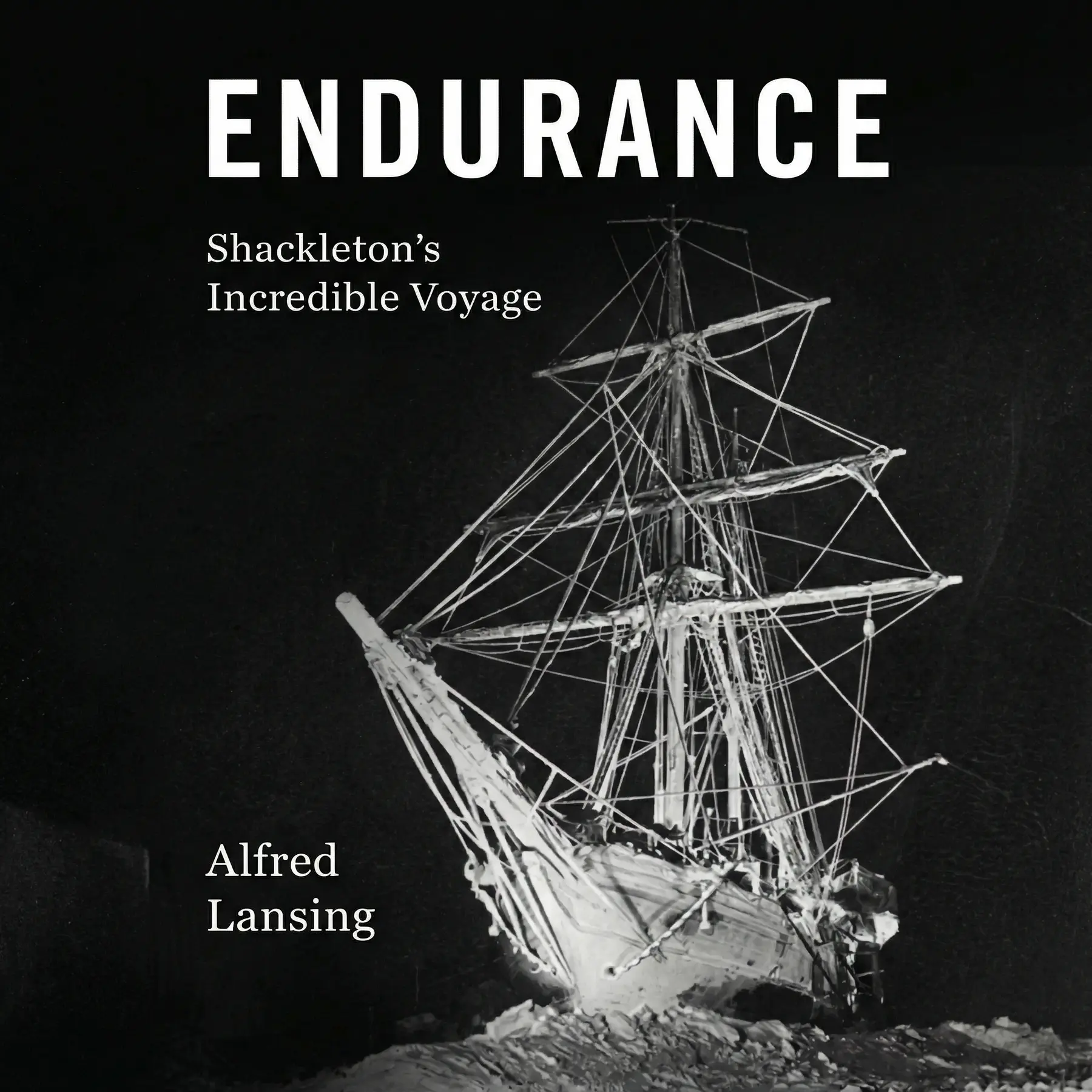
This summary explores the harrowing true story of the 1914 Imperial Trans-Antarctic Expedition. Led by the charismatic and resilient Sir Ernest Shackleton, the crew of the Endurance set out to cross the Antarctic continent but found themselves trapped in a frozen sea, eventually losing their ship to the crushing force of the ice. What follows is a masterclass in leadership, grit, and psychological fortitude. You will learn how Shackleton managed to keep his men alive and motivated through nearly two years of isolation, extreme weather, and dwindling supplies. The book details their transition from explorers to castaways, their desperate journeys in small lifeboats, and the final, impossible mountain crossing that led to their rescue. It is a testament to the strength of the human spirit when pushed to its absolute breaking point.
Alfred Lansing was a Chicago-born journalist and author who is best known for Endurance. His meticulously researched account of Shackleton’s voyage is considered one of the greatest survival stories ever told.
Listeners find that this narrative feels like a novel and offers a gripping adventure that keeps them completely mesmerized. The prose is superbly written, and the thorough chronicle is remarkably well researched. Listeners commend Shackleton’s command, with one listener remarking how physical endurance is as important as mental endurance. They value the motivating tales of bravery, with one review focusing on the incredible display of human spirit.
Wow. I finished this book feeling like I’ve been holding my breath for several days straight. Lansing does an incredible job of transforming historical facts into a narrative that pulses with life and unbearable tension. Shackleton’s leadership is nothing short of legendary, yet what struck me most was the collective mental fortitude of the entire crew. You feel the bite of the Antarctic wind and the desperation of the men as they face the loss of the Endurance. It’s hard to believe this actually happened because no screenwriter could imagine such a flawless arc of survival. The prose is lean and punches hard, never getting bogged down in useless fluff. This is the ultimate testament to the human spirit.
Show moreSeriously, how are these men even real? I get grumpy if the Wi-Fi is slow for ten minutes, but these guys were eating sled dogs and sleeping in frozen boots for months. Lansing’s writing style is punchy and direct, which makes the survival elements feel even more immediate and visceral. There is no unnecessary drama because the reality of the situation is dramatic enough. It reads like a high-stakes thriller but carries the weight of absolute truth. I’m convinced that if Shackleton were around today, he could solve basically any global crisis just by being his optimistic, stubborn self. If you enjoy adventure stories, stop reading this review and go buy the book.
Show moreWhat an absolute powerhouse of a book! Lansing captures the sheer brutality of the Antarctic environment with such precision that I felt physically chilled while reading it in my heated living room. The narrative flows with the speed of a novel, yet every detail is meticulously documented from the survivors' journals. Shackleton’s transition from an explorer to a protector is moving, highlighting that mental resilience is just as vital as physical strength. I was particularly captivated by the descriptions of the 'wind madness' and the sheer audacity of the final boat trek. This is a definitive masterpiece of non-fiction adventure that deserves every bit of its reputation.
Show moreEver wonder what true leadership looks like in the face of certain death? This book provides a masterclass on the subject through the lens of Sir Ernest Shackleton’s ill-fated voyage. Lansing’s account is so well-executed that you forget you’re reading non-fiction; it feels like a pulse-pounding survival movie. The sheer logistics of keeping twenty-eight men alive and sane on a shifting ice pack for over a year are mind-boggling. I loved the focus on the psychological battle against despair just as much as the physical struggle against the elements. It’s an inspiring, humbling story that makes your own daily problems feel incredibly small in comparison. Five stars aren't enough.
Show moreNot what I expected at all. I thought this would be a dry history lesson, but it turned out to be the most captivating adventure I’ve read in years. The way Lansing describes the Endurance being crushed by the ice is so vivid it’s haunting. You can almost hear the beams snapping. What really got to me were the small details: the salt-water boils, the lack of dry clothes, and the way the men used humor to keep the darkness at bay. It’s a beautifully documented tribute to the crew's spirit. By the time they reached the whaling station, I was practically cheering out loud. This is mandatory reading for anyone who loves a good survival story.
Show moreAs someone who gets stressed out when my phone dies, reading about Shackleton and his crew was a major reality check. These men were living in a frozen hell for over a year with zero way to call for help, yet they never gave up on each other. Lansing’s prose is modern and accessible, making the 1950s publication date feel irrelevant. He captures the 'unflagging optimism' that defined the expedition's survival. The chapter on the final trek across South Georgia is pure adrenaline. It’s a riveting story of courage that proves that mental toughness is the ultimate survival tool. Honestly, I think everyone should read this to gain a little perspective on life.
Show moreFinally got around to this classic after it sat on my nightstand for nearly a year. The research involved here is staggering; Lansing clearly pored over every diary entry and ship log available to reconstruct the timeline. While the middle sections on the ice floes felt a bit repetitive at times—it's essentially a cycle of hunting seals and being cold—the payoff is immense. Shackleton's ability to maintain morale under impossible conditions is the gold standard for leadership studies. I did find myself wishing for more maps to track their exact movements through the Weddell Sea. Nevertheless, the boat journey to South Georgia is one of the most harrowing things I’ve ever read.
Show moreAfter hearing my dad rave about this for years, I finally decided to see what the fuss was about. The truth is, Lansing manages to make 1914 feel like yesterday. He avoids the stiff, academic tone often found in historical accounts and instead focuses on the raw, human elements of the tragedy. You get to know the personalities of the crew, which makes the moments of loss—like the fate of the dogs—truly heartbreaking. There were a few points where the technical sailing jargon went over my head, but it didn't detract from the overall impact. It's a gripping reminder that human will can overcome almost any obstacle Mother Nature throws our way.
Show moreLook, the endurance displayed by these men is simply beyond my comprehension. Lansing’s writing is excellent, providing a detailed and extraordinarily documented account of a journey that should have ended in total disaster. While the beginning moves a bit slowly as they navigate the pack ice, the tension ramps up significantly once the ship is abandoned. My only minor gripe is that some of the crew members blend together in the narrative, making it hard to track everyone except the main figures. However, the descriptions of the James Caird voyage are absolutely stellar. It’s a remarkable piece of history that stays with you long after you close the cover.
Show moreTo be fair, the historical significance of the Endurance expedition is undeniably fascinating. However, as a reading experience, I found the pacing to be quite uneven during the long months the men were adrift on the ice. The descriptions of the sub-zero temperatures and the constant diet of seal meat became redundant after the first hundred pages. I understand that the monotony was a real part of their suffering, but it made for a slog of a middle act. Lansing is a gifted researcher, but the prose felt a bit dry for my personal taste. It’s a solid history book, but it didn't quite grip me as much as the glowing reviews suggested it would.
Show moreHamilton Helmer

Michael Axworthy


Tom Standage

Margaret Heffernan

Ishmael Beah

AUDIO SUMMARY AVAILABLE
Get the key ideas from Endurance by Alfred Lansing, plus 5,000+ more titles in English and Thai.







