

21 min 35 sec
Finding the Mother Tree: Discovering the Wisdom of the Forest
Explore the revolutionary discovery of how trees communicate and cooperate through vast underground networks, revealing a forest ecosystem that functions like a sentient, interconnected family centered around powerful Mother Trees.
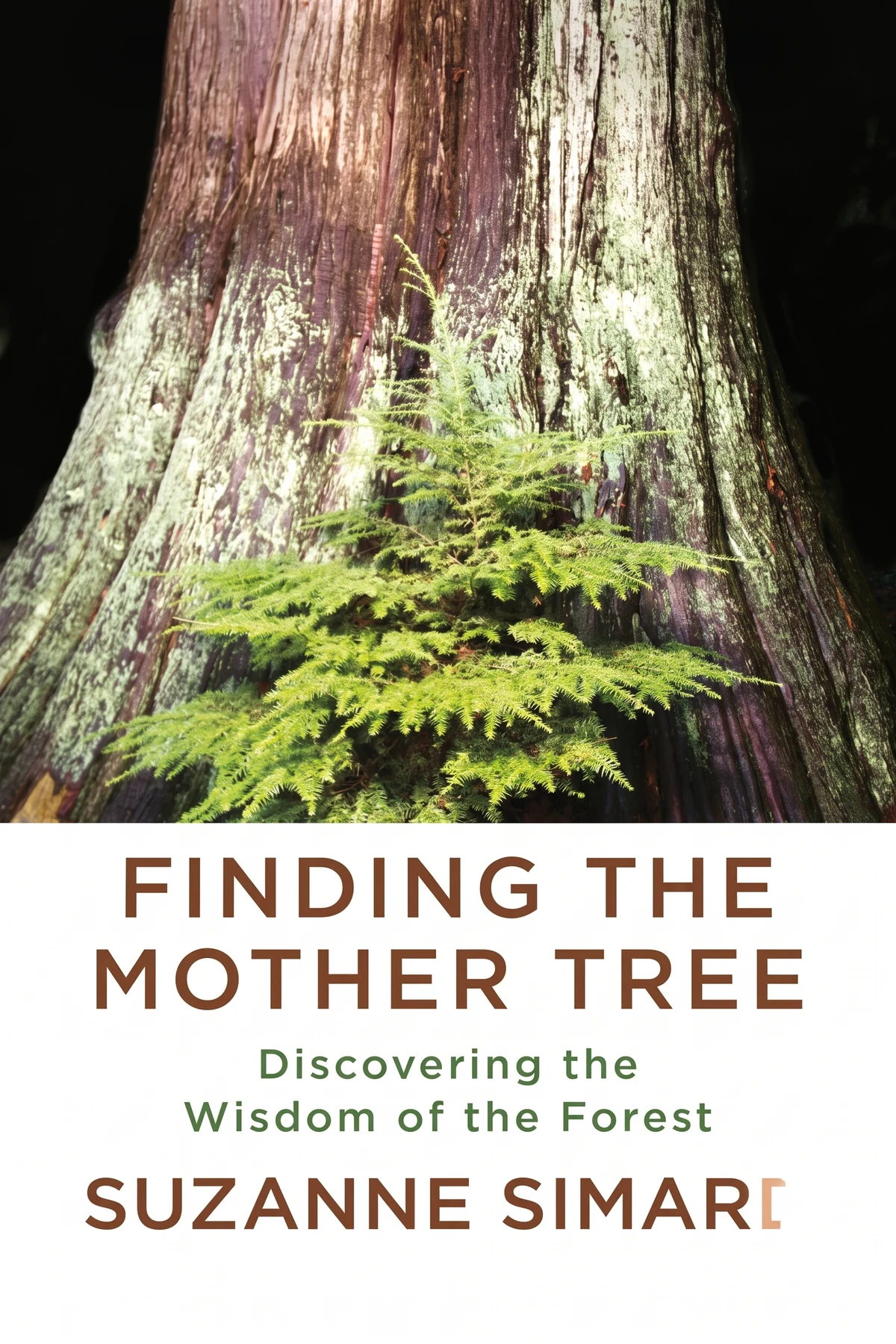
Table of Content
1. Introduction
1 min 45 sec
Imagine walking through a dense, ancient forest. To the naked eye, the towering firs, the delicate birches, and the sprawling cedars look like individuals, standing side-by-side in a silent, eternal competition for sunlight and space. For decades, this was exactly how we were taught to see the woods—as a battlefield where only the strongest survive. But beneath your feet, hidden in the dark, damp earth, a very different story is unfolding. It is a story of connection, of sacrifice, and of an intelligence that rivals our own.
Suzanne Simard’s life work has been to pull back the curtain on this hidden world. In this exploration of her journey, we’ll move from the logging camps of British Columbia to the high-stakes world of scientific research. We’ll see how a single childhood memory of a trapped dog led to a discovery that would change ecology forever. This is not just a book about trees; it is a memoir about how the natural world mirrors the human experience—the way we nurture our kin, the way we communicate in times of crisis, and the way we heal.
Through Simard’s eyes, we learn that a forest is not just a collection of timber; it is a unified, social organism. We’ll follow the trail of the ‘wood-wide web’ and discover the central role of the Mother Tree—the ancient hub that holds the entire community together. As we walk through these chapters, notice how the throughline of cooperation challenges everything we thought we knew about nature. We aren’t looking at a struggle for dominance, but a masterclass in reciprocity. Let’s step into the woods and find out how the forest is truly wired.
2. The Roots of Discovery
1 min 58 sec
A childhood memory of a family rescue operation reveals the complex, layered world hidden beneath the forest floor.
3. The Mystery of the Dying Seedlings
1 min 57 sec
Working for a logging company, Suzanne encounters a baffling failure in the industry’s standard planting methods.
4. The Partnership of the Mycorrhiza
2 min 02 sec
A simple truffle discovery reveals a life-or-death partnership between fungi and trees that challenges the idea of forest competition.
5. The Flaw in the Free-to-Grow Policy
2 min 07 sec
The forestry industry’s obsession with eliminating competition leads to a destructive and scientifically questionable policy.
6. Restoring the Living Soil
2 min 16 sec
Experimental proof shows that the secret to forest regeneration lies in the complex biological legacy of old-growth soil.
7. The Cooperation of the Alder and the Pine
1 min 54 sec
Scientific findings reveal that supposed ‘weed’ trees actually share resources and nutrients with their neighbors.
8. Mapping the Wood-Wide Web
2 min 08 sec
Doctoral research reveals that trees communicate and share energy through a complex, cross-species network.
9. The Power of the Mother Tree
1 min 54 sec
Ancient trees act as central hubs in the forest’s neural network, nurturing their kin and protecting the community.
10. A Legacy of Healing and Reciprocity
1 min 54 sec
Facing a life-threatening illness, Suzanne discovers that the forest’s lessons on kinship and sacrifice apply to human survival as well.
11. Conclusion
1 min 40 sec
As we reach the end of this journey through the woods with Suzanne Simard, the image of the forest has been forever transformed. We started with the idea of individual trees locked in a silent struggle for survival, but we leave with a vision of a vibrant, talking, and deeply cooperative community. The discovery of the ‘wood-wide web’ and the central role of Mother Trees has cracked open the old myths of pure competition and replaced them with a much more beautiful and accurate reality: the reality of the social forest.
The throughline of Simard’s work is clear: everything is connected. From the nitrogen-rich leaves of the alder to the carbon-sharing roots of the birch and fir, the forest thrives because it is a system of reciprocity. When one tree is in distress, the network responds. When a Mother Tree reaches the end of her life, she passes her strength to the next generation. This isn’t just biology; it’s a blueprint for resilience that we can apply to our own lives and societies.
The actionable takeaway here is a shift in perspective. We must stop viewing nature as a resource to be mined or a competition to be won. Instead, we should see it as a family to be cared for. In our own lives, we can look for the ways we act as ‘hubs’ in our own networks, and how we can better support the growth of those around us. By protecting the Mother Trees of the world—the ancient forests and the wisdom they hold—we are ultimately protecting the future of our own kin. Let the forest remind you that you are never truly standing alone; you are part of a vast, intelligent web that is wired for healing and built to last.
About this book
What is this book about?
This summary dives into the groundbreaking work of ecologist Suzanne Simard, who transformed our understanding of the natural world. It follows her personal and professional journey from a young forest worker to a world-renowned scientist. The narrative explores how she uncovered the 'wood-wide web,' a complex fungal network that allows trees to share nutrients, send warning signals, and nurture their young. Beyond the science, it is a story of resilience, covering Simard's battles with industry dogma, personal loss, and her own fight against cancer. It promises to change the way you look at the forest, moving away from a model of pure competition to one of deep, necessary cooperation. You will learn about the vital role of Mother Trees and how preserving these ancient hubs is essential for the survival of our planet's ecosystems.
Book Information
About the Author
Suzanne Simard
Suzanne Simard is a forest ecologist and professor at the University of British Columbia. She has made major contributions to research on the cooperative nature of forest ecosystems and the existence of “mother,” or hub, trees. Her discoveries and life story have served as the inspiration for numerous works of fiction, including Richard Powers’s Pulitzer Prize–winning novel The Overstory, and James Cameron’s award-winning film Avatar.
Ratings & Reviews
Ratings at a glance
What people think
Listeners find this work to be a vital and gripping piece of literature that details impactful research while providing lucid descriptions of intricate biological ideas. They value the profound insights into the natural world and forest ecosystems, with one listener characterizing the account as a personal voyage of scientific exploration. Listeners applaud the memoir-like storytelling approach and find the content motivating; one review mentions its power to provoke reflection and alter personal habits. The prose is easy to follow, and listeners cherish the focus on interconnectedness, as one review emphasizes the incredible communication among trees and soil-dwelling organisms.
Top reviews
Viroj
Suzanne Simard has managed to turn complex forest ecology into a deeply moving narrative about how we are all connected. The way she describes the "wood-wide web" of mycorrhizal fungi is nothing short of magical, yet it is backed by years of hard, gritty field work. I was particularly struck by her descriptions of the BC wilderness and the struggle to be taken seriously as a female scientist in a male-dominated logging industry. Some might find the personal stories about her family’s logging history a bit long, but I thought they provided essential context for why she cares so much. It's rare to find a book that challenges your worldview while also teaching you the intricacies of nitrogen transfer between species. This is a must-read for anyone who thinks humans are the only ones capable of cooperation. Truth is, we have a lot to learn from the dirt beneath our feet.
Show moreSayan
This book completely transformed how I look at the woods behind my house. Simard’s discovery that trees are social, cooperative beings is the kind of paradigm shift we desperately need in an era of climate crisis. I loved following her journey from a young woman working for logging companies to a world-renowned researcher uncovering the secrets of the soil. Her descriptions of the forest are so evocative that you can almost smell the damp earth and pine needles. The chapters on clear-cutting were heart-wrenching, but they made the scientific breakthroughs feel even more vital. Some people complain about the personal anecdotes, but I found them grounding; they remind us that science is done by real people with real families and real struggles. It’s a beautiful, brave book that everyone should pick up.
Show moreDylan
Finding the Mother Tree is so much more than a textbook; it’s a testament to resilience. Simard’s journey through a cancer diagnosis while continuing her research adds a layer of vulnerability that makes the scientific discoveries feel deeply personal. She writes with such humility and wonder about the forest's ability to heal itself if we just stop interfering. I was fascinated by the way she linked the health of the trees to the health of our own bodies and communities. The prose is often poetic, especially when she describes the vast, hidden networks of fungi that keep everything alive. It is a long read, but it never felt like a slog to me. I finished it feeling inspired to do more for the planet and more for my own community. Truly an important piece of work for our time.
Show moreKob
Wow, just wow. I didn't expect a book about trees to make me cry, but Simard's story is so filled with passion and grit that it’s hard not to be moved. She fought against a system that wanted to treat forests like cornfields, proving that diversity and connection are what actually sustain life. The way she weaves her own motherhood into the concept of the Mother Tree is brilliant and makes the science feel intuitive. It’s not just about biology; it’s about how we care for the next generation. The science is explained well enough for a layperson, though it does get intense in the middle. If you enjoyed 'The Overstory,' you have to read the real-life inspiration for it. This is a five-star masterpiece of science communication.
Show moreBam
After hearing Simard’s TED Talk, I was eager to dive into the full story behind her research. The book delivers a fascinating look at how trees communicate and share nutrients, shifting the focus from competition to cooperation. Personally, I enjoyed the blend of memoir and science, though the transitions can be a bit jarring at times. One minute you’re in a lab looking at isotopes, and the next you're hearing about her brother's rodeo career or family drama. It felt like a little bit of verbal whiplash, but her passion for the forest kept me engaged throughout. I especially appreciated the sections on the "Mother Trees" and how they nurture their kin. It is a dense read, and you might need to re-read a few paragraphs to grasp the biology, but it is worth the effort for the perspective shift it provides.
Show moreTar
As someone with a background in environmental studies, I appreciated the rigor Simard brought to her field trials. She doesn't just tell you that trees talk; she shows you the data, the struggles with herbicide spraying, and the resistance from the established forestry industry. My only real gripe is how she briefly glosses over Indigenous knowledge until the very end. She mentions that her research eventually confirmed what many cultures have known for millennia, but it felt a bit like an afterthought compared to the Western scientific process. Still, the message of reciprocity and the "Mother Tree" concept is powerful. The writing is accessible, even if it gets a bit bogged down in the minutiae of soil chemistry. It’s a solid 4-star read that will definitely make you think twice about how we manage our natural resources.
Show morePhu
Picked this up at my local library and found it to be a compelling, if slightly uneven, read. The science is absolutely top-tier—the idea that birches and firs are trading carbon depending on the season is just mind-blowing. Simard is a pioneer, and her renegade spirit really shines through in her writing. However, I have to agree with some other reviewers that the jumping around between time periods was confusing. One paragraph she’s a child, and the next she’s a mother, and then she’s back in the 80s as a seasonal worker. It takes a second to orient yourself. Despite the clunky timeline, the core message about forest connectivity is so strong that I’d still recommend it to anyone. Just be prepared for a lot of talk about dirt and roots!
Show moreJong
Ever wonder why a forest feels like a single living organism rather than a collection of individual plants? Suzanne Simard has the answer, and it’s hidden in the soil. This book is a fascinating journey through her life’s work, proving that trees share resources and even warn each other of danger. I loved the detective-story feel of her early experiments, even if the writing got a bit repetitive during the middle sections. The truth is, the book is quite long and could have used a tighter edit to keep the momentum going. However, the insights into forest resilience and the failures of industrial logging are too important to miss. It has definitely changed the way I behave when I’m out hiking. I find myself looking for the Mother Trees now, feeling a new sense of respect for the giants above us.
Show moreOoi
While the core concept of trees communicating through fungal networks is undeniably cool, the execution here left me wanting more. I struggled with the structure, which felt like a disjointed mix of a technical dissertation and a family memoir. One moment you're reading about isotopes and mass spectrometers, and the next you’re hearing about her childhood without a clear bridge between the two. The lack of diagrams or charts made the more intense scientific sections a real hurdle for a layperson like me to clear. Frankly, it felt like the book needed a much stronger editorial hand to smooth out the transitions and keep the focus on the forest. I respect Simard's pioneering work and her dedication to the environment, but the narrative flow was too clunky to truly enjoy. It’s a fascinating subject trapped in a somewhat frustrating package.
Show morePacharapol
To be fair, the research presented in these pages is groundbreaking and deserves every bit of recognition it gets. But as a reading experience? It was a struggle. I was baffled by how the author repeatedly ignored safety protocols while handling radioactive materials and toxic sprays, which made it hard to sympathize with her at times. The book also suffers from a lack of visual aids; explaining complex fungal nodes and hub trees using only text is a tall order for a general audience. I found myself googling her research papers just to see a diagram of what she was talking about. If you’re a biology student, you’ll probably love the level of detail. If you’re looking for a smooth, narrative nature book like 'Braiding Sweetgrass,' you might find this one a bit too technical and dry.
Show moreReaders also enjoyed

A Promised Land
Barack Obama


A River in Darkness: One Man’s Escape from North Korea
Masaji Ishikawa

A Spy Among Friends: Philby and the Great Betrayal
Ben Macintyre


A Year in the Life of William Shakespeare: 1599
James Shapiro


AUDIO SUMMARY AVAILABLE
Listen to Finding the Mother Tree in 15 minutes
Get the key ideas from Finding the Mother Tree by Suzanne Simard, plus 5,000+ more titles in English and Thai.
- 5,000+ titles
- Listen as much as you want
- 7-day free trial
- Cancel anytime







