
18 min 34 sec
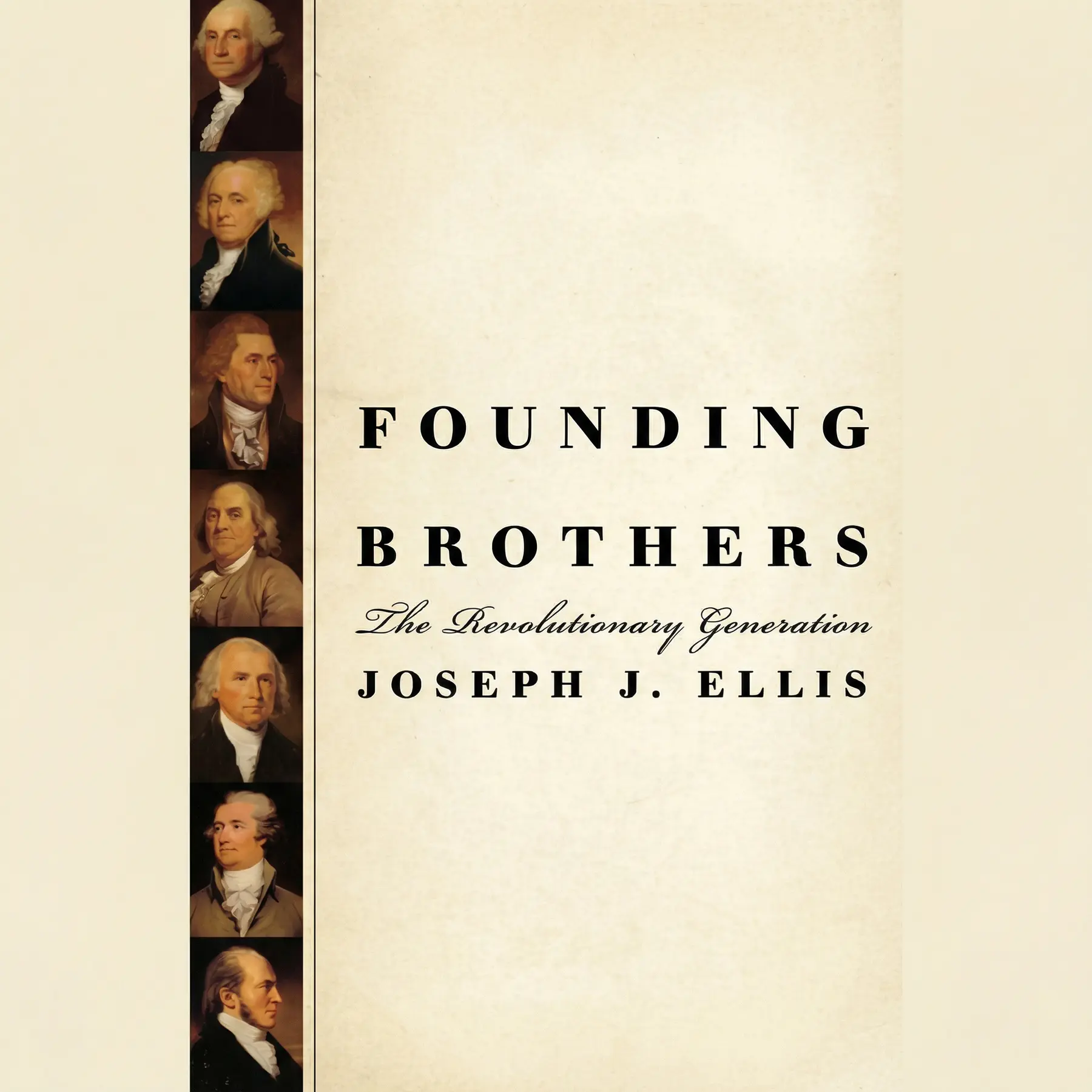
Founding Brothers: The Revolutionary Generation
A nuanced exploration of the interpersonal relationships and high-stakes political maneuvers of America’s early leaders, revealing how their humanity and compromises shaped a fragile new nation during its most uncertain years.
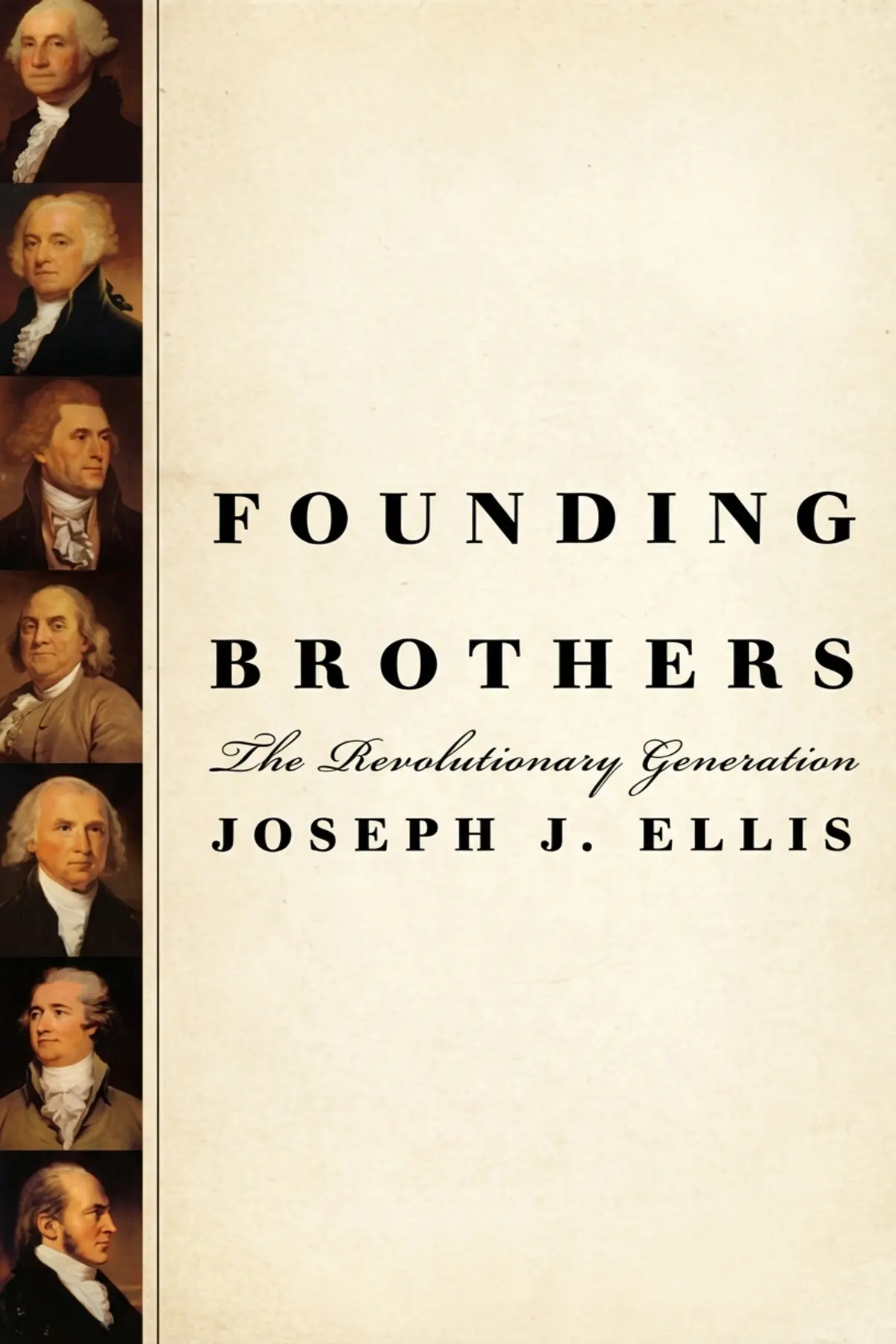
Table of Content
1. Introduction
1 min 35 sec
When we think about the birth of the United States, it is easy to fall into the trap of viewing the past as a series of inevitable victories. We look at the names inscribed on the Declaration of Independence and see them as legendary icons—men who possessed a divine foresight and an unwavering clarity of purpose. This perspective turns history into a collection of clichés, simplifying a messy and dangerous reality into a neat, one-dimensional success story. But if we are to truly understand how the American experiment survived its infancy, we have to look past the marble monuments and see the founders as they were: a small, often fractious group of individuals who were making it up as they went along.
In Joseph J. Ellis’s account, the story of the nation’s founding is not one of solitary giants, but of a brotherhood. These men were colleagues, rivals, and partners in a struggle where the outcome was never certain. They were brilliant, yes, but they were also deeply human. They were capable of profound insight and immense stubbornness. They gambled with the future of millions, followed their gut instincts, and often held one another to impossible standards of virtue. This summary explores the high-tension clashes and the tenuous compromises that defined the 1780s and 90s, focusing on the thread that ties them all together: the belief that the revolution was a unique, one-time-only chance to change the course of human history. As we move through these pivotal chapters, we will see why their personal relationships were just as important as their political theories, and how their shared commitment to a fragile republic kept the country from tearing itself apart before it could even begin.
2. The Utopian Wager of 1776
2 min 15 sec
The American Revolution was far more than a military conflict; it was a radical bet against the historical norm of monarchy and a plunge into the unknown.
3. The Essential Role of Civic Virtue
2 min 14 sec
In a government without a king, the moral character of the people and their leaders becomes the only thing preventing a slide into chaos and tyranny.
4. Hamilton and the Federalist Vision
2 min 09 sec
A combative genius from the Caribbean, Alexander Hamilton sought to build a powerful nation fueled by urban industry and a strong central authority.
5. The Financial Crisis and the Debt Assumption Debate
2 min 23 sec
Facing a mountain of revolutionary war debt, the young nation stood divided over whether the federal government should take control of state finances.
6. A Dinner Table Accord: The 1790 Compromise
2 min 13 sec
A private meal hosted by Thomas Jefferson became the setting for a historic trade-off that secured the nation’s credit and its permanent capital.
7. Benjamin Franklin and the Revolutionary Conscience
2 min 08 sec
In his final days, the legendary Benjamin Franklin challenged the nation to live up to its promise of equality by ending the institution of slavery.
8. The Price of Compromise and the Great Silence
2 min 09 sec
To keep the North and South united, the founders made a tragic agreement to postpone the discussion of slavery, a delay that would eventually lead to civil war.
9. Conclusion
1 min 28 sec
In the end, the story of the American founding is a deeply human narrative, filled with all the complexities and contradictions of its leading actors. We often look back at history and see a straight line leading directly to the present, but for the men in this story, the path was anything but clear. They lived in a world of high stakes and extreme uncertainty, where every choice felt like it could either save the republic or condemn it to failure. What they left behind was not a perfect system, but a living experiment that required constant maintenance, bitter arguments, and the occasional painful compromise.
The most important lesson to take away is that the survival of the United States was not a miracle of superhuman genius; it was the result of human determination. These men—despite their vastly different backgrounds and visions for the future—managed to hold the country together because they understood that the experiment was more important than their individual agendas. They were far-sighted, but they were also flawed. They were able to build a nation’s financial foundations and geographic center through pragmatic deals, yet they also failed to address the moral cancer of slavery, leaving that burden to their descendants. As we reflect on their legacy, we see that the American republic was born out of a unique brotherhood that thrived on intense clash and mutual respect. Their story reminds us that history is not a pre-written script, but a series of choices made by people who were brave enough to bet on a future they couldn’t yet see.
About this book
What is this book about?
Founding Brothers dives deep into the formative years of the United States, moving past the marble statues to reveal the flesh-and-blood men who navigated the country’s earliest crises. Joseph J. Ellis argues that the American Revolution’s success was never a foregone conclusion; rather, it was a high-stakes gamble dependent on the personalities and professional collaborations of a small group of leaders. The book promises to reframe the standard historical narrative by focusing on the 'brotherhood' of these statesmen—men like Hamilton, Jefferson, Madison, and Adams—and the intense, often bitter, disagreements they had to resolve to prevent the union from collapsing. Through a series of pivotal moments, the text explores how these individuals balanced their personal ambitions with their shared vision of a republic. From the resolution of national debt to the tragic silence surrounding slavery, the book highlights the blend of genius and human frailty that defined the revolutionary generation. It offers a front-row seat to the debates that decided the location of the capital and the very definition of American virtue, illustrating that the nation was built on a series of fragile compromises that would echo through history.
Book Information
About the Author
Joseph J. Ellis
Joseph J. Ellis is a distinguished specialist in American history and serves as the Ford Foundation Professor of History at Mount Holyoke. He has established himself as a leading voice on the revolutionary era through several award-winning biographical works. Among his notable publications are American Sphinx, which provides an in-depth study of Thomas Jefferson, and The Passionate Sage, a detailed exploration of the life and legacy of John Adams.
Ratings & Reviews
Ratings at a glance
What people think
Listeners find this work to be an intriguing and approachable experience that provides significant insight into America's past. The narrative flows smoothly and is organized into distinct historical episodes, leading one listener to remark that it feels like reading a novel. Listeners value the educational benefits of the material, especially for those studying history, and view it as a worthwhile investment. Although many listeners consider the language straightforward, some feel the writing style is overly verbose.
Top reviews
Ana
Picked this up for a college course, but I ended up devouring it like a thriller. Ellis manages to take dry historical facts and weave them into a narrative that feels remarkably immediate and alive. The opening chapter on the Hamilton-Burr duel sets a high bar, stripping away the mythology to show two men driven by ego and archaic codes of honor. Truth is, I never realized how fragile the early republic actually was until reading about these bitter rivalries. While some find the prose a bit elevated, I found it sophisticated and fitting for the era. It’s an essential read for anyone wanting to understand the human flaws behind the Great Men of history.
Show moreAubrey
Why do we call them brothers instead of fathers? That’s the core question Ellis explores, and his answer is a beautifully written look at the 1790s. He shows that these men weren't distant statues but colleagues who worked, fought, and eventually reconciled in a way that shaped our entire government. I was particularly struck by the chapter on the 'Collaborators,' showing how Madison and Jefferson operated as a tag-team against Adams. The book reads with a certain kinetic energy that makes you feel the stakes of every letter and every secret cabinet meeting. If you want a dry list of dates, go elsewhere; if you want the 'why' behind the American experiment, read this.
Show moreNadia
Ever wonder how the United States survived its first decade without falling apart into a dozen tiny, warring countries? This book answers that by focusing on the intense, personal relationships between the men at the center of it all. Ellis is a gifted storyteller who understands that history is made by people with biases, tempers, and contradictory dreams. The final chapter on the correspondence between Adams and Jefferson is one of the most moving things I’ve read in a history book. It shows two old enemies finding common ground at the end of their lives, which feels like a lesson we could all use today. Highly recommended for any history buff or casual reader alike.
Show moreArm
The chapter on 'The Silence' was a punch to the gut and easily the most important part of the whole book. We often hear about the brilliance of the founders, but Ellis forces us to look at their calculated decision to ignore the slavery question for the sake of union. It’s a sobering reminder that the 'checks and balances' were sometimes just tools for procrastination on moral crises. Personally, I appreciated how the book focused on the 1790s as a series of specific episodes rather than a sprawling, messy timeline. To be fair, there are moments where the language gets a bit academic, but the insights into Washington’s Farewell Address made the effort worthwhile.
Show moreSukit
Finally got around to this Pulitzer winner and I’ve got to say it lived up to most of the hype. Ellis treats these historical icons like a dysfunctional family, which makes their political bickering feel much more relatable to our modern era. The way he compares the 'odd couple' of the American Revolution—Adams and Jefferson—is masterful and quite touching toward the end. You see the tall, elusive Virginian contrasted against the short, combative New Englander in a way that feels human rather than legendary. My only gripe is that it can be a bit repetitive in its themes of collaboration and strife. Still, it’s a fluid read that doesn't feel like a dusty textbook.
Show moreDimitri
Wow, this was surprisingly easy to digest despite the heavy subject matter of constitutional formation and fiscal reform. I’ve been trying to learn more about Alexander Hamilton lately, and the sections here on his financial plans and his rivalry with Jefferson provided great context. Ellis has a way of explaining complex political shifts, like the 'Dinner Table Bargain,' without making it feel like a boring lecture. I did find a few sentences that were absolute monsters to unpack, which is why I'm not giving it a full five stars. Overall, it’s a solid piece of nonfiction that provides a lot of educational value for the price.
Show moreMoo
After hearing about this book in my American History course, I expected it to be a real drag, but I was pleasantly surprised. The narrative is divided into six distinct stories, which makes it much easier to pick up and put down during a busy semester. I felt like I got to know John Adams for the first time, especially his relationship with Abigail and how she acted as his 'cabinet of one.' Some of the language is definitely 'historese,' but the drama keeps you moving forward. It’s a great example of how personality drives politics, proving that the founders were just as petty and brilliant as anyone today.
Show moreKavya
As someone who usually loves history, I found myself torn on whether to recommend this one to friends. On one hand, the vignettes about the early republic are fascinating and offer deep dives into personalities I only knew from surface-level biographies. On the other hand, the writing style is so thick with multi-syllabic words that it occasionally breaks the immersion. To be fair, the research is top-notch, and the connections Ellis makes between the personalities of the brothers and the policies they created are brilliant. However, I often felt like I was wading through a swamp of academic prose just to get to the next interesting anecdote. It's educational, sure, but it definitely isn't the light, novel-like experience some reviewers claim.
Show moreZoe
Frankly, Ellis seems a bit too enamored with his own vocabulary at times, which almost ruined the experience for me. There are sections where the sentences are so long and convoluted that I had to read them three times just to find the subject. That being said, the actual content is quite good, especially the analysis of Washington’s struggle to maintain neutrality amidst the French Revolution. The book does a fine job of illustrating the 'contaminating radioactive cloud' of slavery that hung over every single discussion the founders had. It's a bit of a mixed bag: great historical insights trapped inside some very dense, sometimes pretentious writing.
Show moreThongchai
Look, I really wanted to like this given the National Book Award win, but it felt like a chore from page one. The author seems to have swallowed a dictionary and spent most of his time trying to impress the reader with academic jargon rather than telling a clear story. It’s incredibly wordy, making even the most exciting moments—like the tension between Jefferson and Adams—feel bogged down in academic fluff. I frustra-cried a bit because I knew the material was important, but the delivery was just so unnecessarily dense and pretentious. If you enjoy reading a thesaurus in a dark room, this is the book for you. Otherwise, find a more accessible historian who doesn't use ten words when two would do.
Show moreReaders also enjoyed
Alexander the Great
Philip Freeman
A History of Iran: Empire of the Mind
Michael Axworthy
A History of the World in 6 Glasses
Tom Standage

A Long Way Gone: Memoirs of a Boy Soldier
Ishmael Beah
A Splendid Exchange: How Trade Shaped the World
William J. Bernstein
AUDIO SUMMARY AVAILABLE
Listen to Founding Brothers in 15 minutes
Get the key ideas from Founding Brothers by Joseph J. Ellis, plus 5,000+ more titles in English and Thai.
- 5,000+ titles
- Listen as much as you want
- 7-day free trial
- Cancel anytime







