
15 min 18 sec
From Founder to Future: A Business Roadmap to Impact, Longevity, and Employee Ownership
By John Abrams
From Founder to Future explores how entrepreneurs can exit their businesses while preserving their mission. It offers a guide to employee ownership, democratic leadership, and building resilient, purpose-driven organizations that thrive long-term.
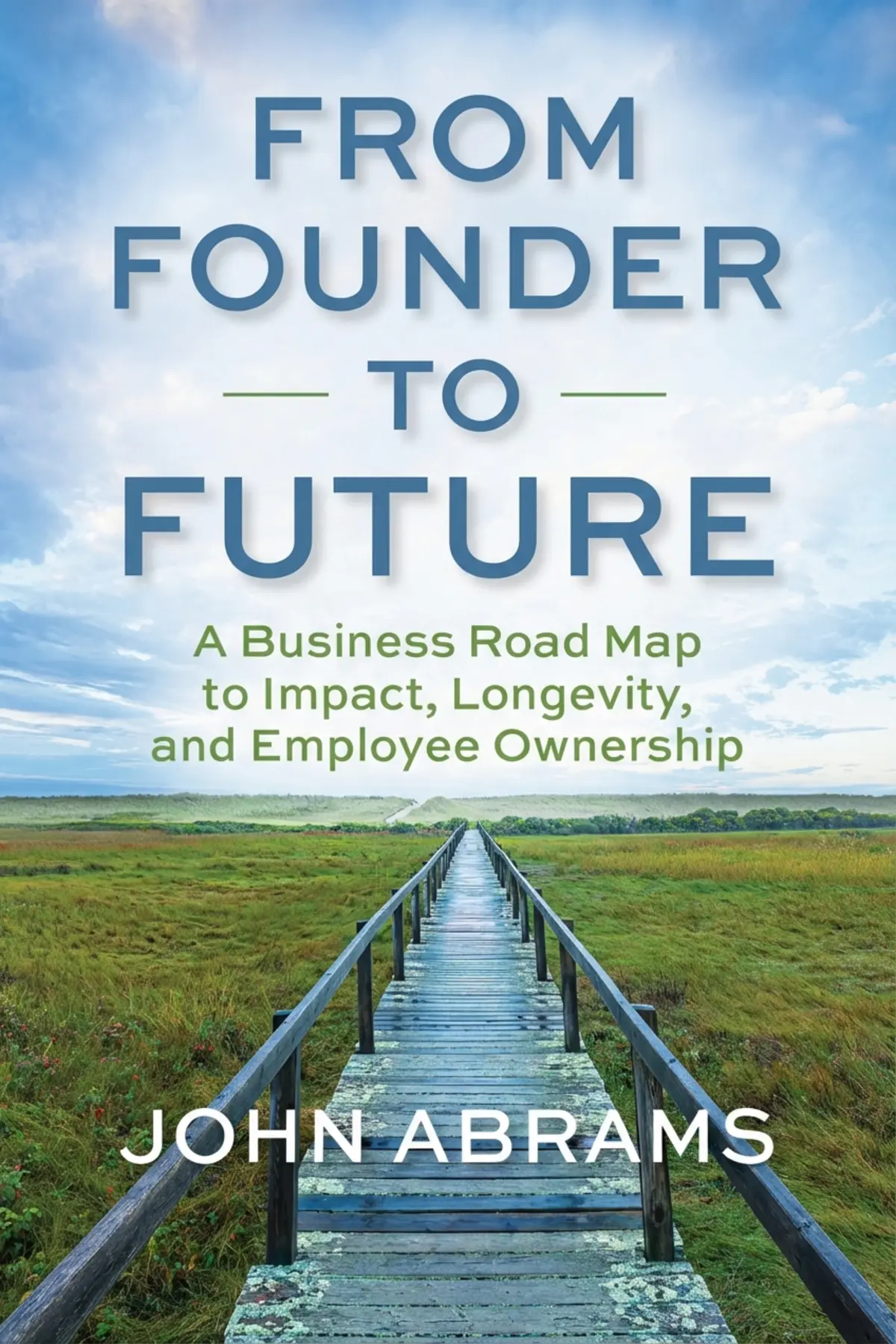
Table of Content
1. Introduction
1 min 10 sec
You’ve spent years, perhaps decades, pouring your heart and soul into a business. You’ve built a culture you’re proud of, hired people you trust, and created a brand that stands for something more than just a line on a balance sheet. But eventually, the time comes when every founder must face the inevitable: what happens when you’re no longer at the helm? For most, the traditional exit strategies feel like a betrayal of everything they’ve worked for. Selling to a private equity firm often means the culture will be gutted for short-term profit. Selling to a larger competitor might mean your brand is absorbed and your mission forgotten.
There is, however, a quiet revolution happening in the world of small business. It’s a movement away from the ‘sell-out’ and toward the ‘grow-on.’ In this exploration of From Founder to Future, we are going to look at how entrepreneurs are rethinking succession. It’s about moving from a founder-centric model to a future-ready organization that belongs to the people who helped build it. We will dive into the mechanics of worker cooperatives, the strategic benefits of employee stock ownership, and the essential leadership shifts required to make a company truly resilient. The goal isn’t just to retire; it’s to ensure that your business continues to be a force for good long after you’ve stepped away.
2. The Evolution of the CommonWealth Company
2 min 14 sec
Discover how transitioning from a founder-led model to a collective ‘CommonWealth’ structure can protect a company’s legacy and ensure its survival through changing times.
3. Worker Cooperatives as a Practical Succession Path
2 min 15 sec
Explore why worker cooperatives are becoming a preferred choice for founders who want to exit on fair terms while empowering their staff.
4. A Growing Infrastructure for Employee Ownership
1 min 59 sec
Learn about the sophisticated network of legal, financial, and strategic support now available to businesses transitioning to shared ownership.
5. The Power of Business Ecosystems and Networks
2 min 09 sec
See how interconnected networks of values-aligned companies create a more resilient and impactful economy for everyone involved.
6. Balancing Financial Gain with Mission Protection
2 min 20 sec
Compare different ownership structures like ESOPs and EOTs to understand how to protect your company’s mission over the long haul.
7. Building a Structure for Shared Responsibility
2 min 10 sec
Learn why true succession requires a focus on the ‘three-legged stool’ of ownership, leadership, and management systems.
8. Conclusion
1 min 01 sec
As we’ve seen, the transition from founder to future is not just an exit—it’s an evolution. It’s a chance to take everything you’ve built and transform it into a legacy that benefits your employees, your community, and the world. By embracing models like worker cooperatives, ESOPs, or Employee Ownership Trusts, and by building strong leadership pipelines and participatory management systems, you can ensure that your company’s mission outlasts your tenure.
The path to a ‘CommonWealth’ company requires courage and foresight. It asks you to let go of control in exchange for something far more durable: a resilient, purpose-driven organization that is truly owned by the people who power it. As you move forward, remember that you don’t have to do this alone. There is a growing movement of founders and experts ready to support you. The work you do now to design a thoughtful, values-aligned succession will be the ultimate testament to your success as a leader. It’s time to move beyond the founder-led era and build a future that belongs to everyone.
About this book
What is this book about?
For many entrepreneurs, the hardest part of building a business isn't the startup phase—it’s the exit. When a founder is ready to step away, they often face a difficult choice: sell to a competitor, hand the keys to an outside investor, or close the doors entirely. Each of these options risks destroying the culture and mission the founder spent decades cultivating. From Founder to Future presents a different path, showing how business owners can transition toward a model of longevity and impact through shared ownership and participatory management. The book provides a practical and philosophical roadmap for transforming a founder-led company into what is called a CommonWealth organization. By shifting the focus from individual control to collective responsibility, businesses can ensure they remain rooted in their communities and committed to their values. Through examples of successful worker cooperatives, ESOPs, and mission-led leadership transitions, the text demonstrates that a values-driven exit isn't just an ethical choice—it's a strategic move for creating a sustainable, high-performing enterprise that serves its employees and the planet for generations to come.
Book Information
About the Author
John Abrams
John Abrams is a builder, entrepreneur, and advocate for employee ownership, best known as the co-founder and longtime CEO of South Mountain Company, a worker-owned cooperative. He is widely recognized for his pioneering work in sustainable business practices and democratic workplaces. His best-selling book, The Company We Keep, details his journey in building a values-driven, employee-owned company.
Ratings & Reviews
Ratings at a glance
What people think
Listeners find the book delivers useful direction without becoming too dense, as one review notes it offers actionable advice. It is also seen as an uplifting resource, with one listener calling attention to its thorough strategy for business growth. Additionally, the content receives praise for exploring employee ownership frameworks, and one listener characterizes the work as a pleasant experience for organization founders.
Top reviews
Isabelle
Abrams has managed to distill decades of boots-on-the-ground experience into a framework that feels both radical and inevitable. The concept of the 'CommonWealth company' is particularly striking because it moves beyond mere profit-sharing into a deeper sense of stewardship. I appreciated how he broke down the five transitions; they provide a much-needed map for founders who feel trapped by the traditional 'sell-to-the-highest-bidder' exit strategy. Truth be told, the prose is a bit dense in the middle sections, but the case studies keep the momentum going throughout. It is a visionary look at how we can rebuild our local economies from the inside out using business as a primary tool for good.
Show moreEye
As a small business owner staring down the barrel of retirement, I found this book to be an absolute lifeline. I’ve spent thirty years building a team that feels like family, and the idea of selling to a private equity firm made me lose sleep. Abrams offers a different path that prioritizes the people who actually did the work. The personal anecdotes about South Mountain Company added a layer of authenticity that you just don't get from academic business texts. It is deeply inspiring to see that success doesn't have to mean selling out your community for a quick payday. I finished it feeling like my legacy might actually be safe in the hands of my staff.
Show morePloy
The discussion guide at the end is a total game-changer for anyone trying to socialize these ideas within their own company. I’ve already shared several chapters with my management team to spark a conversation about our long-term trajectory. Abrams writes with a 'legend in the field' authority, yet he remains remarkably humble about the learning curve involved in shared ownership. The book succeeds because it treats employees as partners in a shared future rather than just line items on a balance sheet. It’s a roadmap for those of us who believe business can be a force for systemic good. I especially liked the focus on regional impact and the wider business ecosystem.
Show moreAndrei
Rarely do you find a business book that balances such lofty philosophical goals with such grounded, practical advice. I’ve been following John Abrams’ work for years, and this feels like the culmination of his life’s mission to change how we think about ownership. He manages to explain the mechanics of complex ownership structures without ever losing sight of the human element. The idea that a company can outlive its founder while staying true to its original purpose is incredibly heartening. If you are serious about legacy, you need to read this book before you make any final decisions about your company’s exit plan. It offers a clear, understandable path forward.
Show morePriya
John Abrams’ previous work set a high bar, but this new volume manages to exceed it by focusing on the broader future of business. I was particularly impressed by the transparency regarding the challenges of the transition process. It’s not just a 'how-to' manual; it’s an invitation to join a movement of companies that prioritize the common good over short-term gain. The five transitions he outlines are logical and provide a clear timeline for action. I finished the book feeling a renewed sense of hope for what our local economies could look like in twenty years if we embrace these models. It's a must-read for students of shared ownership.
Show moreRafael
Finally, a guide that doesn't just preach about values but actually shows you how to bake them into your legal structure. I picked this up because I’m helping a client through a succession crisis, and the clarity Abrams provides on ESOPs versus worker co-ops was invaluable. It’s not a quick read, nor should it be, given the weight of the subject matter. To be fair, I would have liked more focus on the tax implications of these transitions, but as a primer on mission preservation, it’s top-tier. The tone is encouraging without being overly optimistic about the hurdles involved. Any founder looking to retire should consider this an essential part of their toolkit.
Show moreWan
While some of the legal nuances were a bit dense for me, the overall message of the book is undeniably powerful. Look, most business books are 200 pages of fluff wrapped around a single blog post's worth of insight, but this is different. It’s a heavy-duty manual for structural change that doesn't shy away from the hard questions. I was particularly fascinated by the section on how these models enhance worker-life balance. It makes sense—when you own the place, you have a vested interest in making sure the pace of work is sustainable. A few parts felt repetitive, but the core message about mission-driven growth is essential for the modern era.
Show moreNatchaya
We talk a lot about 'scaling up' in the tech world, but Abrams asks us to consider 'scaling deep.' This shift in perspective is what makes this book so vital for the current economic moment. The author’s focus on regional change through a robust ecosystem of employee-owned firms is exactly the kind of big-picture thinking we need right now. Frankly, the writing is a bit dry in the technical chapters, but the passion behind the mission shines through. It’s a solid resource for anyone who cares about the intersection of business and social justice. I'll be recommending this to my local Chamber of Commerce for their next study circle.
Show moreUbolrat
Not your typical dry business text, this book actually tells a story about where we are headed if we choose the right path. I appreciated the way Abrams blends the 'why' with the 'how,' even if the 'how' got a little bit technical for my taste at times. It’s clear the author has a deep love for his community and for the people he’s worked with over the decades. Not gonna lie, I think some of the timelines he suggests might be a bit optimistic for larger, established firms. Still, the core framework is brilliant and very much needed to address the massive wealth gap in our current system.
Show moreViroj
I’ll be the first to admit that I struggled with some of the more idealistic projections in these pages. The 'CommonWealth' model sounds wonderful in theory, but I wonder how it holds up in high-growth, venture-backed environments that require fast capital. To be fair, Abrams is clearly writing for a specific type of mission-driven founder, and for that audience, this is a five-star resource. For those of us in more traditional corporate settings, the transition feels like a monumental mountain to climb. The case studies are well-researched, though I found myself wishing for more examples of failures to see what we should avoid. It's a noble vision, if a bit niche.
Show moreReaders also enjoyed
Acting with Power: Why We Are More Powerful Than We Believe
Deborah Gruenfeld
All In: How Great Leaders Build Unstoppable Teams
Mike Michalowicz
Alibaba: The House That Jack Ma Built
Duncan Clark
AUDIO SUMMARY AVAILABLE
Listen to From Founder to Future in 15 minutes
Get the key ideas from From Founder to Future by John Abrams, plus 5,000+ more titles in English and Thai.
- 5,000+ titles
- Listen as much as you want
- 7-day free trial
- Cancel anytime







