
22 min 12 sec
Genius Makers: The Mavericks Who Brought AI to Google, Facebook, and the World
By Cade Metz
Genius Makers chronicles the intense competition and brilliant minds behind the rise of artificial intelligence, from early neural network research to the modern race for artificial general intelligence at Google and Facebook.
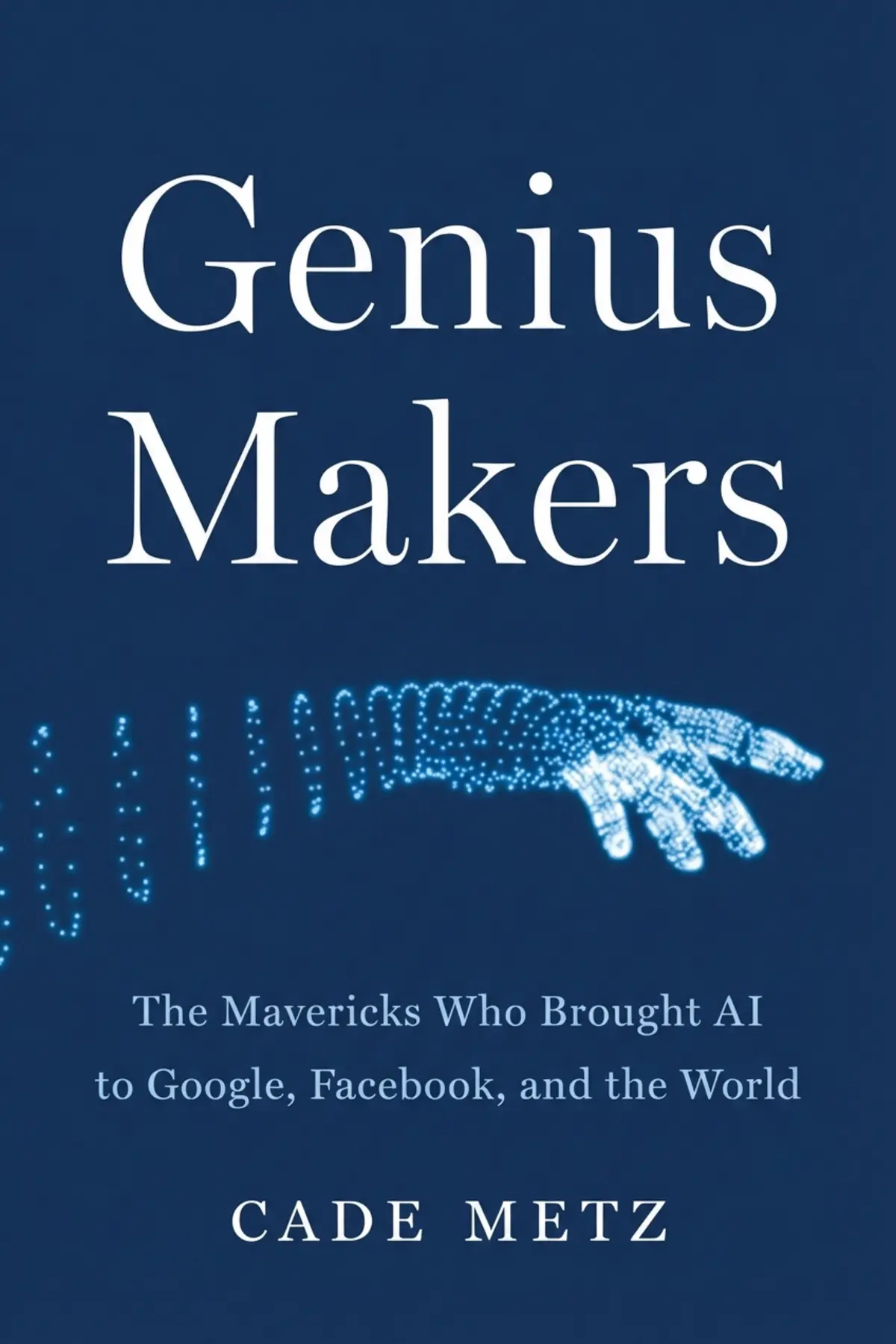
Table of Content
1. Introduction
2 min 01 sec
In the late 1960s, a fictional computer named HAL captured the public imagination in the film 2001: A Space Odyssey. HAL wasn’t just a tool; it was a character with its own motives, capable of speech, reason, and eventually, a chilling form of malice. For decades, that kind of technology remained firmly in the realm of science fiction. It was a fantasy for writers and a pipe dream for engineers. But in the modern era, the line between what is imagined and what is possible has begun to blur in ways that are both exhilarating and deeply unsettling.
Today, the race to develop genuine artificial intelligence is no longer a fringe pursuit. It is a global contest involving the most powerful corporations on Earth, the most prestigious academic institutions, and governments looking for a strategic edge. We interact with the precursors of AI every single day, often without even realizing it. Whether it’s the algorithm suggesting your next purchase, the voice assistant in your kitchen, or the facial recognition on your phone, the seeds of a machine-led future have already been sown.
In this exploration of the AI landscape, we are going to look behind the curtain. We will meet the mavericks who kept the flame of research alive during the dark years when the world stopped believing in them. We will see how a handful of researchers became the most sought-after prizes in a multi-billion dollar talent war. We will also confront the difficult questions that come with this power: What happens to truth when machines can fabricate reality? How do we ensure these systems don’t inherit our worst human biases? And most importantly, are we building a tool that will serve us, or a force that we can no longer control? This is the story of the dreamers and the doers who are currently drafting the blueprint for the next era of human civilization.
2. The Rocky Beginnings of Neural Networks
2 min 10 sec
Early attempts to build machines that learn like humans faced intense criticism and a period of stagnation known as the AI winter.
3. The Breakthrough of Deep Learning
2 min 10 sec
A persistent researcher’s focus on multi-layered neural networks eventually led to a massive leap in how machines process speech and images.
4. The Corporate Talent War for AI Minds
2 min 14 sec
As the potential for AI became clear, tech giants engaged in a frenzied battle to recruit the world’s top researchers.
5. Machines Surpassing Human Capabilities
2 min 24 sec
AI systems began to demonstrate mastery over complex games and specialized tasks like medical diagnostics, rivaling human expertise.
6. The Rise of Synthetic Reality and Bias
2 min 14 sec
The ability of AI to generate realistic images and videos has created new risks, from deepfakes to the amplification of human prejudice.
7. AI in the Political and Military Crosshairs
2 min 17 sec
The strategic value of artificial intelligence has drawn it into the world of government surveillance, drone warfare, and political influence.
8. The Fundamental Difference Between Machines and Humans
2 min 16 sec
Despite their impressive feats, modern AI systems still lack the innate common sense and adaptable learning abilities of the human brain.
9. The Unfinished Quest for General Intelligence
2 min 17 sec
The ultimate goal of many AI pioneers is the creation of AGI—a machine capable of any intellectual task a human can do.
10. Conclusion
2 min 09 sec
As we look back at the journey of the ‘genius makers’ who have brought us to this point, it’s clear that we are living in a transformative moment in history. We have moved from a time when artificial intelligence was a laughed-at academic theory to an era where it is the defining technology of our age. The persistence of figures like Geoff Hinton and the bold ambitions of companies like DeepMind and OpenAI have fundamentally altered the landscape of what is possible. We now have machines that can see, hear, and even outmaneuver us in complex arenas of logic and strategy.
However, this progress has not come without a price. We are now forced to confront the unintended consequences of our creations. We see the risks of synthetic media eroding our shared sense of truth, the dangers of biased algorithms reinforcing social inequalities, and the ethical dilemmas of AI’s role in warfare and political manipulation. The quest for artificial intelligence has held up a mirror to our own humanity, showing us both our incredible capacity for innovation and our persistent flaws. It has reminded us that technology is an extension of our own values, and if we are not careful, it can amplify our worst instincts as easily as our best.
Ultimately, the story of AI is not just a story about machines; it is a story about us. It’s about our desire to understand our own minds and our drive to create tools that can transcend our biological limitations. As we stand on the threshold of a future that may include artificial general intelligence, the responsibility lies with all of us—the researchers, the policymakers, and the public—to ensure that these powerful systems are developed with wisdom, transparency, and a commitment to the common good. The geniuses have made the machines; now it is up to the rest of humanity to decide how we will live alongside them. The future is no longer a distant vision of science fiction; it is being written right now, one line of code at a time.
About this book
What is this book about?
Genius Makers explores the fascinating history and the high-stakes future of artificial intelligence. It traces the journey of AI from its humble beginnings as a fringe scientific theory to becoming the most powerful technology on the planet. The narrative focuses on the brilliant, often eccentric, scientists who refused to give up on the idea of machines that could think, even when the rest of the world had moved on. The book provides an inside look at the corporate wars between giants like Google, Facebook, and Microsoft as they scrambled to hire the best talent and acquire the most promising startups. Beyond the business battles, it examines the profound ethical questions raised by AI, including the risks of deepfakes, systemic bias, and the potential for autonomous weaponry. Ultimately, it offers a window into the quest for artificial general intelligence—a machine that can match or exceed human intellect—and what that means for the future of humanity.
Book Information
About the Author
Cade Metz
Cade Metz is a reporter for the New York Times, where he covers topics including artificial intelligence, robotics, and other emerging digital technologies. Before joining the Times, he was a senior staff writer at Wired magazine, bringing years of experience in tech journalism to his reporting on the Silicon Valley landscape.
Ratings & Reviews
Ratings at a glance
What people think
Listeners enjoy this book's extensive history of AI's creators and its thorough look at deep learning's trailblazers. The work is praised for being easy to read; one listener considers it essential for tech fans, while another characterizes it as an exciting exploration of AI's early innovators. Furthermore, listeners commend the way it simplifies intricate ideas, and one review notes that it "seamlessly blends technical brilliance with storytelling." Listeners also appreciate the perspectives on AI's impact and the depiction of the individuals at the center of the field.
Top reviews
Kavya
Cade Metz has written a definitive account of the architects of machine intelligence. This book doesn't just explain the code; it chronicles the humans who bet their entire careers on neural networks when the rest of the world thought they were chasing a pipe dream. Personally, I was captivated by the portrait of Geoffrey Hinton, a man who literally could not sit down due to a back injury while he was upending the entire tech industry. The narrative flows with the energy of a corporate thriller, especially when describing the bidding wars between Google and Baidu for top-tier talent. It captures that rare lightning-in-a-bottle moment where academic curiosity transformed into billion-dollar infrastructure. While some technical readers might want more math, the focus on personalities like the eccentric Marvin Minsky and the visionary Demis Hassabis makes it incredibly accessible. It's a gripping story about how a small group of contrarians eventually won the future.
Show moreTang
As someone who usually finds tech history dry, I was shocked by how emotional this journey felt. Metz focuses heavily on the human side of the equation, specifically the struggles of pioneers like Hinton who faced decades of rejection. The book manages to blend technical milestones with tragic personal details, like the loss of Hinton’s wives to cancer, which fueled his drive for medical AI. It makes these 'geniuses' feel like real people rather than just distant figures in a lab. The way the author describes the transition from university hallways to the high-stakes boardrooms of Google and Facebook is masterfully done. To be fair, it’s a very male-centric story, but that reflects the unfortunate reality of the field during those decades. I came away with a much better understanding of why my phone can recognize my face and why that technology is so complicated to get right. Absolutely brilliant storytelling.
Show moreWatcharee
What a wild ride through the history of a technology we use every single day without thinking. I’ve been following AI for a while, but I never knew the level of drama involved in the creation of things like GANs or BERT. The 'GANfather' Ian Goodfellow and his journey to Google is a particularly interesting thread. Metz has a knack for finding the small, telling details that make a story pop, like the specific graphics cards needed to run these massive simulations. This isn't just a book about computers; it’s a book about obsession and the price of being right when everyone else says you're wrong. In my experience, most tech books are either too simple or too complex, but this one hits the sweet spot perfectly. It’s informative, entertaining, and just a little bit frightening when you think about where we are headed. Highly recommended for anyone who wants to understand the brains behind the bots.
Show moreGabriel
Wow, I didn't realize the world of artificial intelligence was so full of giant egos and petty rivalries! This book is a page-turner that feels more like a biography of an idea than a dry history of software. Cade Metz manages to make you care about the researchers as much as the research itself. I loved the bits of humor sprinkled throughout, especially Geoff Hinton’s dry wit regarding his own academic failures. The book successfully explains why 'deep learning' was such a breakthrough and why companies were willing to spend $650 million on a startup like DeepMind before it even had a product. It’s a fascinating look at the intersection of extreme intelligence and extreme wealth. Even if you aren't a 'tech person,' you will find the stories of these pioneers and their struggles worth the price of admission. It’s easily one of the best non-fiction books I’ve read this year.
Show moreSamira
Ever wonder how a handful of researchers became worth hundreds of millions of dollars? This book pulls back the curtain on the talent wars that shaped our current digital reality. Metz does a fantastic job translating the 'AI Winter' and the subsequent spring into a story that feels personal rather than academic. Frankly, the sheer number of names can be a bit overwhelming at times, and I found myself wishing for a character list to keep track of everyone moving between Google, Facebook, and OpenAI. That being said, the writing is sharp and the pacing is excellent. I particularly enjoyed the sections on AlphaGo; the tension in those matches felt real even though I already knew the outcome. It's a solid, well-reported history that highlights both the brilliance and the massive egos of the men involved. Not a perfect book, but definitely a must-read for anyone curious about the origins of the tools we use every day.
Show moreJoseph
Finally got around to reading this one after seeing it on several 'Best of' lists, and it mostly lived up to the hype. The book explores the dramatic shift from symbolic AI to the deep learning models that now power everything from our phones to our cars. Truth is, I expected more focus on the ethics and the 'gorilla' incident, but Metz treats those as secondary beats to the main story of technical development. He captures the cutthroat nature of Silicon Valley brilliantly, showing how even the most idealistic researchers eventually got swallowed by corporate giants. The prose is clear and moves quickly, which is a feat given how dense this subject matter can be. I did feel the ending was a bit abrupt, leaving the future of AGI mostly to the imagination. Still, it’s a fascinating look at the 'genius makers' and the immense power they now wield over our society.
Show moreSkylar
The chapter on DeepMind’s AlphaGo victory against Lee Sedol reads like a high-stakes thriller, and it’s easily the highlight of the book. Metz excels at explaining why these milestones mattered, showing how a game of Go was actually a proxy for the future of general intelligence. Gotta say, the author’s ability to demystify neural networks without using a single line of code is impressive. He takes you from the early days of the Perceptron in the 50s all the way to the massive language models of today. My only real gripe is that the middle section gets a little bogged down in the 'he-said, she-said' of academic rivalries. Some of the ego clashes between Minsky and the younger generation felt a bit petty and dragged on longer than necessary. Regardless, it’s a very readable bit of science history that avoids the typical hyperbole found in AI books. It provides a much-needed reality check on what these machines can and cannot do.
Show moreCee
Metz delivers a sophisticated look at the 'gold rush' of modern computing with a focus on the key players who made it happen. The book does a stellar job of explaining the transition from academic theory to corporate product. Not gonna lie, I was fascinated by the descriptions of the early neural network machines built from old airplane parts. It really highlights how far we’ve come in such a short amount of time. The author balances the optimism of the researchers with the cold reality of how these tools are being used by the military and for surveillance. While the narrative is mostly pro-AI, it doesn't completely shy away from the 'GIGO' problem—garbage in, garbage out—and how human bias gets baked into the code. The prose is punchy and the research is clearly exhaustive. It’s an important book that helps ground the current AI hype in actual historical context.
Show moreArjun
The Genius Makers provides a necessary bridge between science fiction and the reality of neural networks. Instead of worrying about Skynet, Metz shows us the real-world problems, like how a Google app misidentified a person as a gorilla. These are the human errors that define the field. The book is remarkably easy to read, avoiding jargon in favor of clear storytelling and vivid character sketches. I found the sections on the 'AI Winter' particularly enlightening, as they explain why progress stalled for so many decades. To be fair, the timeline jumps around a bit, which might confuse some readers, but the overall message is clear. It’s a story of perseverance and the eventual triumph of an idea that was once ridiculed. It leaves you with a profound sense of how much our lives have already been changed by these 'geniuses' and their machines. A solid four-star read for anyone interested in the future of humanity.
Show moreSomboon
Not exactly what I expected given the massive hype surrounding this title. While Cade Metz is clearly a talented journalist with incredible access, the book felt a bit like a collection of Wired articles stitched together. Look, the history is comprehensive, but the focus is almost entirely on a very small, homogeneous group of men. I was disappointed that the critical issues of bias and the social implications of facial recognition were treated as minor footnotes rather than central themes. The writing is polished, but the narrative arc feels repetitive after the third or fourth corporate acquisition. It’s a decent primer if you want to know which professor moved to which tech giant, but it lacks the critical edge I was hoping for. It’s more of a celebration than a deep investigation into the consequences of these technologies. Good for a plane ride, but don't expect a balanced critique of the industry’s darker side.
Show moreReaders also enjoyed
AUDIO SUMMARY AVAILABLE
Listen to Genius Makers in 15 minutes
Get the key ideas from Genius Makers by Cade Metz, plus 5,000+ more titles in English and Thai.
- 5,000+ titles
- Listen as much as you want
- 7-day free trial
- Cancel anytime







