
15 min 15 sec
Glad We Met: The Art and Science of 1:1 Meetings
Explore how to transform routine one-on-one meetings into powerful engines for growth and trust. This summary provides a research-backed blueprint for meaningful leadership and higher team engagement through intentional, personalized dialogue.
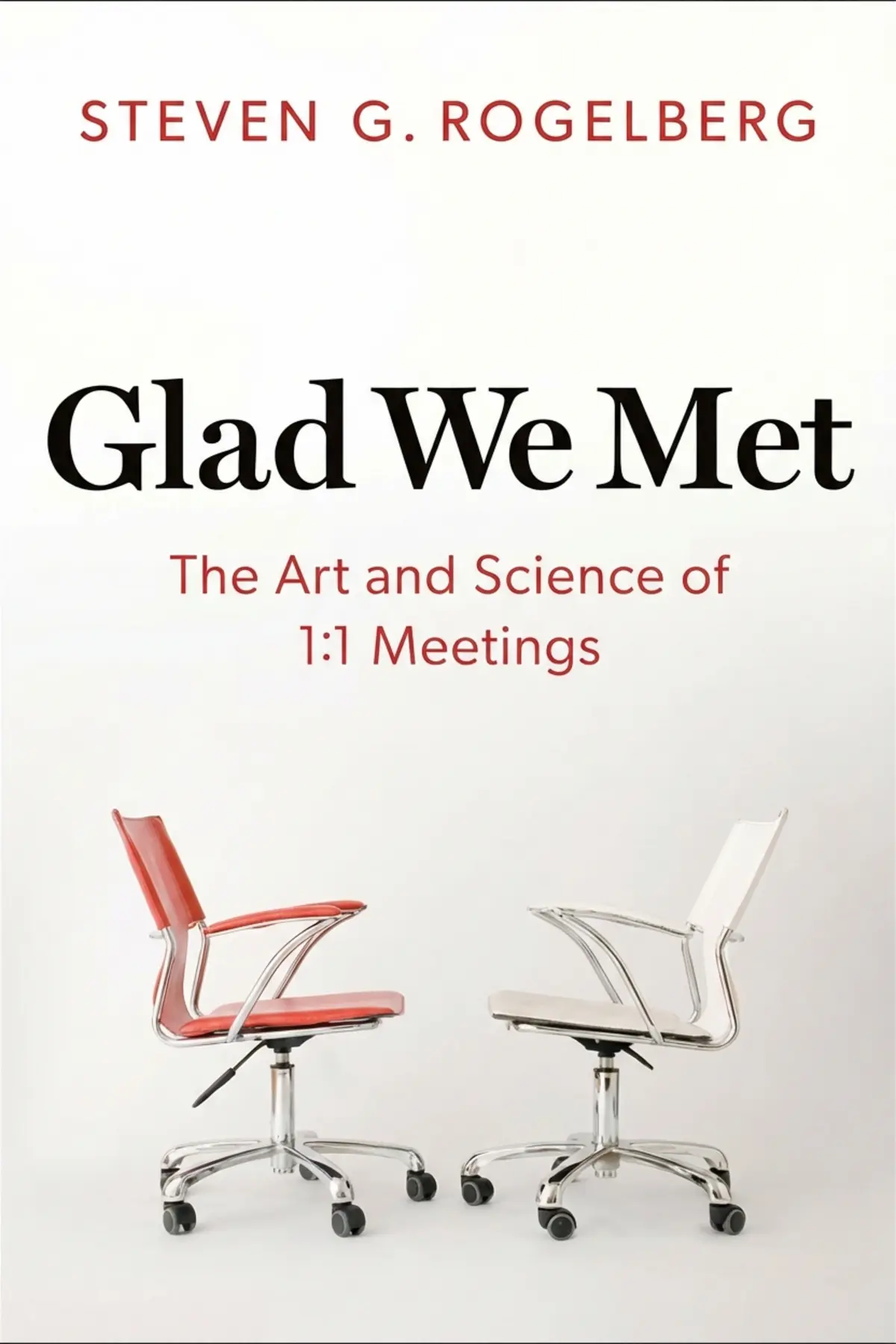
Table of Content
1. Introduction
1 min 30 sec
In the modern landscape of work, the calendar often feels like a battlefield. Between the endless stream of emails and the constant ping of instant messages, leaders and employees are struggling to find a real connection. We often treat our one-on-one meetings as just another task to be checked off, a repetitive chore where we look at a list of statuses and move on. But what if we’ve been looking at it all wrong? What if these brief windows of time are actually the most important minutes in our entire workweek?
This is the core premise of our exploration today. We are moving away from the idea of the meeting as an administrative burden and toward a vision of the meeting as a strategic investment. When a leader sits down with a direct report, they aren’t just discussing projects; they are building the foundation of trust, psychological safety, and professional development that keeps an organization running. In a world where talent is mobile and engagement is often low, the quality of these sessions can be the deciding factor in whether a team thrives or merely survives.
Over the next several sections, we will break down the art and science of the intentional one-on-one. We will look at how to structure these meetings for maximum impact, the specific listening skills that separate great managers from good ones, and how to ensure that the progress made during a conversation doesn’t evaporate the moment the meeting ends. Whether you are a seasoned executive or a first-time manager, the goal here is to give you a clear, actionable path toward making your team feel valued and empowered. Let’s redefine what it means to connect at work.
2. The Strategic Value of Personal Connection
2 min 04 sec
Discover why individual attention is the secret weapon of high-performing teams and how it builds a foundation of trust that group meetings can never replicate.
3. Designing the Ideal Meeting Rhythm
2 min 08 sec
Setting the right frequency and environment can change the entire tone of your professional relationship. Learn how to tailor your logistics to fit individual needs.
4. The Pillars of Masterful Dialogue
2 min 13 sec
Communication is more than just talking; it’s about active listening and empathy. Learn the skills that turn a basic check-in into a transformative coaching session.
5. Closing the Loop and Maintaining Momentum
1 min 52 sec
What happens after the meeting is just as important as the meeting itself. Explore strategies to ensure that ideas turn into action and trust continues to grow.
6. Navigating Meeting Fatigue and Organizational Visibility
2 min 00 sec
Address the challenge of a crowded calendar and learn how skip-level meetings can provide vital insights into your company’s true health.
7. Maximizing Efficiency in General Meetings
1 min 59 sec
Not every problem requires a meeting. Learn how to audit your group sessions to ensure they are actually productive and respectful of everyone’s time.
8. Conclusion
1 min 29 sec
As we wrap up our journey through the art and science of the one-on-one, it’s clear that these meetings are far more than just administrative check-ins. They are the heartbeat of effective leadership. By shifting our perspective and viewing these sessions as a strategic investment in our people, we unlock a level of trust and productivity that simply isn’t possible through any other medium. We’ve explored how to set the right rhythm, the importance of listening with empathy, and the necessity of following through on our commitments.
The throughline of this approach is simple: the success of an organization is built on the strength of its relationships. When a leader takes the time to truly see, hear, and support their team members, they are doing more than just managing a project—they are cultivating a culture of growth. This isn’t a task that you finish; it’s a practice that you refine over time. Each one-on-one is a new opportunity to learn something new about your team, to remove a roadblock, and to reinforce the idea that every individual’s contribution matters.
So, as you head back into your workweek, take a look at your calendar. Ask yourself how you can make your next one-on-one more meaningful. Could you change the setting? Could you ask a better question? Could you listen just a little bit longer? By making these small, intentional changes, you aren’t just improving a meeting; you are transforming your leadership and empowering the people around you to reach their full potential. The path to a better workplace starts with a simple conversation. It’s time to make it count.
About this book
What is this book about?
Many professional interactions feel like a drain on time, but the one-on-one meeting is the most underutilized tool in a leader's arsenal. This book shifts the focus from administrative check-ins to a strategic philosophy of mentorship and mutual growth. It argues that the relationship between a manager and an employee is the primary driver of organizational health, and the quality of that relationship is forged in these private, focused sessions. Listeners will learn the logistics of setting a perfect meeting cadence, the psychological importance of selecting the right environment, and the skills required to facilitate a truly two-way conversation. Beyond the mechanics of the meeting itself, the book covers the critical importance of follow-up and how to navigate the modern challenge of meeting fatigue. The promise is a more cohesive, high-performing team where employees feel genuinely heard and supported, leading to long-term retention and collective success.
Book Information
About the Author
Steven G. Rogelberg
Steven G. Rogelberg is a distinguished professor at the University of North Carolina, where he focuses on organizational science, management, and psychology. He is an acclaimed researcher in the fields of team performance and employee well-being. Rogelberg is also the author of The Surprising Science of Meetings and is recognized globally for his data-driven insights into how people work together.
Ratings & Reviews
Ratings at a glance
What people think
Listeners find this book to be an outstanding manual for managers and executives, delivering useful perspectives backed by academic study. The text successfully optimizes meeting results and improves the quality of private discussions. Furthermore, listeners value the accessible writing, helpful material, and output advantages, with one listener mentioning its research-driven approach. They also appreciate its impact on social dynamics, with one review noting how it strengthens workplace bonds with colleagues.
Top reviews
Sombat
Steven Rogelberg has clearly done the legwork here to bridge the gap between academic research and the messy reality of being a manager. This book isn't just a collection of anecdotes; it's a data-driven blueprint for making one-on-ones actually matter instead of just checking a box on a calendar. Personally, I found the distinction between running a meeting and facilitating a connection to be the most impactful shift in my own mindset. While some might find the academic citations a bit dense, they provide the necessary weight to back up what otherwise might seem like simple advice. I’ve started implementing the five key behaviors for empathy and vulnerability, and the shift in my team's energy is palpable. It’s rare to find a leadership book that prioritizes the direct report's experience so heavily, making it a must-read for anyone serious about professional development. The focus on listening over talking is something every leader needs to hear more than once.
Show moreThitiwan
Wow. This is the book I wish my first boss had read twenty years ago when I was struggling to find my footing in the corporate world. Rogelberg captures the human element of leadership perfectly, reminding us that how we spend our days is how we spend our lives. The concept that a one-on-one should end with a genuine glad we met feeling is so simple yet so profound. It’s a research-backed playbook that challenges the idea of meetings as a burden and instead frames them as an investment in success. I found the section on appropriate vulnerability to be particularly enlightening, as it’s something many leaders struggle to balance. Even though it covers a lot of ground that might seem obvious to some, seeing it all laid out with data to support it is incredibly validating. I’m buying copies for my entire supervisor team because we need this cultural shift.
Show moreBae
The chapter on the 10 Direct Behaviors changed the way I approach my weekly check-ins immediately. Instead of me doing all the heavy lifting, I’ve started coaching my team to be curious, know what they need, and actively engage in the process. It's a great book for exploring the nuances of these interactions, especially if you're a first-time manager who feels a bit lost. Rogelberg’s research-infused style makes the advice feel credible and sturdy, rather than just another person's opinion on leadership. I really appreciated the focus on ending meetings with gratitude and a clear reiteration of support, which has helped me build much stronger ties with my directs. While some parts are a bit repetitive, the core message about 1:1s being an obligation rather than a choice is something every organization should adopt. It’s easily one of the most practical guides I’ve read this year for improving workplace culture and interpersonal effectiveness.
Show moreSomporn
After hearing Rogelberg on a podcast, I decided to grab this to see if I could improve the stagnant 1:1s I've been having with my engineering team. The truth is, most managers treat these meetings as an annoying add-on to their real work, but this book argues convincingly that these interactions ARE the job. I appreciated the specific list of ten behaviors for direct reports, as it helps me coach my team on how to show up and own their time. The research-backed approach makes it much easier to sell these changes to upper management who only care about the bottom line. My only real gripe is that the audiobook version is a nightmare to navigate because the chapters aren't labeled, making it hard to find specific tips. Still, the practical takeaways on ending meetings with gratitude and clear action items have already made my Tuesday mornings much more productive.
Show moreHiroshi
Picked this up on a whim after a particularly draining week of back-to-back team syncs. What I found was a thoughtful, if slightly over-explained, guide on how to turn those draining sessions into high-value investments for my people. The book outlines five key behaviors that I realized I was mostly ignoring, especially the part about involving directs in the agenda-setting process. I've always been a fan of the Effective Manager model, and this pairs nicely with that, though Rogelberg is much more focused on the psychological safety aspect of the meeting. It’s a bit repetitive in parts—the author really loves to hammer home the same research points—but the message is an important one for the modern workplace. It reminds us that at the end of the day, we are leading humans, not just resources. The advice on how to handle feedback constructively was particularly useful for some of my more defensive team members.
Show moreMax
As someone who has been a manager for over a decade, I thought I had 1:1s figured out, but this book proved me wrong. It provides a much-needed coach-like perspective on how to be genuine and meaningful in a world that often feels thankless and corporate. I specifically liked the breakdown of the 10 critical behaviors for directs, which gave me a new way to empower my staff to take the lead. It’s practical and research-based, which helps justify the time spent on these meetings to my own supervisors who are obsessed with productivity metrics. The tone is supportive throughout, though I’ll admit it gets a little pedantic when explaining the what and why of a meeting. However, if you can look past the slightly repetitive nature of the writing, there is a wealth of interpersonal effectiveness tools here. It’s a solid addition to any leadership library, especially for those who want to build better relationships.
Show moreA
Ever wonder why your calendar is full of one-on-ones that feel like a total waste of time for everyone involved? This book tries to solve that problem, though it takes a very long route to get to the point. While I appreciate the emphasis on interpersonal effectiveness and being present, I couldn't shake the feeling that this could have been a New Yorker-length article. The author breaks down the common core of communication, which is helpful for beginners but might feel like mansplaining to women who have been navigating these office dynamics for years. To be fair, the sections on demonstrating appropriate vulnerability and creating a cadence of accountability are solid and actionable. It’s a decent reference to keep on your desk, but you can probably skim the first third without missing anything vital. It’s definitely more for people managers than project managers, so keep that in mind before buying.
Show moreWipada
Finally got around to reading this after seeing it all over my professional feeds. It’s a mixed bag for me; there are moments of brilliance buried under a lot of fluff and common-sense advice. The chapter on the walking meeting was a high point, offering a creative way to break the monotony of the office and foster better conversation. However, the author spends a lot of time explaining the very basics of communication that feel like they belong in a middle school classroom. If you can filter through the repetition, the five key behaviors for personal needs are actually quite transformative for building trust. It’s definitely a short read that could have been even shorter, but the focus on productivity and meeting effectiveness is appreciated. It’s an okay book that serves as a good reminder to be more intentional with your team, even if it isn't earth-shattering. I'll keep it on my shelf as a quick reference guide.
Show moreManop
Look, I really wanted to like this one because I’m a fan of Rogelberg’s previous work, but this felt like a lengthy LinkedIn post that someone forced into a book. It’s incredibly repetitive, saying the same three or four points in slightly different ways until you feel like you’re trapped in a loop. Frankly, the content is so basic that it feels like a prerequisite for a prerequisite, covering things that should be common sense to anyone who has ever worked in an office. I actually found the introduction quite jarring and struggled to get past the first fifty pages because the tone felt a bit condescending at times. There is a great section on walking meetings that sparked some inspiration, but that’s about five pages of actual value in a sea of filler. If you’ve never held a meeting in your life, you might find this revolutionary, but for seasoned leads, it’s mostly stuff you already know.
Show moreKatya
Not what I expected given the high praise I saw online, and I honestly struggled to finish it. The book feels stretched way too thin, with a lot of filler content that makes it feel more like a manual for people who have never interacted with other humans before. I was looking for advanced strategies for managing a high-output project team, but this is strictly for line management and basic rapport building. I found myself skipping through entire sections of the audiobook because it was just repeating the same communication is key mantra without offering new scenarios. The intro was probably the weakest part, almost turning me off the book entirely before I even got to the actual advice. There are some okay nuggets about walking meetings and ending on a positive note, but it’s not worth the cover price. Just read a summary online and you’ll get 90% of the value without the headache.
Show more
Readers also enjoyed
A Year with Peter Drucker: 52 Weeks of Coaching for Leadership Effectiveness
Joseph A. Maciariello

Acting with Power: Why We Are More Powerful Than We Believe
Deborah Gruenfeld
All In: How Great Leaders Build Unstoppable Teams
Mike Michalowicz
AUDIO SUMMARY AVAILABLE
Listen to Glad We Met in 15 minutes
Get the key ideas from Glad We Met by Steven G. Rogelberg, plus 5,000+ more titles in English and Thai.
- 5,000+ titles
- Listen as much as you want
- 7-day free trial
- Cancel anytime







