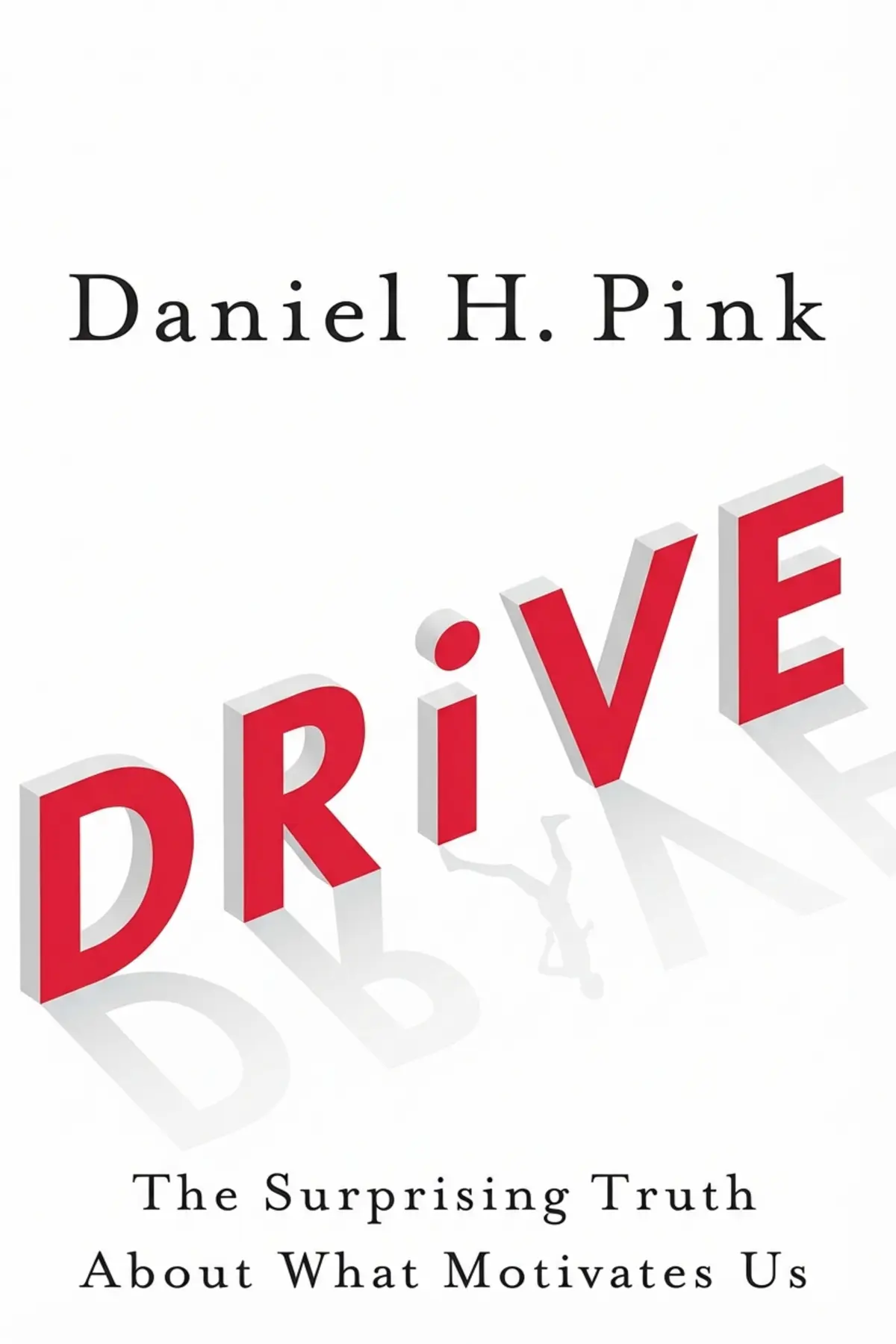
Drive: The Surprising Truth About What Motivates Us
Daniel H. Pink
Explore the transition from the Information Age to the Conceptual Age, where creative, right-brain skills like design, empathy, and storytelling are becoming the essential tools for professional success and personal fulfillment.
1 min 52 sec
Imagine for a moment the long arc of human history. We’ve progressed through various eras, each defined by the tools we used and the way we thought. We moved from the Agricultural Age, defined by physical strength and the rhythm of the seasons, into the Industrial Age, where machines augmented our muscles and we learned to work with mechanical precision. Eventually, we entered the Information Age, a period where the ability to manage data and master specialized, logical tasks became the ultimate ticket to prosperity. In this era, the computer was our primary tool, and the person who could think like a computer—linear, analytical, and logical—was the one who got ahead.
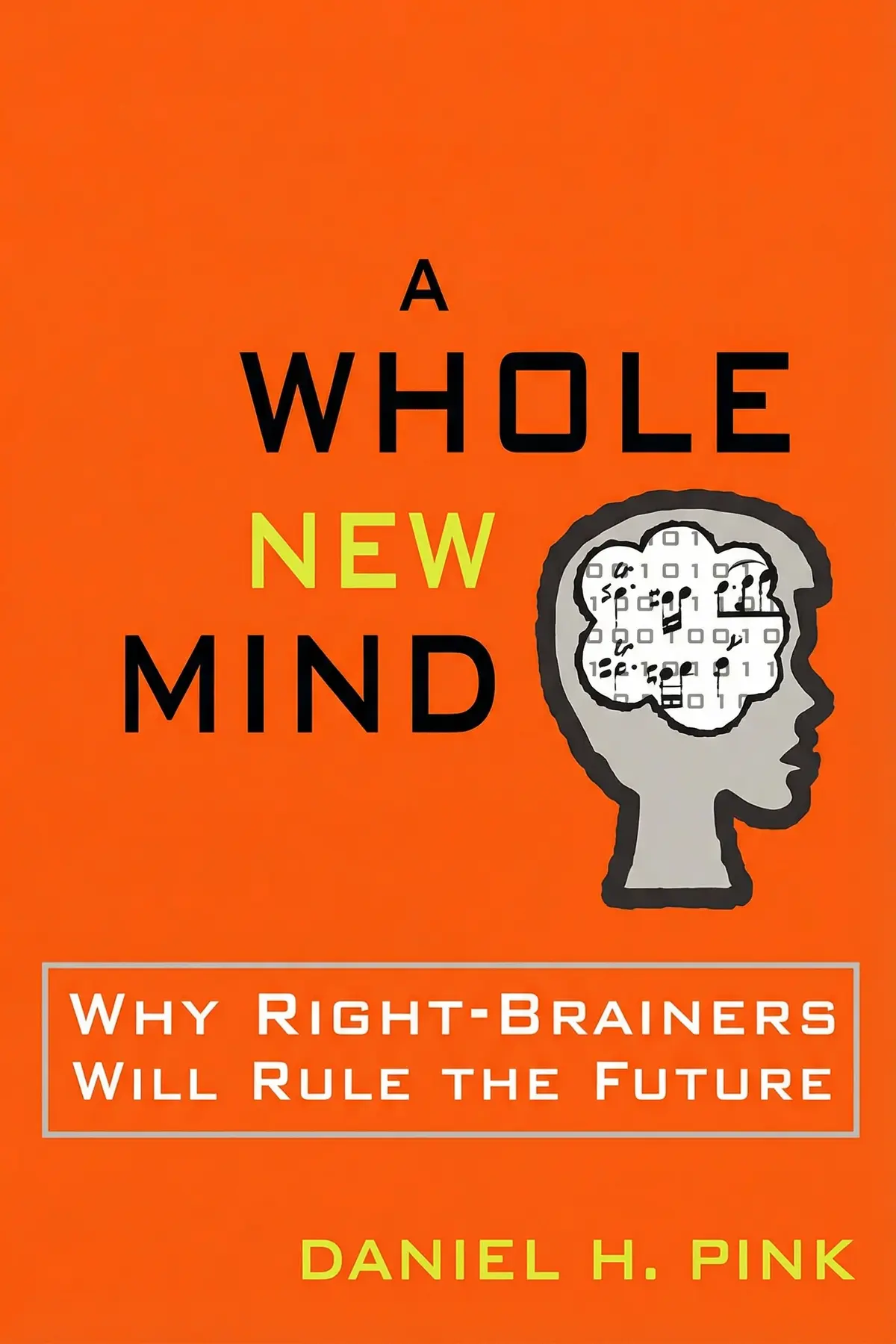
But that world is changing beneath our feet. We are now standing at the threshold of a new epoch: the Conceptual Age. In this summary of A Whole New Mind by Daniel H. Pink, we explore why the analytical skills of the left brain, while still necessary, are no longer sufficient on their own. The future belongs to a different kind of person with a different kind of mind—creators, empathizers, pattern-recognizers, and meaning-makers.
This isn’t just about being ‘artsy’ or ‘creative’ in a vague sense. It’s about a fundamental shift in what the world values. As automation takes over routine cognitive tasks and as white-collar work is increasingly outsourced to regions where labor is cheaper, the qualities that make us uniquely human are becoming our most valuable assets. We will journey through the biological foundations of our thinking and then dive deep into the six essential high-concept and high-touch aptitudes that will define the leaders of tomorrow. By the end of this exploration, you’ll see how to balance the two halves of your brain to not only survive in the modern economy but to flourish in a life filled with purpose and significance.
2 min 30 sec
Delve into the fascinating divide between the left and right hemispheres and discover how they work together to create a complete human experience.
2 min 09 sec
Uncover why analytical thinking has dominated our culture for so long and how the tides are finally turning in favor of the big-picture thinker.
2 min 26 sec
Learn about the powerful global factors that are making creative and emotional intelligence the most valuable skills in the modern economy.
2 min 10 sec
Explore why good design is no longer a luxury for the elite but a fundamental requirement for business success and personal well-being.
2 min 07 sec
Discover why being able to tell a compelling narrative is more important than possessing a mountain of facts in our information-saturated world.
2 min 03 sec
Learn how to master the art of synthesis and why the ability to connect seemingly unrelated ideas is the key to modern innovation.
2 min 14 sec
Discover how the very things we were told to leave out of the workplace—emotion and lightheartedness—are actually vital for productivity and innovation.
2 min 02 sec
Understand how the quest for purpose and spirituality is reshaping the way we live and work in an era of unprecedented prosperity.
1 min 52 sec
As we conclude our journey through the ideas of Daniel H. Pink, the throughline is clear: the age of the purely analytical, left-brain dominated worker is coming to an end. We are not discarding logic, analysis, or the incredible technological progress of the Information Age, but we are recognizing that they are no longer enough. To thrive in the Conceptual Age, we must bring our ‘whole mind’ to the table.
We have looked at the six essential aptitudes that will define this new era. We saw how Design goes beyond utility to give our world significance. We explored how Story provides the context that turns cold facts into human truth. We learned how Symphony allows us to see the big picture and innovate by connecting disparate ideas. We discovered how Empathy and Play give us a uniquely human edge that machines can never replicate. And finally, we saw how the search for Meaning is the ultimate driver of our happiness and success.
This shift is not a burden; it is an invitation. It is an invitation to reclaim the parts of our humanity that we were once told to leave at the door when we went to work. It is an invitation to be more creative, more empathetic, and more purposeful. By developing these right-brain skills, you aren’t just future-proofing your career against automation and outsourcing; you are opening the door to a richer, more integrated way of living.
So, as you move forward, ask yourself: How can I add more design to my work? What is the story I am trying to tell? How can I see the symphony in the chaos around me? The world is changing, and it is waiting for those who are brave enough to lead with their whole minds. It’s time to embrace the artistry and the empathy that make you who you are. The future doesn’t just belong to the logical; it belongs to the creative, the compassionate, and the meaningful.
For decades, the global economy has been driven by analytical, logical, and linear thinking—the classic hallmarks of the left brain. This was the Information Age, a time when data was king and specialized knowledge was the ultimate currency. However, as Daniel H. Pink argues in this summary of A Whole New Mind, that era is giving way to a new reality called the Conceptual Age. In this new landscape, the skills that once seemed secondary—artistry, empathy, and big-picture synthesis—are now the primary drivers of value. This summary breaks down the six essential aptitudes that define this new era: Design, Story, Symphony, Empathy, Play, and Meaning. You will discover why facts alone are no longer enough to succeed when information is ubiquitous and machines can process data faster than any human. By understanding how to integrate the creative right hemisphere with the logical left, you can adapt to a world where automation and outsourcing are changing the nature of work. It is a guide for anyone looking to future-proof their career and find deeper significance in an increasingly complex and material world.
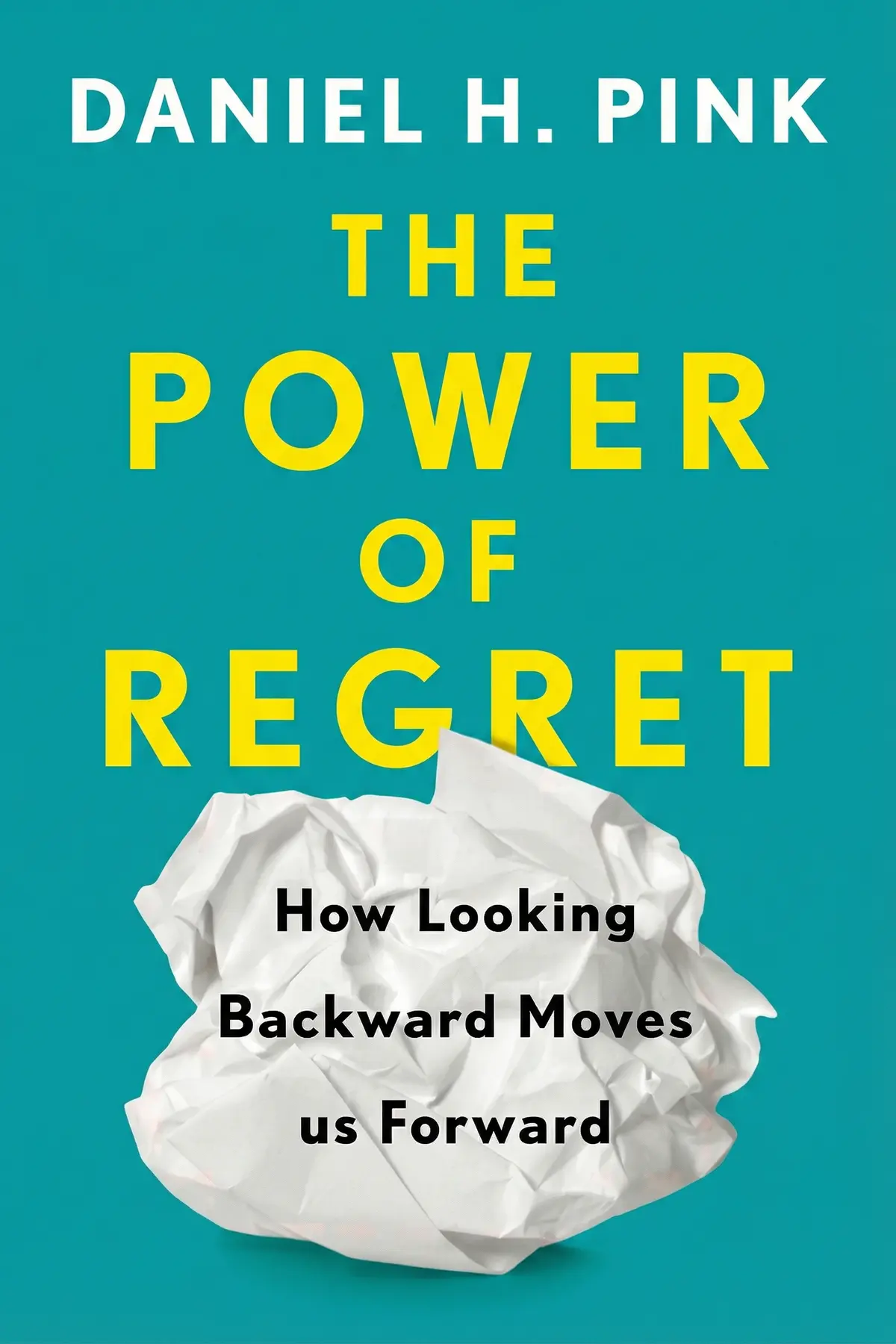
Daniel H. Pink is a prominent American author known for his bestselling books focusing on the evolution of business, management, and the changing nature of work. His work, A Whole New Mind, originally published in 2005, became a long-running bestseller on the New York Times and BusinessWeek lists. Pink's insights into human behavior and the economy have reached a global audience, with his writings translated into 20 languages.
Daniel H. Pink
Daniel H. Pink
Listeners find this work captivating and well-documented, providing hands-on activities to train the right brain. They also value the intellectually stimulating material, with one listener pointing out how it clarifies the brain's dual nature. Additionally, the book sparks creativity and infuses products with emotional depth while detailing the right-brain senses and helping listeners discover meaning within their work.
Ever wonder why some people just seem to 'get' the big picture while others are stuck in the weeds? Pink explores this by highlighting the shift from the Information Age to the Conceptual Age, where empathy and meaning are the new currency. I particularly enjoyed the sections on 'Symphony' and how synthesis allows us to see connections that others miss entirely. The book is well-researched, but it's the emotional resonance that really makes it stick in your mind long after you finish. Frankly, we need more leaders who understand that 'high touch' is just as important as 'high tech' in our modern world. It really helped my creative juices start flowing again after a long period of burnout.
Show moreAs a self-proclaimed 'creative type' who has spent years working in a sea of spreadsheets, this book felt like a long-awaited validation. Pink argues that the capabilities we once thought were frivolous, like joyfulness and inventiveness, are actually the keys to flourishing in the future. I loved the idea that an MFA might be more valuable than an MBA because it focuses on the human element of commerce. The writing style is engaging and moves quickly, though he does repeat his main points quite often. Personally, I think the emphasis on storytelling is the most useful takeaway for anyone trying to persuade a tough audience. It’s an inspiring call to action for everyone to embrace their whole mind.
Show moreFinally got around to reading this classic, and I’m struck by how Pink’s predictions have actually aged into reality. We really do live in a world of abundance where design is no longer a luxury but a baseline requirement for any successful product. He correctly identified that meaning and transcendence would become major drivers for workers who are no longer just struggling for survival. The writing is punchy and accessible, making it easy to digest his points about the 'Conceptual Age' in just a few sittings. My only gripe is that he glosses over the systemic reasons why creative work is often undervalued and underpaid. Still, it provides a great roadmap for personal growth and finding purpose.
Show morePicked this up after my manager recommended it for our quarterly design sprint. I was skeptical about the whole 'MFA is the new MBA' claim at first, but Pink builds a very persuasive case throughout the text. By focusing on design and story, he shows how we can differentiate ourselves in a world where technical tasks are increasingly automated or outsourced. To be fair, some of the neuroscience feels a bit simplified, yet the core message remains undeniably relevant for any professional today. The practical exercises in the 'portfolio' sections helped my team generate fresh ideas for our current project. It’s a solid resource for anyone feeling stuck in a purely analytical role.
Show moreThe chapter on Symphony alone made the entire purchase worth it. Pink explains that synthesis—the ability to combine disparate pieces into a new whole—is what will distinguish successful people in the coming years. Got to say, his focus on 'big picture' thinking really resonated with how I approach my own consulting business. The book is filled with actionable 'portfolio' items that allow you to practice these right-brain skills in your daily life. While some chapters are stronger than others, the overall message about finding meaning in your work is quite profound. It’s a quick read, but the impact of his six senses framework is surprisingly long-lasting. I’ve already recommended this to several colleagues who are feeling overwhelmed by data.
Show moreNot what I expected from a business book, but in the best way possible. Instead of just focusing on profit margins, Pink talks about the importance of play and how humor can actually boost productivity. The book is thoroughly researched, yet it maintains a casual tone that keeps you turning the pages. I found the 'Portfolio' sections at the end of each chapter to be the most valuable part of the experience. They give you concrete ways to train your brain to think more holistically and creatively. It’s a refreshing take on what it means to be a 'knowledge worker' in the 21st century. I finished it feeling much more optimistic about my career path.
Show moreDaniel Pink has a knack for taking complex shifts in our global economy and turning them into digestible, actionable advice. In this book, he makes a compelling case for why 'L-Directed' thinking is no longer enough to stay competitive in a world of automation. He uses great examples, like how empathy improves patient outcomes in hospitals, to show that 'soft skills' are actually quite hard. To be fair, the book can feel a bit repetitive, as he hammers home the same few points in every chapter. But the core message is so important that the repetition almost feels necessary for it to sink in. It’s a great guide for anyone looking to enrich their professional life with more emotion and creativity.
Show moreWhile I appreciate the effort to champion creativity, this book feels incredibly dated in our current AI-driven landscape. Pink focuses heavily on the triple threat of abundance, automation, and Asia, which might have felt revolutionary in 2005 but feels like old news now. In my experience, the binary between left-brain and right-brain is a bit of a tired trope that neuroscientists have largely moved past. That said, the 'six senses' framework—Design, Story, Symphony, Empathy, Play, and Meaning—still offers some valuable food for thought for those in corporate environments. I found the section on 'Play' a little cringeworthy, especially the mention of laughing yoga. It’s an okay read, but don't expect it to change your entire worldview.
Show moreTruth is, I found the first half of the book a bit repetitive with its constant hammering of the 'Asia and Automation' threats. Pink seems very concerned with maintaining middle-class relevance, which can feel a bit narrow-minded at points. However, once he gets into the 'Six Senses,' the content becomes much more engaging and practical for the average reader. The distinction between 'high concept' and 'high touch' is a useful way to think about why certain products succeed while others fail. I particularly liked the focus on empathy and how it’s becoming a critical skill even for traditionally 'cold' professions like medicine. It’s not a perfect book, but it’s definitely worth a skim for the exercises.
Show moreFrankly, the 'science' here is so thin it's practically transparent. Pink takes basic common sense and wraps it in a 'right-brain' metaphor that has been largely debunked by actual experts in the field. He spends far too much time fear-mongering about jobs going to Asia while offering 'laughing yoga' as a potential solution to our professional woes. I had to read this for a work seminar and found the tone to be quite patronizing toward middle-class workers. The examples he uses, like looking at products at a suburban Target, are trite and lack any real depth. If you want a serious look at the future of the economy, look elsewhere. This is just another piece of vacuous pop-psychology.
Show moreAUDIO SUMMARY AVAILABLE
Get the key ideas from A Whole New Mind by Daniel H. Pink, plus 5,000+ more titles in English and Thai.