
14 min 49 sec
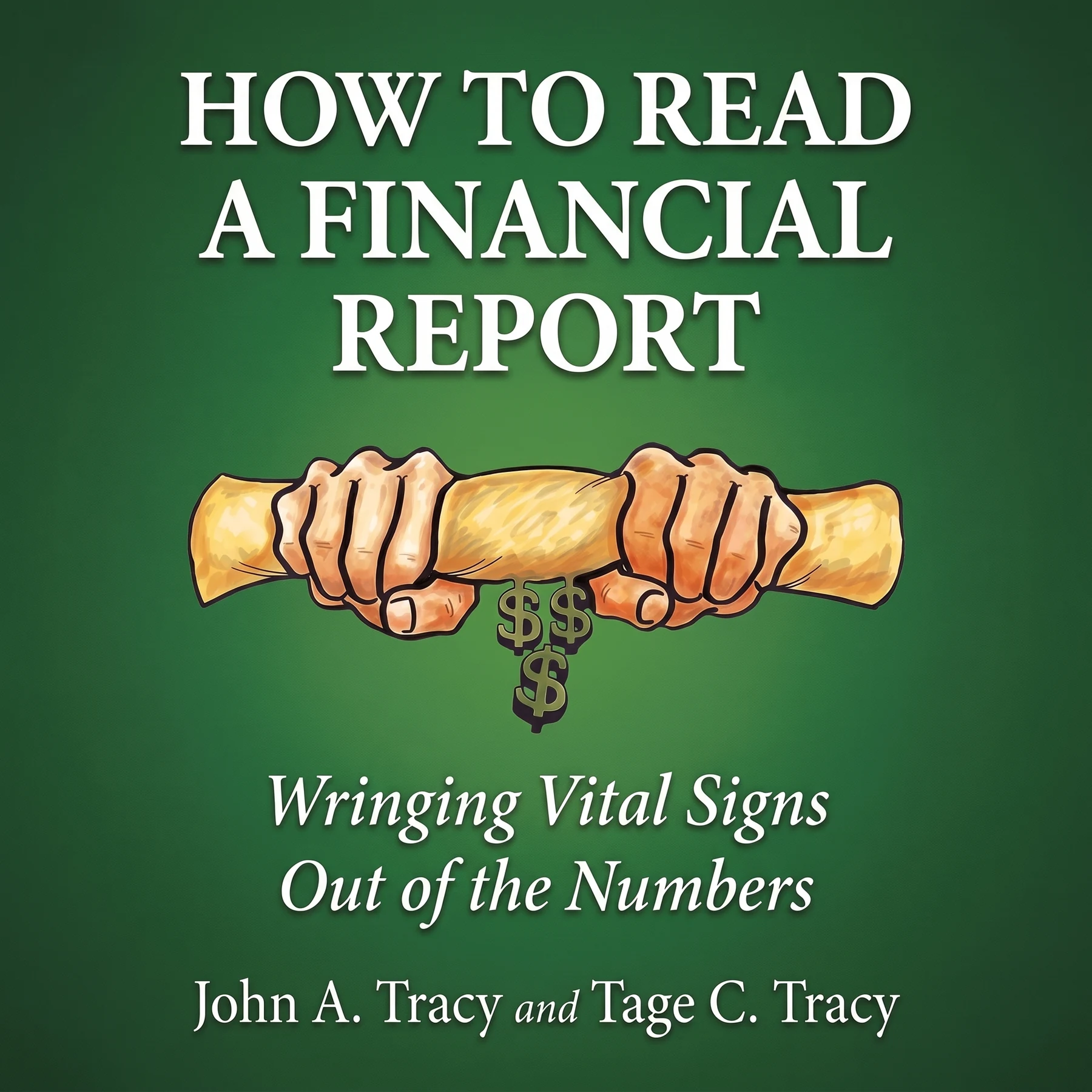
How to Read a Financial Report: Wringing Vital Signs Out of the Numbers
How to Read a Financial Report breaks down the intimidating world of corporate finance into understandable components, teaching you how to analyze balance sheets, income statements, and cash flows to judge business health.

Table of Content
1. Introduction
1 min 25 sec
Walking into the world of financial reporting can often feel like stepping into a foreign country without a map or a dictionary. You open an annual report, and you’re immediately met with a dense forest of tables, percentages, and footnotes that seem designed to confuse rather than clarify. But whether you are an aspiring entrepreneur, an individual investor trying to grow your retirement fund, or a manager responsible for a department budget, these documents are your most vital tools. They are the primary way a business communicates its successes, its struggles, and its future potential.
The reality is that money is the lifeblood of any organization, and the financial report is its health chart. To make sound decisions, you don’t need to become a certified accountant, but you do need to understand the fundamental grammar of finance. This journey is about moving past the initial anxiety of seeing long columns of digits and starting to see the patterns they reveal. We are going to explore the three pillars of financial reporting—the balance sheet, the income statement, and the statement of cash flows—and see how they weave together to create a single, cohesive narrative. By the time we’re done, those intimidating pages will start to look less like a puzzle and more like a clear guide for your next big move. We’ll look at what specific figures actually mean for a company’s survival and how you can spot the warning signs or the opportunities that others might miss. It’s time to take the mystery out of the numbers and replace it with confidence.
2. The Three Pillars of Financial Health
2 min 44 sec
Every company’s story is told through three specific lenses that show what it owns, how much it earns, and where its cash is moving.
3. Tracing the Movement of Cash
2 min 26 sec
Profit is a matter of opinion, but cash is a matter of fact, and the cash flow statement is where the truth resides.
4. Using Ratios to Reveal the Hidden Narrative
2 min 20 sec
Numbers by themselves can be misleading; financial ratios provide the context needed to compare a company against its past and its peers.
5. The Importance of the Fine Print
2 min 15 sec
The most important information in a financial report is often hidden in the footnotes, where companies disclose the risks the numbers can’t show.
6. The Role of the Auditor and Managerial Influence
2 min 24 sec
An independent auditor provides a seal of approval, but savvy readers must still maintain a level of skepticism about how numbers are presented.
7. Conclusion
1 min 15 sec
Mastering the ability to read a financial report is like gaining a superpower in the business world. It allows you to peer behind the curtain of marketing hype and corporate PR to see the actual engine that drives a company. We have seen how the balance sheet provides a foundational snapshot of what is owned and owed, how the income statement tracks the ongoing battle for profit, and how the cash flow statement serves as the ultimate arbiter of truth. By using ratios, you can turn these numbers into meaningful insights that allow for fair comparisons across companies and industries.
But remember that financial reports are not just mathematical exercises; they are human documents. They are influenced by the goals of managers and the scrutiny of auditors. The fine print in the footnotes often holds the keys to the most significant risks and opportunities. As you move forward, the most important takeaway is to stay curious and skeptical. Don’t be afraid of the numbers. Instead, treat them as the starting point of a conversation. Whether you are looking at your own business, considering an investment, or analyzing a competitor, you now have the framework to ask the right questions. The more you practice looking at these documents, the more clearly the stories within them will emerge, guiding you toward smarter, more informed financial decisions.
About this book
What is this book about?
Many people find financial documents overwhelming, often viewing them as a chaotic sea of numbers and jargon. However, these reports are the essential pulse-check for any organization, whether it is a small family business or a global corporation. This guide removes the mystery by explaining the primary financial statements that every stakeholder must master to make informed decisions. The promise of this exploration is a practical level of financial literacy. It moves beyond simple definitions to show how the balance sheet, the income statement, and the cash flow statement interact to tell a complete story. You will learn how to use ratios to compare companies, why the fine print in footnotes matters more than you think, and how to interpret the independent assessment of an auditor. By the end, you will have the tools to look past the surface-level polish of an annual report and understand the underlying reality of a company's performance and stability.
Book Information
About the Author
John A. Tracy
John A. Tracy is a distinguished Professor of Accounting at the University of Colorado who has won multiple awards for his teaching. He has dedicated his career to making accounting accessible, authoring well-known guides like Accounting for Dummies. Tage C. Tracy is the founder of TMK & Associates, a financial consulting firm established in 1993. With three decades of experience in financial consulting, he has co-authored several books with his father, including Cash Flow for Dummies and the Small Business Financial Management Kit for Dummies, focusing on demystifying finance for professionals and laypeople alike.
Ratings & Reviews
Ratings at a glance
What people think
Listeners find this book to be an outstanding primer on financial statements, delivering a solid overview of the three primary tools. They also value the straightforward explanations and methodical framework, with one listener noting that understanding improves with each reading. Furthermore, the text connects introductory and sophisticated levels, and listeners believe the purchase is well worth the cost.
Top reviews
Saengdao
A classic for a reason. This guide is an absolute masterpiece for anyone who feels intimidated by the dense jargon of the financial world. It reads more like a workbook than a dry manual, stripping away the complexity of income statements and balance sheets to reveal the underlying logic. Frankly, the pedagogical approach used by the Tracys is wonderful because it focuses on the interconnections between the three primary financial statements. Most books treat them as isolated silos, but here you see how a change in one ripples through the others. I’ve started giving copies to my non-finance colleagues as gifts. It is short, to the point, and manages to be helpful without being overly 'scientific' or academic. If you want to understand how a business actually breathes, start here.
Show moreMint
As a small business owner with zero background in accounting, I found this primer to be an absolute lifesaver. I used to panic when my accountant sent over the year-end reports, but this book cleared the mystery almost immediately. It explains the basics of financial statements in a clear and logical way that actually makes sense for someone who isn't a math whiz. The authors even inject a touch of humor into the discussion, which I never thought possible for a book about auditing and accrual accounting. Better yet, it shows how everything ties together so you aren't just looking at a list of random debts and assets. I have read it twice now, and my understanding of my own company's health improves with each revisit. It is truly worth the investment.
Show moreTantipat
Every time I revisit this text, I pick up on a nuance I missed during the previous pass. I’ve struggled with this subject for a long time, and other authors always seemed to assume I already knew the key points. Tracy & Tracy don't make those assumptions. They explain the 'why' behind the numbers, which is what I really needed to stay engaged. Not gonna lie, I used to find financial reports completely overwhelming, but this book helped me wade through the maze. It’s especially good at showing the relationship between the accounts and how they influence each other. Whether you're a student or a professional, this is the best primer on basic financial statements imaginable. It has helped me immensely in my law practice when I have to analyze macro-level news stories or corporate clients.
Show moreLayla
This book finally helped me bridge the gap between just looking at numbers and actually understanding the flow of capital. The way it illustrates the relationship between cash flow and profit is a revelation for beginners who might confuse the two. I particularly appreciated the sections on how companies can 'massage' their quarterly numbers to appease Wall Street; it adds a layer of healthy skepticism that every investor needs. My only real gripe is the physical layout of the examples. You often have to flip back three or four pages to reference a specific chart while reading the explanation, which gets annoying after a while. Still, it is a very comprehensive guide that makes a boring subject surprisingly digestible. It helped me crystallize several concepts that were fuzzy during my undergrad years.
Show morePatcharaporn
If you are tired of relying on talking heads on TV for stock tips, grab this book immediately to learn fundamental analysis for yourself. It takes you through the entries on financial documents to show you what they mean for a business’s long-term survival. I found the discussion on the CPA’s opinion particularly enlightening since most people just skip over that part of an annual report. The book helps you take more juice out of an average 10-K filing. While it isn't the deepest read on the market, it makes simple sense and provides a great overview of the three main financial tools. I do plan to create a personal spreadsheet to measure these ratios for my own portfolio now. It’s a great way to start connecting the dots without getting bogged down in too much theory.
Show moreTawee
The most insightful sections for me weren't just the math, but the discussion on how companies can manipulate their reported expenses. As someone who eked out a 'C' in accounting years ago, I usually find this topic incredibly dull, but Tracy makes the discussion relevant and digestible. He shows you how to spot a negative cash flow even when a company claims to be making a profit on paper. This kind of knowledge is essential for any manager who wants a clear understanding of the business they are involved in. The book is well-structured and avoids a lot of 'scientific' non-useful statements that usually clutter these types of guides. It isn't perfect, and some parts feel a bit dated, but it's a solid 4-star resource for the non-finance crowd.
Show moreCha
Finally got around to reading this as part of my professional development goals for the year and I'm glad I did. It is a very comprehensive guide that simplifies some concepts I have struggled with for years, particularly accrual-based accounting. The book gets straight to the point right away and then dives into the details later, which fits my learning style perfectly. I found the most value in seeing how the income statement and cash flow statement tie together. Even though some of the examples are a bit tedious to follow because of the page-flipping, the overall clarity is excellent. For any non-finance manager who wants to understand how their department affects the bottom line, this is a must-read. It helped me feel much more confident during our last quarterly budget meeting.
Show moreAim
To be fair, the content is solid, but the experience feels a bit like reading a textbook from an MBA course. If you already have a basic grasp of accounting, you might find a significant portion of this to be a review of things you already know. The authors do a great job of explaining things in plain words, yet I found the last twenty pages to be almost too elementary to be useful. Look, it’s a good starting point for managers or entrepreneurs who need to 'squeeze' a balance sheet for information, but don't expect deep-dive advanced strategies. Also, keep in mind this is heavily focused on US accounting practices and regulations. If you are operating internationally, you will definitely need to supplement this with other material to get the full picture of global standards.
Show moreAnchalee
While the Tracy duo clearly knows their stuff, I've come across other guides that explain these terms in even simpler language for the average person. It’s a decent enough start, but it can feel a bit dry and repetitive in the middle sections. The explanation of the three statements is good, but I found the chapters on auditing to be a bit too brief to be truly useful. Personally, I think this book sits in an awkward spot between a beginner guide and an intermediate textbook. It covers the relationship between accounts and touches on possible manipulations, but it doesn't go quite deep enough for my taste. If you are a total beginner, it’s a 4-star book, but if you have any experience, it’s more of a 3-star revision tool.
Show moreStella
Look, if you've already taken a basic accounting course in college or read similar titles, you can probably skip this one. It was okay, but I didn't find anything new or groundbreaking that I hadn't seen elsewhere. The writing style is fine, but it really feels like a primer for someone who has never even heard the term 'balance sheet' before. For an intermediate reader, it’s mostly just a slow revision of the basics. The most frustrating part was the constant flipping between pages to see the numbers they were talking about in the text. There are definitely better books out there that explain these terms in a simpler, more modern way without the repetitive textbook feel. It’s an okay start for a complete novice, but for anyone else, it’s probably a bit of a waste of time.
Show moreFeatured in
Readers also enjoyed



AUDIO SUMMARY AVAILABLE
Listen to How to Read a Financial Report in 15 minutes
Get the key ideas from How to Read a Financial Report by John A. Tracy, plus 5,000+ more titles in English and Thai.
- 5,000+ titles
- Listen as much as you want
- 7-day free trial
- Cancel anytime







