
22 min 33 sec
Humor, Seriously: Why Humor Is a Superpower at Work and in Life (And How Anyone Can Harness It. Even You.)
Humor, Seriously explores how professional levity can transform workplace culture. Stanford experts Jennifer Aaker and Naomi Bagdonas demonstrate how humor builds trust, boosts creativity, and creates more authentic, high-performing leadership.
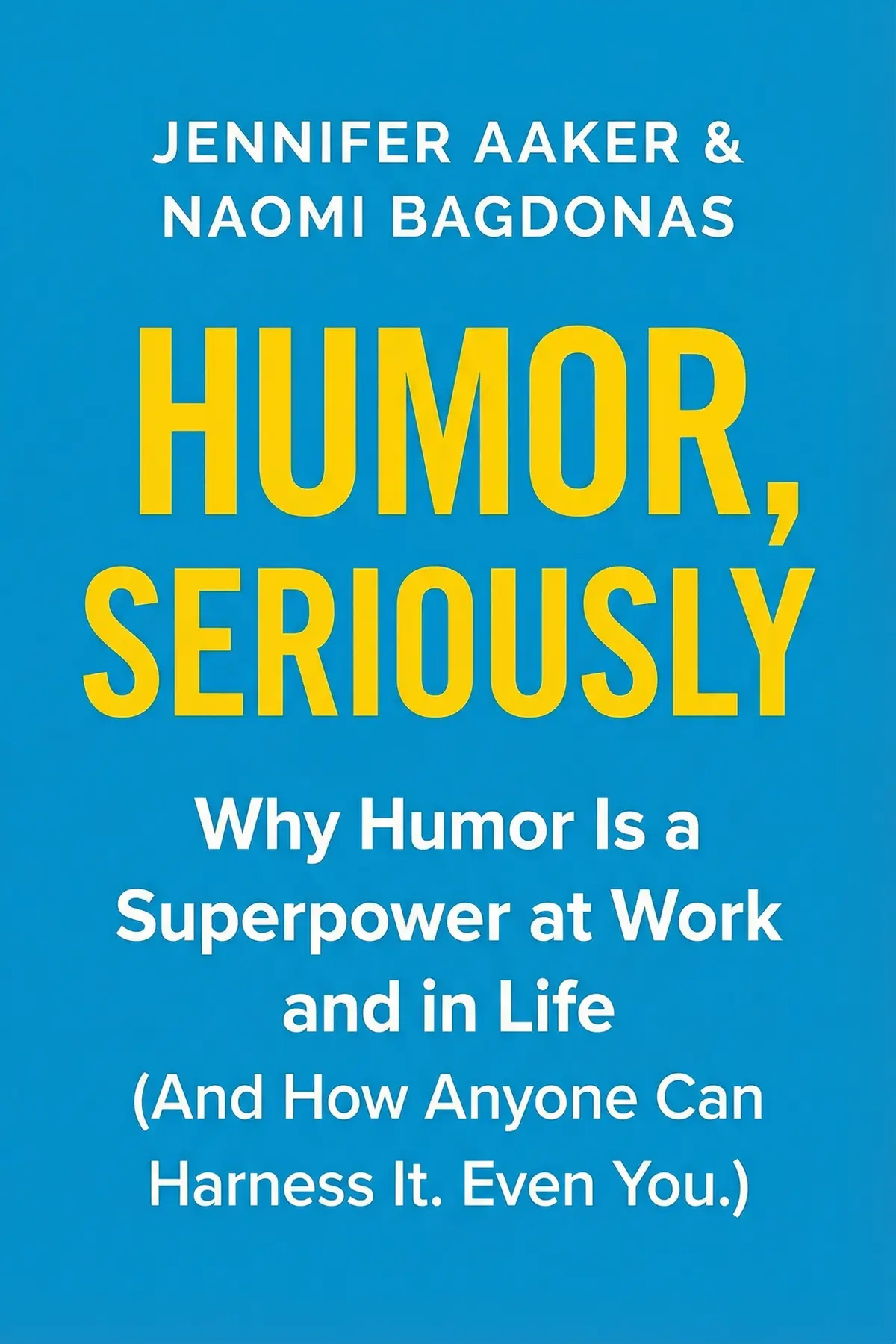
Table of Content
1. Introduction
2 min 03 sec
In our modern professional world, we often operate under a strange, unspoken rule: to be taken seriously, we must be serious. We trade in the playful energy of our youth for stiff suits, corporate jargon, and a perpetual frown of productivity. But what if this obsession with gravity is actually holding us back? What if the secret to better leadership, more innovative thinking, and deeper trust wasn’t found in a spreadsheet, but in a well-timed joke?
This is the central premise of Jennifer Aaker and Naomi Bagdonas in their exploration of professional levity. They argue that humor isn’t just a fun side-effect of a good day; it is a critical business tool that most of us have allowed to rust. We are currently living through what they call a ‘levity cliff.’ Statistics show that as we enter the workforce around the age of 23, the frequency with which we laugh and smile plummets. We become ‘professional,’ which we mistakenly interpret as ‘boring.’
However, the costs of this seriousness are high. When we stop laughing, we lose out on the biological and psychological benefits that help us navigate stress and connect with others. Humor, Seriously is a guide to reversing this trend. It’s about more than just telling jokes; it’s about a mindset shift. It’s about learning to talk like a human being again and using joy as a catalyst for a more creative and productive workplace.
Over the next few minutes, we’re going to explore how humor functions as a superpower. We’ll look at the science behind why laughter makes us more effective, identify different comedic styles so you can find your own voice, and examine the specific techniques used by professional comedians that you can apply to your next meeting or email. Most importantly, we’ll see how humor can bridge the trust gap between leaders and their teams, creating an environment where people feel safe to take risks and be their authentic selves. You don’t have to be a stand-up comic to bring levity into your life. You just have to be willing to look for the absurdities that are already right in front of you.
2. The Biological and Psychological Benefits of Levity
2 min 08 sec
Discover why laughter is more than just a reaction—it is a physiological reset that releases a powerful cocktail of chemicals to improve your performance.
3. Identifying Your Unique Humor Style
2 min 36 sec
Not everyone is meant to be a stand-up comedian. Learn which of the four humor archetypes fits your personality and how to use it authentically.
4. The Foundation of Humor is Truth and Observation
2 min 14 sec
You don’t need to invent jokes to be funny; you just need to pay attention to the absurd truths of daily life and share them with others.
5. Practical Tools from the Comedian's Toolkit
2 min 34 sec
Learn how professional comedians use specific techniques like the rule of three and exaggeration to turn everyday observations into comedic gold.
6. Using Humor to Supercharge Creativity and Innovation
2 min 13 sec
Laughter is more than a social bond; it’s a cognitive boost. Discover how humor activates the creative centers of the brain to drive innovation.
7. The Ethics of Laughter and Reading the Room
2 min 13 sec
Humor can build bridges or burn them. Learn how to navigate the ‘spectrum of truth, pain, and distance’ to ensure your levity is always responsible.
8. Humanizing Professional Communication
2 min 00 sec
Break free from ‘corporate drone’ speak. Discover how small touches of personality and wit in your emails and bios can make you more memorable and trusted.
9. Humor as a Leadership Strategy for the Modern Era
2 min 23 sec
In an era of dwindling trust, humor is the ultimate leadership tool. Learn how to use levity to bridge the status gap and inspire your team.
10. Conclusion
2 min 09 sec
As we wrap up our look into the power of levity, it’s clear that humor is far more than a frivolous distraction. It is a fundamental human need and a professional necessity. By embracing the ‘superpower’ of humor, you aren’t just making your workday more enjoyable; you are actively building a more creative, trusting, and resilient environment for yourself and everyone around you.
We’ve seen that the benefits of laughter are biological, releasing chemicals that reduce stress and foster bonding. We’ve explored how to find your own comedic voice, whether you’re a Magnet, a Sniper, a Stand-up, or a Sweetheart. We’ve learned that the best humor is found in the simple truths of our lives and that anyone can use the tools of professional comedians—exaggeration, specificity, and the rule of three—to communicate more effectively. Most importantly, we’ve seen that in an age where trust is at a premium, humor is the bridge that connects leaders to their teams and colleagues to one another.
The throughline of all these insights is the courage to be human. It takes confidence to drop the corporate mask and share a laugh. It takes vulnerability to admit a mistake with a smile. But the rewards for doing so are immense. When you bring levity to work, you aren’t just checking a box; you’re creating a space where people can be their boldest, most authentic selves.
As you head back into your professional life, remember that you don’t need to wait for the perfect moment to be funny. You don’t need a script or a stage. Just look for the absurdities that are already there. Look for the shared recognitions. And most importantly, look for the opportunities to play. By doing so, you’ll find that work becomes more than just a series of tasks—it becomes a source of joy and genuine connection.
So, here is your actionable closing thought: Stop trying to be the most serious person in the room. Instead, try to be the most human person in the room. Use your humor to build others up, to admit your own faults, and to spark the creativity that only comes when we are at ease. In a world that often feels too heavy, your levity is a gift. Use it wisely, use it often, and use it to build a life—and a career—that is truly worth smiling about.
About this book
What is this book about?
Most people believe that work is a place for serious business and that humor is a distraction. Humor, Seriously challenges this misconception by presenting humor not as a luxury, but as a fundamental superpower for professional success. Based on a popular Stanford Graduate School of Business course, this summary explains why we lose our sense of play as we enter adulthood and how to reclaim it to foster better collaboration and innovation. The promise of the book is simple: anyone can be funny, and you don't need to be a comedian to benefit from levity. By understanding the four primary humor styles and learning specific techniques like exaggeration and the rule of three, you can learn to navigate high-stakes environments with more grace. It also provides a framework for using humor responsibly, ensuring that laughter builds bridges rather than burning them. Whether you are a leader trying to build trust or an employee looking to stand out, these insights offer a roadmap to a more joyful and productive life.
Book Information
About the Author
Jennifer Aaker
Dr. Jennifer Aaker is a prominent expert on how purpose and meaning influence individual decision-making. Her research has been featured in the New York Times, the Wall Street Journal, and the Atlantic. She famously counts a 1980s dance-off victory among her top achievements. Naomi Bagdonas is a Stanford professor and executive coach who prepares leaders and celebrities for high-profile appearances on shows like Saturday Night Live. She is a dedicated foster dog parent whose pets describe her as a provider of many treats.
Ratings & Reviews
Ratings at a glance
What people think
Listeners find this book exceptionally fun and educational, appreciating how it simplifies behavioral science for everyone. It emphasizes the profound benefits of laughter and how leaders who use humor thrive, with one listener noting how it helps develop humor muscles. Furthermore, listeners value its positive effect on office culture and team dynamics, while one review highlights its intelligent perspective on leadership. Additionally, the book earns praise for its storytelling and communication tips, with one listener noting how it improves personal relationships and the work environment.
Top reviews
Kofi
Picked this up during a particularly rough month at my tech firm. The truth is, I’d started to feel like one of those corporate zombies the authors describe. Aaker and Bagdonas managed to bridge the gap between stiff business advice and actual human connection using behavioral science. I loved the 'Anatomy of Funny' section because it breaks down comedy into something you can actually practice, like a muscle. Even though some of the baseball metaphors flew over my head as a non-American, the core message about levity being a superpower resonated deeply. It’s not about being a stand-up comedian; it’s about being a human who isn’t afraid to show a little vulnerability. Since finishing, I’ve tried a few of the 'spiced-up' email sign-offs and the response from my team has been incredible. This is a must-read for any leader who wants to build a culture of trust rather than fear.
Show moreWaree
As a recovering addict, I know firsthand that laughter is often a survival mechanism. When I first got clean, life felt incredibly heavy and gray, but learning to find levity in the struggle changed everything for me. Seeing Aaker and Bagdonas apply these concepts to the professional world was incredibly validating. They explain how humor creates a 'secret weapon' for navigating high-stakes situations and humanizing the workplace. I’ve used these tips to connect with clients in high-stress environments, and the difference is night and day. The book teaches you how to walk that fine line between being playful and being offensive, which is crucial. It’s not just about cracking jokes; it’s about creating an environment where people feel safe to be themselves. This is one of those rare business books that actually has a soul. I highly recommend it to anyone who feels like they’ve lost their spark at work.
Show moreAnawin
Finally got around to reading this after seeing it on so many 'Best of' lists. It lived up to the hype by providing a roadmap for improving office culture through simple, human interactions. The anecdotes, like the woman who chose her favorite apple or the executive with the 'mind control' workshop, were both hilarious and instructive. These stories illustrate how a little bit of playfulness can de-escalate tension instantly. In my experience, most business books are dry and repetitive, but the authors here use their own advice to keep the reader engaged. They make a compelling case for why humor is a superpower for creativity and team dynamics. By the end, I felt like I had actually developed my 'humor muscles' and had a better grasp on how to tell a good story. If you want to improve your relationships at work and home, buy this book. It's an entertaining and deeply informative guide to living a more joyful life.
Show moreGrace
After hearing about the Stanford course, I had to see if the hype was real. Look, I’m a serious person by nature, and I often worry that using humor at work will make me look less professional. This book flipped that script by showing how leaders with a sense of humor are actually perceived as more confident and competent. The chapter on 'Putting Your Funny to Work' was especially eye-opening regarding negotiations and building rapport. My only gripe is that the writing can feel a bit repetitive in the middle sections, and the footnotes, while quirky, sometimes distracted from the data. However, the insights into the 'failure myth' helped me realize that a joke falling flat isn't the end of the world. It’s a solid resource for anyone in management looking to humanize their leadership style. The storytelling is top-notch, even if a few of the examples felt a bit too 'Silicon Valley' for my taste.
Show moreHunter
Ever wonder why some bosses can command a room with just a quick quip? This book dives deep into the behavioral science of why that works. I found the section on the 'power of the PS' in emails to be a total game-changer for my daily communication. It’s such a small, low-risk way to signal that you’re a human being and not just an automated response bot. While some of the humor styles (like the 'Stand-up') felt a bit aggressive for my introverted nature, the 'Magnet' style gave me a path forward that felt authentic. My team has definitely noticed a shift in the office culture since I started implementing these small moments of levity. Not every joke is a winner, but the book gives you the tools to recover gracefully when things go south. It’s an intelligent take on leadership that avoids the usual cliches you find in most management books.
Show morePannipa
Wow, I didn't expect a book about jokes to be so grounded in data. Aaker and Bagdonas do a fantastic job of making complex behavioral science accessible for the average reader. They show how humor isn't just a 'nice-to-have' but a vital tool for building trust and psychological safety. I especially liked the 'pet frog' negotiation example—it's a perfect illustration of how a tiny bit of levity can lead to better outcomes. While the book is definitely aimed at corporate America, the lessons on communication are universal. I did find the sections on 'fancy-dress Friday' a bit much—that kind of environment would drive me up the wall! But the broader advice on using humor to correct mistakes and admit vulnerability is gold. It’s a great reminder that we don’t have to be 'serious' to do serious work.
Show moreHemp
In my experience, the best leaders are always the ones who don't take themselves too seriously. This book provides the scientific 'why' behind that observation. It’s full of practical tips for harnessing joy to create a more productive workplace. I found the analysis of 'humor fails' to be particularly brave and helpful, as that’s usually what stops people from trying. My only real complaint is the heavy reliance on American sporting figures and baseball metaphors. As a reader outside the US, those references didn't quite hit the mark for me and felt a bit dated. Nevertheless, the core message about the 'anatomy of funny' is solid. It helps you realize that you don't need to be a natural-born comedian to use humor effectively. It’s a thoughtful, well-written guide that I’ll definitely be keeping on my desk for reference during those inevitable 'zombie' days at the office.
Show moreSomsri
Can you actually learn to be funny from a book? That’s the question I kept asking myself while flipping through these pages. Personally, I found the theory behind the four humor styles quite fascinating and helpful for self-awareness. It’s interesting to see how different 'personalities' clash or complement each other in a meeting setting. However, I didn’t find most of the featured comedians particularly relatable, so a lot of the specific examples didn't land for me. The authors argue that humor is a learned skill, which is encouraging, but some of the exercises felt a bit cringey for a standard office environment. To be frankly honest, it's a bit of a mixed bag. It’s informative and well-researched, but it didn't quite give me the 'funny bone' transplant I was hoping for. It works better as a study on workplace dynamics than a 'how-to' guide for comedy.
Show moreBun
The chapter on 'Why Humor is a Secret Weapon' was easily my favorite part. I appreciate the effort the authors put into researching how joy can drive productivity. However, I’ll be honest: I didn’t quite grasp the whole concept by the time I finished. The writing style is very direct and professional, which is fine, but it almost felt too serious for a book about humor. I struggled with some of the more complex 'anatomy' sections where they break down the mechanics of a joke. It felt like I was back in a college lecture hall rather than reading something for my own growth. That being said, the four humor myths were a great reality check for my own insecurities. It’s a useful read for raising self-awareness, especially if you’re in a higher-level position. Just don't expect it to be a page-turner that keeps you laughing throughout.
Show moreRome
Rarely have I felt so much irony while reading a book that claims to be about humor. To be fair, I went in with high hopes, but I found the opening chapters incredibly off-putting and oddly depressing. The 'humorous' anecdotes felt forced, like watching a corporate drudge desperately trying to win over a room with a pre-written joke about a pet frog. It reads like a miserable marriage of a self-help manual and a dry business textbook. While the authors are clearly intelligent, the 'Anatomy of Funny' was so clinical that it managed to suck the joy out of every punchline. If you enjoy over-analyzing why a joke works until it isn't funny anymore, this is the book for you. For everyone else, I’d suggest watching old sitcoms instead. It was a struggle to reach the end, and I didn't find the 'levity' they promised anywhere in these pages.
Show moreFeatured in

Readers also enjoyed

AUDIO SUMMARY AVAILABLE
Listen to Humor, Seriously in 15 minutes
Get the key ideas from Humor, Seriously by Jennifer Aaker, plus 5,000+ more titles in English and Thai.
- 5,000+ titles
- Listen as much as you want
- 7-day free trial
- Cancel anytime







