
17 min 35 sec
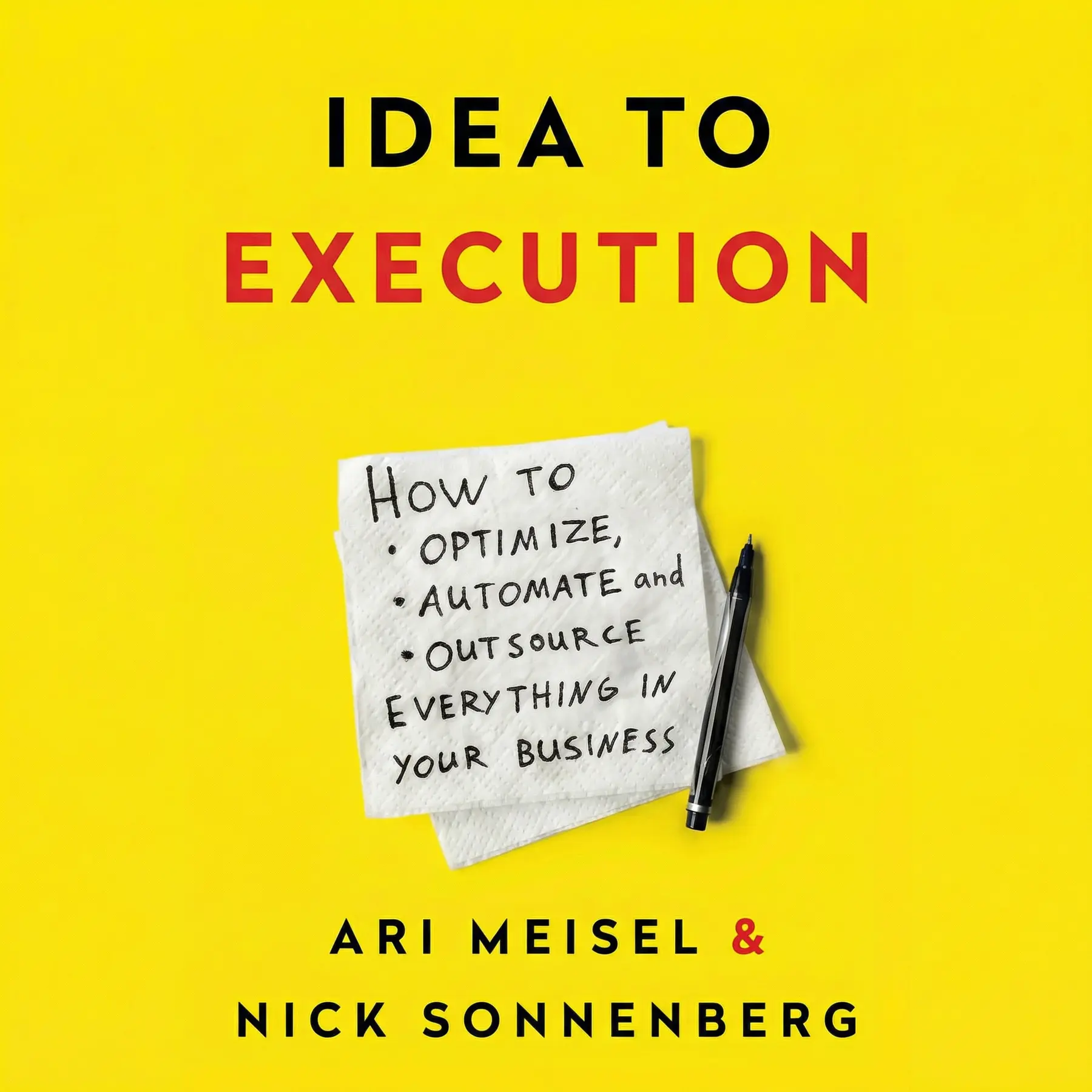
Idea to Execution: How to Optimize, Automate and Outsource Everything in Your Business
Discover how to launch and scale a business in just twenty-four hours. This summary explores the frameworks for optimizing operations, automating repetitive tasks, and outsourcing for maximum efficiency and growth.
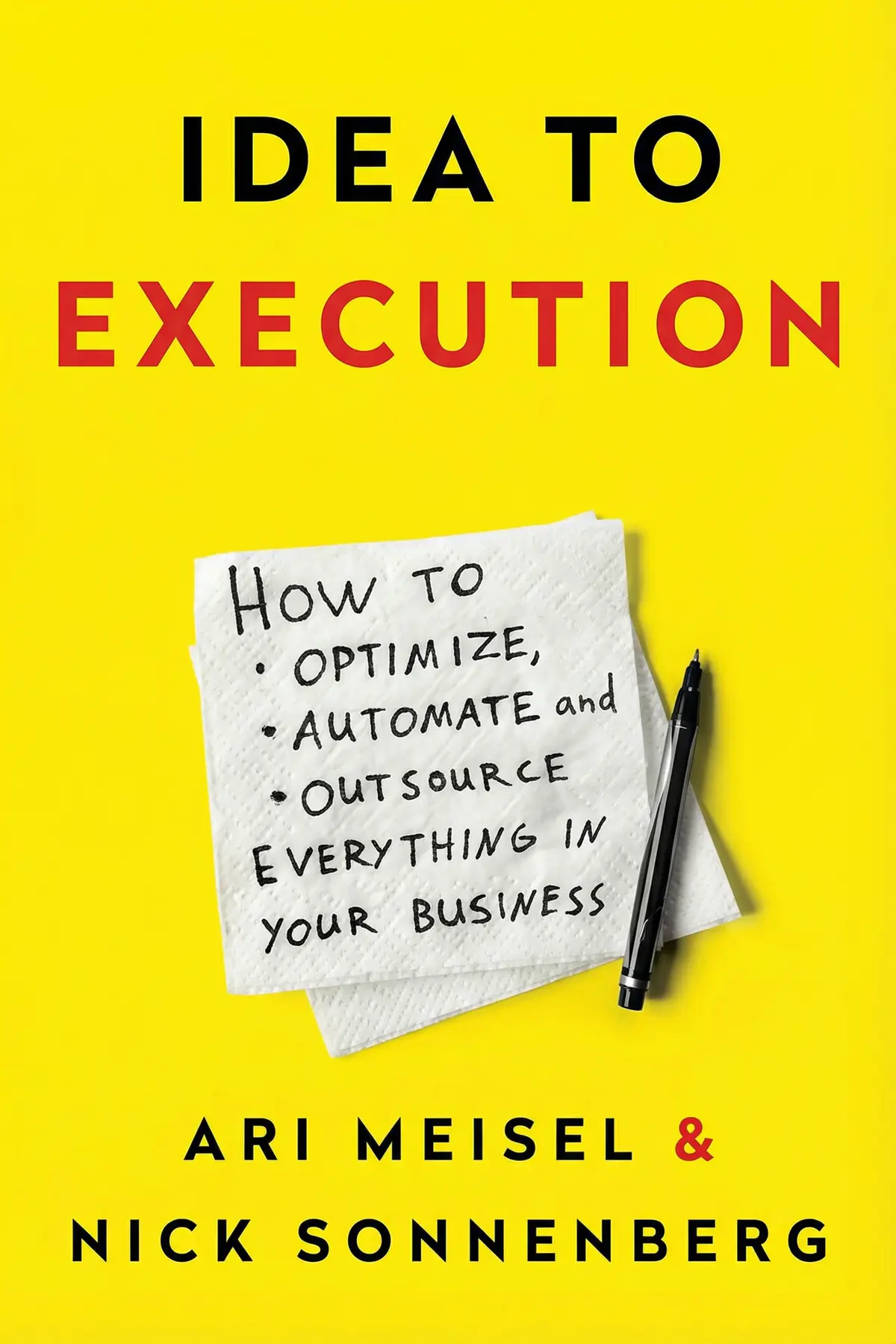
Table of Content
1. Introduction
1 min 35 sec
Think about how many times you have sat on a brilliant concept simply because the logistics of starting felt too heavy to carry. We often convince ourselves that launching a company requires an exhaustive business plan, a massive bank loan, and months of careful deliberation. But what if those assumptions are actually the very things holding you back? In the modern landscape, the distance between a spark of inspiration and a functional business has never been shorter.
Idea to Execution tells the story of how a major startup was born in less time than it takes to fly across the world. It’s not just a story of speed, however; it’s a manual for efficiency. The authors suggest that the secret to a thriving company doesn’t lie in how much money you throw at it, but in how well you can optimize, automate, and outsource every single part of the operation.
In this summary, we are going to walk through the lifecycle of a business that went from a dinner-table chat to a hundred-thousand-dollar-a-month reality in just one year. We’ll look at why a sudden market collapse can be your greatest opportunity and how free software can serve as the backbone of a global team. We will also explore the psychological shifts needed to move from being a solo operator who does everything to a leader who designs systems that run themselves.
If you have ever felt like you missed the boat on a great idea because you didn’t know where to start, this is for you. We’re going to break down the barriers that make entrepreneurship feel intimidating and show you that the best time to act is usually right now. Let’s look at how you can take an idea and turn it into a reality with speed and precision.
2. The Power of Immediate Action
1 min 43 sec
Discover how a dinner conversation turned into a fully functional business in just one day by seizing a sudden market gap.
3. Identifying and Filling Service Gaps
1 min 35 sec
Learn why the standard business models for virtual assistants were failing and how a hybrid approach created a better solution.
4. Building a Tech-First Infrastructure for Free
1 min 37 sec
You don’t need expensive software to run a company; explore how free project management tools can handle complex operations.
5. A Smarter Approach to Hiring
1 min 39 sec
Traditional resumes are often useless; find out how a two-step application process can filter out 80% of unqualified candidates.
6. The Role of Networking and Custom Dashboards
1 min 36 sec
Rapid growth can be a double-edged sword; discover how to manage a sudden influx of clients through custom oversight tools.
7. Refining the System with 5 Whys and Kaizen
1 min 42 sec
Don’t let customer complaints stop you; use structured problem-solving methods to find the root cause of every failure.
8. Monetizing Your Internal Knowledge
1 min 29 sec
Your business processes are valuable assets; learn how to turn your expertise into a secondary revenue stream.
9. The Psychology of Customer Retention
1 min 30 sec
Explore why spending more time with a new client can actually lead to long-term success and higher engagement.
10. Using Data to Combat Churn
1 min 31 sec
Learn how to identify the warning signs of a departing customer and take action before they decide to leave.
11. Conclusion
1 min 38 sec
The journey of taking an idea to execution is ultimately a journey of letting go. As we have seen through the evolution of Ari and Nick’s startup, the initial spark of an idea is just the beginning. The real work lies in creating a system that can survive without you. From the intense twenty-four-hour launch to the multi-million-dollar run rate, the throughline has remained consistent: if you can optimize a process, automate a repetitive task, and outsource the labor to a capable team, you are no longer limited by your own twenty-four hours in a day.
We’ve explored how to use free tools to build a world-class infrastructure and how to use psychological filters to hire a proactive team. We’ve seen how data can be used to predict when a customer is about to leave and how a simple shift in onboarding can change a client’s relationship with your product forever. But perhaps the most important takeaway is the ‘three strikes’ rule they implemented: a business is only as strong as its standards. By being firm with your quality control and obsessive about your efficiency, you create a brand that people can rely on.
Now, the challenge is in your hands. You likely have a concept that has been sitting in the back of your mind for weeks or months. The lesson of this book is that you don’t need to wait for a better time or more money. You have the tools, many of them for free, and you have the frameworks for building a team. Start by looking at your current workflow and identifying one thing you can automate or one task you can hand off. The goal isn’t just to work harder, but to design a life where you can do less while achieving more. Take that first step today, because as Ari and Nick showed, a lot can happen in just twenty-four hours.
About this book
What is this book about?
Idea to Execution tells the remarkable story of how two entrepreneurs turned a dinner conversation into a profitable startup in a single day. The book serves as a blueprint for the modern founder, demonstrating that the traditional barriers to entry—like heavy capital and years of market research—are no longer necessary in the digital age. By documenting the first year of their virtual assistant company, the authors reveal the specific tools and philosophies used to build a scalable infrastructure from scratch. Throughout this guide, you will learn the art of the pivot, the importance of proactive hiring, and the psychological principles that keep customers engaged. The promise is simple but profound: by focusing on optimization, automation, and outsourcing, anyone can transform a spark of inspiration into a functional, revenue-generating entity without needing a massive investment or a physical office space. It is a masterclass in efficiency that challenges everything you thought you knew about the timeline of business success.
Book Information
About the Author
Ari Meisel
Ari Meisel began his career in real estate development before a diagnosis of Crohn’s disease forced him to radically rethink his approach to productivity. This challenge led him to create the Less Doing system, which focuses on reclaiming time and energy. Nick Sonnenberg, a former high-frequency trader on Wall Street, spent nearly a decade mastering financial efficiency before transitioning into entrepreneurship. Together, they co-founded the Less Doing virtual assistant service and collaborated on various ventures, combining their expertise in systems, technology, and rapid execution to help others streamline their lives and businesses.
Ratings & Reviews
Ratings at a glance
What people think
Listeners find the work educational, specifically highlighting the guidance regarding digital applications and practical, real-world illustrations. They describe it as an excellent, fast-paced book and find it quite motivating. However, the title receives varied feedback concerning its ease of use and overall value for money.
Top reviews
Yongyut
Ever wonder how to launch a company in record time? This book is the blueprint. I loved how Ari and Nick broke down the barrier between 'having an idea' and 'having a product.' They used existing tools to build a prototype instead of spending $50k on custom coding, which is a lesson every founder needs to hear. The chapter on tech tools alone was worth the price of admission for me. I’ve already implemented Trello in a similar way to how they described, and it’s transformed my productivity. It's an amazing, fast-paced read that doesn't waste your time with fluff. People complain about the 'hustle' aspect, but in my experience, that's what it takes to go from zero to one in a year. Highly recommended for action-oriented entrepreneurs who want to stop talking and start building.
Show moreSin
This book completely changed how I look at recurring tasks in my daily life. The concept of 'optimize, automate, outsource' is simple but the way they apply it is revolutionary. I realized I was wasting hours on things that a simple script or a VA could handle for a few dollars. It’s a pleasant surprise to find a business book that is so short yet so packed with specific, actionable examples. It reads like a step-by-step guide to building a modern, lean company. I even ended up realizing there are things I should keep doing myself just because I enjoy them, but for everything else, I’m following their lead. If you want to make yourself more efficient and stop being a slave to your inbox, read this immediately. It is an inspiring and functional guide to the future of work.
Show morePisit
Picked this up because I needed to streamline my workflow and I wasn't disappointed by the tactical side of things. The authors provide a literal roadmap of the software they used to automate almost every facet of their operation. In my experience, most business books are too high-level and fluffy, so seeing the 'nitty-gritty' of their systems was a breath of fresh air. They don't just say 'automate,' they show you exactly which buttons they pushed. Yes, the tone is a bit aggressive and the 'hustle' vibes are strong, but the core message about removing yourself as the bottleneck is vital. It’s a very short read, which I appreciated. You can get through it in one sitting and start implementing the tech tools immediately. Solid 4 stars for the functional examples and the sheer number of tool recommendations.
Show moreTaw
While the 'hire fast, fire faster' mentality is controversial, I think people are missing the point of the book’s efficiency focus. This is a case study in speed. They didn't sit around planning for years; they just launched and fixed things on the fly. Truth is, most entrepreneurs fail because they overthink. Meisel and Sonnenberg show the opposite extreme. I found the sections on using virtual assistants to handle recurring tasks incredibly helpful for my own small business. I’ve already started looking into some of the automation bridges they mentioned. It’s a bit dated now—some of these tools have evolved or disappeared—but the logic of 'Idea to Execution' still holds up. Just don't expect a deep dive into company culture or long-term scaling strategy. It’s about the sprint, not the marathon. A great quick read for those who need to stop procrastinating.
Show moreOlivia
Finally got around to reading this case study and I have mixed feelings, though I’m leaning positive. The transparency is the best part; they tell you exactly how much money they made and where they screwed up. It’s an inspiring story for anyone who wants to see how a business can be built with very little capital and a lot of clever software integration. Personally, I think the criticism about it being a memoir is fair, but that’s exactly why I liked it. It’s a real-world example, not a theoretical textbook. The 'no excuses' attitude is a bit much at times, and I wouldn't recommend their HR style to anyone who wants to keep employees long-term, but as a guide for lean startups, it's very effective. Great for a quick boost of motivation on a weekend.
Show moreIsabelle
What stood out most was the transparency regarding their 'optimized' lifestyle. As someone trying to balance a side hustle with a day job, the focus on automation was exactly what I needed. They provide a long list of apps and explain the logic behind choosing them, which saved me hours of research. I'll admit, some of the stories about firing people felt cold, and the book definitely feels like a product of the 2015 'bro-tech' era. But if you can look past the occasionally annoying personas of the authors, there are real nuggets of wisdom here. It’s a practical guide to creating a business that can run without you. Not perfect, and definitely short, but it provides good value for money if you're looking for tool recommendations and real-world examples of scaling a service business.
Show moreOoi
Not gonna lie, the tech stack advice in here is actually quite solid if you are a tools geek. They break down how they used things like Intercom, Trello, and various automation bridges to replace human labor. However, the tone is often arrogant and detached. It feels very much like a 'white guys in tech' bubble where the human element of business is treated as an annoying bug to be patched out. Look, I appreciate the transparency about their mistakes and the financial breakdown of their first year. That’s rare. But the constant bragging about working through family emergencies and firing people in 'minutes' left a sour taste in my mouth. It's a useful resource for finding new productivity apps, but take the management 'philosophy' with a massive grain of salt. Good for the tools, bad for the soul.
Show moreSuphan
Is this a business manual or a diary? It leans heavily toward the latter, detailing the month-by-month evolution of their VA business. As someone who enjoys the 'How I Built This' podcast, I found the narrative flow engaging enough for a quick afternoon read. The authors are very open about their pivots and the chaos of their first year, which is refreshing. On the flip side, the book lacks a clear, distilled structure. I would have loved chapters that ended with actionable takeaways or checklists rather than just chronological storytelling. The advice about optimizing and outsourcing is decent, but it’s buried under a lot of self-promotion. It’s a good book, but it certainly could be better with some tighter editing and less focus on their internal glory. Worth a read if you get it on sale.
Show moreMonthon
The title is incredibly misleading because this is not a universal guide on how to take any idea to execution. Instead, it’s a very specific, diary-like account of how two guys built a virtual assistant company. To be fair, some of the app recommendations are interesting, but many are now obsolete or have changed their pricing models significantly since it was written. I felt like I was reading an extended sales pitch for their specific business model rather than learning transferable skills. If you aren't building a BPO or a service-based startup, you'll have to do a lot of mental gymnastics to make this relevant. It’s more of a startup autobiography than a 'how-to' manual. I finished it in about an hour, but I didn't walk away with much that I couldn't have found on a tech blog for free.
Show moreSurasit
I wanted to like this, but the blatant glorification of hustle culture is just exhausting. There is a specific passage where Ari talks about his newborn daughter being in the hospital, and instead of taking a breath, he uses his ability to work through it as a benchmark to fire other employees. That is simply toxic management. Frankly, it sounds like two 'bros' playing with people's livelihoods while hiding behind a curtain of automation software. If you're looking for a compassionate or sustainable way to grow a business, look elsewhere. The book is essentially a memoir of a firm that doesn’t even exist in this form anymore. It’s short, which is its only saving grace, but the 'hire fast, fire faster' mentality is a relic that needs to stay in 2015. Totally disappointed by the arrogance.
Show moreReaders also enjoyed

7 Powers: The Foundations of Business Strategy
Hamilton Helmer
Alibaba: The House That Jack Ma Built
Duncan Clark
Bad Blood: Secrets and Lies in a Silicon Valley Startup
John Carreyrou
AUDIO SUMMARY AVAILABLE
Listen to Idea to Execution in 15 minutes
Get the key ideas from Idea to Execution by Ari Meisel, plus 5,000+ more titles in English and Thai.
- 5,000+ titles
- Listen as much as you want
- 7-day free trial
- Cancel anytime







