
24 min 41 sec
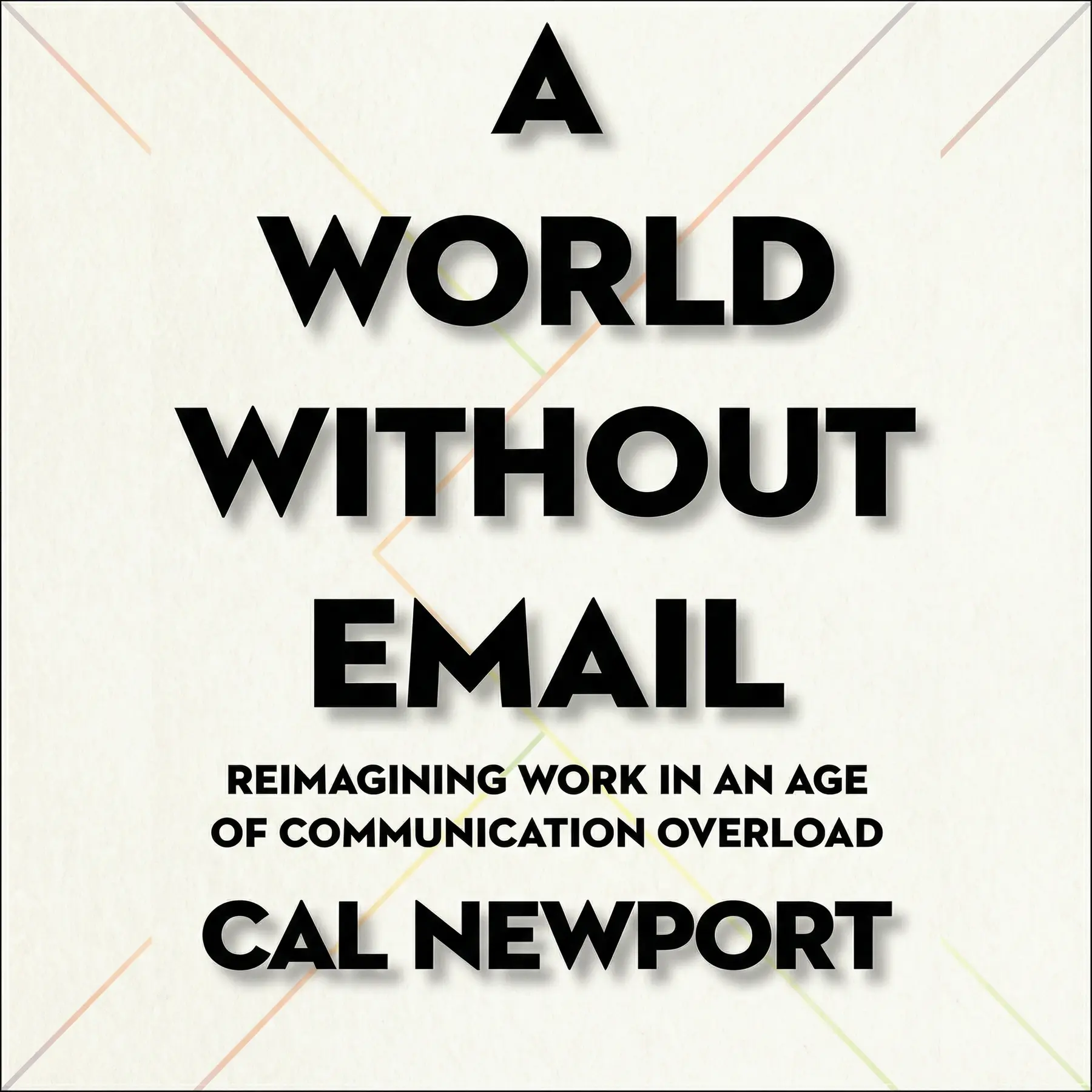
A World Without Email: Reimagining Work in an Age of Communication Overload
By Cal Newport
Cal Newport explores how the constant flood of digital communication destroys productivity. He proposes a radical shift from the hyperactive hive mind toward structured workflows that protect our most valuable resource: human attention.
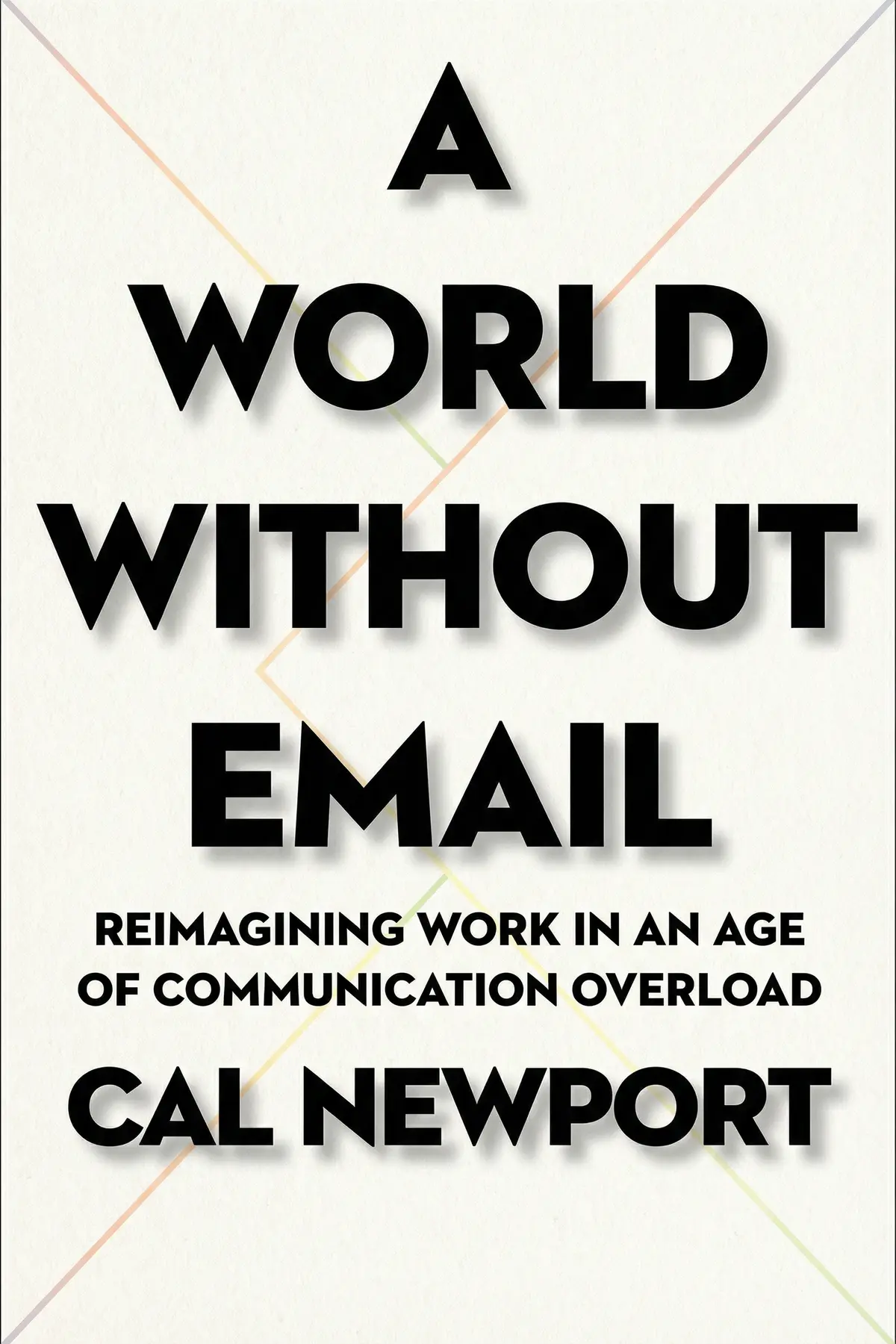
Table of Content
1. Introduction
2 min 10 sec
Consider your average Tuesday morning. You sit down at your desk with a specific goal in mind—perhaps a report you need to draft or a complex problem you need to solve. But before you can even type the first word, a notification pings. It’s a ‘quick question’ from a colleague. As you finish typing the answer, another email arrives. Then a chat message. By lunchtime, you realize you’ve spent three hours responding to people, but you haven’t actually started the work you intended to do. This is the reality for millions of people today, and it’s what Cal Newport identifies as a fundamental crisis in the modern workplace.
In this exploration of a world where the inbox is no longer the center of the universe, we aren’t just looking at how to manage folders or write better subject lines. Those are superficial fixes for a deep, structural problem. Instead, we are looking at a total reimagining of the way we collaborate. We’ve fallen into a trap where communication has become the work itself, rather than a tool to facilitate it. This culture of constant availability doesn’t just make us less effective; it makes us miserable, anxious, and prone to burnout.
Through the lens of history, neuroscience, and real-world case studies, Newport demonstrates that our current reliance on instant, unstructured messaging is actually a very recent and very flawed experiment. We’ll look at why our brains aren’t built for this kind of multitasking and how we can apply the lessons of the industrial revolution to the digital age. The goal isn’t just to reduce the number of emails we receive, but to change the workflows that generate those emails in the first place. By the end of this journey, you’ll understand how to reclaim your ‘attention capital’ and build a professional life defined by focus and impact rather than the perpetual hum of digital chatter. It’s time to move beyond the inbox and find a better way to work.
2. The Rise of the Hyperactive Hive Mind
2 min 30 sec
Discover how the convenience of digital tools created a workflow that forces employees into a state of perpetual, unproductive conversation.
3. The Biological Limit of Attention
2 min 14 sec
Learn why your brain is physically incapable of handling the multitasking demands of modern digital communication without a massive drop in performance.
4. The Myth of Instant Efficiency
2 min 23 sec
Explore why being constantly available as a manager or teammate actually slows down the entire organization in the long run.
5. The Psychological Burden of the Unread Message
2 min 38 sec
Understand the deep-seated evolutionary reasons why an overflowing inbox triggers a literal stress response in our bodies.
6. Applying the Industrial Revolution to the Mind
2 min 35 sec
Learn how the concept of ‘Attention Capital’ can help us redesign work for maximum output, much like the assembly line revolutionized manufacturing.
7. The Autonomy Trap and Workflow Design
2 min 39 sec
Discover why giving knowledge workers total freedom in how they communicate has backfired, and how to fix it without micromanaging.
8. Structure as a Shield for Productivity
2 min 25 sec
See how clear production processes, like shared spreadsheets and structured schedules, can replace the ‘hot potato’ game of email threads.
9. The Specialization Principle and the Cost of Admin
2 min 38 sec
Explore why modern professionals are less productive than their predecessors and how ‘simulating’ support staff can save your focus.
10. Conclusion
2 min 29 sec
As we’ve seen, the problem isn’t email itself, but the ‘hyperactive hive mind’ workflow that email enabled. We have stumbled into a way of working that is fundamentally at odds with how our brains function. We are trying to do deep, complex knowledge work while living in a state of constant social and cognitive interruption. The result is a workforce that is perpetually busy but increasingly less productive, and more importantly, increasingly less happy.
The throughline of Cal Newport’s argument is that we must move from a culture of *convenience* to a culture of *process*. In the short term, it is ‘convenient’ to send a quick email to ask a question. But in the long term, it is ‘efficient’ to have a system where you don’t have to ask that question in the first place. We need to stop treating our attention as an infinite resource that can be sliced into six-minute segments and start treating it as ‘attention capital’—the most valuable and fragile asset in the modern economy.
To move forward, start by identifying just one recurring process in your work that currently relies on a messy email thread. Whether it’s scheduling, status updates, or client feedback, try to move that one process into a structured tool like a shared board or a weekly standing meeting. As you see the stress levels drop and the quality of work rise, you can begin to expand this logic to other areas.
You can also take the immediate step of setting up non-personal email addresses for specific projects or roles. This simple shift breaks the psychological link between the message and the individual, reducing the ‘tribal’ social pressure to respond instantly. By creating these boundaries, you aren’t being less helpful; you are being more professional. You are ensuring that when you do work, you are giving it your full, undivided brilliance. The world doesn’t need more people who are fast at email; it needs more people who can solve hard problems, create beautiful things, and lead with clarity. Reclaim your focus, and you’ll find that a world without email isn’t just possible—it’s a much better place to work.
About this book
What is this book about?
A World Without Email investigates the underlying reasons why modern knowledge workers feel perpetually overwhelmed and exhausted. Cal Newport argues that the arrival of easy digital communication didn't just change how we talk; it changed the very nature of how we work, creating a 'hyperactive hive mind' that forces us to constantly switch tasks. This state of perpetual distraction prevents deep, meaningful work and creates a culture where being 'busy' with messages is mistaken for being productive. The book promises a path forward for organizations and individuals who want to escape the tyranny of the inbox. By applying principles from industrial engineering and organizational psychology, Newport shows how to build communication systems that support the human brain rather than exhausting it. He provides a framework for reimagining processes through 'attention capital,' specialization, and structured protocols. Ultimately, the book is a manifesto for a more focused, calm, and effective way of working that treats human intelligence as a precious resource to be guarded, not a commodity to be fragmented by endless pings.
Book Information
About the Author
Cal Newport
Cal Newport is an associate professor of computer science at Georgetown University, where his research focuses on the theory of distributed systems. Beyond his academic work, he is a New York Times best-selling author known for influential books like Deep Work and Digital Minimalism. Newport is also the creator of the popular Study Hacks blog and is a regular contributor to major publications, including the New Yorker, the New York Times, and Wired, where he writes about the intersection of technology, culture, and productivity.

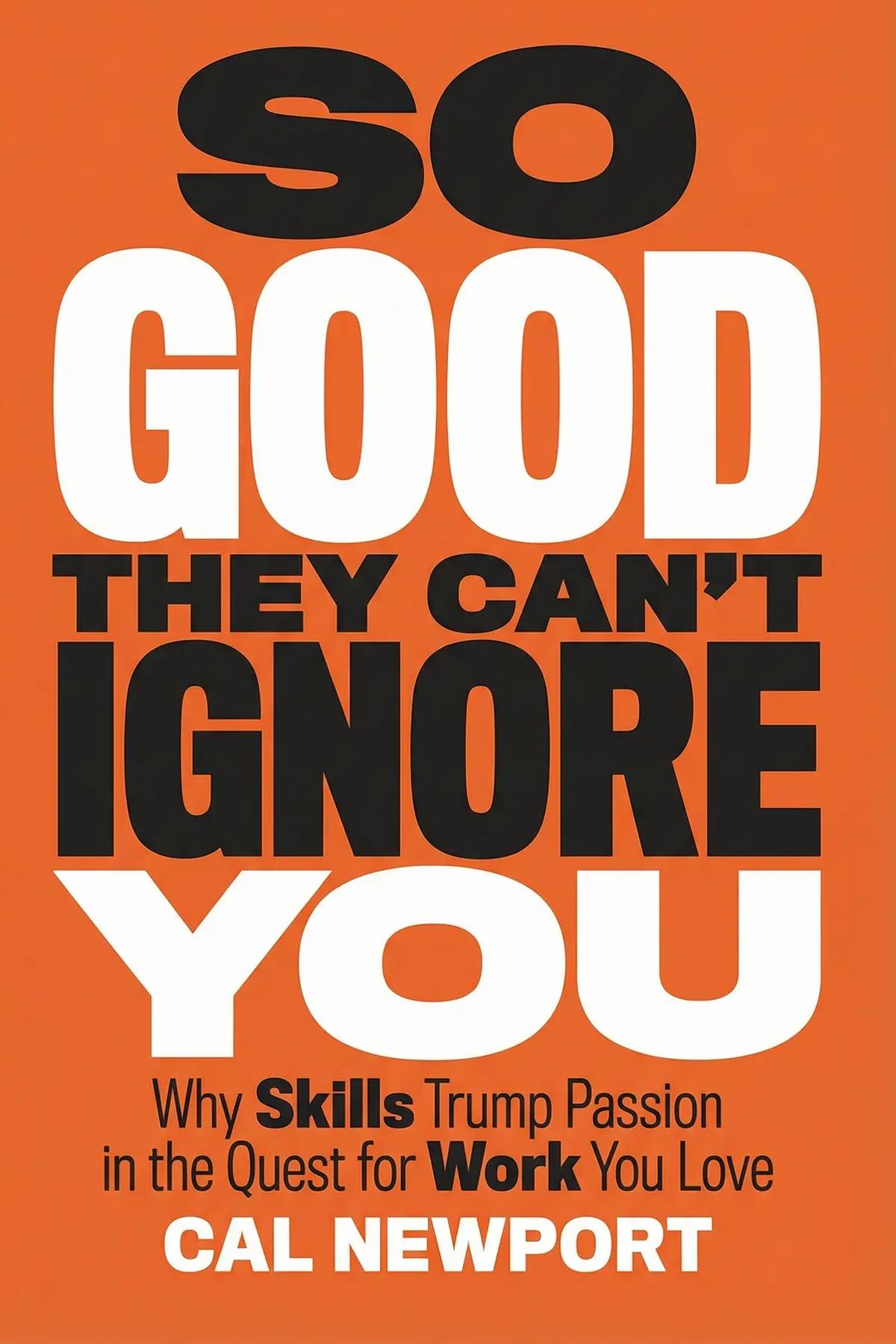
Ratings & Reviews
Ratings at a glance
What people think
Listeners find the work highly stimulating, especially for those managing knowledge workers, and appreciate its polished writing and readability. They value the focus on productivity and efficiency, with one listener noting it makes a meaningful difference to engagement and productivity. The text earns praise for its clarity; one listener describes the book as concise and useful, while another enjoys the balance between stories and principles.
Top reviews
Madison
Finally got around to reading this and it’s a total game-changer for anyone in knowledge work. Newport hits a home run by identifying why we feel so busy yet accomplish so little: the friction-less nature of email has turned our workdays into a Sisyphean battle against the inbox. Unlike his previous books, this one offers a framework for actual structural change rather than just personal discipline. The chapter on 'Attention Capital' is worth the price of admission alone. I’ve already started implementing some of the workflow processes he suggests, and the reduction in cognitive switching is palpable. If you liked The Shallows or Digital Minimalism, you absolutely need this on your shelf.
Show moreOn
Wow, this really spoke to the burnout I’ve been feeling lately. Newport describes the 'misery-inducing approach' of modern work so accurately that it’s almost painful to read. We spend our entire day fighting fires in our inbox only to do our actual 'productive output' in the evenings or on weekends. It’s a broken system. The book is a fascinating look at how we’ve become slaves to connection. I loved the meticulous way he builds his argument, even if some of the solutions—like hiring extra staff just to handle communication—seem a bit out of reach for the average worker. It’s a very readable, practical guide for anyone who wants to reclaim their brain from the digital noise.
Show moreOksana
Cal Newport continues his streak of being the most important voice in modern productivity. This book is a total 'pepinaco'—meticulous, rigorous, and incredibly timely. He doesn't just complain about distractions; he presents a solid, evidence-based argument for why our current way of working is against our evolutionary nature. The shift from individual 'digital minimalism' to organizational 'attention capital' is the logical next step in his philosophy. I devoured the whole thing in two sittings because the prose is so engaging. It’s a masterclass in how to build a case for a better, more focused way of living and working. Absolutely essential reading.
Show moreClara
Newport’s latest offering is a deep dive into what he calls the 'hyperactive hive mind,' a phenomenon where constant messaging dictates our workflow. It’s a compelling follow-up to Deep Work, shifting the focus from individual habits to organizational structures. I found his 'attention capital theory' particularly insightful, as it treats our cognitive capacity as a finite resource that companies currently waste on administrative overhead. The writing is clear and the case studies about Kanban boards are practical, though some might find the implementation daunting in a traditional corporate setting. It’s not just about deleting your inbox; it’s about rebuilding how we collaborate. A must-read for any manager feeling the burn of digital exhaustion.
Show moreFinn
As a team leader in a tech-heavy environment, I found this book to be a refreshing take on productivity that moves beyond simple 'hacks.' Newport argues that constant communication isn't just a distraction; it’s a fundamental flaw in how we organize professional efforts. The book is remarkably well-written and balances high-level principles with actionable stories. We’ve been experimenting with his idea of 'office hours' and structured workflows to minimize the back-and-forth, and the difference in team engagement is already visible. It’s concise, thought-provoking, and offers a realistic path toward a more focused workplace. Even if you can't go entirely 'email-free,' the principles here will make your workday significantly more manageable.
Show moreHana
Picked this up after hearing Newport on a podcast, and I'm glad I did. The book is a solid mix of theory and practice, focusing on how we can use 'attention capital' more effectively. Frankly, I was skeptical that anyone could envision a world without email, but he’s not actually saying we delete the technology—he’s saying we need to move away from the 'hive mind' workflow. The writing is clear and concise, making it a very quick read. I especially liked the section on the 'Theory of Constraints' and how it applies to knowledge work. It’s a useful manual for anyone looking to increase their efficiency without just working more hours.
Show moreEllie
Truth is, I went into this expecting a manifesto on why email is evil, but it’s actually much more nuanced. Newport admits a world without email isn't entirely practical, but he proves that being 'slaves to connection' is a choice we make through poor process design. He moves past short-lived stunts like 'email-free Fridays' to advocate for fundamental changes in how tasks are assigned and tracked. I found the balance between historical anecdotes and modern project management principles to be just right. It’s a bit repetitive in the middle, but the core message is vital: our brains aren't wired for the constant context-switching that modern tools demand. Highly recommended for the thoughtful worker.
Show moreSamroeng
While I appreciate Newport's attempt to tackle the misery of the modern office, this book often feels like a long-form article stretched thin. He makes a solid case against the 'hyperactive hive mind,' but the middle section gets bogged down in repetitive case studies that don't always translate to every industry. It’s also strange that he barely acknowledges how the pandemic shifted remote work dynamics, making some of his 'collocation' suggestions feel dated. The focus on Trello and project management tools as the ultimate savior is a bit simplistic. It’s an interesting read with some good principles, but it lacks the punch and tight focus of his earlier work like Deep Work.
Show moreYanin
Is email actually the problem, or is it just the most visible symptom of a deeper organizational rot? Cal Newport does a phenomenal job as an analyst within a very narrow band, but I found his conclusions a bit daft at times. He treats the 'hyperactive hive mind' as an accidental glitch in the system rather than a feature of how companies now operate. It’s like describing the tail of an elephant and thinking you’ve understood the whole animal. I'd recommend reading this alongside something like Graeber’s Bullshit Jobs for a more robust context. It’s a decent book for CEOs to hand out to employees, but it doesn't quite get to the root of the 'red queen' phenomenon in industry.
Show moreGrace
The central premise here is incredibly frustrating because it feels like Newport is treating a systemic economic issue as a simple software problem. He spends hundreds of pages arguing that email is the enemy, only to suggest we replace it with Trello or Scrum boards. To be fair, constant notifications are draining, but moving the 'hive mind' to a different platform doesn’t solve the underlying culture of ceaseless availability. He ignores the fact that modern capitalism demands this level of frantic productivity. It feels like a technodeterminist approach that misses the forest for the trees—shifting from Outlook to a Kanban board won't suddenly give knowledge workers their lives back if the expectations of profit remain the same.
Show moreFeatured in
Readers also enjoyed
168 Hours: You Have More Time Than You Think
Laura Vanderkam

A Bigger Prize: How We Can Do Better Than the Competition
Margaret Heffernan
AUDIO SUMMARY AVAILABLE
Listen to A World Without Email in 15 minutes
Get the key ideas from A World Without Email by Cal Newport, plus 5,000+ more titles in English and Thai.
- 5,000+ titles
- Listen as much as you want
- 7-day free trial
- Cancel anytime







