
16 min 31 sec
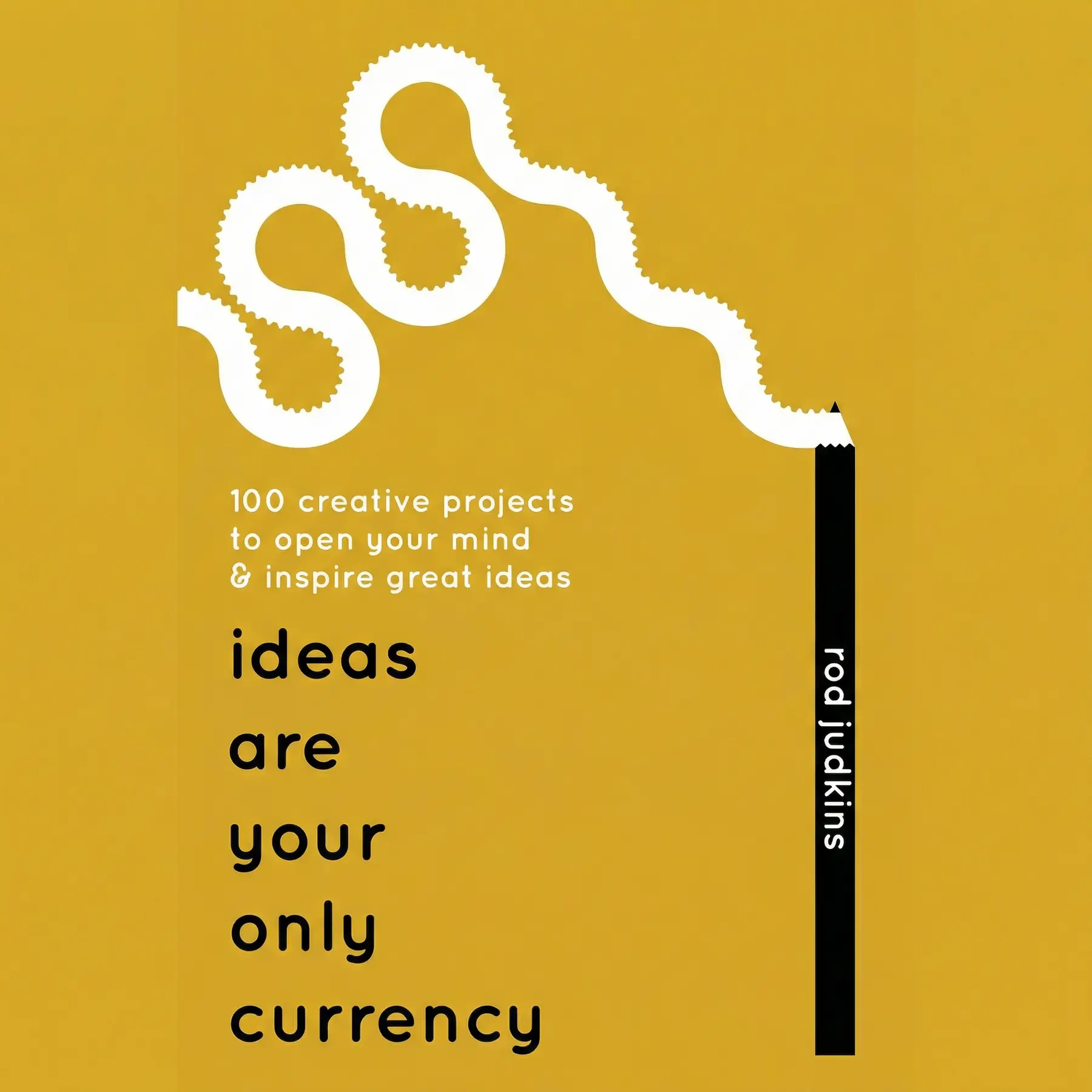
Ideas Are Your Only Currency
By Rod Judkins
Rod Judkins explores how creativity serves as the ultimate professional asset. By engaging in diverse conceptual exercises, individuals can develop the imaginative agility required to navigate a rapidly evolving global landscape and future-proof their careers.
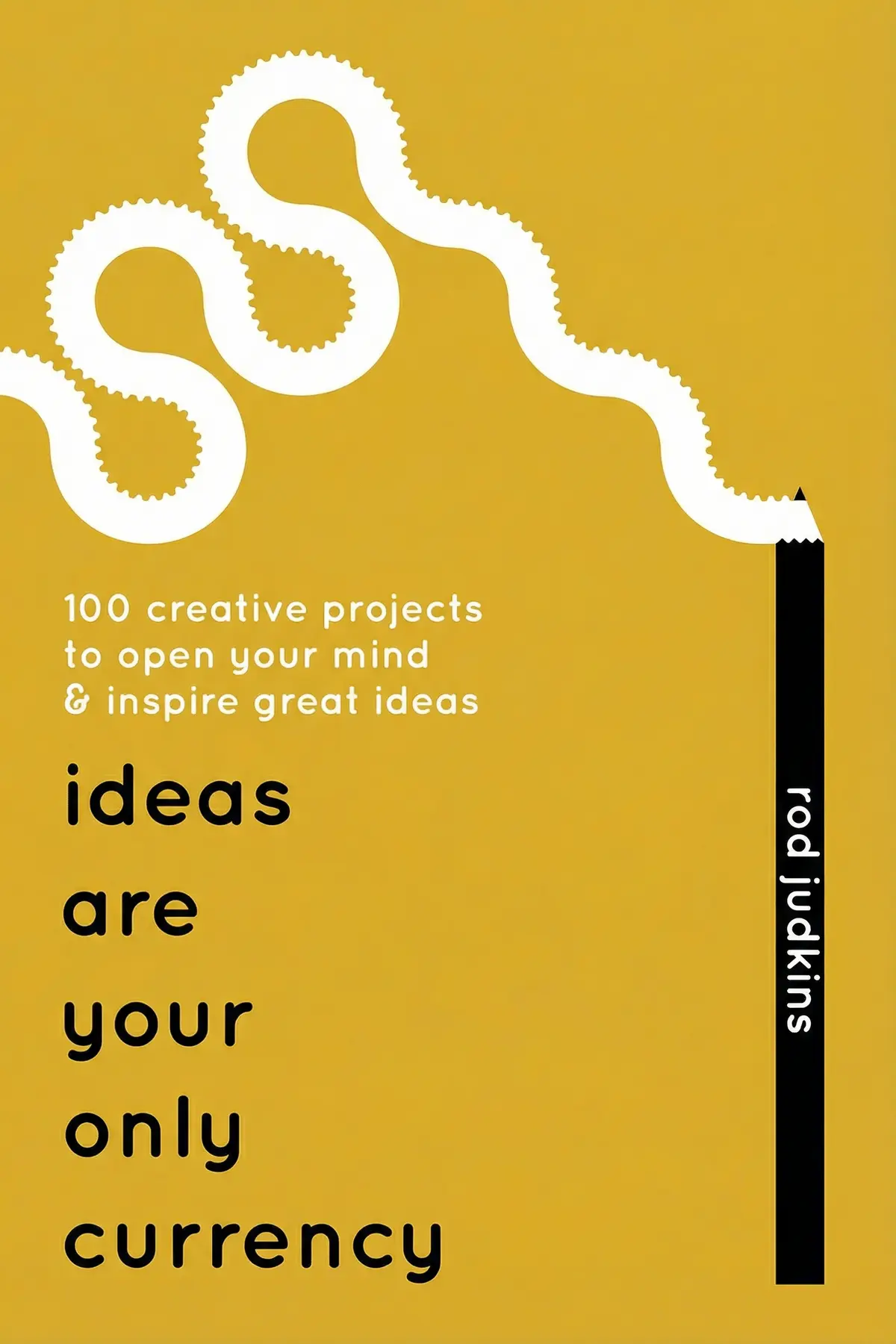
Table of Content
1. Introduction
1 min 51 sec
Back in the fifteenth century, the world witnessed a tectonic shift with the invention of the printing press. It was a massive leap forward, but the interesting part is how long it took for society to actually catch up. For hundreds of years, the ripple effects of literacy and mass communication moved at a pace that allowed generations to adapt slowly.
We no longer have that luxury. In our modern era, innovation doesn’t just knock on the door; it breaks it down and changes the entire neighborhood overnight. What used to take centuries now takes months, or even weeks. This acceleration has eliminated the safety net of traditional expertise. If you rely solely on what you learned in school or the specific technical skills you’ve honed over the last decade, you might find that the ground is moving faster than you can run.
The core message of Rod Judkins is that in this volatile environment, your most valuable asset isn’t your degree or your resume—it’s your imagination. Knowledge has an expiration date, and skills can be automated or rendered obsolete. However, the ability to generate fresh, disruptive, and effective ideas is a form of currency that never loses its value. It is the only thing that allows you to remain relevant when the world pivots.
To thrive today, you have to become more than just a worker; you have to become an architect of possibilities. You need to train your mind to see solutions where others see dead ends. This summary explores a series of mental experiments and creative provocations designed to stretch your thinking. These aren’t just art projects; they are exercises in agility. By engaging with these concepts, you’ll learn to treat your creativity as a muscle that must be flexed, challenged, and refined so that you can navigate the unknown with confidence. Let’s dive into how you can start viewing the world through a lens of infinite invention.
2. Mastering the Tools of Innovation
2 min 21 sec
Discover how our relationship with technology is never a one-way street and why we must reclaim our creative agency over our devices.
3. Reimagining the Dimensions of Time
2 min 04 sec
Explore why time is more than just a ticking clock and how shifting your perspective on the finite can spark radical new ideas.
4. Breaking the Chains of Binary Thinking
2 min 09 sec
Learn how to move beyond simple ‘either-or’ categories to find the rich, creative potential hidden in the grey areas of life.
5. Designing for Deep Time and Future Obsolescence
2 min 09 sec
What if you had to communicate with someone ten thousand years from now? Discover the challenges of designing for the extreme future.
6. Challenging the Fabric of Perceived Reality
2 min 06 sec
Uncover the subjective nature of the world around you and learn how to use imagination to see through social illusions.
7. Redefining Success and the Value of Failure
2 min 17 sec
Why the most valuable things in life can’t be bought and how celebrating your mistakes can lead to your greatest breakthroughs.
8. Conclusion
1 min 34 sec
As we wrap up this exploration of Rod Judkins’ insights, it becomes clear that creativity is far more than an artistic flair—it is a survival mechanism. In a world defined by relentless change, the ability to look at a situation and see a hundred different ways to navigate it is the most robust form of security you can have. We’ve looked at how to reclaim technology, how to stretch our perception of time, and how to dissolve the binary thinking that limits our potential. We’ve even dared to look ten thousand years into the future and questioned the very reality we inhabit every day.
The overarching throughline here is that your mind is your greatest workshop. By engaging in these types of conceptual exercises, you aren’t just passing time; you are training yourself to be an agile thinker who can thrive in any environment. You’ve learned that value is subjective and that failure is actually a stepping stone to mastery.
So, as you move forward, try to look for the ‘unseen’ possibilities in your daily life. When you encounter a problem, don’t just reach for the standard solution. Ask yourself how you could hybridize the situation, or what the ‘honest’ version of the problem looks like. Remember that your ideas are the only currency that won’t fluctuate with the market or become obsolete with the next technological update. Invest in your imagination, treat every challenge as a creative project, and you will find that you are not just keeping up with the future—you are the one designing it.
About this book
What is this book about?
This book challenges the notion that skills or static knowledge are enough for long-term success. In a world where technology and information become obsolete at an unprecedented pace, Judkins argues that your ability to produce original ideas is your only true currency. The book presents a series of thought-provoking projects designed to disrupt conventional thinking and spark innovation. Listeners will discover how to reframe their relationship with time, technology, and social binaries. By treating creativity as a muscle to be trained, the text provides a roadmap for transforming mundane reality into a playground for new possibilities, ensuring that you remain relevant and indispensable no matter how the professional world shifts.
Book Information
About the Author
Rod Judkins
Rod Judkins is an artist, lecturer, and successful author based in London. He teaches creative thinking at Central Saint Martins and utilizes his background in fine art and design to lead international workshops. His work focuses on helping both individuals and large organizations cultivate the imaginative skills necessary to excel in volatile environments.
Ratings & Reviews
Ratings at a glance
What people think
Listeners find this book to be a compelling, exercise-focused handbook that encourages the mind to develop greater flexibility and navigate fast-moving change. While some listeners believe the prompts can sometimes feel too basic or thin on technical detail, most value how the 100 projects ignite instant creative energy. Furthermore, they appreciate the concentration on conceptual design, with one listener highlighting the benefit of reimagining Einstein's theory of relativity as a thrilling book cover. They also point out that the workbook approach is especially helpful for designers and visual artists trying to come up with new solutions in an unpredictable professional world.
Top reviews
Rotjanee
Finally got around to a book that treats creativity as a survival mechanism rather than a hobby. The concept that our best asset isn't what we know, but how we adapt, resonated deeply with me during a period of career transition. I particularly loved the challenge to design a book cover for Einstein’s theory of relativity that actually makes the science feel as thrilling as it is. It’s these types of thought experiments that help you break free from zombie routines of commuting and consuming without critical thought. For anyone feeling stuck in a rigid professional landscape, this is the manual you need to start reclaiming your mental flexibility.
Show moreSue
Rod Judkins delivers a punchy manifesto that feels less like a traditional book and more like a gym for your brain. In an era where skills go obsolete before you even master them, this guide argues that your imagination is the only asset with a permanent shelf life. I spent the weekend tackling the project to redesign a cheese grater based on personal influences, and it genuinely forced me out of my usual linear patterns. While some prompts feel a bit like entry-level advertising tasks, the underlying philosophy about adaptability is spot on. It’s perfect for visual artists who need to snap out of a creative rut and start seeing the world as a series of problems waiting for inventive solutions.
Show moreUraiwan
The chapter on our relationship with technology is worth the price of admission alone. Judkins makes a compelling case that we’ve become tools of our devices rather than the other way around. I spent an afternoon working on the zombie cure kit project, and it really made me interrogate the automated systems I participate in every day. The writing style is brisk—almost urgent—which fits the theme of rapid adaptation perfectly. I did feel that a few exercises were a bit too similar to copywriting drills, but the overall push toward intellectual independence is vital for anyone working in a modern office environment.
Show moreYanin
Wow, what a refreshing way to look at the value we bring to the world. Judkins argues that in a world of machines, our capacity to dream and disrupt is the only true currency we have left. The task to design a perception-altering pill really pushed me to think about my own cultural conditioning in a way I hadn't before. My only real gripe is that the layout sometimes prioritizes graphic design over readable content, making some of the shorter anecdotes feel a bit fragmented. Despite that, the book is a powerful call to action for anyone who wants to stop being shaped by the future and start shaping it themselves.
Show moreArthit
Following the hype around Rod Judkins, I had high expectations for this one. It functions less as a text and more as a catalyst for immediate action, which is exactly what I needed to break out of a stagnant work routine. The focus on conceptual design thinking helps move you away from just making things look pretty to actually making them mean something. Reimagining the floppy disk for modern use was a fun trip through nostalgia and innovation. It’s a practical, if slightly eccentric, tool for anyone trying to navigate the chaos of today’s professional world with a bit more grace and a lot more ideas.
Show moreSai
Ever wonder how to future-proof your career when everything is shifting beneath your feet? Judkins suggests that generating constant ideas is the only way to survive the vortex of modern change. I appreciated the workbook-style approach, especially the prompt about designing a protest placard against disturbing technology. However, I found the anecdote-to-exercise ratio a bit thin; it often felt like a series of social media posts expanded into a book format. It's a fun distraction and great for warming up the brain before a real project, but don't expect it to replace a deep dive into design theory or practical skill-building.
Show moreJavier
Picked this up on a whim because the cover looked fantastic, but the internal content left me feeling somewhat conflicted. The truth is, the book operates more like a sketchbook or a series of workshop prompts than a cohesive narrative. Some of the challenges, like creating a new logo for infinity, are genuinely sparks of genius that help you reframe abstract concepts visually. On the flip side, other sections felt like filler or empty floods of information that didn't provide enough context to be truly useful. It’s a decent resource for a quick creative jolt, though it might not satisfy those looking for a rigorous exploration of design thinking.
Show moreBoy
As someone who struggles with blank page syndrome, I found parts of this workbook incredibly helpful for getting the momentum going. I loved the idea of a failure award and found that prompt particularly liberating for my creative process. Still, I can't ignore the fact that it often feels more like a curated collection of Pinterest ideas than a groundbreaking manifesto. Some prompts are brilliant, while others are just... there. It’s a mixed bag of 100 projects where about 30 are absolute gold and the rest are just okay. I'd recommend it as a gift for a student, but seasoned professionals might find it a bit light.
Show moreAurora
Not what I expected based on the bold title. I was hoping for deep insights into the philosophy of conceptual design, but instead, I found a collection of exercises that felt remarkably childish. To be fair, the production quality is high and the layout is striking, yet the content itself lacks the technical depth I require as a professional creative. The task involving a hamster hybrid felt more like a primary school art project than a serious mental challenge for an adult. If you already work in a creative field, you might find these prompts too narrow or simplistic to actually move the needle on your professional growth.
Show morePot
Frankly, this felt like it was trying too hard to be edgy while offering very little substance. The exercises are far too narrow in scope, stunting the mind's ability to play rather than expanding it. When a prompt asks you to design a city without straight lines, it sounds interesting on the surface, but the book doesn't provide the conceptual tools to actually explore that idea deeply. It feels like it's aimed at people who have never had a creative thought in their lives rather than those of us who live and breathe design. The aesthetic is nice, but I need more than just pretty pages and surface-level tasks.
Show moreReaders also enjoyed
AUDIO SUMMARY AVAILABLE
Listen to Ideas Are Your Only Currency in 15 minutes
Get the key ideas from Ideas Are Your Only Currency by Rod Judkins, plus 5,000+ more titles in English and Thai.
- 5,000+ titles
- Listen as much as you want
- 7-day free trial
- Cancel anytime







