
28 min 40 sec
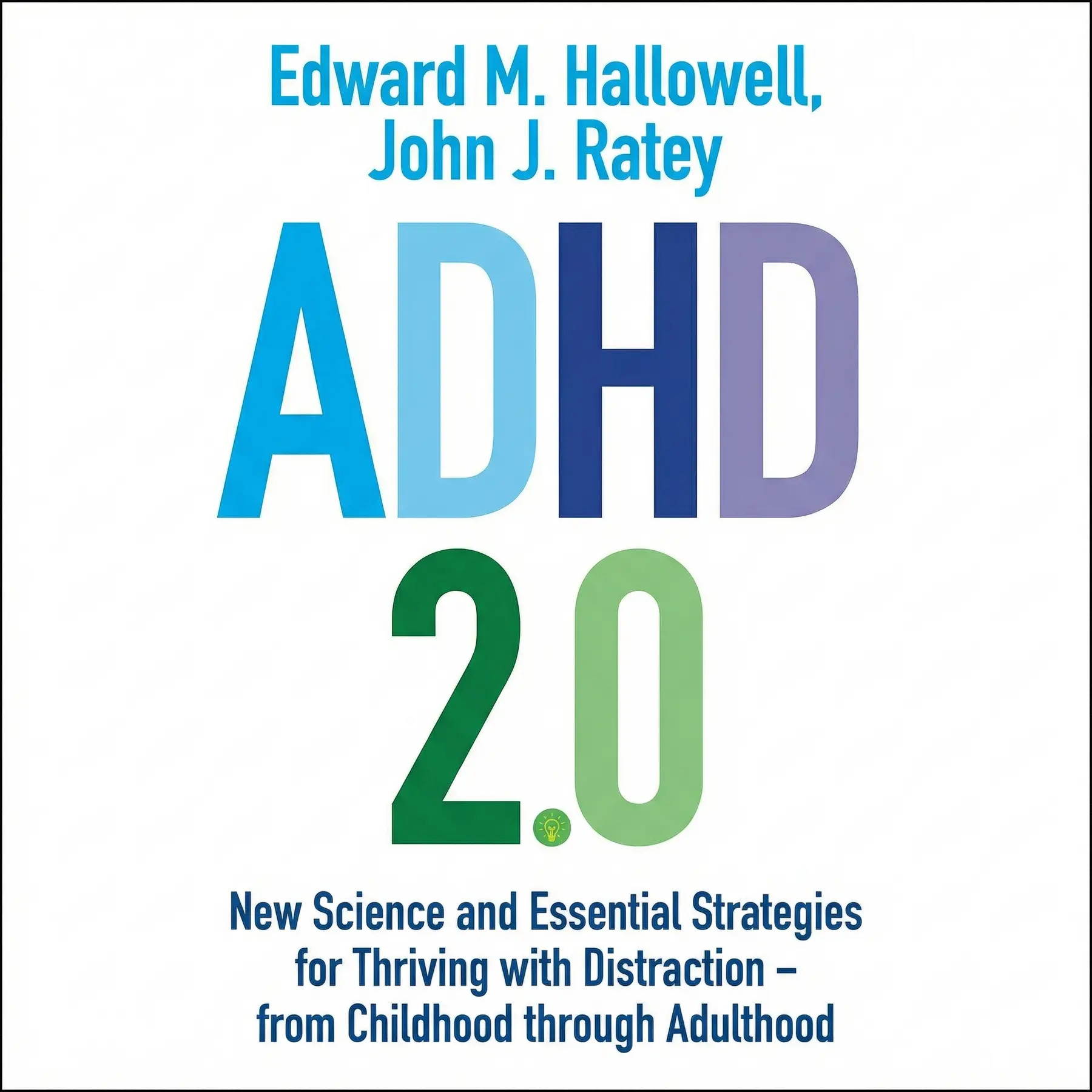
ADHD 2.0: New Science and Essential Strategies for Thriving with Distraction – from Childhood through Adulthood
ADHD 2.0 offers a revolutionary perspective on attention deficit, framing it as a unique brain trait that can be managed through connection, environment, and physical movement rather than just pathology.
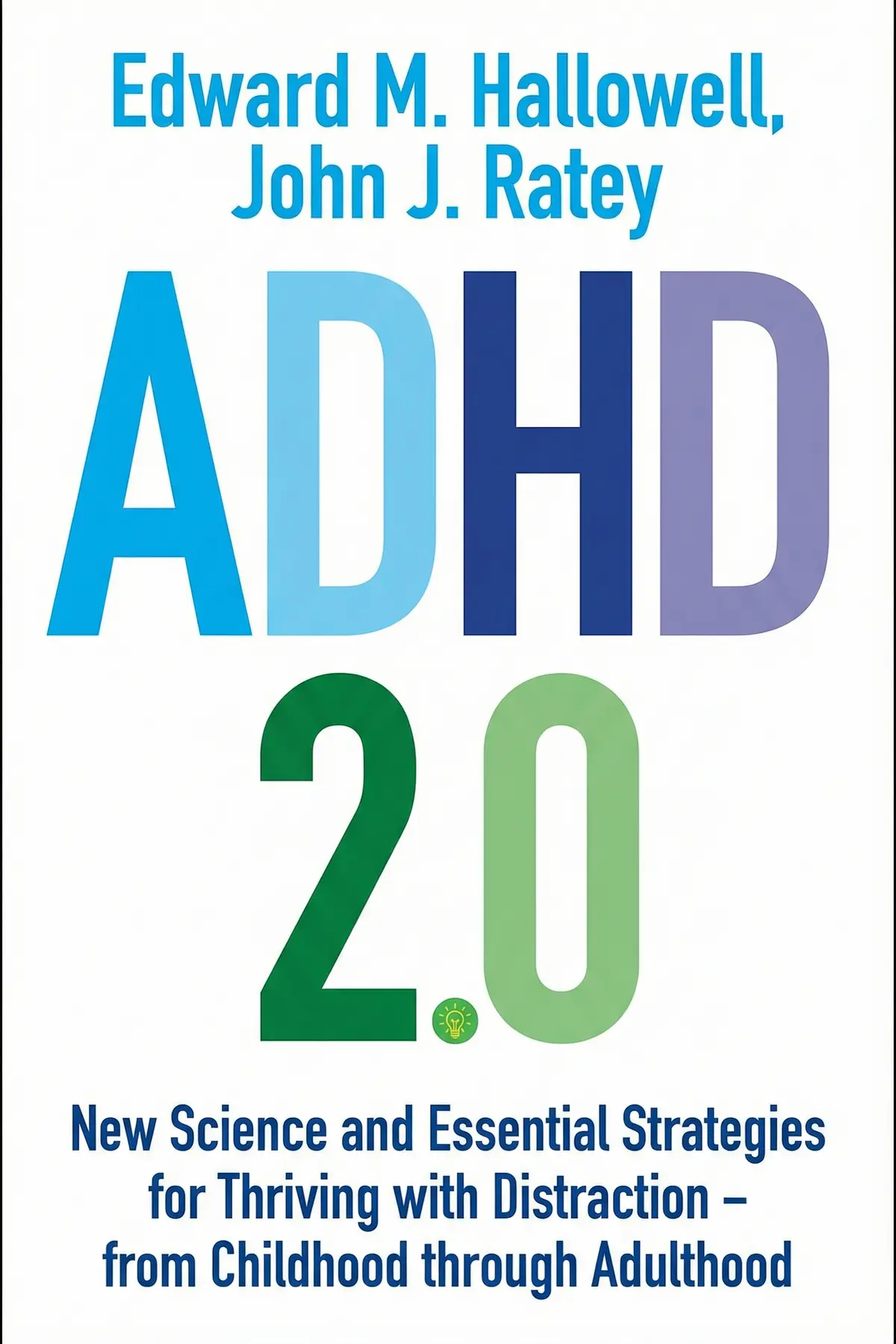
Table of Content
1. Introduction
2 min 17 sec
In a world that often demands rigid compliance and sustained, linear focus, people living with attention deficit hyperactivity disorder frequently find themselves on the periphery. For decades, the dominant narrative surrounding ADHD has been one of dysfunction. We have been taught to see it as a collection of failures: a failure to sit still, a failure to pay attention, and a failure to follow through. This perspective has led to a culture of shame, where individuals are labeled as unreliable or disruptive, and where their immense potential is often buried under the weight of negative expectations. However, a profound shift is occurring in how we understand the human brain. We are beginning to see that ADHD is not merely a deficit of attention, but rather a different way of processing the world—a brain that is wired for high speed, intense creativity, and fearless problem-solving.
This summary of ADHD 2.0 explores a new, science-backed approach to thriving with a distracted mind. Rather than focusing solely on what is missing, we look at how to harness the unique architecture of the ADHD brain. We will delve into the latest neurological research, examining how the brain’s internal networks interact and how specific physical structures influence our emotional and cognitive life. More importantly, we will outline four core strategies designed to strengthen the mind’s ‘brakes’ and unlock its ‘superpowers.’
Through the lens of modern neuroscience and compassionate case studies, we will see that with the right support, the very traits that cause struggle can become the engines of incredible achievement. Whether you are navigating your own diagnosis or supporting a loved one, the goal here is to move beyond mere management and toward a life of genuine fulfillment. We are setting out to prove that the world doesn’t just need to tolerate ADHD—it needs the ingenuity and spirit that people with ADHD bring to the table. By the end of this journey, you will have a new toolkit for navigating the daily hurdles of distraction and a deeper appreciation for the dynamic, race-car engine of the ADHD mind.
2. A New Paradigm for ADHD
1 min 56 sec
Moving beyond the stigma of ‘disorder’ allows us to see the creative and energetic potential inherent in the ADHD brain architecture.
3. The Biological Seesaw of TPN and DMN
2 min 22 sec
Understanding how the brain switches between task-focus and imagination reveals why people with ADHD often feel stuck in their own thoughts.
4. The Power of Brain Plasticity and the Cerebellum
2 min 12 sec
The cerebellum’s role in ADHD goes beyond physical balance, impacting emotional regulation and the ability to learn new skills.
5. The Race Car Paradox and Samuel’s Journey
2 min 22 sec
A young boy’s success story illustrates how replacing punishment with understanding can transform a child’s life.
6. Vitamin C: The Necessity of Connection
1 min 59 sec
Social connection is a vital nutrient for the ADHD brain, acting as a powerful antidote to the isolation and shame often associated with the condition.
7. Practical Bonds for Better Mental Health
1 min 59 sec
Actively cultivating diverse social interactions, from deep friendships to casual acquaintances, provides a safety net against ADHD-related anxiety.
8. Finding the High-Octane Spark
2 min 06 sec
Aligning daily activities with innate passions is the key to turning the hyperfocus of ADHD into a productive asset.
9. Designing a Life Around Strength
1 min 55 sec
Success in the workplace and personal life comes from focusing on what you do best rather than trying to fix every weakness.
10. Mastering the External Environment
2 min 09 sec
Small, consistent changes to our surroundings and routines can provide the scaffolding an ADHD brain needs to stay organized.
11. Fueling the Race Car: Diet and Sleep
1 min 56 sec
Maintaining brain health through proper nutrition and sleep hygiene is essential for managing mood and cognitive performance.
12. Physical Training for Cognitive Control
1 min 51 sec
Targeted balance and coordination exercises can literally reshape the brain, improving memory, learning, and emotional regulation.
13. Movement as a Strategic Intervention
1 min 40 sec
Quick bursts of physical activity can serve as a ‘reset button’ for the brain when focus starts to fade or impulsivity rises.
14. Conclusion
1 min 56 sec
In conclusion, the journey of navigating ADHD is one of moving from a model of deficit to a model of dynamism. The latest science tells us that while the challenges are real, they are matched by equally real and powerful strengths. By understanding the brain’s internal seesaw between task-focus and imagination, and by recognizing the incredible potential for change within the cerebellum, we can stop fighting against our nature and start working with it. The four strategies we’ve explored—cultivating radical connection, identifying and nurturing innate talents, creating a supportive external and internal environment, and using physical movement as a tool for brain training—provide a comprehensive roadmap for success.
People with ADHD are not broken versions of ‘normal’ people; they are individuals with a unique brain architecture that has been essential throughout human history. They are the explorers, the innovators, and the dreamers who see the world in ways others cannot. By strengthening our internal brakes through compassion, structure, and movement, we can finally allow the power of the ADHD engine to drive us toward a life of purpose and fulfillment. Remember that your brain is a high-performance machine; it just requires a specialized set of tools to reach its full potential.
As a final piece of actionable advice: practice the ‘quick shift.’ Whenever you feel yourself descending into a spiral of negative thoughts or ‘stuckness,’ immediately engage in a simple physical task outside of your own head. Whether it’s washing a dish, stretching, or walking to the window, the act of doing something concrete will help your brain switch from the ruminative Default Mode Network back to the Task-Positive Network. Don’t wait for the mood to pass—move your body to change your mind. With these tools in hand, you are ready to turn your distraction into your greatest asset.
About this book
What is this book about?
ADHD 2.0 re-examines attention-deficit hyperactivity disorder through the lens of modern neuroscience. Instead of viewing the condition purely as a deficit, the authors argue it is a specific brain architecture that comes with significant advantages like creativity and high energy. The book provides a detailed roadmap for managing the challenges that come with this brain type while maximizing its strengths. Listeners will discover how to navigate the neurological 'seesaw' of focus and imagination, the critical role of physical balance in cognitive function, and why social connection is the most powerful non-medical intervention available. By moving away from shame and toward a strength-based approach, the book promises a way to transform what is often seen as a disability into a specialized tool for success in the modern world.
Book Information
About the Author
Edward M. Hallowell
Dr. Edward M. Hallowell and Dr. John J. Ratey are renowned authors whose book Driven to Distraction pioneered a broader understanding of ADD/ADHD 20 years ago. After continuing their research and publishing several further books, including Married to Distraction and Super-parenting for ADD, these coauthors have joined forces again to provide updated information and insights for people with ADHD, and parents, educators, and loved ones of people with ADHD.
Ratings & Reviews
Ratings at a glance
What people think
Listeners consider this ADHD guide highly educational and accessible, offering useful tips and excellent perspectives on the diagnosis. Its prose is specifically designed for the ADHD brain, and listeners enjoy the friendly voice and positive, motivating framework. They find the recommendations helpful, with one listener highlighting the inclusion of drug-free therapy alternatives, and overall describe the experience as both absorbing and enjoyable.
Top reviews
Cameron
Wow, what an incredibly validating and insightful journey this book turned out to be for me. As a late-diagnosed adult, the 'race car engine with bicycle brakes' analogy hit me like a ton of bricks because it describes my internal experience perfectly. This book doesn't just list symptoms; it offers a way to navigate a world that isn't built for our specific brain wiring. I found the section on the TPN and DMN—the 'angel and demon' of the ADHD brain—to be absolutely illuminating for understanding my own ruminations. Hallowell and Ratey write with such a relatable, compassionate tone that I actually felt seen for the first time in years. They focus on the 'VAST' traits as potential superpowers while never downplaying the genuine pain of unfulfilled potential. It’s a short, engaging read that manages to be both scientifically grounded and deeply emotional.
Show morePim
Finally got around to finishing this, and the focus on human connection as a 'treatment' was exactly what I needed to hear. In my experience, most ADHD books focus solely on lists of what you’re doing wrong, but this one emphasizes the healing power of love and support. The authors argue that vitamin 'Connect' is just as important as any pill you might take. I found the 'Find the Right Difficult' chapter to be a game-changer for my career planning. It’s an empowering read that encourages you to stop fighting your brain and start working with its natural rhythms. The tone is consistently optimistic, which is a breath of fresh air compared to the clinical coldness of other medical texts. It’s a fantastic resource for anyone feeling overwhelmed by their diagnosis.
Show moreLeah
Picked this up during a really dark time after my diagnosis, and it felt like a warm hug from two experts who truly understand. The authors emphasize that we aren't crazy, lazy, or stupid, but simply individuals with a specific set of traits that need the right environment to flourish. I loved the emphasis on 'never worrying alone' and the importance of finding a community that supports your unique way of thinking. The science behind the cerebellum and its role in emotional regulation was a total 'aha' moment for me. It’s an easy, engaging read that provides a clear roadmap for both behavioral shifts and medical options. This book gives you the tools to finally find some agency and empowerment in how wildly wonderful your brain can be.
Show moreOm
After hearing Hallowell on a podcast, I had to see if the book lived up to the hype. It is an empowering, remarkably fast-paced read that doesn't get bogged down in too much jargon. I’ve found the medication chart in the back to be one of the most practical resources I’ve encountered in years of research. While the authors clearly have a very specific, high-achiever perspective, the core message about the healing power of connection is universal. It’s refreshing to see a focus on how love and support can actually change our brain chemistry. This isn't just a clinical manual; it’s a guide to living a better life with a race-car brain. I finished it in two sittings and felt much more capable of handling my daily hurdles.
Show moreNongnuch
Ever wonder why your brain oscillates between brilliant creativity and complete, soul-crushing chaos? This book provides a fascinating neurological look at that exact struggle by explaining the interplay between the Default Mode Network and the Task Positive Network. I appreciated the authors’ attempt to rebrand the experience as VAST, which feels much less pathologizing than a traditional diagnosis. The writing style is punchy and direct, clearly designed with an ADHD reader’s attention span in mind. While some of the 'superpower' talk feels a bit overblown, the practical advice on creating stellar environments is genuinely helpful for daily functioning. It provides a solid mix of traditional medication info and lifestyle shifts like exercise and connection. It’s an insightful guide that focuses on harnessing your strengths rather than just dwelling on your deficits.
Show moreRome
The chapter on the cerebellum and simple balance exercises felt weirdly revolutionary for such a straightforward concept. Personally, I’ve always been skeptical of 'natural' fixes, but the science behind how physical movement can stimulate focus was very compelling. The book is very easy to digest, with short chapters that respect the reader's likely difficulty with long, dense paragraphs. I appreciated that they didn't shy away from the darker sides of ADHD, like the increased risk of addiction and lower life expectancy. However, they always circle back to how these risks can be mitigated through proper management and stellar environments. It’s a practical, no-nonsense guide that feels very modern. While some of the case studies felt a bit 'best-case scenario,' the overall framework for management is something I can actually implement today.
Show moreIsaiah
Look, this is an excellent primer for anyone just starting their journey with VAST or ADHD. It’s succinct, which is perfect for brains that tend to skip over dense medical texts. To be fair, if you’ve been scouring ADDitude magazine for years, you might find the medication section a bit redundant. However, the authors' focus on a strength-based approach rather than just 'fixing' a deficit is incredibly refreshing and necessary. They emphasize finding your 'right difficult' to stay engaged. While the balance board suggestions felt a little niche, the overall message of finding empowerment through connection is something every ADHDer needs to hear. It’s not a perfect manual, but it’s a very hopeful one that provides a great bird's-eye view of the condition.
Show moreSupaporn
Truth is, I was skeptical about the concept of VAST at first, but the authors make a compelling case for how our modern environment mimics ADHD symptoms. The book is packed with fantastic insights into why we crave stimulation and how to manage the 'demon' of negative rumination. I especially valued the chapter on exercise and its effects on the brain, even if some of the balance board stuff felt a bit anecdotal. The layout is very ADHD-friendly with clear headings and a structure that doesn't feel overwhelming to get through. My only real complaint is that it occasionally feels like it’s skimming the surface of complex topics. Still, as a resource for practical, non-medication treatment options, it’s a very strong addition to any shelf.
Show morePornpimon
Not what I expected from the authors of the seminal 'Driven to Distraction,' though it still has some value for newcomers. To be fair, the book is quite short, with the actual content wrapping up in just over 130 pages. It often feels like a collection of blog posts rather than a cohesive new theory, complete with some questionable affiliate-style mentions of products like CBD oil and specific balance boards. The short section on the 'Task Positive Network' was a welcome addition, but I was hoping for more depth on the 'New Science' promised in the title. It’s a decent primer if you’re looking for a quick, up-to-date overview of the disorder. However, those of us who have been living with this diagnosis for years might find it a bit thin on actionable new strategies.
Show moreAna
Frankly, the 'New Science' in the title feels like a bit of a stretch for a book that reads mostly like a collection of repurposed blog entries. While I appreciated the technical breakdown of the Default Mode Network, I was deeply troubled by the authors' endorsement of Applied Behavior Analysis. Many in the neurodivergent community find ABA to be antiquated and harmful, yet it’s mentioned here without any critical nuance. The constant mentions of specific products and expensive balance exercises also gave me pause. I expected a major new entry in the field but found a scant 130 pages that didn't offer much beyond what's already available for free online. If you're a white, cis-male entrepreneur, you'll probably find the success stories inspiring. For the rest of us looking for deep strategies, it’s a bit of a letdown.
Show moreReaders also enjoyed


ADHD an A-Z: Figuring It Out Step by Step
Leanne Maskell




Alcoholics Anonymous
Alcoholics Anonymous World Services
A Liberated Mind: How to Pivot Toward What Matters
Steven C. Hayes
AUDIO SUMMARY AVAILABLE
Listen to ADHD 2.0 in 15 minutes
Get the key ideas from ADHD 2.0 by Edward M. Hallowell, plus 5,000+ more titles in English and Thai.
- 5,000+ titles
- Listen as much as you want
- 7-day free trial
- Cancel anytime







