
24 min 51 sec
ISIS: Inside the Army of Terror
ISIS explores the chilling evolution of the world’s most notorious insurgent army. This deep dive reveals how historical grievances, strategic patience, and brutal ideology transformed a local fringe group into a global threat.
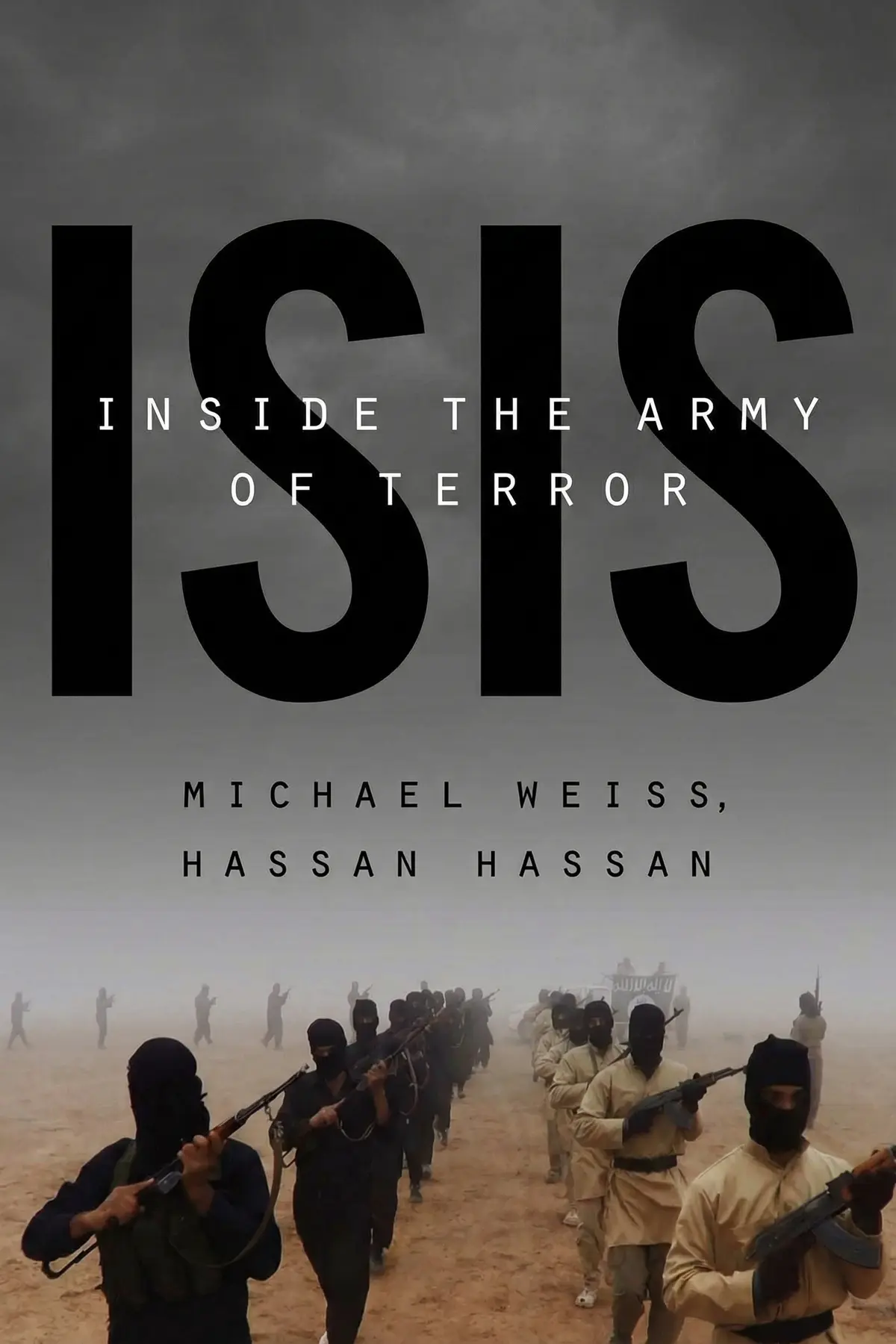
Table of Content
1. Introduction
1 min 47 sec
For many people around the world, the appearance of the black flag on the evening news felt like a sudden, inexplicable rupture in history. One day, the region seemed to be grappling with the familiar fallout of the Arab Spring and the long shadow of the Iraq War; the next, a group of disciplined, ruthless militants had seized massive swaths of territory across two countries, claiming to have established a new world order. This was ISIS, or the Islamic State in Iraq and al-Sham. To the casual observer in the West, this organization seemed to materialize out of the desert sands, fully formed and terrifyingly effective.
However, as we look closer at the history presented by Michael Weiss and Hassan Hassan, we see that the story of ISIS is not one of a sudden accident. Instead, it is a narrative of strategic patience, calculated brutality, and the exploitation of deep-seated societal fractures. This wasn’t just a group of rebels; it was an insurgent army that had been decades in the making. They moved through the ruins of fallen regimes and the smoke of civil wars, building an infrastructure that combined religious fanaticism with the cold, hard efficiency of a professional military.
In this exploration, we are going to pull back the curtain on the internal mechanics of this organization. We will see how they transformed from a fringe movement into a state-like entity that challenged global superpowers. We will look at the specific figures who shaped their ideology and the geopolitical blunders that provided them with the oxygen they needed to grow. By understanding the roots of their power—from the prison cells of Jordan to the battlefields of Syria—we can begin to grasp why they were so successful and why the world struggled so mightily to respond. This is the story of how an idea became a caliphate, and how terror became a tool of governance.
2. The Cult of the Fanatic
1 min 55 sec
Discover how ISIS builds its ranks by attracting the most radicalized individuals, moving beyond simple rebellion to create a force driven by absolute ideological purity and extreme dedication.
3. Defining the Caliphate
1 min 56 sec
Learn about the group’s ultimate goal of erasing international borders and establishing a state governed solely by a medieval interpretation of religious law.
4. The Architect of Extremism
2 min 01 sec
Explore the life of Abu Musab al-Zarqawi, the Jordanian militant whose violent vision and prison experiences provided the blueprint for the Islamic State’s expansion.
5. An Alliance of Convenience
2 min 00 sec
Witness the tense and often conflicting relationship between the local ambitions of Zarqawi and the global agenda of Osama bin Laden’s al-Qaeda.
6. The Baathist Intersection
1 min 56 sec
Uncover the surprising ways the secular remnants of Saddam Hussein’s regime found common ground with religious radicals to fuel the insurgency.
7. Martyrdom and its Aftermath
1 min 56 sec
Examine the transition of leadership after the death of Zarqawi and how his successors expanded the group’s vision into a territorial state.
8. The Strategic Waiting Game
1 min 54 sec
Understand how the group survived a period of near-collapse by going underground and utilizing prisons as recruitment hubs during the US withdrawal.
9. The Syrian Crucible
1 min 57 sec
See how the chaos of the Syrian Civil War provided ISIS with the perfect environment to expand and finally break away from the old guard of al-Qaeda.
10. The Digital Jihad
1 min 59 sec
Learn how sophisticated media production and social media outreach allowed ISIS to recruit globally and bypass traditional news filters.
11. Guerilla Governance
1 min 58 sec
Discover the tactical brilliance behind the group’s conquests, including the use of local tribal politics and hidden sleeper cells.
12. The Western Blind Spot
1 min 53 sec
Analyze the intelligence failures and policy mistakes that prevented Western powers from effectively countering the rise of the Islamic State.
13. Conclusion
1 min 39 sec
The rise of ISIS is a sobering reminder of what happens when vacuum-sealed ideology meets political chaos. Through the work of Michael Weiss and Hassan Hassan, we see that this organization was never just a random outburst of violence. It was a carefully constructed machine that utilized every resource at its disposal—from the strategic expertise of former Baathist officers to the digital connectivity of the modern world. They didn’t just break the rules of international politics; they attempted to rewrite them entirely, substituting the nation-state with a brutal, borderless caliphate.
While the territory they once held has been largely reclaimed, the conditions that allowed them to flourish—sectarian division, disenfranchisement, and the collapse of state authority—remain present in many parts of the world. The ‘throughline’ of this summary is that ISIS was a symptom as much as it was a cause. They were the product of decades of local grievances and international miscalculations. Their story teaches us that terror isn’t just a tactic; for those who seek to build a state on fear, it is a form of logic.
As you reflect on this journey from the prisons of Jordan to the streets of Raqqa, consider the power of narratives. ISIS succeeded because they offered a compelling, albeit horrific, story of identity and purpose to those who felt they had neither. To prevent the next iteration of such a group, the world must not only defeat the militants on the battlefield but also address the underlying fractures that make their message appealing to the desperate and the radicalized. The black flag may have been lowered in many places, but the history that raised it is still being written.
About this book
What is this book about?
ISIS: Inside the Army of Terror offers a comprehensive look at the rise of the Islamic State, tracing its origins from the aftermath of the Iraq War to its sudden dominance in Syria. Authors Michael Weiss and Hassan Hassan break down the group’s complex identity, explaining that it is not merely a band of terrorists but a highly organized military and administrative entity. The book promises to deconstruct the myths surrounding the group, illustrating how they leveraged sectarian tensions, formed unlikely alliances with former Baathist officials, and utilized sophisticated propaganda to recruit thousands of followers. By examining the leadership of figures like Abu Musab al-Zarqawi and Abu Bakr al-Baghdadi, the authors provide a necessary historical context that explains why Western interventions often failed to anticipate or stop the group’s expansion. It is a sobering analysis of how chaos and miscalculation birthed a caliphate of terror.
Book Information
About the Author
Michael Weiss
Hassan Hassan is a distinguished Middle East analyst specializing in the dynamics of Syria, Iraq, and the Gulf States. He serves as a columnist for The National in Abu Dhabi, and his expert commentary has been featured in major international outlets including the Guardian, Foreign Policy, and the New York Times. Michael Weiss is an experienced columnist whose writing has appeared in Foreign Policy, The Daily Beast, and NOW Lebanon. He is a fellow at the Institute of Modern Russia and holds the position of editor-in-chief for The Interpreter, the institute’s online news journal.
Ratings & Reviews
Ratings at a glance
What people think
Listeners find this work remarkably educational and deeply researched, with one listener specifically praising the thorough breakdown of the organization's roots. The caliber of the writing is also widely appreciated, as one listener mentioned feeling completely drawn into the account. Furthermore, the book delivers significant context regarding the movement’s underlying goals and the complex political landscape of Iraq and Syria. On the other hand, clarity is a point of contention; some deem it a gripping narrative, whereas others find it challenging to track. Pacing also draws varied responses, with several listeners noting that the subject matter feels terrifying and distressing.
Top reviews
Pita
Wow. Weiss and Hassan have managed to peel back layers of a conflict that usually feels like a blurry mess on the nightly news. Frankly, it is one of the most immersive accounts of modern radicalization I’ve ever encountered. The way they link the US prison system in Iraq to the eventual leadership structure of ISIS is both brilliant and terrifying. You start to see how guys like Baghdadi weren't just born, they were forged in the vacuum left by Western intervention. The authors don't pull punches when discussing the role of the Iranian Quds force either. Every page feels like it’s backed by a dozen interviews. It’s an upsetting read because of the brutality described, but it’s necessary for anyone who wants to look past the headlines. The writing quality is top-notch, making complex geopolitical shifts feel immediate and visceral.
Show moreAroha
The chapter on Abu Musab al-Zarqawi alone makes this worth the purchase price for anyone trying to understand the genesis of modern jihadism. This is a masterful piece of reporting. Weiss and Hassan have managed to get closer to the subject than almost any other Western journalists. I found the interviews with active ISIS members to be particularly illuminating, as they reveal a level of pragmatism that the media often ignores. It’s a harrowing read, especially when you realize how many of these issues were avoidable. The documentation is exhaustive, and the authors' deep knowledge of the region shines through in every paragraph. It’s upsetting, yes, but that’s because the truth of the situation is grim. This book is a vital piece of the puzzle for understanding the current state of the Middle East.
Show moreJom
Ever wonder how a ragtag group of insurgents transformed into a pseudo-state with its own economy and courts? In my view, this is the definitive account of that transformation. The authors go way beyond the beheading videos to look at the advanced logistics and recruitment strategies that make ISIS so effective. It’s a terrifyingly immersive read. The way they explain the symbiotic relationship between Assad and the extremists was a real eye-opener for me. It’s complex, but the authors break it down with clarity and precision. While some might find it difficult to follow at times due to the complexity of the subject, the effort is well rewarded. This is a thoroughly documented, frighteningly relevant book that every citizen should read. It completely changed my perspective on the failures of the Iraq War.
Show moreKoi
This book is essentially a deep dive into the absolute chaos of the Middle East post-2003. Truth is, the authors do a fantastic job of tracing how the remnants of Saddam’s Baathist regime merged with radical Salafism to create a monster. It’s thoroughly informative and well-documented, especially when discussing the tactical failures of the US occupation. I appreciated the specific details on how the Al-Maliki government’s sectarianism pushed Sunnis into the arms of extremists. However, the narrative can get a bit bogged down in the sheer number of names and acronyms. It’s not exactly a beach read, and the pacing is often interrupted by dense political analysis. Still, for anyone wanting to understand why the 'mission' was never actually 'accomplished,' this is indispensable. It provides a sobering look at how regional players like Iran and Syria manipulated the insurgency for their own ends.
Show moreZoe
As someone who follows foreign policy, I found the analysis of the Baathist-Salafist convergence to be the strongest part of the narrative. Not gonna lie, the section on the early days of Zarqawi is genuinely gripping. The book does a great job of showing how ISIS isn't just a terrorist group, but a highly organized military and bureaucratic machine. This isn't just about religion; it's about power and political disenfranchisement. My only real complaint is that the writing can be a bit repetitive, hammering home the same points about the Maliki government multiple times. Still, the quality of the research is undeniable. It’s a frightening look at a resilient enemy that was decades in the making. Definitely worth your time if you can handle the dense prose.
Show moreTaweesak
Picked this up hoping for a clear roadmap of how we got here, but it’s a dense trek. To be fair, Weiss and Hassan have clearly done their homework. The documentation is impressive and the interviews with former members provide a chilling look inside the caliphate’s machinery. My main gripe is the readability; the prose is often dry and assumes the reader has a PhD in Middle Eastern studies. One moment you are reading a compelling account of Zarqawi’s rise, and the next you are lost in a sea of confusing tribal alliances. It’s a frightening and upsetting book, which is expected given the subject matter, but the lack of a strong narrative thread made it hard to stay engaged. It works better as a reference text than a cohesive story. If you want a deep dive into the minutiae of the Syrian civil war, go for it.
Show moreViolet
After hearing so much about the 'Army of Terror,' I expected something more sensational, but this is a scholarly, almost clinical account. Gotta say, the information regarding the 'Sahwa' or Sunni Awakening and its subsequent betrayal by the Baghdad government was the highlight for me. It explains so much about the current Sunni-Shia divide. However, the pacing is quite uneven. Some sections fly by with intense reporting, while others feel like a repetitive list of intelligence reports. I found it difficult to follow the various splinter groups in the latter half of the book. It’s a valuable resource for sure, but the readability is mixed at best. You really have to focus to keep the timeline straight as it jumps between Iraq and Syria. It’s informative but lacks the narrative drive of similar non-fiction works.
Show moreWeera
Look, the level of detail here is staggering, yet I found myself constantly flipping back to previous chapters to remember who was who. Personally, I think the authors are experts, but they might be too close to the material to realize how confusing it is for a layperson. The book provides incredible insights into the group's motivations, specifically how they use order and social services to win over war-torn populations. That's a side of the story we rarely see in Western media. But the transition between the history of AQI and the modern Syrian conflict felt rushed. I struggled with the dry tone during the more analytical sections. It’s a heavy, upsetting book that requires a lot of mental energy. It is well-documented, no doubt, but it isn't always a 'compelling' read in the traditional sense.
Show morePracha
Finally got around to reading this, and it’s certainly a sobering look at how the US essentially helped create a vacuum for radicalization. In my experience, most books on this topic are either too shallow or too academic, and this one sits uncomfortably in the middle. The insights into the Baathist influence within ISIS were fascinating. It really challenges the idea that this is purely a religious movement. On the downside, the chapters on the Syrian civil war felt incredibly cluttered. There are so many moving parts that the authors fail to synthesize into a clear picture. The pacing is upsettingly fast in parts where I wanted more detail, and slow where I wanted a summary. It’s a mixed bag. It’s informative, yes, but be prepared for a difficult, often frustrating reading experience.
Show moreSook
Not what I expected at all, and I honestly found it a chore to finish. While it is obviously well-researched, the focus is so narrow that it loses the forest for the trees. The authors seem to have a very specific political lens, particularly when discussing the role of Iran and the Assad regime. I felt like the role of Western intelligence was glossed over in favor of blaming local actors for every single development. The writing is dense and the pacing is incredibly slow, making it difficult to follow the evolution of the group. It felt less like a book and more like a collection of long-form journalism pieces stitched together. For a topic this explosive, the prose was surprisingly flat. I wanted to understand the 'why' behind the movement, but I mostly just got a list of names and dates.
Show moreReaders also enjoyed

A Promised Land
Barack Obama

A River in Darkness: One Man’s Escape from North Korea
Masaji Ishikawa

A Splendid Exchange: How Trade Shaped the World
William J. Bernstein
A Theory of Justice
John Rawls

A Spy Among Friends: Philby and the Great Betrayal
Ben Macintyre


AUDIO SUMMARY AVAILABLE
Listen to ISIS in 15 minutes
Get the key ideas from ISIS by Michael Weiss, plus 5,000+ more titles in English and Thai.
- 5,000+ titles
- Listen as much as you want
- 7-day free trial
- Cancel anytime







