
26 min 46 sec
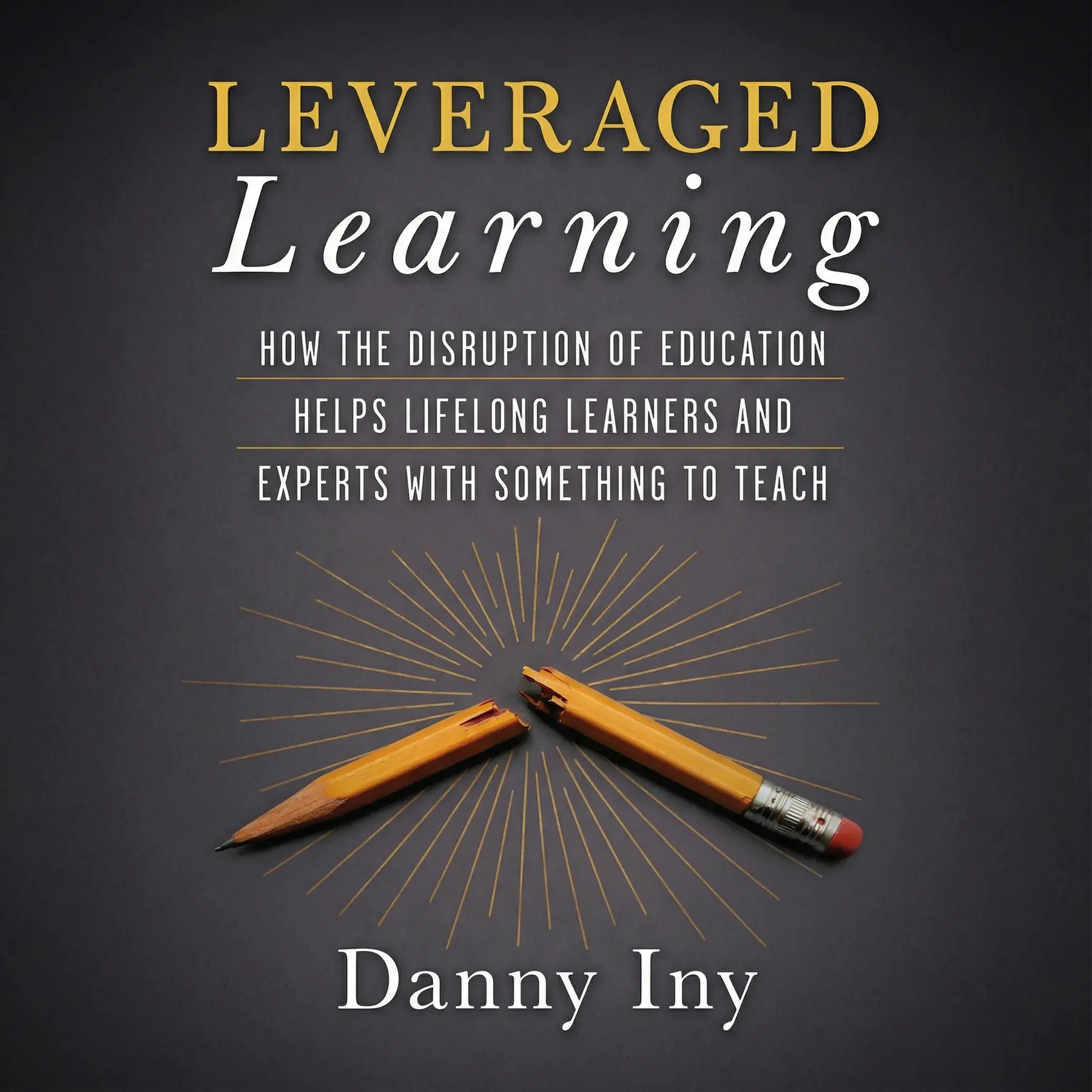
Leveraged Learning: How the Disruption of Education Helps Lifelong Learners, and Experts With Something to Teach
By Danny Iny
Leveraged Learning offers a modern blueprint for education, moving beyond rote memorization toward a strategy that prioritizes critical thinking, technological agility, and sustainable habits for personal and professional growth.
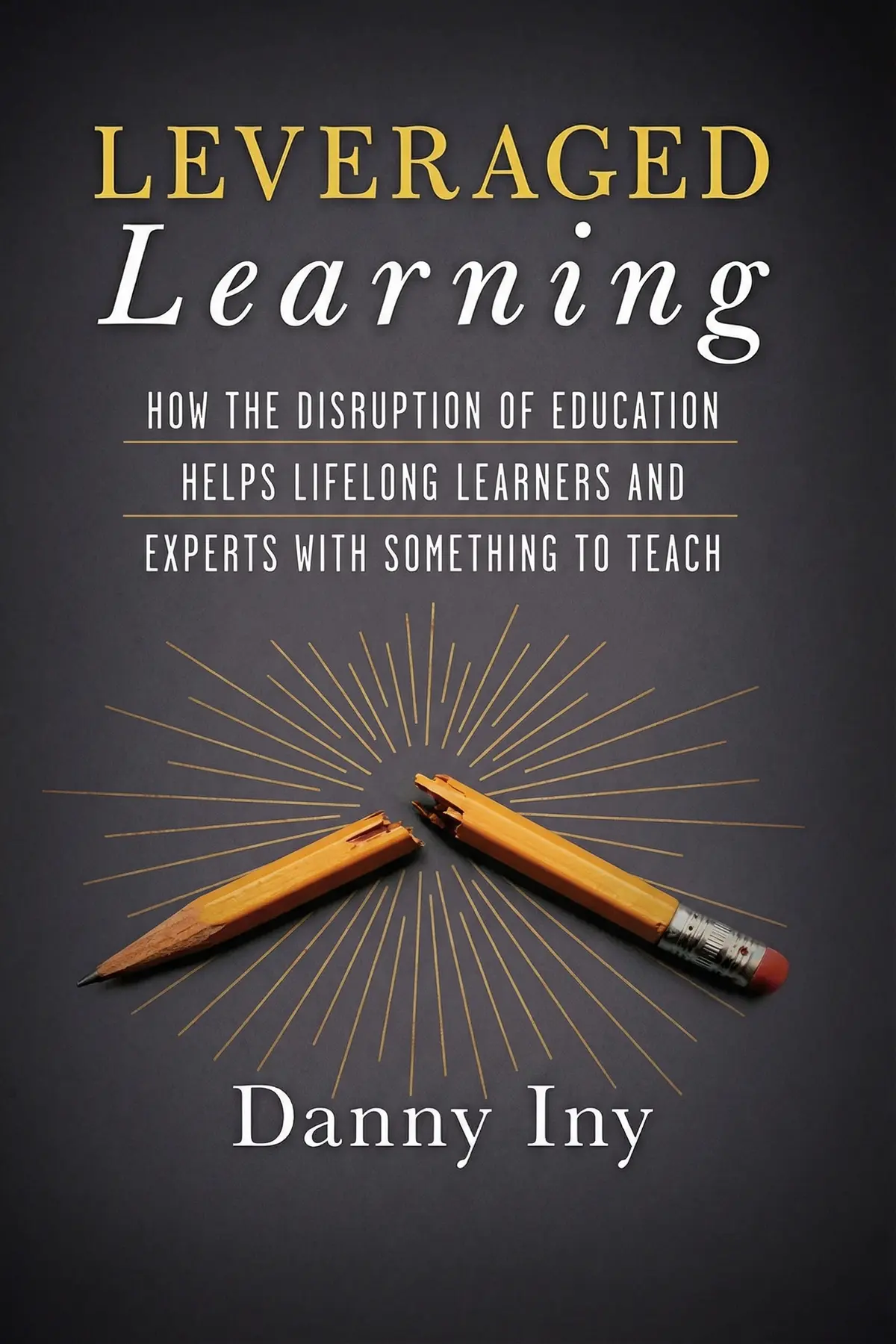
Table of Content
1. Introduction
2 min 23 sec
We are often told that education is the ultimate key to unlocking a successful life. From a young age, the path seems clear: attend school, earn a degree, and the world will open its doors to you. However, as many of us have discovered, there is a profound disconnect between the academic world and the practical demands of the twenty-first century. Conventional educational pathways frequently fall short of fulfilling their intended purpose, leaving graduates with impressive-looking diplomas but a lack of the versatile skills required to thrive in a rapidly shifting landscape.
Consider the plight of the modern college student. After four years of intense study and significant financial investment, many find themselves woefully unprepared for the nuances of their chosen careers. They have the theory, but they lack the agility. The problem isn’t a lack of intelligence or effort; it is that the traditional model of learning was built for a different era—one where information was scarce and the pace of change was slow. Today, we live in a world of information abundance and technological disruption. To survive and flourish, we need a different operating system for our minds.
This is where the concept of “leveraged learning” comes into play. It is not just about studying harder or longer; it is about studying smarter by utilizing specific layers of educational strategy that maximize impact and efficiency. This framework acknowledges that technology is not just a tool but a fundamental shift in how we acquire and apply information. By understanding how to blend content with critical thinking, success behaviors, and the right user experience, we can move from being passive consumers of information to becoming masters of our own growth.
In the following exploration, we will look at how to navigate the overwhelming sea of educational options available today. Whether you are a student, a professional, or someone with a passion to teach others, this approach provides the structure needed to design a learning experience that truly delivers results. We will see why simply knowing facts is the bare minimum, why creativity is your best defense against automation, and how to build the mental fortitude required to never stop growing.
2. The Multidimensional Nature of Mastery
2 min 46 sec
Knowledge is merely the starting point of education. Discover why true learning requires moving beyond basic facts to develop deeper procedural skills and practical application.
3. Building a Robot-Proof Mind
3 min 09 sec
As automation threatens traditional roles, higher-level thinking becomes essential. Learn how critical thinking and creativity can provide a competitive edge in an AI-driven world.
4. The Psychology of Perseverance
3 min 07 sec
Learning is difficult, and many give up before reaching their goals. Discover the behavioral shifts and mental frameworks needed to foster long-term fortitude.
5. Optimizing Knowledge Delivery
2 min 59 sec
Efficiency is key when acquiring new information. Explore how to prune unnecessary content and use proven techniques like scaffolding to accelerate your progress.
6. The Fallacy of Learning by Osmosis
2 min 42 sec
Why passive exposure to information rarely leads to high-level skills. Discover the importance of structured practice and feedback in developing true insight.
7. Rewiring the Mind for Success
2 min 42 sec
Traditional ‘grit’ is often misunderstood. Learn how mindfulness and mental contrasting can help you navigate internal obstacles more effectively than pure willpower.
8. Designing the User Experience of Learning
2 min 38 sec
The structure of your study environment impacts your results. Explore how choosing the right format—from mobile to asynchronous—can fit learning into a busy life.
9. Accountability and the Power of Social Stakes
2 min 31 sec
Why we often choose immediate pleasure over long-term growth and how to use social systems to ensure we cross the finish line.
10. Conclusion
1 min 49 sec
As we have seen, the landscape of education is undergoing a radical transformation. The old model, which prioritized the passive consumption of information within a rigid institutional framework, is no longer sufficient for the world we live in today. To thrive, we must adopt a more dynamic, layered approach—one that places the learner at the center and uses technology to amplify our natural abilities.
The journey of leveraged learning begins with the recognition that knowledge is just the foundation. To truly excel, you must build upon that foundation with critical thinking, creativity, and the insight to see opportunities that others miss. You must cultivate the mental fortitude to handle setbacks and the behavioral habits that ensure consistent progress. You must be strategic about how information is delivered to you, pruning the unnecessary and using cognitive science to make the essential stick. And finally, you must design an experience that fits your life and surround yourself with the accountability and support needed to stay the course.
The most important takeaway is that you are in the driver’s seat. Whether you are seeking a new career path, looking to advance in your current role, or wanting to share your own expertise with the world, the tools are now at your fingertips. Start by identifying the minimum amount of knowledge you need to take the next step. Practice it deliberately, seek out feedback, and don’t be afraid to iterate. By applying these layers of strategy, you can turn the disruption of the modern world into your greatest advantage. The future belongs to those who never stop learning, and with a leveraged approach, that future is within your reach. Now, take what you have learned here and apply it to your next big challenge.
About this book
What is this book about?
The traditional educational system is increasingly out of step with the demands of the modern workforce. Many students graduate with degrees that fail to provide the practical skills required for today’s fast-paced, technology-driven environment. This book introduces a new framework designed to bridge that gap, focusing on how individuals can take control of their own intellectual development. At its core, this approach emphasizes that knowledge alone is no longer a competitive advantage in the age of artificial intelligence. Instead, learners must focus on higher-order skills such as creativity and insight. The book provides a detailed roadmap for mastering any subject by layering information with critical thinking, behavioral psychology, and social support. It promises to transform the way we view schooling and self-study, offering actionable techniques for anyone looking to stay relevant in a changing economy.
Book Information
About the Author
Danny Iny
Danny Iny is a prominent figure in the world of online education, serving as the founder and CEO of the online business education firm Mirasee. His expertise has been recognized by prestigious institutions, leading him to guest lecture at renowned universities including Yale and McGill. Iny is a prolific writer and a best-selling author, having penned nine influential books such as Teach and Grow Rich and The Audience Revolution, all focusing on the intersection of education, business, and audience engagement.
Ratings & Reviews
Ratings at a glance
What people think
Listeners find the material deeply educational and perceptive, with one individual characterizing it as a thorough critique of current academic norms. The writing is expertly documented, and one listener highlights that it contains a wealth of historical context. Listeners view the book as mandatory study for both parents and those in the teaching profession.
Top reviews
Moo
Finally got around to Danny Iny’s latest, and it’s a total deep dive into why our current schooling is basically a relic of the Industrial Revolution. I was particularly impressed by the historical references he uses to ground his arguments. It isn’t just a rant; it’s a well-researched critique of how "academic inflation" is devaluing the very degrees we pay a fortune for. Truth is, the way he explains the shift toward skill-specific learning makes so much sense in our current economy. Every parent with kids approaching college age needs to sit down with this. It’s a sobering roadmap that highlights why soft skills and "robot-proof" education are the real currency now. My only minor gripe is that he plugs his own course-building philosophy a bit much toward the end, but the core insights are too good to ignore.
Show moreSawit
Wow. This is a comprehensive takedown of the educational status quo that left my head spinning. Danny Iny has clearly done his homework, blending historical data with a sharp vision of a "robot-proof" future. Why are we still using 19th-century methods to train 21st-century minds? It’s a question he answers with brutal honesty. I loved the emphasis on "learning to learn" and the focus on higher-order thinking skills that machines just can't replicate. The writing style is conversational yet authoritative, making complex pedagogical concepts accessible to anyone. Look, the world is changing faster than our curriculums, and if you aren't paying attention to the "leveraged learning" model, you're going to get left behind. This is mandatory reading for anyone who feels like the current path to success is a dead end.
Show moreSavannah
Ever wonder why a college degree doesn't guarantee a stable career anymore? Leveraged Learning tackles this head-on by exploring the "Age of Acceleration" and why our current credentials are often obsolete within five years. The research here is deep. I was fascinated by the historical deep-dive into how the Industrial Revolution shaped our current classrooms into "factory" models. Danny Iny’s argument for "skill-specific" training over broad, expensive degrees is hard to argue with when you look at the student debt crisis. His conversational tone makes the heavy statistics go down easy. Not gonna lie, I was skeptical about another "business guru" writing about education, but this is a serious, scholarly look at a systemic failure. It’s a roadmap for survival in an era where what you can do matters more than what you know.
Show moreJackson
This book is a blunt takedown of a system that is clearly failing the next generation. I was hooked from the first few pages where Iny describes the misalignment between what employers want—soft skills and initiative—and what universities actually provide. The historical references are packed in here, giving the whole argument a weight that many other "disruptive" business books lack. He makes a compelling case that we need a "robot-proof" education system that values creativity and innovation over rote memorization. It’s refreshing to read someone who acknowledges that "learning to learn" is the most important skill we can possess. Personally, I think every high school guidance counselor should have a copy of this on their desk. It provides a much-needed alternative to the debt-heavy path we’ve been told is the only option.
Show moreIvan
As a parent watching my kids navigate a broken system, this book felt like a much-needed wake-up call. Danny Iny doesn't hold back when he argues that the traditional university model is essentially dead for most practical purposes. The book is packed with fascinating historical context, showing how we got stuck in this "high school to college to job" loop that no longer functions. I found the section on Edgar Dale’s Cone of Learning particularly enlightening—it explains exactly why those long, dry lectures we all sat through are the least effective way to actually gain knowledge. Personally, I would have liked more concrete "how-to" steps for students who aren't looking to start their own businesses, but as a cultural analysis, it’s brilliant. It challenges you to rethink the value of a diploma versus actual, demonstrable competence.
Show moreFang
The chapter on "Designing Great Courses" was the highlight for me, as someone who actually works in the training space. Danny Iny understands that teaching is an art, not just a data dump. He correctly identifies that experts often fail as teachers because they forget the "curse of knowledge"—they don't remember what it was like to be a beginner. This book is a brilliant resource for anyone looking to create education that actually sticks. I appreciated the specific references to scaffolding and building "fortitude" in learners. Gotta say, the middle section on self-driving cars and tech shifts felt a little disconnected from the main point, but it eventually ties back into the need for rapid adaptation. It’s a solid four-star guide that bridges the gap between old-school theory and new-age application.
Show moreElan
After hearing Danny on a podcast, I had high hopes for this book, and it largely delivered. It’s a fascinating look at the "Story of Progress" and why we are currently at a breaking point with modern schooling. I found his take on "fortitude" and the need for emotional support in digital learning to be spot on. We can't just expect students to watch dry videos and magically become experts. The book does a great job of explaining that higher-order cognitive skills require interaction and discussion. To be fair, some of the acronyms and diagrams felt a bit like filler, but the overall message is powerful. It’s an essential read for educators who want to move beyond the "lecturing" model that Dale’s Cone shows is so ineffective. Solid 4 stars for a visionary take on our future.
Show moreKofi
In my experience as an educator, it is rare to find a book that so accurately captures the frustration of the modern classroom. Iny hits the nail on the head regarding "academic inflation" and the way degrees have become mere checkboxes rather than signs of true mastery. I especially liked the questions at the end of each chapter; they really help you integrate the concepts. The writing is authoritative, yet it feels like a conversation over coffee. While I don't agree that universities are completely "dead"—they still offer invaluable social growth—I do agree that the instructional model is broken. The book is a great reminder that we must commit to being lifelong learners if we want to stay relevant. It’s a provocative, insightful read that manages to be both historical and forward-looking at the same time.
Show moreBig
Not what I expected, though there are certainly nuggets of wisdom buried in here. To be fair, Iny makes a compelling case about the "87% dropout rate" of MOOCs and why simply dumping information online isn't enough. He argues that we need to teach "fortitude" and create engaging experiences rather than just checklists. However, I felt like a large portion of the book served as an elaborate funnel for his own business training programs. While the research into the evolution of education is top-notch, the tone occasionally slides into that "six-figure webinar" hype that I tend to avoid. If you can filter out the self-promotion, the discussion on cognitive objectives and the failure of the American student loan system is very much worth your time. It’s a decent read for educators, but take the "universities are dead" hyperbole with a grain of salt.
Show moreSofia
Frankly, I found this to be a bit of a retread of ideas that have been circulating in the "ed-tech" world for years. While Iny is a clear writer, he doesn't bring much new to the table if you’ve already been following the work of people like Ken Robinson or even using platforms like Khan Academy. He spends a lot of time attacking universities—which, let’s be honest, is an easy target—without acknowledging the social and networking value they provide. The "academic inflation" argument is valid, but the solution he offers feels suspiciously like it leads right to his own products. It’s a lot of hype about a revolution that is already well underway. If you are totally new to the concept of online learning, you might find it interesting, but for anyone already in the industry, it feels quite basic.
Show moreReaders also enjoyed
7 Powers: The Foundations of Business Strategy
Hamilton Helmer
Alibaba: The House That Jack Ma Built
Duncan Clark
Better and Faster: The Proven Path to Unstoppable Ideas
Jeremy Gutsche
AUDIO SUMMARY AVAILABLE
Listen to Leveraged Learning in 15 minutes
Get the key ideas from Leveraged Learning by Danny Iny, plus 5,000+ more titles in English and Thai.
- 5,000+ titles
- Listen as much as you want
- 7-day free trial
- Cancel anytime







