
16 min 42 sec
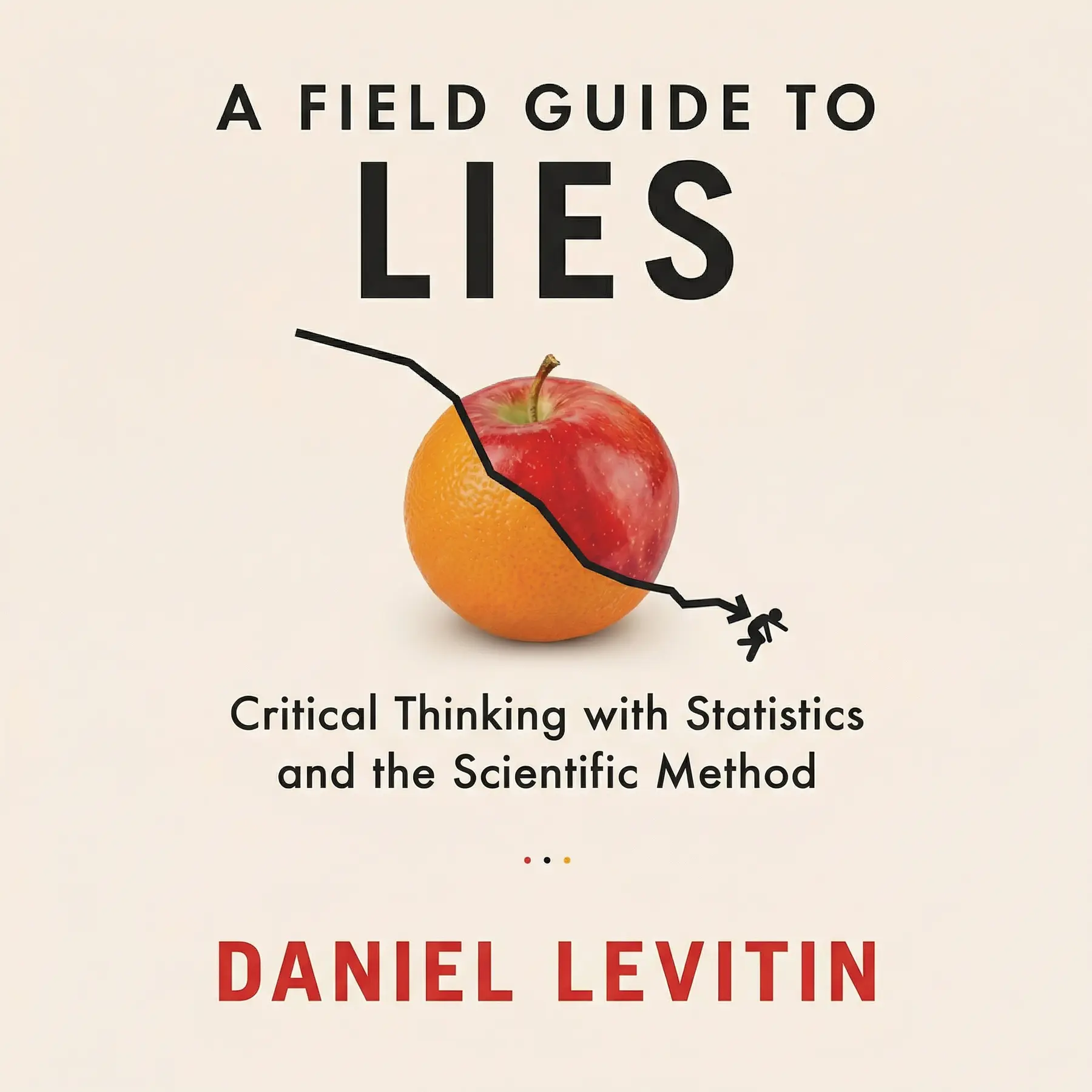
A Field Guide to Lies: Critical Thinking with Statistics and the Scientific Method
Learn to navigate the modern flood of misinformation by mastering critical thinking. This summary explores how to spot misleading statistics, evaluate expert claims, and understand the rigorous nature of scientific inquiry.
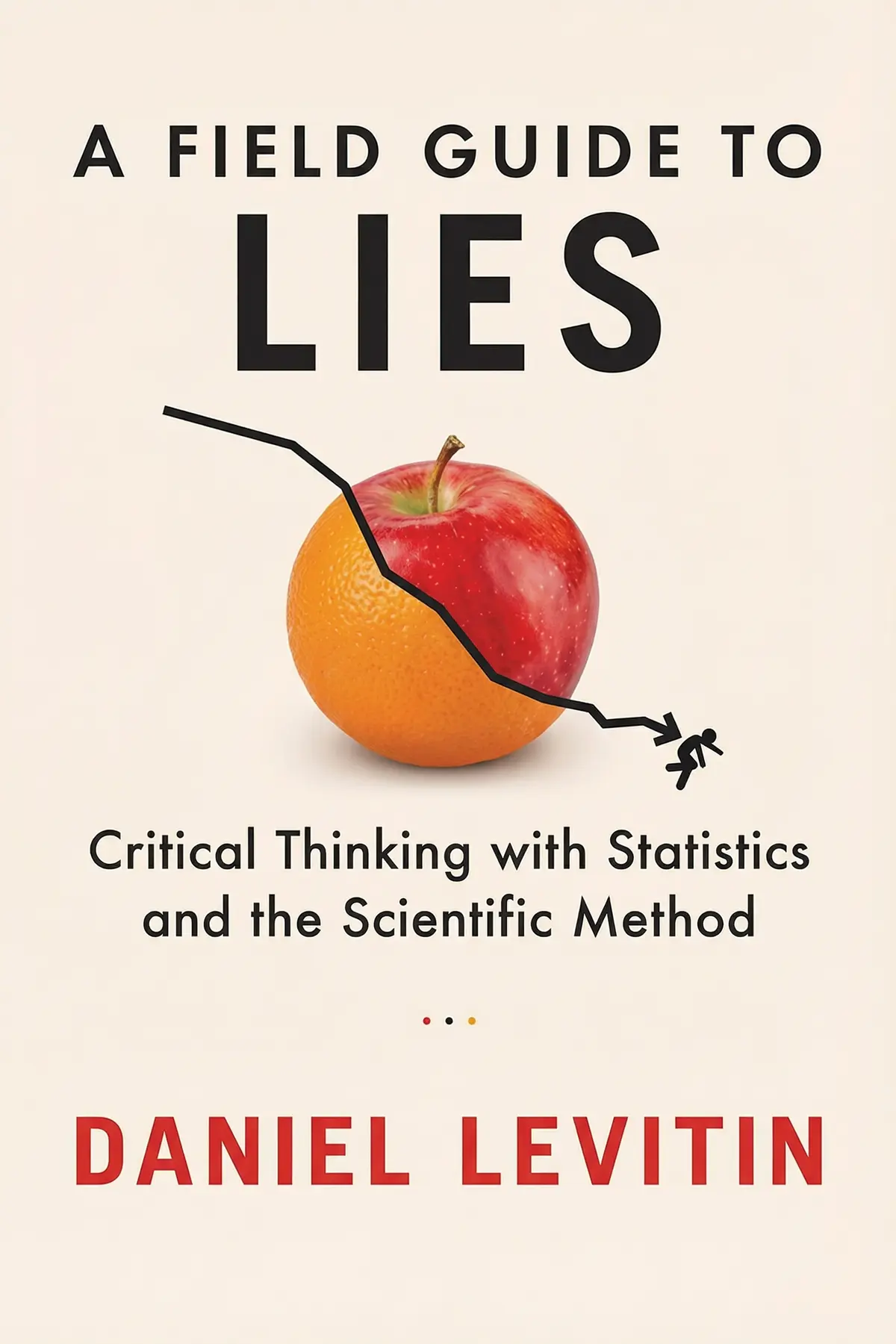
Table of Content
1. Introduction
1 min 37 sec
We wake up every single morning to a digital landscape overflowing with data. Every time you unlock your phone or glance at a news feed, you are met with a barrage of headlines, infographics, and bold declarations. One article tells you a new superfood will add years to your life; another provides a percentage-based proof that a specific political policy is failing. It feels like we have the world’s knowledge at our fingertips, but there’s a catch: a lot of that knowledge is actually carefully packaged misinformation.
The challenge isn’t just that people lie; it’s that we are naturally inclined to believe things that look official. A number or a graph can bypass our skepticism because it feels objective and precise. However, behind every statistic and every study, there are human choices—choices about what to count, how to ask questions, and which results to highlight. If we don’t understand the mechanics of how information is constructed, we remain vulnerable to whoever is doing the constructing.
This exploration is about building a personal toolkit for critical thinking. We aren’t just looking at how to be cynical; we’re looking at how to be intelligently skeptical. We will walk through the common ways that data is twisted, the reasons why even well-meaning studies can be biased, and the fundamental ways the scientific method protects us from our own cognitive blind spots. By the end of this journey, you’ll have a clearer vision of the world, grounded in the ability to ask the right questions and see through the noise of the information age. Let’s begin by looking at the numbers themselves.
2. Performing Reality Checks on Statistics
1 min 48 sec
Numbers often feel like absolute truths, but they are frequently used to mask reality through exaggeration or impossible precision.
3. The Deceptive Nature of Averages
1 min 51 sec
An average can suggest a sense of balance and normalcy while completely obscuring the dangerous extremes of a situation.
4. Identifying Bias in Research Samples
2 min 01 sec
The quality of any study depends entirely on who was included, and more importantly, who was left out of the data collection.
5. Distinguishing True Expertise from Authority
1 min 58 sec
A professional title or a polished website doesn’t guarantee accuracy; real authority is built on transparent evidence and peer review.
6. Understanding the Collective Nature of Science
1 min 53 sec
Scientific progress is rarely about a single genius having a ‘eureka’ moment; it is a slow, iterative process of gathering evidence.
7. The Mechanics of Logic and Reasoning
1 min 48 sec
By understanding the difference between deduction and induction, you can spot when an argument is logically sound or merely suggestive.
8. The Brain’s Bias Toward Patterns and Framing
2 min 06 sec
Our evolution has prepared us to find connections in everything, which often leads us to see meaning in random coincidences.
9. Conclusion
1 min 40 sec
As we have seen, the world is full of sophisticated ways to obscure the truth, but we are not defenseless. The journey through the ‘field guide to lies’ shows us that critical thinking isn’t about knowing every fact; it’s about having a reliable method for processing the facts we encounter. It starts with the simple, humble plausibility check—asking if a claim even makes sense on a basic level. It continues with an understanding of how averages and samples can be manipulated to tell a specific story while ignoring the broader reality.
We must also remember that expertise is a high bar, one that requires transparency and peer verification. We should treat science not as a series of headlines, but as a long-term, collective effort to refine our understanding of the universe. Perhaps most importantly, we have to be aware of our own biological hardware. Our brains want to find patterns, and they want to believe the stories they are told. By engaging our logical minds through deduction and induction, we can balance that instinct with reasoned analysis.
The throughline of all these lessons is a call to active engagement. Don’t be a passive vessel for information. Be an investigator. When you see a shocking statistic or a revolutionary claim, don’t just share it—interrogate it. Ask who created it, why they created it, and what might be missing from the picture. In doing so, you don’t just protect yourself from being misled; you contribute to a more informed and rational society. Mastery of these tools is the only way to navigate the complexities of our digital age with clarity, confidence, and truth.
About this book
What is this book about?
We are currently living in an era where information is more accessible than ever, but that accessibility comes with a significant downside: the rapid spread of falsehoods. This summary breaks down the essential tools needed to evaluate the data, stories, and claims we encounter daily. It focuses on the psychological and statistical traps that often lead us astray, from biased survey samples and the misuse of averages to the way our brains are naturally wired to find patterns where none exist. By following these insights, you will develop a mental defense system against manipulation. You will learn why a single number doesn't tell the whole story, how to distinguish between true expertise and polished presentation, and why scientific progress is a slow, collective effort rather than a series of overnight miracles. Ultimately, this is a guide to becoming a more discerning consumer of information, ensuring you can separate reality from the sophisticated lies often used to influence our decisions.
Book Information
About the Author
Daniel Levitin
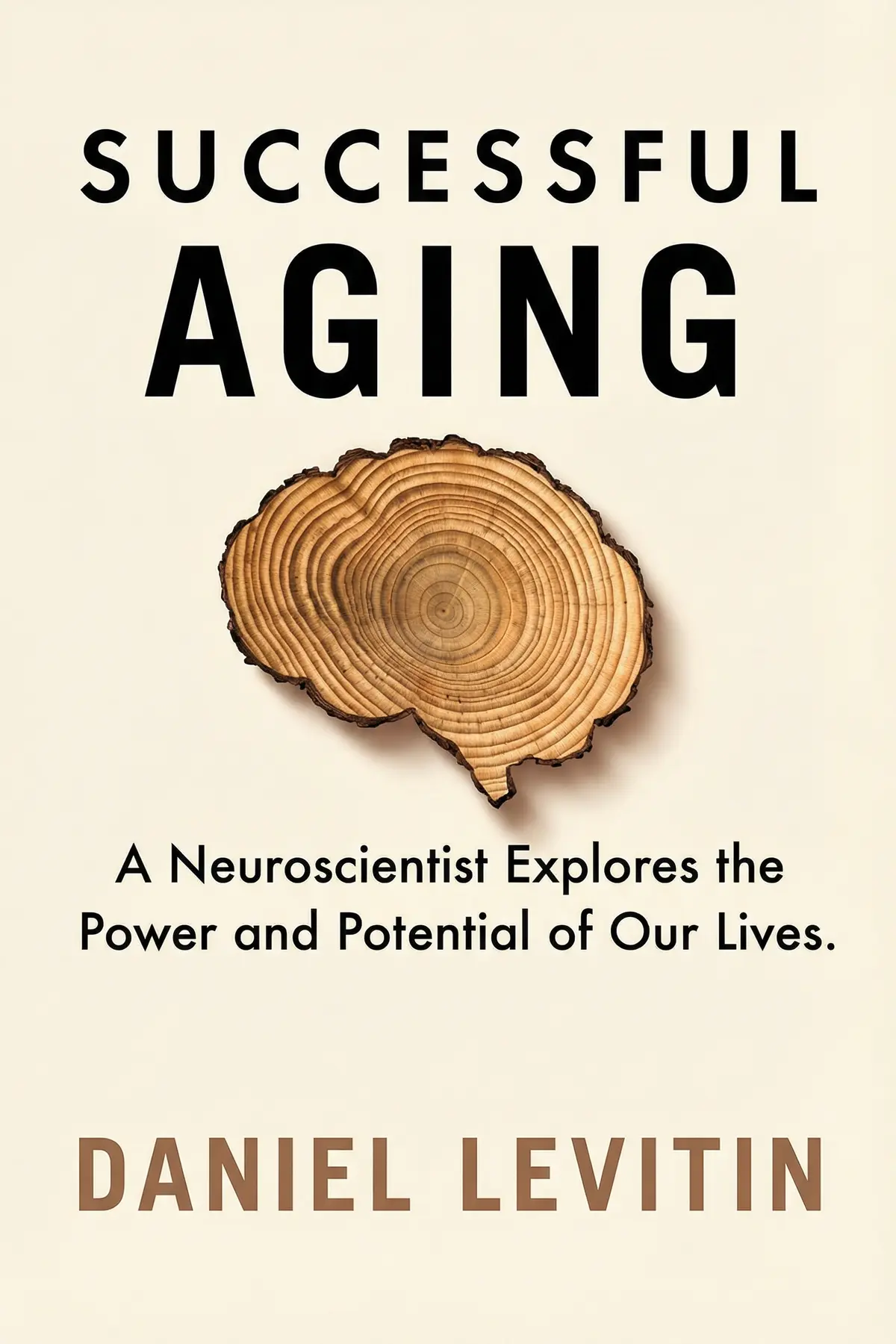
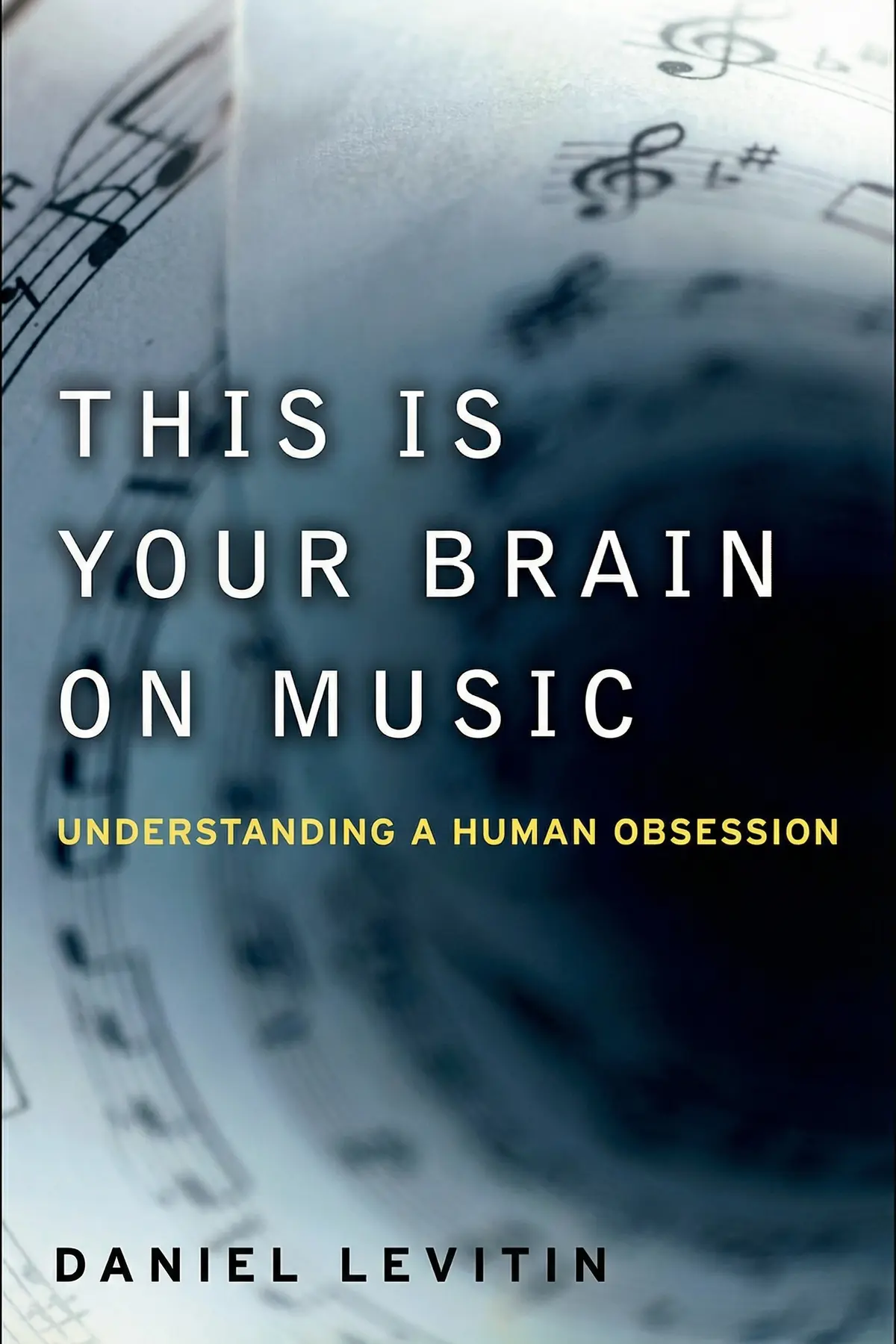
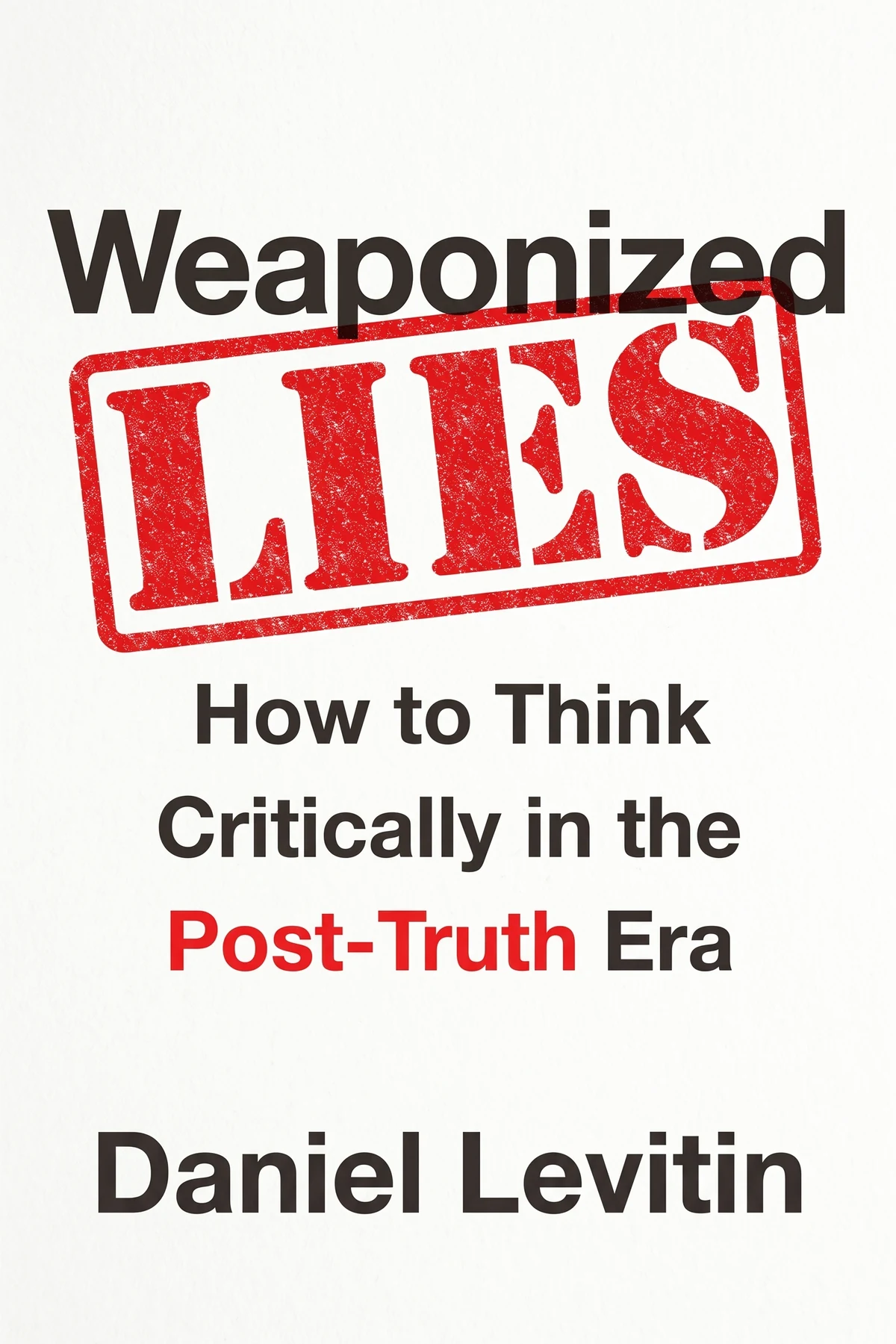
Daniel Levitin is a multifaceted intellectual, serving as a neuroscientist, cognitive psychologist, and accomplished musician. He has written several highly acclaimed books, including This Is Your Brain on Music and The Organized Mind. Levitin's background is unique; before his academic career, he was a session musician and record producer for legendary artists like Stevie Wonder and Joni Mitchell. Today, he is a Professor Emeritus at McGill University and the Founding Dean of Arts & Humanities at Minerva University.
Ratings & Reviews
Ratings at a glance
What people think
Listeners appreciate the content of this work, with one listener pointing out its lucid breakdown of statistical principles. Furthermore, the guide receives praise for its accessibility, as one listener notes the use of ordinary examples to explain various concepts.
Top reviews
Hiroshi
Ever wonder why every 'expert' on the news seems to be contradicting the last one? Levitin's guide is a fantastic defense against the deluge of misinformation we face every single day on Facebook and Twitter. He uses very relatable, everyday examples to explain how numbers can be massaged to favor almost any viewpoint you want to promote. I especially liked the part about identifying true expertise versus someone just having a fancy degree in an unrelated field. My only real gripe is that it feels like it’s trying to do too much at once, jumping from clinical epidemiology to logical fallacies in a way that feels a bit scattered. Still, the practical tips on evaluating web sources and understanding 'fourfold tables' are things I’ll actually use. It’s definitely a better-than-average entry in the skeptic literature genre.
Show moreWacharapol
Wow, the chapter regarding the author's decision-making process for his sick dog was worth the price of the book alone. It took all the abstract talk about fourfold tables and Bayesian probability and made it deeply emotional and practical. This isn't just a book about numbers; it's a book about how to make better choices when the stakes are high and the information is muddy. I’ve read a few of these 'skeptic' books lately, and this one stands out because it actually gives you a system to follow. It’s clearly written for a general audience, though it doesn't shy away from some of the more complex statistical hurdles we face. Look, I think this should be required reading for anyone who plans on voting or making medical decisions in the near future. It’s an essential manual for the 21st century.
Show moreSiriporn
The section on average life expectancy was a real eye-opener for me. Most of us just assume 'living longer' means we are all reaching 100, but Levitin clarifies that the average is skewed because fewer children are dying in infancy. It’s a crucial distinction that most people miss when they read headlines about medical breakthroughs or demographic shifts. While the tone can sometimes feel like a dry first-year textbook, the clarity he brings to concepts like bimodal distributions is genuinely helpful for the average reader. I did feel that some of the political examples, particularly those involving Fox News or specific candidates, might date the book a bit too quickly. Nevertheless, the core message about skepticism remains incredibly relevant today. It’s a solid 4-star read for anyone who wants to stop being fooled by flashy graphics and misleading percentages.
Show moreVipawan
As someone who usually breaks out in a cold sweat when math is involved, I found the breakdown of probability surprisingly approachable. Levitin has a way of taking these cold, hard logical truths and turning them into something you can actually apply to your own life decisions. I was particularly fascinated by the section on 'axis shenanigans'—it’s amazing how a simple change in scale can make a minor fluctuation look like a catastrophic drop. The book does get a bit bogged down in the final third when it pivots to formal logic and induction, but the case studies help pull everything back into focus. It’s a necessary read for the modern era where we are constantly blasted with information that is designed to sell us a specific narrative. I’d recommend it for high schoolers or anyone who wants to sharpen their mental toolkit.
Show moreLeah
After hearing a lot of buzz about this on various skeptic blogs, I decided to see if it lived up to the hype. The book serves as a robust 'field guide' for spotting the subtle ways that data is skewed to suit specific agendas, whether it’s in politics or marketing. I found the discussion on 'conditional probability' particularly enlightening, even if I had to read those paragraphs a few times to fully grasp the math. It’s not a perfect book, as the author’s sly voice sometimes feels a bit condescending toward those he labels as 'conspiratorial.' Still, the core message about the responsibility of professional writers and editors to be gatekeepers of truth is one I can get behind. It’s a dense read at times, but the knowledge gained about 'unknown unknowns' is well worth the effort.
Show moreTalia
Picked this up because I’m tired of being manipulated by misleading charts on social media. Levitin does a great job of demystifying things like bimodal distributions and the difference between correlation and causation. The section on how numbers are collected was a major standout for me because it reminds us that a 'fact' is only as good as the methodology behind it. To be fair, some of the jokes and the 'sly authorial voice' fell a bit flat for me, feeling a little forced at times. And while the information is timely, I worry that the specific references to the 2016 election might make the book feel dated to younger readers in a few years. Regardless, the chapters on identifying expertise and the pitfalls of 'counter-knowledge' are incredibly valuable. It’s a strong 4-star guide that rewards careful reading.
Show moreSuthida
Truth is, we live in an era where 'alternative facts' are everywhere, and this book provides a solid toolkit for filtering the noise. Levitin focuses on the 'utter hopelessness' of people failing to think critically, but he offers a way out through simple, logical steps. I found his explanation of why 'honest people do not need to preface their remarks' to be a very sharp observation on modern communication. The book covers everything from the 'prosecutor's fallacy' to how we interpret risk, and it does so without requiring a degree in mathematics. My only criticism is that the middle section on 'Evaluating Words' feels a bit less rigorous than the heavy statistical focus of the first half. It’s still a fantastic resource for anyone who wants to stop being a passive consumer of information. Definitely worth a spot on your shelf.
Show moreFinn
You could argue this came out at the perfect time given the political climate, but the execution feels a bit dry. Levitin covers everything from 9/11 truthers to the skewed stats used in pharmaceutical ads, yet the narrative lacks a certain 'spark' found in books like Bad Science. It often reads like a manual rather than a compelling argument for critical thinking. To be fair, the breakdown of Bayesian probability was one of the better explanations I’ve encountered, making a difficult concept feel almost intuitive. I appreciated the focus on 'axis shenanigans' and how graphs are manipulated to show trends that don't actually exist in the data. However, the author occasionally skips over deeper nuances to maintain a faster pace, which might frustrate those looking for a truly academic deep dive. It’s useful, but not exactly a page-turner.
Show moreSkylar
Personally, I think this serves as a decent introductory primer, though it doesn't quite replace the classics. While Levitin is clearly an expert in his field, the book feels a bit too much like a collection of anecdotes rather than a cohesive guide to critical thinking. He covers a lot of ground, from Bayesian thinking to the pitfalls of mean versus median, but the transition between these topics can feel jarring. I did enjoy the real-world examples involving medical screens and the legal system, which show how these abstract concepts have life-or-death consequences. However, some sections felt like they were just skimming the surface of much more complex issues. If you’ve already read The Half-life of Facts or similar titles, you might find this a bit repetitive. It’s a good starting point for a novice, but maybe not for a seasoned skeptic.
Show moreTeng
Not what I expected from a guy who claims to be teaching us how to think scientifically. I was initially impressed when he corrected the common misconception about life expectancy early on, but then he turned around and used that same flawed logic later in the book! How can a professional writer be so careless with the very principles he is supposedly championing? It makes the entire premise feel a bit hopeless if even the 'gatekeepers of information' can't keep their own arguments straight. There's a lot of focus on 'counter-knowledge' and conspiracy theories, but the writing style is shambolic and inconsistent. Frankly, you’re much better off reading How to Lie with Statistics or something by Ben Goldacre if you want a coherent education in data literacy. This was a massive disappointment for me.
Show more
Readers also enjoyed
A Liberated Mind: How to Pivot Toward What Matters
Steven C. Hayes

Acting with Power: Why We Are More Powerful Than We Believe
Deborah Gruenfeld
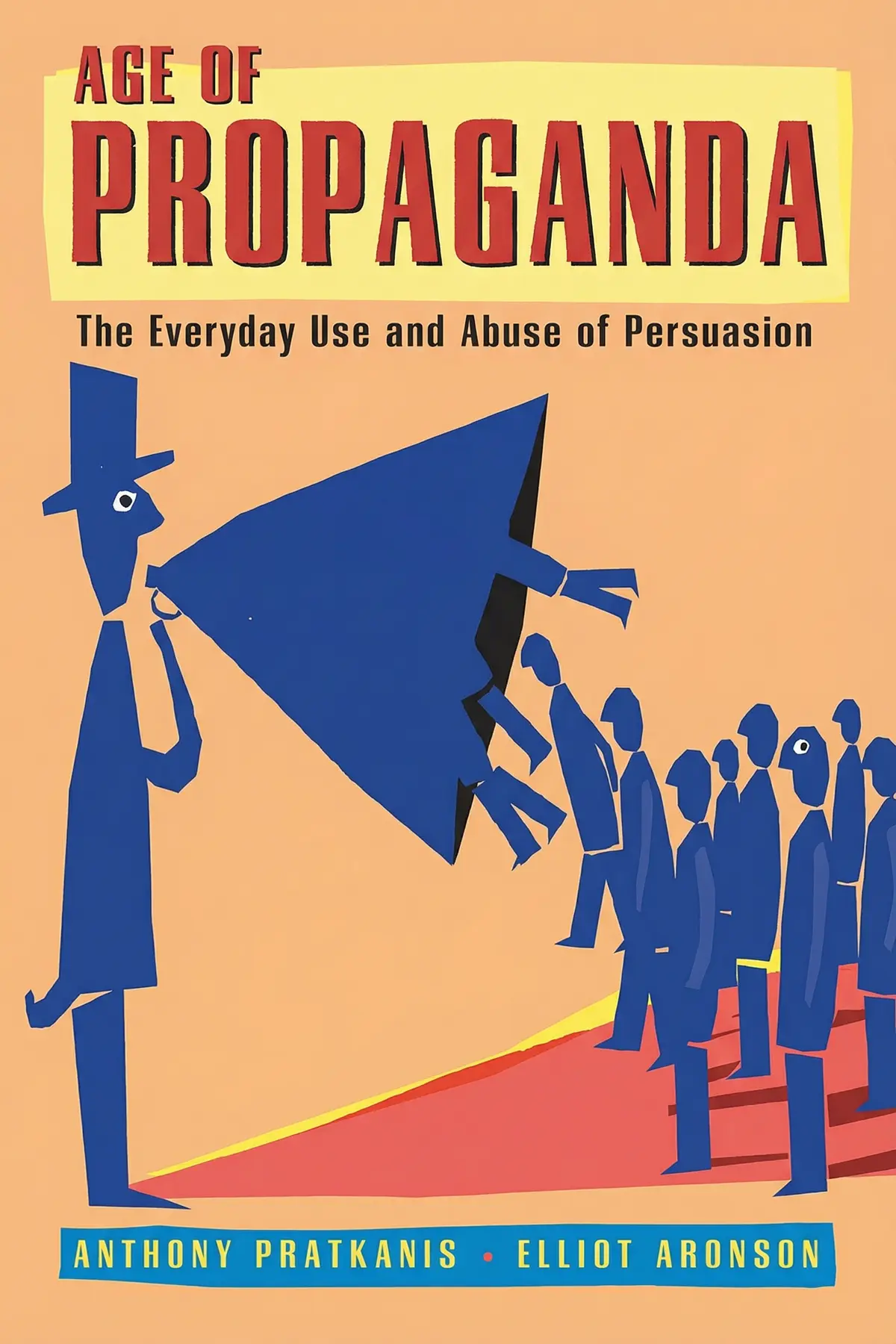
Age of Propaganda: The Everyday Use and Abuse of Persuasion
Anthony Pratkanis
AUDIO SUMMARY AVAILABLE
Listen to A Field Guide to Lies in 15 minutes
Get the key ideas from A Field Guide to Lies by Daniel Levitin, plus 5,000+ more titles in English and Thai.
- 5,000+ titles
- Listen as much as you want
- 7-day free trial
- Cancel anytime







