

Adults in The Room: My Battle With Europe’s Deep Establishment
Yanis Varoufakis
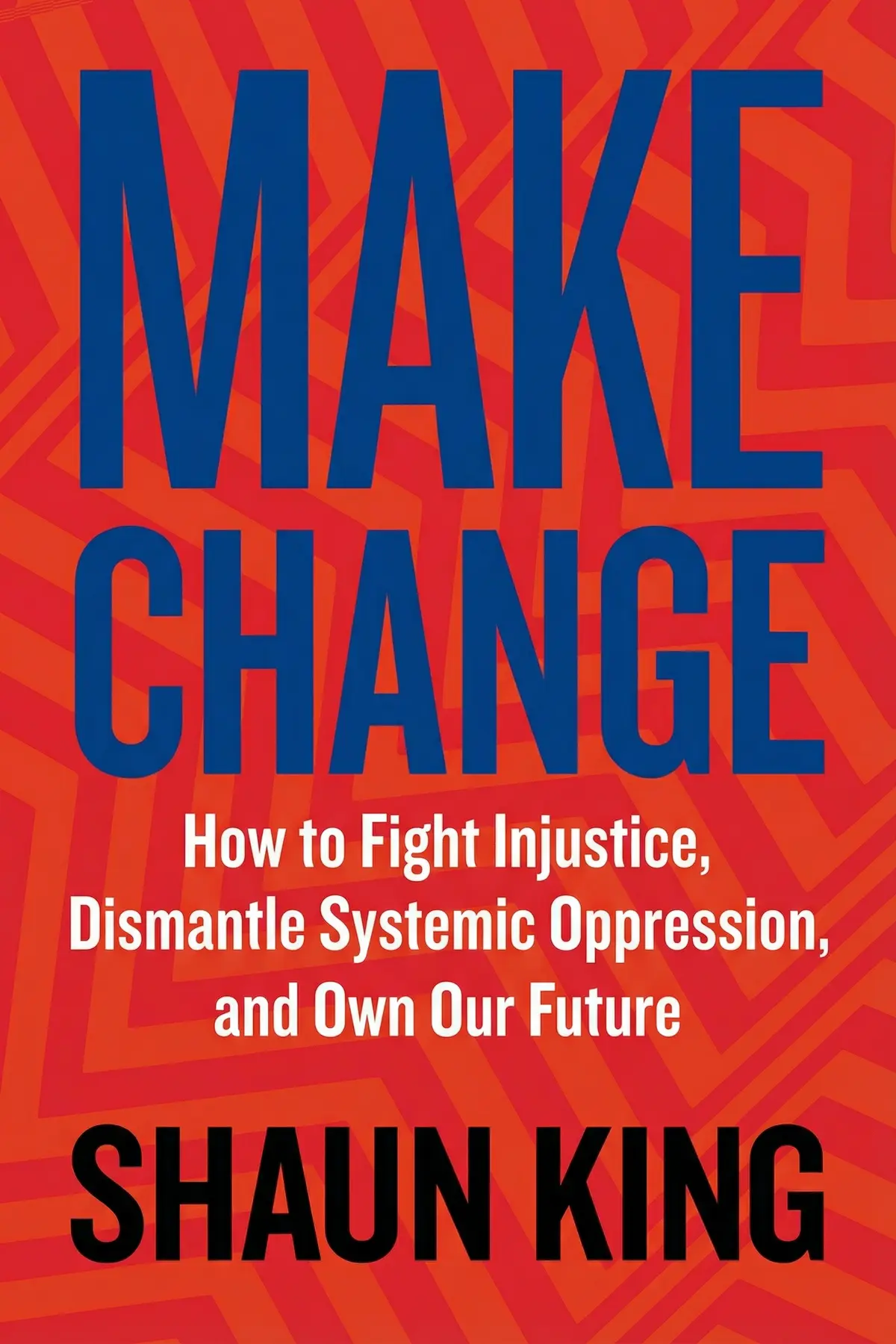
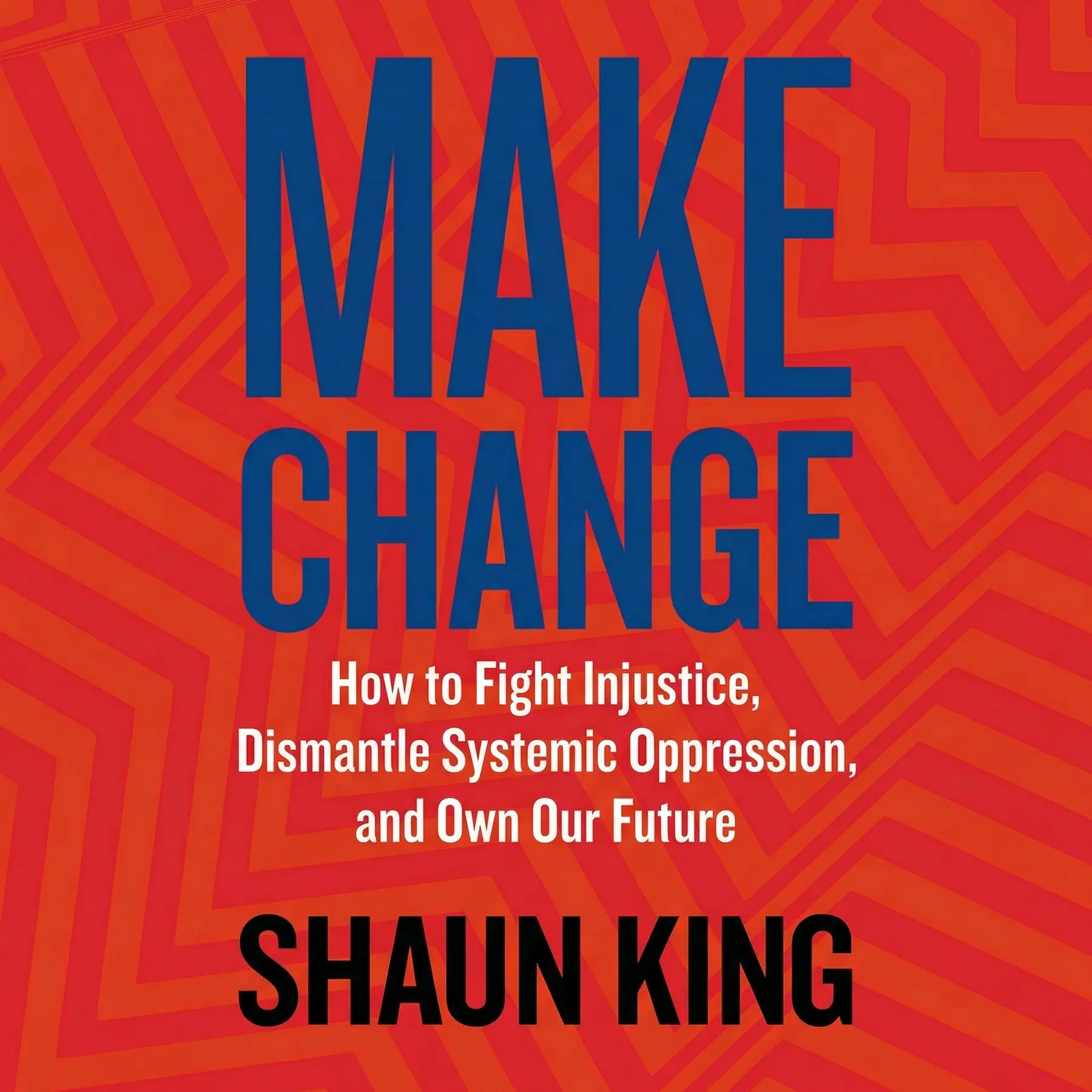
A powerful guide to modern activism, exploring how individuals can dismantle systemic oppression and fight for justice by combining personal passion with strategic organization and historical perspective to create lasting change.
2 min 21 sec
In our current era, it is nearly impossible to ignore the weight of the world’s problems. Every morning, the news cycle delivers a fresh batch of sobering realities. We see statistics about the staggering frequency of police-involved shootings, the widening gap between the ultra-wealthy and the working class, and the looming, existential threat of a changing climate. For anyone with a sense of empathy, these issues don’t just feel like news; they feel like a heavy burden. It is easy to find yourself paralyzed by the sheer magnitude of what needs to be fixed. You might wonder, in a world of eight billion people, how one individual can possibly make a dent in systems that have existed for centuries.
This sense of helplessness is common, but it is based on a fundamental misunderstanding of how the world actually changes. The truth is that no massive social shift ever happened because of a single hero or a sudden, unexplained burst of progress. Every victory for justice, from the smallest local policy change to the grandest civil rights legislation, was the result of ordinary people deciding that they had seen enough and were ready to act. But wanting change and making it happen are two different things. It requires a specific set of tools, a clear-headed understanding of history, and a strategy that goes beyond social media posts or good intentions.
In this summary, we are going to explore a roadmap for modern activism. We will look at why history moves in cycles rather than a straight line, and how understanding that cycle can keep you from giving up when things look bleak. We will discuss the vital importance of finding your specific ‘why’—the one issue that moves you so deeply that you cannot look away. Beyond that, we will dive into the mechanics of movement-building, examining the three pillars that every successful campaign must have: energized people, a structured organization, and a sophisticated plan of action.
By the end of this journey, you will see that you are not just a witness to history; you are an active participant in it. Whether you are a student, a parent, a professional, or a retiree, you have a role to play. The goal here is to help you find that role, hone your skills, and join a collective effort that is much larger than yourself. We are shifting the narrative from ‘someone should do something’ to ‘I am doing something.’ This is about taking ownership of the future and learning the discipline of hope in action.
2 min 40 sec
Discover why human history is not a steady march toward justice, but a series of peaks and valleys that require constant vigilance.
2 min 18 sec
Learn how your own life story and the experiences that move you to tears or rage are the compass for your activist work.
2 min 31 sec
Stop waiting for the perfect moment or the perfect credentials; find out why your involvement is needed right now, exactly as you are.
2 min 33 sec
Discover the blueprint for success that transforms social momentum into concrete policy changes and lasting justice.
2 min 22 sec
Understand why setbacks are an inevitable part of the journey and how to protect your mental health for the long struggle ahead.
2 min 31 sec
Recognize that the current systems are not ‘broken’ but working as intended, and that the responsibility for change rests entirely with us.
1 min 48 sec
As we wrap up this look into the mechanics of social change, let’s return to the core idea that has woven its way through every point we’ve discussed: progress is not a gift that is given to us; it is a prize that must be won through deliberate effort. We’ve seen that history is a cycle of highs and lows, and that our current challenges are part of a ‘dip’ that requires us to organize and push back. We’ve learned that our own personal stories are the most powerful fuel for our work, and that the movement needs our specific talents—whatever they may be.
Building a successful movement is not just about having a big heart; it’s about having a big plan. It requires the energy of the masses, the discipline of organization, and the strategic thinking of a well-crafted roadmap. And perhaps most importantly, it requires the resilience to keep going when we lose. We must remember that every setback is a lesson, and every moment of rest is an act of self-preservation that allows us to return to the struggle with renewed vigor.
Ultimately, the responsibility for the future rests on our shoulders. The systems that create injustice were built by humans, and they can be dismantled and rebuilt by humans. It is easy to look at the world and see only the problems, but it is much more rewarding to look at the world and see the opportunities for action.
Your next step is simple: don’t let this be just another thing you’ve listened to. Take one small, concrete action today. Whether it’s researching a local organization, making a small donation, or starting a conversation with a friend about a cause you care about, start moving. The future doesn’t belong to the silent or the complacent; it belongs to those who show up, who speak out, and who commit themselves to the hard, beautiful work of making change. It’s on us to own our future, and that ownership begins right now.
Make Change is a comprehensive manual for social transformation in an era of deep division and systemic injustice. It addresses the overwhelming nature of global problems—from racial inequality and police brutality to economic disparity and climate change—and provides a practical framework for individual action. Drawing on personal experiences and historical analysis, the book argues that progress is not a steady upward climb but a series of fluctuations that require constant, organized effort to sustain. Through the lens of his own journey as a civil rights leader, the author outlines the essential components of a successful movement: energized people, tight organization, and a sophisticated plan. The book promises to move readers from a state of concerned observation to active, effective participation, teaching them how to identify their specific calling, contribute their unique talents, and build the resilience necessary to survive the inevitable setbacks of the long struggle for justice.
Shaun King is a prominent civil rights activist and organizer known for his work against police brutality and racial injustice. A key figure in the Black Lives Matter movement since 2014, he has contributed to the New York Daily News and the Intercept. King is a co-founder of Grassroots Law and the Real Justice PAC, and was recognized by Time magazine in 2018 as one of the internet's most influential people.
Listeners find this work to be essential reading that provides a thorough education from start to finish, and one listener even called it the best read of 2020. Furthermore, the text acts as a compelling call to action for transformation, assisting people in discovering their inner activist, while one listener characterizes it as a roadmap for making change. The prose is also highly captivating, with one listener observing that it feels as though the author is talking straight to the audience. Listeners value the profound emotional resonance, with one saying it feeds their soul, and they greatly respect the author’s openness and sincerity. This title is also very easy to connect with, as one listener points out how it details the author's own path as a change-maker.
This book acts like a compass for anyone feeling lost in the current political climate. King manages to weave his personal journey into a broader instructional guide that truly feeds the soul. I felt like he was speaking directly to me, stripping away the jargon to reveal the core of what it means to be a change-maker. The transparency about his failures and his resilience makes the advice feel grounded and achievable rather than just another idealistic lecture. While some chapters feel a bit more polished than others, the overall impact is undeniable. It’s an educational deep dive from start to finish that helped me identify my own 'inner activist' without feeling overwhelmed by the scale of systemic injustice. If you want a blueprint for making a difference that doesn't ignore the emotional toll of the work, this is it. It’s a required read for the modern era.
Show moreWow, what a powerful testimony. This isn't just a book; it's an experience that challenges you to look inward at your own potential for impact. King’s honesty about his upbringing and the brutal violence he survived in high school is gut-wrenching but necessary context for his drive. I’ve read a lot of non-fiction this year, but this feels like the best read of 2020 because it’s so immediate and raw. The way he breaks down the statistical reality of gun violence and police brutality makes the abstract feel painfully personal. Frankly, the writing style is so conversational that I finished it in two sittings. It feels like a long-overdue conversation with a mentor who isn’t afraid to show you their scars. This book provides the emotional depth needed to sustain long-term commitment to social justice. Highly recommended for anyone ready to own our future.
Show moreAs someone who struggles to find their place in social movements, this book was a revelation. King asks a pivotal question: 'What is your gift?' and then shows you how to use it. I’ve always felt guilty for being an introvert who avoids protests, but he validates the 'behind the scenes' work like childcare or logistics as essential. The educational value here is immense, especially the historical context regarding Leopold Von Rancke’s theories and 'the dip.' It’s a roadmap for making change that feels inclusive of all personality types. His transparency regarding his own mistakes makes him feel human rather than some untouchable figurehead. You can tell he poured his heart into these pages to help others avoid the same pitfalls. It’s definitely a soul-feeding piece of literature that I will be recommending to my entire community.
Show moreEver wonder how to turn your outrage into actual progress? This book answers that question with clarity and conviction. King provides a brilliant summary of how the current social order was crafted to keep power in specific hands. It’s an educational journey that doesn't just point out problems but offers tangible solutions for dismantling them. I found the section on the history of the criminal justice system particularly eye-opening, even as someone who follows the news closely. The book serves as a powerful testimony to what can happen when we stop making excuses and start organizing. His voice is distinct and urgent, making the reader feel like an essential part of the story. By the time I finished, I felt equipped with a real roadmap for the next generation of activists. It is the best read of the year for those who want to see a better world.
Show morePicked this up during the 2020 protests and it served as the perfect guide for navigating that turbulent time. This book is a required read because it bridges the gap between understanding injustice and taking action against it. King's journey as a change-maker is presented with such transparency that it’s hard not to be inspired. He manages to make the daunting task of 'dismantling systemic oppression' feel like a series of manageable, necessary steps. The focus on identifying one's unique skill set—whether that's administrative, creative, or physical—removes the barrier to entry for many people. It’s the best read for anyone who wants to ensure that the current wave of activism isn't just a trend but a lasting movement. Truly a powerful testimony that promotes genuine, sustainable change through organized effort. It fed my soul when I was feeling most cynical.
Show moreFinally got around to reading King's manifesto and it’s a solid mixture of personal history and tactical advice. The writing is incredibly engaging, moving at a clip that sometimes feels like a suspense novel when he recounts his experiences in Kentucky. Truth is, the book struggles slightly with its dual identity as both a memoir and a call to action, leading to some jarring transitions between his personal life and policy discussions. However, the practical steps he outlines for organizing are genuinely useful for those of us who aren't comfortable on the front lines. I appreciated the emphasis on using your specific gift, whether that’s cooking or administrative work, to support the movement. It’s a powerful testimony that proves everyone has a role to play in dismantling oppression. Even if you don't agree with every tactical decision he's made, the roadmap he provides for local organizing is undeniably valuable.
Show moreThe chapter on 'the dip' was a revelation for me. It perfectly explains that frustrating moment when progress stalls and you feel like giving up on your goals. King’s writing is punchy and direct, which helps when dealing with heavy topics like mass incarceration and systemic racism. I did feel that the religious undertones were a bit smuggled in toward the middle, which might be off-putting for some secular readers. However, his work with the Real Justice movement is impressive and provides concrete proof that his methods can yield results. Bernie Sanders’ foreword sets a strong tone for the rest of the book, emphasizing that this is about collective action rather than a single persona. It’s a compelling read, even if it feels a bit padded in the middle sections with repetitive motivational phrases. Definitely worth your time if you want to understand the machinery of power.
Show moreKing writes with a raw honesty that feels like a face-to-face conversation. He doesn’t shy away from the messy parts of his life, including the moments he wanted to quit everything out of sheer overwhelm. This relatability is what makes the book so effective; it makes the reader believe that they, too, can overcome their procrastination and capacity issues. The research presented on the Washington Post’s tracking of police killings is sobering and serves as a necessary wake-up call for those still on the fence. I appreciated the specific chapter on rebounding from failure, as it provides a realistic view of activism that isn't all victories and viral moments. While the 'foreshadowing' in the early chapters was a bit heavy-handed and silly, the overall message of empowerment is strong. It’s a required read for anyone looking to transition from passive observer to active participant.
Show moreTo be fair, I went into this with high expectations given King's massive social media presence. While there are some incredible insights here—especially regarding the 'War on Drugs'—the overall structure felt somewhat disorganized and unpolished. King bounces between career shifts and personal anecdotes in a way that occasionally muddles the central message, and I noticed some timeline issues regarding his family life that felt out of sync. Not gonna lie, some parts felt like a collection of sound bites I've already seen on Instagram rather than fresh, deep-dive analysis. That said, the section on rebounding from failure was surprisingly vulnerable and offers a perspective often missing from activist literature. It’s a decent starting point for beginners who need motivation, but more experienced organizers might find the advice a bit sophomoric. It feels less like a cohesive book and more like a series of essays stitched together.
Show moreNot what I expected based on the social media hype. Look, King has done some significant work, but this book often feels like he’s trying too hard to be the 'voice of a generation' without the depth to back it up. The narrative jumps around quite a bit, making it hard to follow his personal trajectory from pastor to activist, which felt a bit jarring. Some of the advice feels like a basic orientation for volunteers, lacking the intellectual rigor I was hoping for regarding complex systemic issues. To be fair, his passion is clear and the statistics he cites are staggering and important for everyone to read. But the tone can be a bit lecturing, like being stuck in a very long, arrogant sermon that you didn't sign up for. It’s a fine introductory text for those new to the movement, but it feels a bit padded and unoriginal in places.
Show moreYanis Varoufakis
Yuval Noah Harari
Jacinda Ardern
Pankaj Mishra

Johny Pitts
James Comey
Anthony Pratkanis
AUDIO SUMMARY AVAILABLE
Get the key ideas from Make Change by Shaun King, plus 5,000+ more titles in English and Thai.







