
20 min 27 sec
Nine Lives: In Search of the Sacred in Modern India
William Dalrymple explores the shifting religious landscape of modern India through nine intimate portraits, revealing how ancient spiritual traditions survive and transform amidst the pressures of the contemporary world.
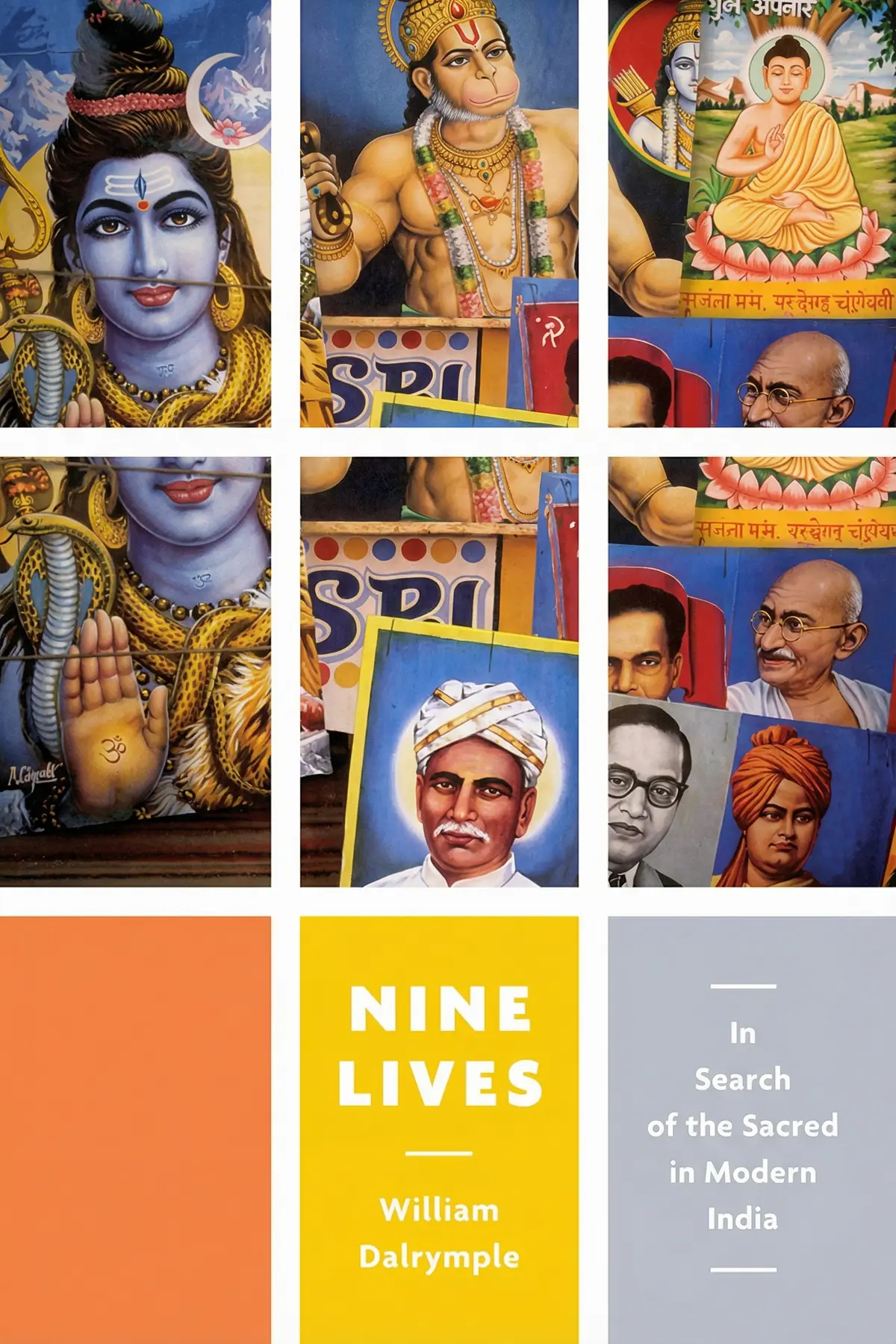
Table of Content
1. Introduction
2 min 15 sec
Imagine standing at a crossroads where the ancient world meets the digital age, where the scent of jasmine and incense mingles with the exhaust of city traffic. This is the landscape William Dalrymple invites us into—a vibrant, chaotic, and deeply spiritual India that often defies the simplistic labels placed upon it by outsiders. For over a quarter of a century, Dalrymple has walked these paths, not as a tourist, but as a listener. He has sought out the voices that aren’t always heard in the grand narratives of national progress: the monks, the minstrels, the outcasts, and the devotees who represent the many faces of the sacred in a rapidly changing land.
In this exploration, we move away from the abstract study of religious texts and enter the messy, beautiful reality of lived experience. India is a country defined by its staggering diversity, a place where the geography itself—from the snow-capped peaks of the North to the lush, tropical coastlines of the South—mirrors the complexity of its many faiths. Here, we see Buddhism, Hinduism, Islam, and Jainism not as static relics of the past, but as breathing, evolving forces. We find that spiritual life is rarely a straight line; it is a winding journey shaped by history, politics, and the profound personal tragedies and triumphs of ordinary people.
Through Dalrymple’s eyes and the voices of those he interviewed, we will uncover a throughline of human resilience. We will witness how a Jain nun copes with the loss of her closest companion, how a Dalit laborer finds dignity through divine possession, how a monk grapples with the morality of violence in the face of occupation, and how a blind singer finds a home in the philosophy of the heart. These nine lives offer us a window into the soul of a nation, revealing that the search for the divine is often a search for one’s own place in a world that is constantly shifting. As we begin this journey, keep in mind that these stories are more than just biographies; they are testimonies to the enduring power of the human spirit to find meaning in the most unlikely of places.
2. The Radical Asceticism of the Jain Path
4 min 11 sec
Discover the extreme demands of Jainism, where the rejection of worldly comfort is seen as the only true path to spiritual liberation and the ultimate sacrifice of self.
3. Caste, Oppression, and the Divine Justice of Theyyam
4 min 04 sec
Explore the complex social landscape of Kerala, where rigid caste hierarchies are challenged by ancient rituals that allow the marginalized to speak with the voice of gods.
4. The Burden of History and the Warrior Monk of Tibet
3 min 48 sec
Delve into the internal struggle of a Tibetan monk forced by political upheaval to trade his prayer beads for a rifle in a desperate fight for survival.
5. The Wandering Minstrels and the Temple of the Heart
3 min 37 sec
Meet the Bauls of Bengal, wandering singers who reject formal religion to find the divine within the human body through music, love, and a life of total freedom.
6. Conclusion
2 min 32 sec
As we close this journey through the diverse spiritual landscapes of modern India, we are left with a powerful realization: faith is never a static thing. It is not something found merely in the dust of old libraries or the quiet of ancient temples. Instead, it is a living, breathing force that is constantly being renegotiated in the hearts and minds of the people who practice it. Through the nine lives we’ve explored, we have seen that the sacred is intimately tied to the secular—to the politics of occupation, the injustices of the caste system, and the universal experience of grief and loss.
From the Jain nun plucking her hair in a ritual of detachment to the Baul singer finding God in a melody, these stories remind us that there is no single way to be holy. Each individual we met has had to forge their own path, often at a great personal cost. They show us that spirituality in the twenty-first century is frequently a form of resilience—a way for people to maintain their identity and their sense of purpose in a world that is moving faster than ever before. Whether it is through the transformative power of the Theyyam dance or the silent prayers of a former warrior monk, these individuals demonstrate that the search for meaning is an essential part of being human.
The throughline of these stories is the persistence of the sacred. Despite the rise of global technology and the shifting social norms of a developing nation, these ancient traditions endure because they speak to fundamental human needs. They offer a framework for understanding the mysteries of existence, a way to process the tragedies of life, and a method for challenging the status quo. William Dalrymple has shown us that to understand India, one must look past the statistics and the headlines and listen to the stories of those who walk its roads with their eyes fixed on the divine.
As you move back into your own world, perhaps take a moment to consider the ‘lived religion’ in your own life—the values and beliefs that guide your actions when the road gets difficult. The people of Nine Lives remind us that the sacred isn’t always found in grand gestures; it is found in the persistence of hope, the courage to speak truth to power, and the willingness to look within for the ‘Man of the Heart.’ Their lives are a testimony to the fact that even in an age of uncertainty, the human spirit continues to reach for something higher, something deeper, and something that connects us all.
About this book
What is this book about?
Nine Lives offers an immersive journey into the sacred heart of modern India, moving far beyond the stereotypical tourist trails to find the lived reality of faith. William Dalrymple spends years interviewing people who occupy the fringes of conventional society—from a Jain nun seeking ultimate detachment to a prison warden who becomes a god during ritual dances. These are not merely stories of theology; they are deeply personal accounts of how individuals navigate the collision between ancient vows and the relentless pace of the twenty-first century. The book promises a nuanced look at the diversity of Indian spirituality, covering Buddhism, Hinduism, Islam, and the syncretic traditions of wandering minstrels. It examines how the caste system, political upheaval, and personal tragedy shape the spiritual paths people choose. By focusing on individual biographies, Dalrymple reveals the human face of religion, showing that the search for the sacred is often a struggle for identity, survival, and meaning in an increasingly fragmented world. It is a profound exploration of how the past continues to breathe through the present.
Book Information
About the Author
William Dalrymple
William Dalrymple is a critically acclaimed author best known for his work on Indian history and religion. His previous books include City of Djinns and White Mughals, which received the Wolfson—Britain’s most prestigious history prize. Dalrymple is a regular contributor to the Guardian, the New Yorker, and the New York Review of Books. He is based in New Delhi and London.
Ratings & Reviews
Ratings at a glance
What people think
Listeners find this book to be an incredible experience that offers deep understanding of Indian religions through nine distinct narratives. The prose is expertly written, and listeners admire the meticulous investigation and fascinating perspective on life in India. Furthermore, they appreciate the way the work examines different elements of Hindu customs and spiritual heritage, while one listener remarks that it masterfully combines faith and culture.
Top reviews
Yui
Dalrymple has an incredible knack for fading into the background, letting his subjects speak for themselves in a way that feels raw and authentic. I was particularly struck by the story of Lal Peri, the Sufi fakir, which beautifully illustrates the tension between orthodox Islam and the more mystical, inclusive traditions of the subcontinent. The writing is as lyrical as you'd expect from the author of City of Djinns, yet there’s a new weight here, a sense of witnessing a world that is rapidly being swallowed by the noise of modern progress. It’s a thorough piece of research that never feels dry because it's so deeply rooted in the human heart. If you're looking for a captivating look at Indian life beyond the usual tourist clichés, this is the book you need to pick up.
Show moreUraiwan
What does faith actually look like when it’s stripped of the glossy brochures and Sunday morning platitudes? Dalrymple answers this by introducing us to characters like Hari Das, a man who spends his weeks as a prison warder and his weekends as a possessed god-incarnate. This duality is captured with such sensitivity and lack of prejudice that you can't help but feel moved by the conviction of these people. The book is an amazing read that provides excellent insight into Indian faiths, moving far beyond the four main religions to explore the fringes where things get truly interesting. Each story acts as a window into a different soul, revealing a complex landscape of hope and struggle. It’s haunting, enlightening, and ultimately deeply moving.
Show morePornthip
Rarely do you find a travelogue that manages to be so profound without feeling the need to preach or over-analyze its subjects. In this book, Dalrymple provides nine stories that are as diverse as India itself, from the singing bards of Rajasthan to the blood-stained rituals of the Tantrics in the cremation grounds. The writing is exceptionally well-crafted, creating vivid imagery that lingers in your mind long after you've closed the covers. It’s a fascinating book because it refuses to simplify the religious landscape, instead embracing the messy, beautiful crossovers between Hindu, Muslim, and Buddhist traditions. This is travel writing at its absolute best—unveiling the extraordinary within the ordinary and challenging our own materialist worldview.
Show moreSomsri
Wow. This was an unforgettable, haunting, and enchanting journey through the spiritual heart of a country I thought I knew something about. Dalrymple has created a masterpiece of empathy, allowing the voices of the marginalized and the devout to ring out with total clarity and no hint of prejudice. The story of the blind minstrel, Kanai, was a highlight for me, proving that God can be found in joy and dancing just as much as in temple rituals. It’s a captivating look at Indian life that I would recommend to anyone, regardless of their own religious standing. Truly an amazing read that left me questioning my own concepts of what it means to live a meaningful life.
Show moreLars
As a student of history and culture, I found Nine Lives to be an essential bridge between the ancient world and the bustling reality of 21st-century India. The author avoids the typical 'mystic India' tropes, instead offering a gritty, fascinating look at how belief systems like Jainism or Tantric worship survive in a land of call centers and software hubs. The story of the idol maker in Tamil Nadu was particularly enlightening, showing the immense pressure to keep ancestral crafts alive when the next generation is looking toward careers in tech. My only minor gripe is that some chapters felt significantly more fleshed out than others, making the pacing feel slightly uneven at times. Still, it’s a brilliant blend of religion and culture that challenges Western concepts of spirituality.
Show moreSing
Finally got around to reading this after hearing so much about Dalrymple's travelogues, and it mostly lived up to the hype. The chapter on the maker of idols was my favorite, as it detailed the meticulous process of bronze casting that has remained unchanged for seven centuries. There is something deeply grounding about reading these accounts of people who are so firmly rooted in their traditions while the world around them spins into chaos. I appreciated how the author kept himself in the shadows, though at times I found myself wishing for just a little more context on how he actually found these specific nine people. It’s a captivating look at Indian life that feels both timeless and timely, even if some sections move a bit slower than others.
Show moreJack
Ever wonder how ancient traditions survive the onslaught of a rapidly transforming modern India? This collection of nine biographies provides a compelling answer, showing that faith is often the only thing people have to hold onto in a shifting world. I was particularly fascinated by the story of the 'Singer of Epics' and the realization that literacy might actually be the death knell for oral traditions that have survived for hundreds of years. The book is a thorough piece of research, though I will say that the repetitive structure of 'meet person, give history, see festival' can feel a bit formulaic by the seventh or eighth chapter. Regardless, the insight into these lesser-known sects is invaluable for anyone interested in the subcontinent.
Show moreViolet
The chapter on the Jain nun, Prasannamati Mataji, stayed with me for days after I finished the book. Her description of giving up everything—first her home, then her possessions, and finally her own body—is one of the most powerful things I have ever read. Dalrymple manages to capture the staggering conviction required to live such a life without making it feel like a circus act or a curiosity. While I occasionally found the historical tangents a bit dense, they were essential for understanding the weight of the traditions these people are carrying. It’s a beautifully written exploration of spirituality that doesn't shy away from the darker, more challenging aspects of belief and sacrifice.
Show morePisit
I wanted to love this book because of Dalrymple’s reputation, but truth is, I struggled to finish it. While the prose is undeniably beautiful and well-crafted, the heavy focus on the minutiae of religious ritual eventually became repetitive and a bit dry for my taste. I enjoyed the personal histories of the nine individuals, particularly the Tibetan monk, but the endless descriptions of Shastras and theological crossovers left me feeling detached. It's an important work of travel journalism, certainly, but it lacked the narrative drive I found in his other histories like The Last Mughal. Perhaps I'm just not the right audience for such an intensive study of faith, as I found myself skimming the religious explanations to get back to the people.
Show moreElias
To be fair, the prose is stunning, but I found the content of these stories to be incredibly distressing rather than inspiring. The account of the Jain nun watching her friend starve to death in a ritual suicide was particularly hard to stomach, as was the chapter on the Devadasis, which felt like a polite way of describing systemic exploitation. I couldn't help but feel like a bit of a cultural voyeur, peering into the most painful and extreme moments of these people's lives for the sake of 'travel literature.' While the research is clearly thorough, the lack of authorial judgment—which many praise—actually made me uncomfortable in the face of such tragedy. It’s a well-written book, but I found it quite bleak and difficult to recommend.
Show moreReaders also enjoyed
Abundance: The Inner Path to Wealth
Deepak Chopra
Aflame: Learning from Silence
Pico Iyer
Alcoholics Anonymous
Alcoholics Anonymous World Services
A Force for Good: The Dalai Lama's Vision for Our World
Daniel Goleman
A New Earth: Awakening to Your Life’s Purpose
Eckhart Tolle
A Return to Love: Reflections on the Principles of a Course in Miracles
Marianne Williamson

All My Knotted-Up Life: A Memoir
Beth Moore
Autobiography of a Yogi
Paramahansa Yogananda
AUDIO SUMMARY AVAILABLE
Listen to Nine Lives in 15 minutes
Get the key ideas from Nine Lives by William Dalrymple, plus 5,000+ more titles in English and Thai.
- 5,000+ titles
- Listen as much as you want
- 7-day free trial
- Cancel anytime







