
23 min 54 sec
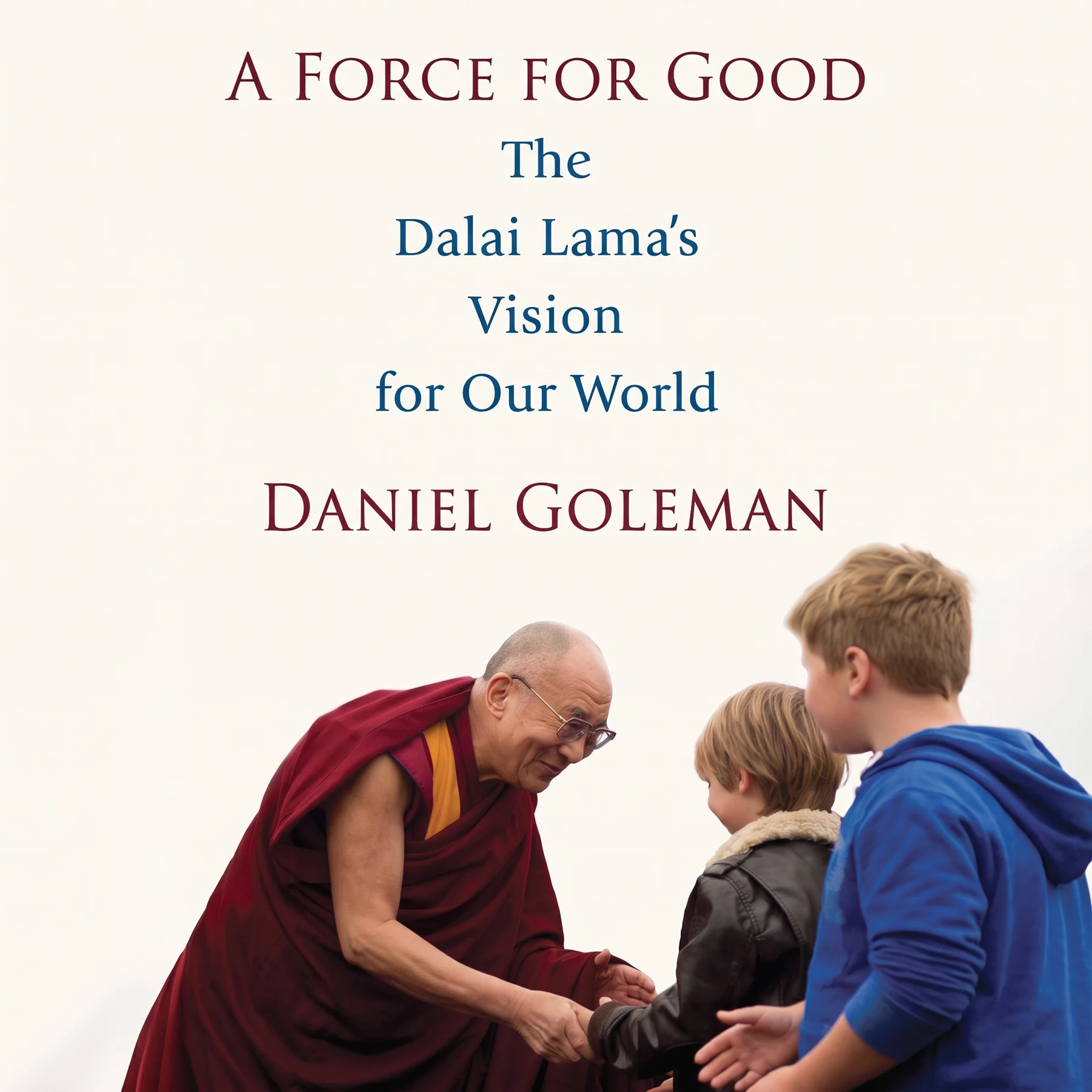
A Force for Good: The Dalai Lama's Vision for Our World
Explore the Dalai Lama’s transformative vision for a world rooted in compassion and moral responsibility. This guide reveals how individual inner shifts can lead to global changes in economics, education, and social justice.
Table of Content
1. Introduction
2 min 26 sec
When we look at the world today, it is incredibly easy to feel a sense of despair. Every time we check our phones or turn on the television, we are met with a relentless stream of headlines detailing conflict, environmental degradation, and the staggering weight of human suffering. It is natural to ask: is this the best humanity can do? Are we destined to live in a cycle of competition and cruelty, or is there another way to exist?
According to the Dalai Lama, the answer lies in a radical shift in perspective. He argues that the vast majority of our global crises—whether they are economic, environmental, or social—share a common root: a profound deficiency in compassion and moral responsibility. We have built systems that prioritize personal gain over collective well-being, and we have allowed our negative impulses to dictate our actions. However, there is a powerful alternative.
In this exploration of the Dalai Lama’s vision, we are invited to consider how we can become a ‘force for good.’ This isn’t just a feel-good slogan; it is a rigorous, practical approach to living that combines internal mental training with external social action. By learning to manage our own minds and hearts, we can transform our emotional responses from rage and frustration into love and altruism. This internal change isn’t just for our own benefit; it is the necessary starting point for changing the world around us.
Over the course of this summary, we will look at how the principles of compassion can be applied to every facet of human life. We will discover why science and religion actually make a powerful team in the quest for a better world. We will explore what a ‘compassionate economy’ looks like and how for-profit businesses can adopt the heart of a nonprofit. We will also examine the simple, everyday practices that anyone can use to sharpen their focus and regulate their emotions.
This is a journey toward understanding our shared humanity. It is about moving past the divisions of ‘us versus them’ and realizing that our own happiness is inextricably linked to the well-being of everyone else on the planet. By the end, the goal is to see that while the world’s problems are indeed great, our capacity for kindness is even greater. Let’s begin by looking at how this transformation starts within the individual.
2. Inner Transformation as a Catalyst for Global Change
2 min 13 sec
Discover how the Dalai Lama’s daily morning ritual informs a vision for shifting from self-interest to a collective sense of moral duty.
3. Mastering Emotional Responses through Mindfulness
2 min 01 sec
Learn the practical techniques for pausing before reacting, ensuring your choices are driven by reason rather than raw impulse.
4. The Biological Imperative of Compassion
1 min 57 sec
Understand why kindness is a biological necessity rooted in our survival, rather than just a religious or philosophical ideal.
5. Compassion in the Public Sphere
2 min 01 sec
Explore how fairness, transparency, and accountability can transform corrupt systems and drive social reform.
6. The Synergy of Science and Spirituality
1 min 58 sec
See how merging ancient wisdom with modern research creates a more credible and effective approach to human well-being.
7. Building a Compassionate Economy
1 min 55 sec
Imagine an economic system where the drive for profit is balanced by a profound commitment to social welfare and human dignity.
8. The Power of Individual Agency and Resilience
1 min 54 sec
Learn how the concepts of grit and mindset empower individuals from all walks of life to overcome obstacles and drive progress.
9. Environmental Responsibility as a Moral Duty
1 min 47 sec
Face the reality of our ecological impact and discover how small personal changes can lead to a healthier planet.
10. Healing Conflict Through Connection
1 min 56 sec
Discover how human connection and the building of individual friendships can bridge the deepest of social and political divides.
11. Educating the Heart for a Better Future
1 min 38 sec
Learn why the next generation needs an education that prioritizes emotional intelligence and ethics alongside academic achievement.
12. Conclusion
2 min 08 sec
As we conclude this exploration into the Dalai Lama’s vision for humanity, the throughline is clear: the transformation of our world is a direct reflection of the transformation of ourselves. We have seen that many of the most daunting problems we face today—inequality, war, corruption, and environmental decay—are not inevitable. They are the results of human choices driven by a lack of compassion. But just as we have the capacity for destruction, we have an even greater capacity for restoration.
The journey toward becoming a force for good begins with a simple, internal shift. It starts when we decide to take responsibility for our own emotional landscape. By practicing mindfulness and emotional regulation, we move from being reactive victims of our impulses to being proactive agents of kindness. This personal work is the essential foundation upon which everything else is built. From there, we can bring that compassion into our workplaces, our local communities, and the global economy.
We must remember that science and spirituality are allies in this quest, offering us both the ‘how’ and the ‘why’ of human flourishing. We have also seen that even the smallest actions—the growth of a personal ‘handprint’ or the building of a friendship across a cultural divide—carry immense weight. There is no such thing as an insignificant act of kindness. When millions of individuals commit to living with moral responsibility, those small ripples combine into a tidal wave of change.
Finally, let’s carry forward the idea that the power to change history does not belong exclusively to the powerful or the famous. It belongs to anyone who is willing to look at the world’s suffering and respond with action rather than apathy. As you move back into your daily life, look for one small place where you can make a difference. Whether it’s through a moment of deep breathing to calm your own anxiety or an act of service to a neighbor, you are contributing to a more compassionate world. Don’t wait for the world to change; be the change you wish to see. The future of our shared home is in our hands.
About this book
What is this book about?
A Force for Good details a blueprint for a more compassionate world, as envisioned by the Dalai Lama and articulated by psychologist Daniel Goleman. The book moves beyond abstract spiritual concepts, offering a practical framework for addressing the modern world’s most pressing issues, from economic inequality and environmental destruction to systemic corruption and violent conflict. The promise of this work is that humanity possesses the innate biological capacity for kindness, and by harnessing that potential through emotional mastery and 'education of the heart,' we can transform our societies. By bridging the gap between ancient wisdom and modern science, the text provides a roadmap for individuals to move from passive concern to active, moral responsibility, eventually creating a collective force capable of mending the fractures in our global community.
Book Information
About the Author
Daniel Goleman
Daniel Goleman is an author, psychologist, and science journalist. For 12 years, he worked as a journalist for The New York Times, specializing in articles on psychology and brain sciences. Goleman is the author of several books on psychology, education, and science.
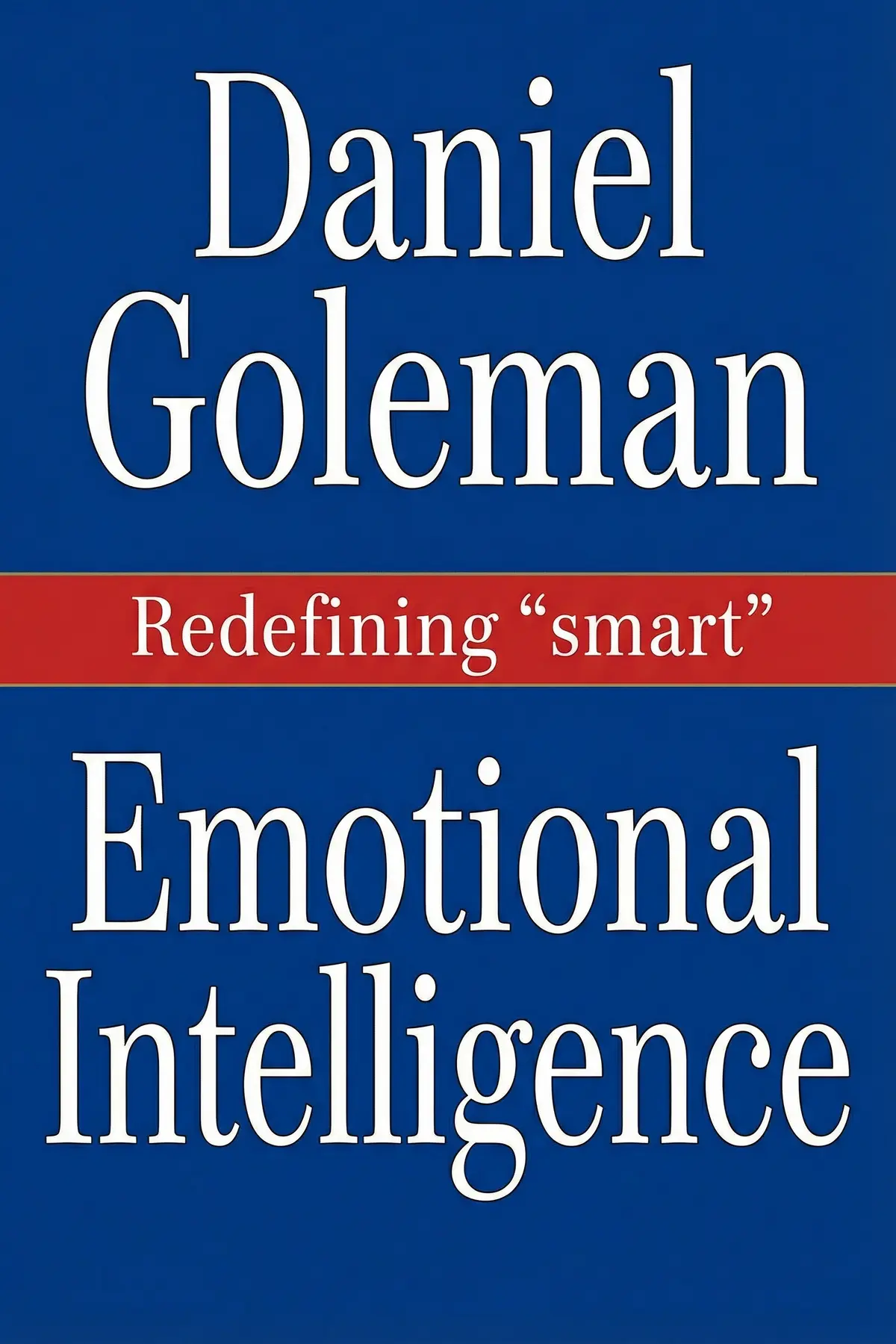
Emotional Intelligence: Why It Can Matter More Than IQ
Daniel Goleman
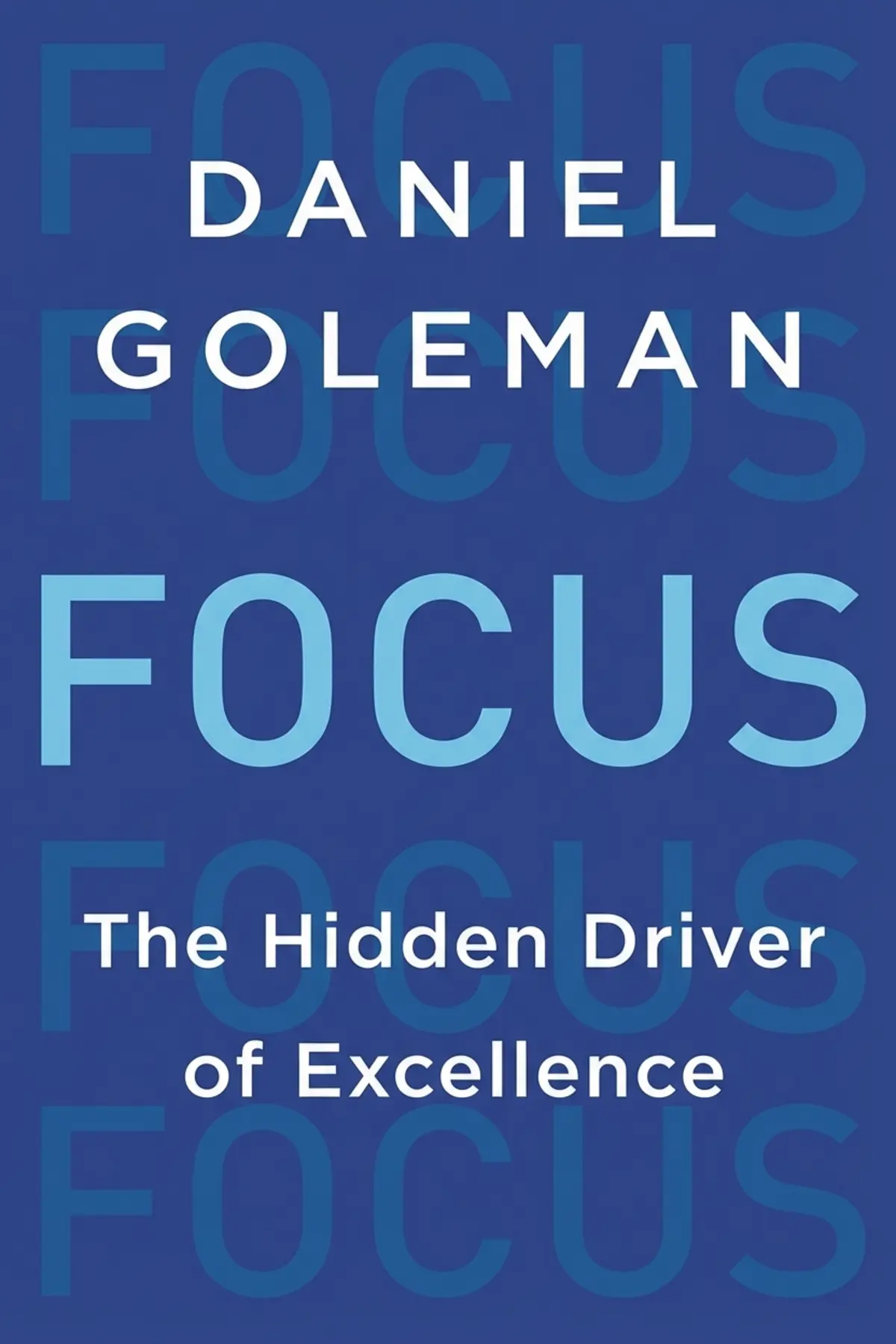
Focus: The Hidden Driver of Excellence
Daniel Goleman
Working with Emotional Intelligence
Daniel Goleman
Ratings & Reviews
Ratings at a glance
What people think
Listeners find this work highly accessible and straightforward, regarding it as a necessary read about an extraordinary figure. They value the combination of scientific research and mindfulness, and one listener mentions how the text highlights various ways to support others. Providing an encouraging narrative, the book is labeled by one person as a profound spiritual accomplishment.
Top reviews
Layla
Finally finished this collaborative effort between Daniel Goleman and the Dalai Lama, and I found it incredibly uplifting. It isn’t just a collection of spiritual platitudes; instead, it offers a concrete roadmap for a 'Kindness Revolution' that feels attainable even in our chaotic modern world. Goleman does an excellent job of bridging the gap between ancient wisdom and contemporary neuroscience, making the case that compassion is a biological necessity. I particularly enjoyed the peek into His Holiness’s daily routine, like how he starts his day at 5:30 AM watching the BBC news. While some sections about global economics felt a bit dense, the overall message remains accessible and deeply moving for any reader. It provides genuine options for helping others that don't require you to be a monk or a billionaire. This is a must-read for anyone feeling cynical about the state of humanity today.
Show moreAmy
Wow, what a profound spiritual accomplishment this book turned out to be. Goleman has a gift for making complex psychological studies feel personal and applicable to everyday life. I loved the emphasis on how we can all contribute to a 'Kindness Revolution' regardless of our religious background or social standing. It’s incredibly uplifting to read about a world leader who truly believes in the progress of the next thirty years. The blend of science and mind is handled beautifully, proving that empathy is a skill we can actually cultivate. This isn't just a book you read; it's a book that invites you to change your entire outlook on the world. I finished it feeling energized and ready to take action in my own community. Truly, it is a must-read for anyone looking for hope in a cynical age.
Show moreAstrid
Imagine starting your day at 5:30 AM to watch the news and then spending the rest of your time figuring out how to save the world through kindness. That is the glimpse into the Dalai Lama's life that Daniel Goleman provides in this wonderful book. It is an incredibly easy to read and understand guide for anyone who wants to make a difference. I loved how the book blends rigorous science with deep spiritual insights without feeling preachy or overly religious. It really focuses on 'secular ethics' that can apply to everyone, regardless of what they believe. The stories of real-world applications of compassion in business and politics were my favorite parts. It left me feeling that a better world is actually possible if we just change our focus. This is a profound spiritual accomplishment that manages to be practical at the same time.
Show moreKanokporn
This book provides a much-needed roadmap for anyone who feels overwhelmed by the negativity in the world today. Goleman and the Dalai Lama make a formidable team, perfectly balancing heart-centered wisdom with hard scientific data. I was especially moved by the sections on how we can reform our political and economic systems to prioritize human well-being over profit. It’s a very important book that encourages actual action rather than just passive meditation or well-wishing. The writing is clear, concise, and incredibly easy to follow, making it accessible even for those who don't usually read spiritual books. I found the blend of mind and science to be the most compelling part of the entire work. It really is an uplifting account of what we can achieve if we lead with compassion. I'll be recommending this to everyone I know.
Show moreGoy
As someone who has followed Goleman's work on emotional intelligence for years, I found this to be a natural and necessary evolution of his previous ideas. The book focuses heavily on the Dalai Lama’s vision for a more compassionate global economy, which was surprisingly grounded in modern data. I appreciated how it didn't shy away from difficult topics like environmental exploitation or the failures of modern capitalism. However, the tone occasionally veers into territory that feels a bit like a marketing brochure for the Dalai Lama's inner circle. There are a lot of anecdotes about scientists and journalists traveling to meet him that don't always add much to the core message. Still, the underlying argument for a science-based ethics is compelling and very easy to read. It's a solid 4-star read that offers a lot of food for thought for the future.
Show moreSomrutai
After hearing so much about 'A Force for Good,' I finally sat down with it and found the experience quite illuminating. The book does a fantastic job of presenting options for helping others that feel realistic rather than just idealistic. I was particularly fascinated by the discussion of a 'compassionate economy' and the references to Piketty’s work on wealth inequality. It’s refreshing to see a spiritual leader tackle such heavy, systemic issues with a sense of optimism and practical wisdom. My only real gripe is that the book can be a bit repetitive, hammering home the 'compassion' theme in every single chapter. You get the point pretty quickly, but Goleman keeps adding more and more studies to prove it. Despite the redundancy, the blend of spirituality and neuroscience is handled with great care. It’s an uplifting account that most people would benefit from reading.
Show morePla
The chapter on education reform alone makes this book worth your time. It’s inspiring to see the Dalai Lama advocate for teaching empathy and emotional intelligence to children as a core part of their schooling. Goleman compiles these interviews with his usual clarity, making the dense psychological concepts very accessible to a general audience. I did feel that the book was a bit too focused on praising the Dalai Lama at times, which felt unnecessary given how strong his ideas are on their own. For example, the constant reminders that 'the Dalai Lama was pleased' felt a bit like filler after the third or fourth time. Nevertheless, the book succeeds in showing that spirituality and science are not mutually exclusive. It provides a hopeful vision for the future that is backed by actual research. Definitely worth a read for those interested in social change.
Show moreChai
Ever wonder how spirituality and science can actually talk to each other without fighting? This book attempts that bridge, but it sometimes stumbles over the details. I was disappointed to find a factual error regarding James Cook and Norfolk Pines being used for ship masts. It makes me wonder what else wasn't fact-checked properly during the editing process. Despite that, Goleman’s writing is very easy to understand, and the focus on compassion as a 'force for good' is genuinely sweet. The middle sections about Thomas Piketty and economic systems were a bit dry for my taste, though they did offer a different perspective. It’s a decent introductory text, but seasoned readers of Buddhist philosophy might find it a bit repetitive. It isn't a bad read, but it didn't quite live up to the hype for me.
Show moreYaowaluk
To be fair, the message of this book is beautiful, but the delivery left me a bit cold. It often felt like I was reading a collection of newspaper clippings rather than a cohesive narrative about a vision for the future. Goleman is a great writer, but here he seems almost too close to his subject, leading to a tone that feels a bit sycophantic. I was also disappointed by the factual slip-up regarding James Cook and the Norfolk Pines, which took me out of the story. If the science and history aren't 100% accurate, it makes the rest of the arguments feel a bit shaky. That said, the general idea of a kindness revolution is hard to argue with. It's a nice, light read if you want something uplifting, but don't expect a deep philosophical treatise. It's a good book, just not a great one.
Show moreKet
Look, I really wanted to like this book because the subject matter is so important, but it fell flat for me. It felt less like a deep dive into philosophy and more like a series of disjointed newspaper articles praising a single man. Every other page seemed to end with the phrase 'and the Dalai Lama was pleased,' which started to feel incredibly sycophantic after a while. I was also quite taken aback by the casual mention of him being a Marxist without much deeper interrogation of what that means in a modern context. If you already know the basics of Buddhism, there isn't much new information here to sink your teeth into. It felt a bit like a glorified marketing brochure for a group of world-traveling elites rather than a transformative text. Frankly, you might find more substance in a short documentary than in these repetitive chapters.
Show moreReaders also enjoyed

Abolish Rent: How Tenants Can End the Housing Crisis
Tracy Rosenthal

Abortion: Our Bodies, Their Lies, and the Truths We Use to
Jessica Valenti


Afropean: Notes From Black Europe
Johny Pitts


All About Love: New Visions
bell hooks

A New Earth: Awakening to Your Life’s Purpose
Eckhart Tolle
AUDIO SUMMARY AVAILABLE
Listen to A Force for Good in 15 minutes
Get the key ideas from A Force for Good by Daniel Goleman, plus 5,000+ more titles in English and Thai.
- 5,000+ titles
- Listen as much as you want
- 7-day free trial
- Cancel anytime







