Do the Work: Overcome Resistance and Get Out of Your Own Way
Steven Pressfield
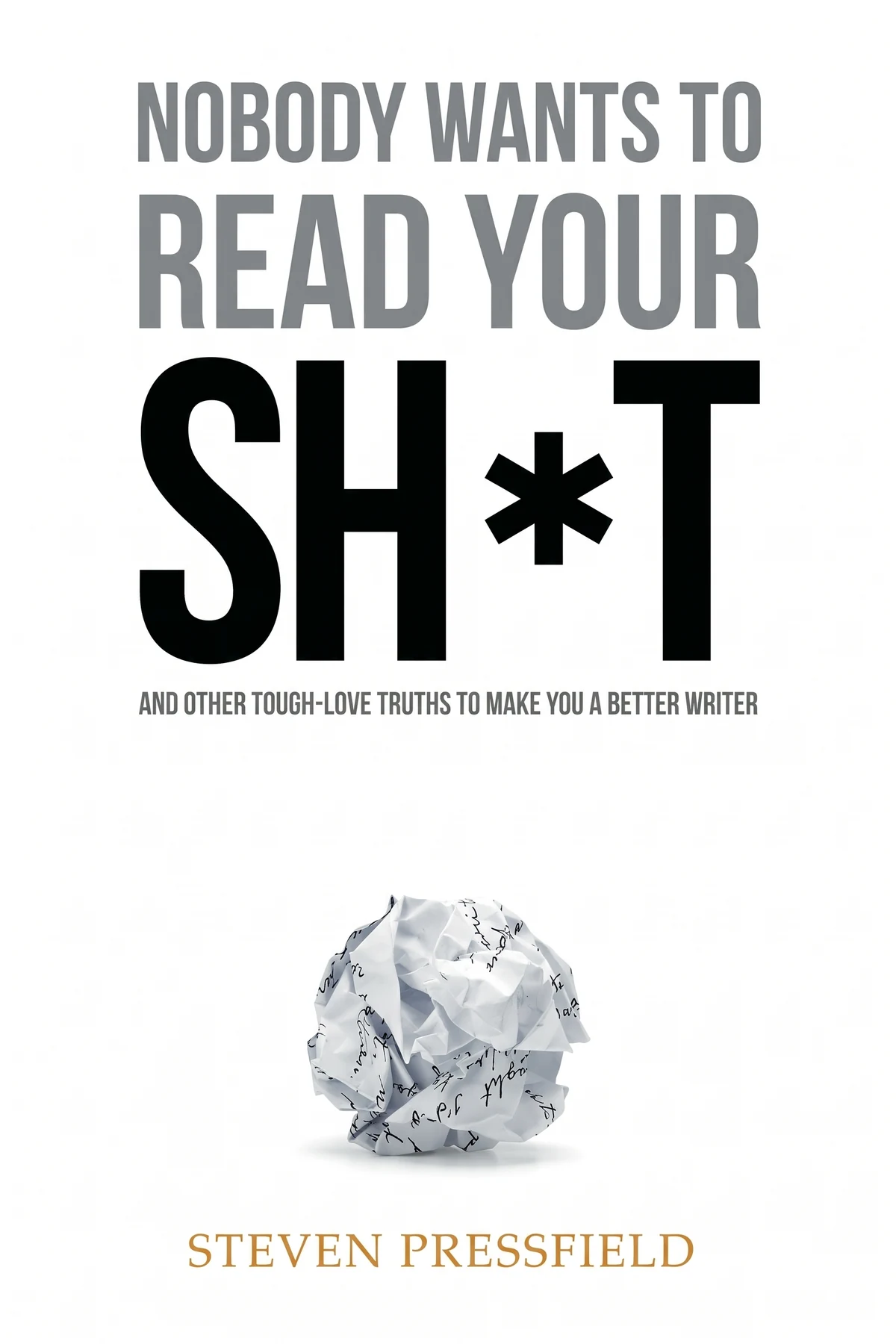
Nobody Wants to Read Your Sh*t is a tough-love guide for writers. It reveals how to overcome reader indifference by mastering the fundamental narrative structures that turn boring content into compelling stories.
2 min 01 sec
Imagine for a moment that you’ve just spent three years of your life pouring your heart into a manuscript. You’ve sacrificed weekends, stayed up past midnight, and survived on caffeine and ambition. You finally hit ‘send’ to an agent or post it online, expecting the world to stop and take notice. But then—nothing. No one clicks. No one calls.
This is the brutal reality that Steven Pressfield confronts in his provocative guide, Nobody Wants to Read Your Sh*t. It sounds harsh, maybe even mean-spirited, but it is actually the most liberating truth a writer can ever accept. Why? Because once you realize that the world is indifferent to your self-expression, you can finally start learning how to be a professional who earns a reader’s attention.
In the world of high-stakes advertising, screenwriting, and professional publishing, attention is not a gift; it is a hard-won prize. Pressfield argues that we often fail as writers because we focus too much on ourselves—our feelings, our clever metaphors, our personal histories—and not enough on the person on the other side of the page. We forget that the reader has a life, a job, and a thousand other things they could be doing instead of reading our work.
This summary isn’t just about writing better sentences. It’s about a fundamental shift in mindset. We are going to explore why most writing fails, why a strong ‘concept’ is your best weapon against boredom, and how the ancient structures of storytelling are still the most effective ways to hook a human brain. We’ll look at the lessons Pressfield learned from years of rejection in Hollywood and how those same rules apply whether you’re writing a blog post about birds or an epic movie about heroes. By the end of this journey, you’ll understand that the secret to being read isn’t about being more talented—it’s about being more empathetic to your audience and more disciplined in your craft. Let’s dive into the core strategies that turn ‘sh*t’ into something truly exceptional.
1 min 55 sec
Discover why your biggest hurdle isn’t lack of talent, but the fact that the world is too busy to care about your work.
2 min 13 sec
A great idea is more than just a thought; it’s a unique angle that makes the mundane feel absolutely essential.
2 min 18 sec
Every great story starts with a problem to solve and a deeper meaning that ties every detail together.
2 min 05 sec
Before you can be a master, you must be willing to do the grunt work and learn the hidden rules of the trade.
2 min 13 sec
Learn why almost every successful story throughout history follows a predictable, three-part rhythm.
2 min 15 sec
Break down the specific duties of each act to ensure your story never loses its momentum.
2 min 00 sec
Learn to create characters so deep and compelling that the best performers would fight to play them.
2 min 06 sec
Discover why your ‘authorial voice’ isn’t something you invent, but something you uncover through life and honesty.
2 min 13 sec
Don’t let the facts get in the way of a good story; use narrative techniques to make information come alive.
2 min 06 sec
Learn to identify the psychological blocks that stop you from finishing and how to push through them.
2 min 03 sec
As we reach the end of this exploration of Steven Pressfield’s Nobody Wants to Read Your Sh*t, the message is clear: the bridge between an amateur and a professional is empathy. An amateur writes for themselves, hoping for validation and praise. A professional writes for the reader, understanding that attention is a precious commodity that must be earned through craft, structure, and emotional truth.
We’ve seen that the world doesn’t owe us an audience. To break through the noise, we must embrace the ‘Big Concept’—the surprising angle that makes our work stand out. We must anchor our stories in universal themes that speak to the shared human experience. We’ve learned that the three-act structure is not an arbitrary rule, but a time-tested map that guides the reader through the emotional journey we’ve prepared for them. Whether we are writing a novel, a screenplay, or a nonfiction book about the migration of birds, we must be storytellers first and foremost.
Perhaps the most important takeaway is the value of the ‘long game.’ Excellence doesn’t happen overnight. It is the result of years of apprenticeship, of writing through the rejections, and of living a life full enough to have something meaningful to say. It requires the discipline to show up every day and fight the internal ‘Resistance’ that tries to keep us silent.
So, here is your actionable takeaway: take a look at your current project and ask the hard questions. Is the concept strong enough? Is the theme clear? Are you respecting the reader’s time, or are you just indulging your own ego? Don’t be afraid to cut the ‘sh*t.’ Be ruthless with your own work so that the reader doesn’t have to be. Remember, the goal isn’t just to be heard; it’s to provide something so valuable, so entertaining, or so profound that the reader can’t help but pay attention. Now, put down the guide, sit at your desk, and start doing the work that earns that attention. The world may not want to read your work yet—but you have all the tools you need to change their minds.
This book addresses the harsh reality every writer faces: the world is busy, distracted, and largely uninterested in your work. To capture attention, you must move beyond self-expression and master the craft of storytelling. Steven Pressfield draws on his extensive experience in advertising, screenwriting, and novel writing to provide a roadmap for creating content that people actually want to consume. You will learn the importance of having a clear concept and a resonant theme, why the three-act structure is a universal necessity, and how to develop an authentic voice through life experience. The book promises to shift your perspective from that of an amateur seeking attention to a professional providing value. Whether you are writing an ad, a memoir, or a blockbuster script, the principles of narrative remain the same: you must identify the problem, build the tension, and deliver a satisfying resolution.
Steven Pressfield is a celebrated author and screenwriter with a career spanning several decades across various industries, including advertising and Hollywood. He is best known for his fiction and nonfiction works, notably the novel The Legend of Bagger Vance, which was later adapted into a major motion picture featuring Will Smith and Matt Damon. Beyond his books, Pressfield is a dedicated mentor to writers, sharing his insights and experiences through his widely followed blog at stevenpressfield.com.
Steven Pressfield
Steven Pressfield
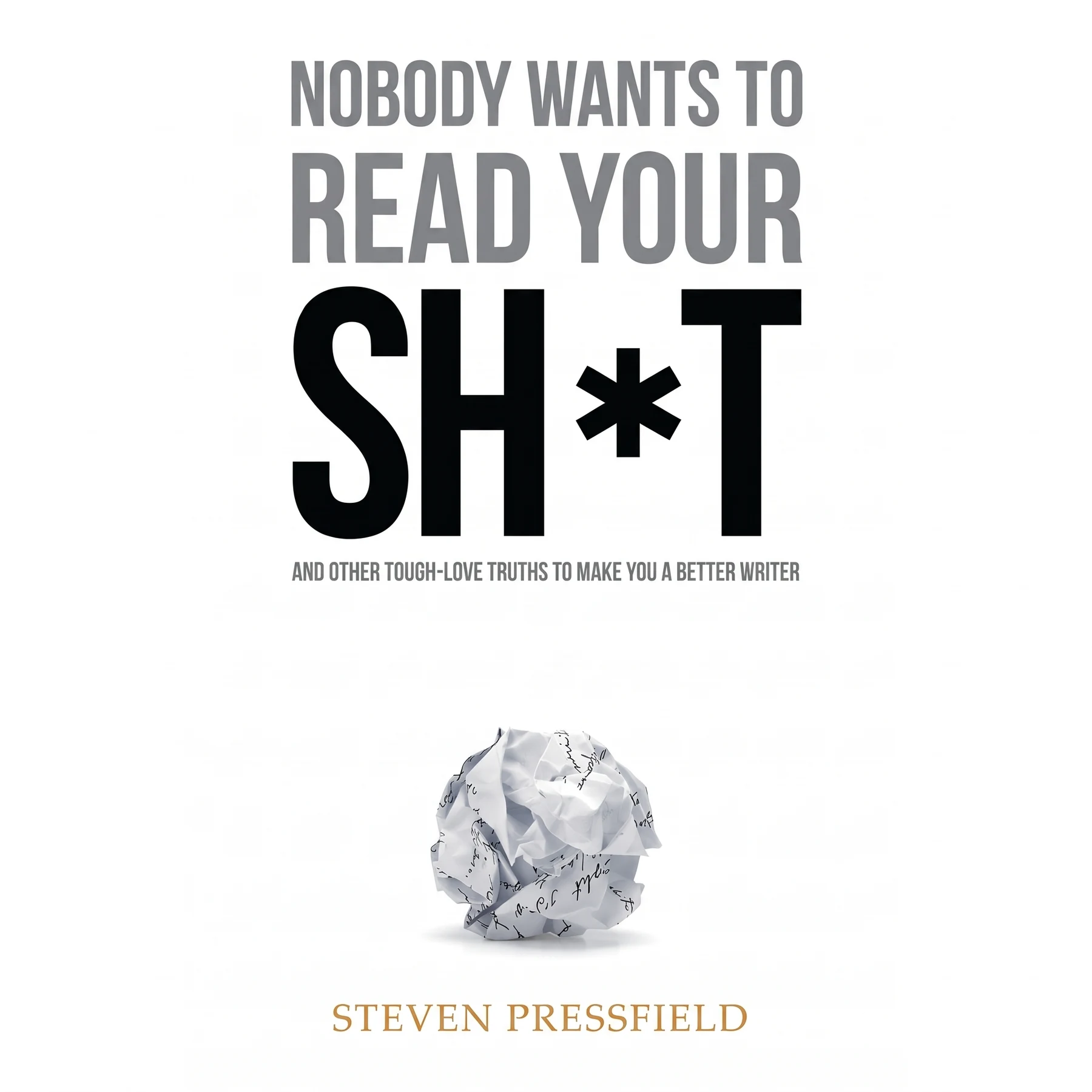
Listeners find the book enjoyable and packed with insightful guidance, with one listener mentioning it is a fast, no-nonsense compilation of fundamental principles. Additionally, the prose is well-received, and one listener points out how useful the advice is for different types of writing. Furthermore, listeners like the lessons on narrative craft, find the content engaging, and value its genuineness and inspirational quality, with one listener calling it a boost for their self-assurance. On the other hand, opinions on the total length are varied, as several listeners mention that it is brief.
Finally got around to reading this and it is the ultimate wake-up call for anyone who thinks the world owes them an audience. Pressfield doesn’t pull any punches when describing the brutal reality of the 'Resistance' and the apathy of the general public. Look, the truth is that most people would rather do anything else than read your unpolished manuscript. This book serves as a high-octane motivational guide that forces you to respect your reader’s time by mastering structure. I found the advice on genre conventions incredibly liberating because it gives you a roadmap to follow instead of wandering in the dark. It’s a quick, punchy read that I’ll likely return to every time I start a new project. If you need a serious confidence booster that is grounded in the hard-won experience of a pro, this is it.
Show moreThe chapter on the pornographic film was worth the price of admission alone because it perfectly illustrated his point about story construction. Pressfield has this incredible way of taking a seemingly degenerate experience and mining it for universal truths about how to hold an audience's attention. I love his 'no-bull' style and the way he treats writing as a blue-collar job rather than a mystical calling. He reminds us that the reader is a customer who is paying with their time, and we better give them their money’s worth. The book is entertaining, authentic, and packed with wise advice that applies to everything from screenplays to business emails. It really changed the way I look at my own drafts. Stop making excuses and just buy it; your future readers will thank you for learning these lessons now.
Show moreWow. This is the kick in the pants I needed to stop being so self-indulgent with my prose and start thinking about the person on the other side of the page. Pressfield is a master of the 'tough love' approach, and his insights into the psychology of the reader are absolutely spot-on. He accurately identifies that invisible force that keeps us from finishing our work and gives us the tools to fight back. The book is a fast-paced, high-energy collection of lessons that are as entertaining as they are practical. I finished it in one sitting and immediately went back to page one to start taking notes. It’s a brilliant guide for anyone who is serious about turning their writing from a hobby into a professional craft. This is essential reading for every writer.
Show moreNot what I expected, but exactly what I needed to hear at this stage in my career. The truth is, I’ve been writing for myself for years and wondering why I couldn't find an audience for my 'masterpieces.' Pressfield explains with brutal clarity that the world doesn't care about your feelings; they care about being entertained or informed. His anecdotes about working as a ghostwriter and in advertising are fascinating and provide a unique perspective on the industry. The writing style is punchy, direct, and completely devoid of the usual academic pretension found in books about craft. It’s a short read, yes, but every word feels like it was chosen to maximize impact. This book is a massive confidence booster because it demystifies the process of storytelling. It’s easily one of the most authentic books on creativity I’ve ever read.
Show morePicked this up after hitting a major wall with my screenplay and it was like a lightning bolt to the brain. Pressfield’s advice on the 'star hero' and the necessity of high stakes helped me realize exactly where my plot was sagging. I love how he uses his own failures as teaching moments, making the whole experience feel very human and relatable. The book is a quick, no-bull collection of keystone lessons that I think every creative professional should own. It’s not just for novelists; the principles of 'hooking' an audience apply to any form of communication. Frankly, I didn't mind the short chapters or the white space because it allowed the big ideas to really breathe. It’s a masterclass in brevity and impact. Highly recommended for writers at any level who are tired of spinning their wheels.
Show moreAs a professional copywriter, I appreciated how Pressfield bridges the gap between commercial advertising and traditional storytelling. The layout of the book is definitely unconventional, with some pages hosting only a few sentences, which might frustrate readers looking for a dense textbook. However, the brevity is the point because he is practicing what he preaches by not wasting your time. I especially enjoyed the sections on how to build a narrative arc that actually keeps a person engaged from the first page to the last. Some of the stories from his early career felt a bit dated, but the core principles of 'foundational integrity' remain timeless. It’s a solid 4-star resource that delivers keystone lessons without the usual fluff you find in writing guides. Just be prepared for a very fast read that feels more like a series of vital memos than a standard book.
Show moreEver wonder why your drafts feel like a slog? Pressfield argues it’s because you haven't identified your genre or respected the 'hero’s journey' enough to keep the engine moving. Personally, I found his breakdown of the three-act structure to be one of the clearest explanations I’ve ever encountered in a writing manual. The book is incredibly easy to read and the tone is like having a beer with a mentor who has seen it all. My only gripe is that it’s almost too brief, leaving me wanting more detailed examples of the principles in action. To be fair, he’s trying to be efficient, but a little more 'meat' on the bones of the middle chapters would have been welcome. Regardless, the core message about empathy for the reader is something every aspiring author needs to hear repeatedly.
Show moreTo be fair, the title alone is worth the price of admission because it’s a mantra every writer should repeat daily. I enjoyed the no-nonsense way Pressfield breaks down complex ideas into simple, digestible 'lessons' that are easy to remember. The bridge builder analogy really stuck with me, especially the part about understanding foundational integrity before you try to get fancy. While I do think the book is a bit overpriced for how short it is, the value of the information outweighs the lack of page count. It’s a very nice primer that avoids being pushy or judgmental while still delivering a much-needed reality check. If you’re looking for a thick, academic tome on literary theory, keep looking. But if you want a practical guide on how to actually finish a project that people might enjoy, get this.
Show morePressfield's perspective on the hero's journey is a bit traditional for my taste and felt somewhat restrictive. He emphasizes following established structures and Joseph Campbell’s archetypes, but I believe modern art often succeeds by breaking those very rules. Why can't we have a hero who fails or a story that is intentionally fractured to reflect the chaos of real life? While I agree that nobody is 'waiting' to read our work, I think the solution is to be more daring, not more formulaic. The book is a quick, nice read and has some decent motivational value for those struggling with writer's block. However, it feels a bit like a 'greatest hits' collection of writing advice you’ve heard elsewhere. It's a 3.5-star effort for me because while the delivery is great, the content didn't offer anything revolutionary for my creative process.
Show moreThis book should have been a blog post, or maybe two at the very most. I was excited to dive into Pressfield’s wisdom, but I felt cheated by the sheer amount of white space on every single page. Calling this a 'book' is a stretch when you can finish the entire thing in under an hour while eating lunch. Most of the advice is just a recycled version of what he wrote in 'The War of Art' but with less depth and more anecdotes about his own failures. For a book that claims to teach you how to make people want to read your work, it felt remarkably thin on actual, actionable techniques. It’s basically a sketchbook of ideas rather than a structured guide. I’m a huge fan of his fiction, but this felt like a low-effort cash grab that didn't respect my intelligence or my wallet.
Show moreAUDIO SUMMARY AVAILABLE
Get the key ideas from Nobody Wants to Read Your Sh*t by Steven Pressfield, plus 5,000+ more titles in English and Thai.