
14 min 53 sec
Peak: Secrets from the New Science of Expertise
This summary explores the groundbreaking research behind human performance, revealing that expertise is not a matter of genetics but rather a specific, rigorous form of training known as deliberate practice.
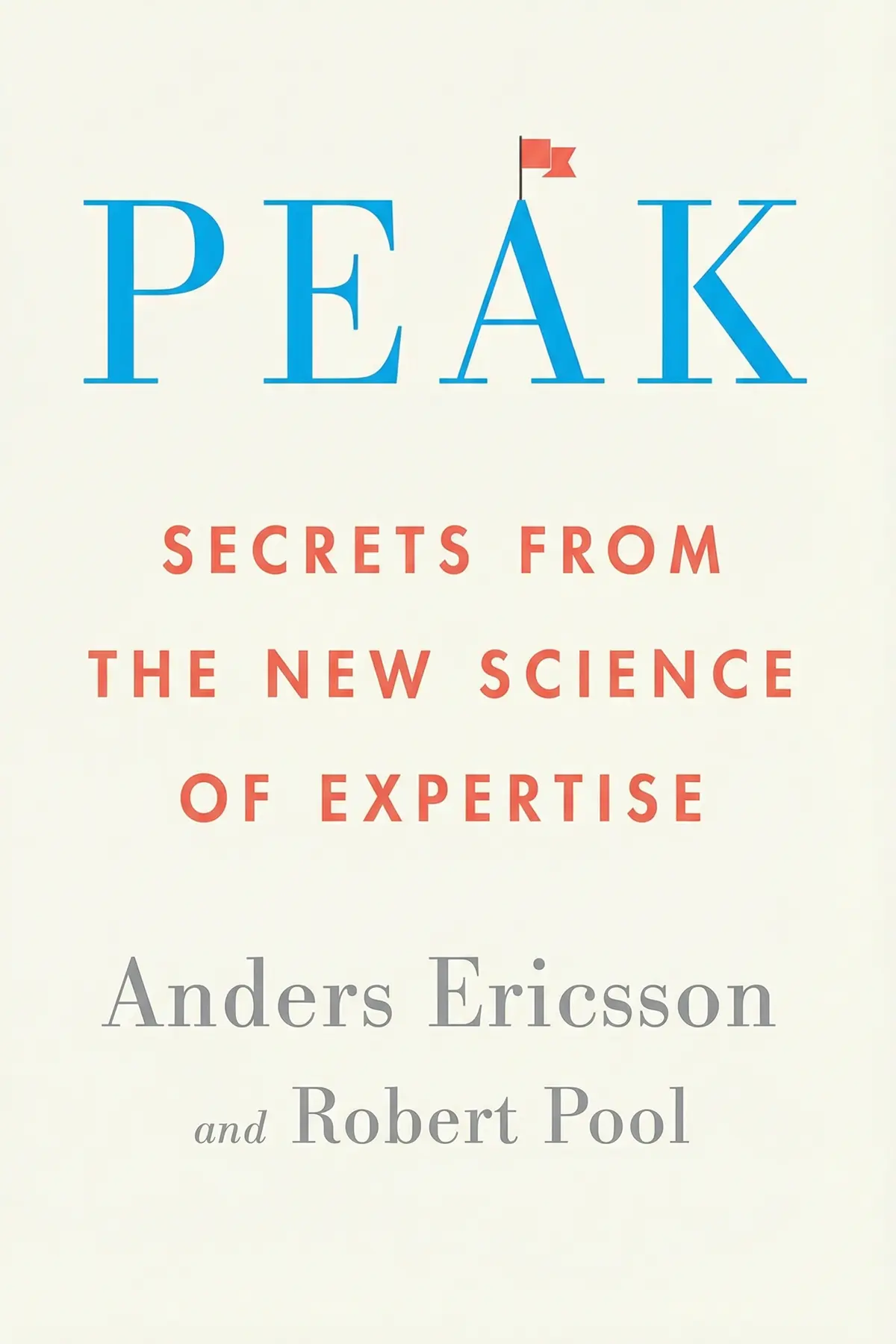
Table of Content
1. Introduction
1 min 32 sec
Imagine watching a world-renowned pianist perform a complex concerto or witnessing an Olympic sprinter shatter a world record. In those moments, it is very common to feel a sense of awe mixed with a bit of resignation. We often tell ourselves that these people were simply born different—that they possess a ‘spark’ or a genetic advantage that the average person could never hope to replicate. We use words like ‘genius’ or ‘prodigy’ to describe them, almost as if their abilities are a form of magic.
But what if that entire narrative is wrong? What if the secret to their success isn’t hidden in their DNA, but in the way they spend their time? This is the central question we are going to explore today. Through the lens of decades of psychological research, we will see how the human brain responds to specific types of training and why the concept of ‘innate talent’ is largely a myth that holds us back.
We’re going to walk through the mechanics of high-level skill acquisition. We will look at how ordinary individuals have pushed the limits of memory, how professionals in fields like medicine and sports reach the top of their game, and why even the most famous ‘naturals’ in history, like Mozart, were actually the products of intense, lifelong practice. By the end of this, you will see that the path to excellence is not a mystery—it is a rigorous, repeatable process. Let’s dive into how we can all begin to redefine our own limits.
2. The Incredible Adaptability of the Human Brain
2 min 07 sec
Explore how the physical structure of our brains can actually change and grow in response to the specific challenges and training we undertake.
3. Challenging the Myth of the Natural Prodigy
2 min 02 sec
Investigate why even legendary figures like Mozart were not born with their abilities, but rather developed them through early and intense instruction.
4. The Power of Mental Representations
2 min 01 sec
Understand how experts use sophisticated mental frameworks to process information and make split-second decisions with incredible accuracy.
5. The Core Pillars of Purposeful Practice
2 min 04 sec
Learn the specific requirements for training effectively, including goal-setting, focus, and the necessity of stepping out of your comfort zone.
6. The Gold Standard of Deliberate Practice
1 min 49 sec
Distinguish between simply working hard and the most effective form of training, which involves expert guidance and established curricula.
7. A New Way of Looking at Human Potential
1 min 46 sec
Reflect on the implications of this research and how it shifts our focus from finding talent to creating it within ourselves.
8. Conclusion
1 min 32 sec
As we wrap up our look at the science of expertise, the most important takeaway is that our potential is not a fixed limit. We’ve seen through the examples of London cab drivers and memory experts that the brain is a highly adaptable tool, capable of physical change when pushed to its limits. We’ve learned that the ‘geniuses’ we admire, like Mozart, were actually masters of a specific kind of labor—deliberate practice—rather than recipients of divine intervention.
The throughline of this entire exploration is that mastery is a choice. It’s a choice to stop engaging in mindless repetition and to start practicing with purpose. It involves setting concrete goals, maintaining unwavering focus, seeking out constant feedback, and—most importantly—living on the edge of your comfort zone.
What this means for you is that whatever field you are in—whether you are a professional trying to sharpen your skills or a hobbyist looking to reach the next level—the path is the same. Don’t wait for a spark of inspiration or a sign of ‘natural talent.’ Instead, seek out the best teachers, build your mental representations, and commit to the hard, focused work of deliberate practice. You have the hardware to be exceptional; now you simply need the right software to run on it. The road to the top is long, but for the first time, we have a clear map of how to get there.
About this book
What is this book about?
Have you ever wondered what truly separates a world-class athlete or a legendary musician from the rest of us? For a long time, we have been told that these individuals possess a rare, innate gift that others simply lack. This book challenges that entire premise by introducing the science of peak performance. Based on decades of research, it argues that the human brain and body are far more adaptable than we ever imagined. The core promise of this work is that greatness is not something we are born with, but something we can build. By understanding the principles of deliberate practice, anyone can move beyond their current limitations and achieve mastery in their chosen field. From memorizing long strings of numbers to navigating the complex streets of a major city, the book provides a roadmap for how specialized skills are actually developed through focused, high-stakes training.
Book Information
About the Author
Anders Ericsson
Anders Ericsson is a professor of psychology and Conradi Eminent Scholar at Florida State University. His extensive research into the nature of expertise has been cited in prominent bestsellers like Moonwalking with Einstein and How Children Succeed. Robert Pool is a seasoned science writer who holds a PhD in mathematics from Rice University. He has a distinguished career as a writer and editor for major scientific publications, including Nature and Science magazine.
Ratings & Reviews
Ratings at a glance
What people think
Listeners describe this work as exceptionally accessible and rank it among the most significant books they have ever encountered. It offers an excellent framework for enhancing skills using deliberate practice, featuring thorough details on how to apply the technique. Listeners value the evidence-based style, which is full of research, and view it as the ultimate authority on this topic. They feel the material is transformative, inspiring, and intellectually stimulating, especially regarding the ideas of developing mental models and gaining mastery through consistent effort.
Top reviews
Narut
Finally finished this masterpiece, and it’s easily one of the most practical guides to human potential I’ve ever encountered. Ericsson provides a clear-eyed, scientific blueprint for moving beyond "good enough" into the realm of true expertise through the framework of deliberate practice. Truth is, we often stagnate because we confuse mindless repetition with actual improvement, a mistake I've made for years in my own hobbies. The breakdown of how mental representations allow experts to process information faster was particularly illuminating and gave me a concrete goal for my own training. While some might find the heavy reliance on academic studies a bit dry, I appreciated the rigor and the way it debunked the lazy "talent" myth. It is a motivating, life-changing read that demands you step outside your comfort zone and actually engage with your weaknesses. If you are serious about mastering any skill—be it music, chess, or business—this is the definitive source you need to own.
Show moreAraya
Ever wonder why some people just seem 'gifted' while the rest of us struggle to learn a basic chord on the guitar? This book argues—quite convincingly—that the "gift" is actually a myth and that anyone can develop skills like perfect pitch if they train the right way at the right time. The discussion on how the brain physically restructures itself in response to intense, focused practice was nothing short of revolutionary for me. It’s not just about working hard; it’s about working smart with a teacher who can spot your micro-errors. I found the sections on medical training and how even experienced surgeons can stagnate without deliberate practice to be a bit scary but very eye-opening. This isn't just another self-help book filled with fluff and "believe in yourself" platitudes. It is a serious, research-backed exploration of human neuroplasticity that offers a tangible path to improvement.
Show moreYui
This book completely shifted my perspective on my own limitations and what I can achieve in my career. I’ve always believed that I just wasn’t "a math person" or "a natural leader," but Ericsson proves that these are just skills waiting to be developed through the right methodology. The truth is, most of us practice until we reach a level of "acceptable" performance and then we just coast, which is why we never get any better. By focusing on performance rather than just knowledge, the authors give you a roadmap to break through those stubborn plateaus. I loved the examples of memory experts and how they use mental models to store vast amounts of data. It’s an empowering read that makes you want to get up and start a new, more disciplined training routine immediately. If you want to stop making excuses and start getting better, read this book now.
Show moreKamol
Picked this up on a whim and now I'm rethinking my entire approach to learning everything from work tasks to my golf swing. The concept of "deliberate practice" is so much more rigorous than I realized, requiring a level of engagement and focus that most of us rarely apply. I especially appreciated the distinction between "purposeful practice" and "deliberate practice"—having that distinction clear in my mind has already changed my daily habits. The book is packed with studies that show excellence is a process, not a destination or a lucky draw in the genetic lottery. It is motivating without being cheesy, which is a rare feat for books in the "improvement" genre. Truly, this is one of those rare reads that has the potential to fundamentally change your life trajectory if you actually apply the principles. Highly recommended for anyone who feels stuck.
Show moreChokdee
As a coach, I've spent years looking for a systematic way to push my students, and this book delivered exactly what I needed. Ericsson and Pool explain that the difference between a pro and an amateur isn't just time spent, but the quality of feedback and the intensity of focus during that time. The Navy’s "Top Gun" school example was a standout moment for me, illustrating how "doing" outweighs "knowing" every single time. To be fair, the middle sections can get a bit bogged down in technicalities regarding brain physiology, which might slow some readers down. However, the core message about building sophisticated mental models is too important to ignore if you want to reach the top of your field. It’s a dense read but incredibly rewarding for those willing to put in the mental effort to digest the research. I'm already planning how to incorporate these feedback loops into my next training cycle.
Show moreFort
Gladwell's 'Outliers' might have started the global conversation on expertise, but 'Peak' is the book that actually provides the data-driven substance. Most people stop at the 10,000-hour rule without realizing that simple repetition is a recipe for a plateau, not mastery. Frankly, I was surprised to learn how many of our assumptions about "natural prodigies" like Mozart are based on exaggerated histories rather than actual practice schedules. The authors do a fantastic job of explaining why your brain needs to be pushed to its limit to trigger structural changes. My only gripe is that the book can feel slightly repetitive, as if they are trying to prove the same point through ten different domains. Still, the underlying logic is sound and incredibly empowering for anyone who feels they’ve hit a wall. It’s a refreshing take on what it actually takes to be great.
Show moreRyan
The chapter on London cab drivers and how their brains literally grew as they memorized "The Knowledge" was absolutely mind-blowing. It serves as a potent reminder that our brains are far more plastic than we often give them credit for, even as adults. Ericsson and Pool provide a wonderful blueprint for anyone looking to sharpen their edge in a competitive field. Personally, I found the emphasis on finding a mentor who can provide immediate, actionable feedback to be the most helpful part of the book. Without that outside perspective, it’s almost impossible to see where your own mental representations are failing. The writing is accessible and moves along at a good clip, though it can feel a bit academic at times. It’s a definitive source for anyone interested in the science of learning and the mechanics of excellence. I’ll definitely be referring back to my notes on this one.
Show moreElias
After hearing about the '10,000-hour rule' for years, it was refreshing to read the actual science behind it from the man who conducted the original research. Ericsson makes it clear that it’s not just about the hours; it’s about the specific type of hours you put in. The focus on mental representations was a game-changer for me, helping me understand why I can play the same songs on the piano for years without actually getting any better. Frankly, the advice on finding the "sweet spot" of difficulty—where you're challenged but not overwhelmed—is something everyone should apply to their education. The writing is clear and the tone is generally encouraging, even when the data gets a bit dense. I wish I had read this ten years ago; it would have saved me a lot of wasted time in the practice room. A solid four stars for clarity and impact.
Show morePierre
While the research is undeniably solid, I struggled with the authors' total dismissal of natural talent and genetic predisposition. To be fair, Ericsson’s focus on deliberate practice is a helpful corrective to the idea that you’re just born with it, but he seems to ignore the "false negative" problem. Not every kid who practices for ten years under a world-class coach becomes an elite athlete; some people simply lack the explosive speed or physical coordination required for the highest levels. The book feels a bit like it's trying to sell a dream that might lead to heartbreak for some. That said, the chapters on how to structure feedback and create mental representations are still incredibly valuable for general self-improvement. It’s a good book if you take the "everyone can be anything" thesis with a grain of salt. For skill-centric hobbies, it’s great; for high-performance sports, I think genes still play a massive role.
Show moreWaree
Look, the core message here is vital, but the book could have easily been a long-form essay or a five-page summary. Once you understand that deliberate practice requires focus, feedback, and pushing past your comfort zone, the next 200 pages of anecdotes start to feel a bit like overkill. Don’t get me wrong, the science is fascinating, but I found myself skimming through several chapters that felt like they were just repeating the same points about chess players or violinists. Not gonna lie, I was expecting a bit more variety in the "how-to" section rather than just more case studies proving that practice works. It’s a great concept, and I’m glad I read it, but it’s definitely a victim of the standard non-fiction bloat. If you’re short on time, you can probably get the gist from the first and last chapters without missing too much.
Show moreFeatured in
Readers also enjoyed
Acting with Power: Why We Are More Powerful Than We Believe
Deborah Gruenfeld

Age of Propaganda: The Everyday Use and Abuse of Persuasion
Anthony Pratkanis

59 Seconds: Change Your Life in Under a Minute
Richard Wiseman
AUDIO SUMMARY AVAILABLE
Listen to Peak in 15 minutes
Get the key ideas from Peak by Anders Ericsson, plus 5,000+ more titles in English and Thai.
- 5,000+ titles
- Listen as much as you want
- 7-day free trial
- Cancel anytime







