
A Spy Among Friends: Philby and the Great Betrayal
Ben Macintyre
Ayelet Waldman explores a desperate experiment with microdosing LSD to manage her severe mood disorder, uncovering the history, science, and legal complexities of psychedelics while seeking a way to be happy.
1 min 57 sec
Imagine waking up every day and feeling like you are at the mercy of a storm you cannot control. For Ayelet Waldman, this wasn’t just a metaphor; it was her daily reality. For years, she lived with a mood disorder that swung between sparkling productivity and deep, crushing despair. She was a successful author, a former public defender, and a mother of four, yet she felt like she was failing at the most basic task of all: simply being okay. After exhausting every conventional medical option, from a long list of antidepressants to various forms of therapy, Waldman found herself at a breaking point.
That’s when she decided to try something radical. She didn’t turn to a new prescription or a different therapist. Instead, she turned to a vial of LSD. But she wasn’t looking for a ‘trip’ or a psychedelic escape. She was looking for a microdose—a tiny, sub-perceptual amount of the drug intended to stabilize her mind without altering her reality. Her goal was modest but profound: she just wanted to have a really good day.
In the journey we are about to explore, we’ll follow Waldman through a thirty-day experiment that challenged everything she thought she knew about medicine, legality, and her own brain. We will see how she navigated the terrifying prospect of becoming a ‘drug user’ in the eyes of the law, the surprising history of a substance that once held great medical promise, and the profound impact that ten micrograms of a prohibited chemical had on her marriage and her children. This isn’t just a story about drugs; it’s a deep look into the search for mental peace in a world that often makes it incredibly hard to find. We’ll examine the systemic double standards of drug policy and the hidden potential of substances that have been stigmatized for decades. By the end of this journey, you’ll understand why the pursuit of a single good day can be a life-altering mission.
2 min 52 sec
Years of struggle led Ayelet Waldman to cycle through numerous psychiatric diagnoses and medications, only to find herself still drowning in irritability and self-hatred.
2 min 22 sec
Taking a fraction of a recreational dose on a specific schedule allows users to experience subtle mood improvements without any hallucinogenic effects.
2 min 23 sec
The initial days of microdosing brought a surprising sense of flow and calm, prompting an investigation into how LSD affects the brain’s neural networks.
2 min 37 sec
Despite its terrifying reputation, LSD has a remarkable safety record with no recorded overdose deaths and surprising benefits for long-term health.
2 min 36 sec
From the development of the personal computer to Nobel Prize-winning chemistry, psychedelics have a hidden history of fueling major intellectual breakthroughs.
2 min 21 sec
As a former public defender, Waldman highlights the deep racial and class disparities in drug law enforcement, noting that her own safety is a privilege not afforded to others.
2 min 38 sec
While formal clinical trials are scarce due to legal hurdles, thousands of self-reported cases suggest that microdosing can address a wide range of mental and physical issues.
2 min 27 sec
At the end of her thirty-day trial, Waldman found that the most telling evidence of her success came not from her own notes, but from the observations of her husband and children.
1 min 53 sec
The story of Ayelet Waldman’s month with LSD is more than just a personal memoir; it is a challenge to the way we think about mental health, legality, and the human brain. For thirty days, she stepped outside the boundaries of conventional medicine to find a solution that worked for her, and in doing so, she shone a light on the absurdities of our current system. We live in a society that is deeply addicted to prescription drugs—many of which have severe side effects and limited efficacy—yet we treat the use of a non-toxic, potentially life-changing substance as a moral and legal failing.
Waldman’s journey shows us that the ‘war on drugs’ has been, in many ways, a war on the possibilities of human wellness. By criminalizing these substances, we haven’t just created a massive and racially biased prison system; we have also blocked off promising avenues for treating the millions of people who struggle with mood disorders, anxiety, and addiction. Her experiment proved that for some, a tiny shift in neurochemistry can mean the difference between a life defined by shame and a life defined by presence and love.
As we conclude this summary, consider the ‘paradox of the good day.’ If a person can find a way to be more patient with their children, more productive in their work, and more forgiving of themselves, shouldn’t that be celebrated rather than punished? Waldman’s experience suggests that the secret to a better life might not be found in a new diagnosis or a stronger prescription, but in rethinking our relationship with the molecules that shape our minds. While the legal path forward remains complex, her story offers a powerful reminder that everyone deserves the chance to experience a really good day, and that sometimes, the most radical healing comes from the most unexpected places.
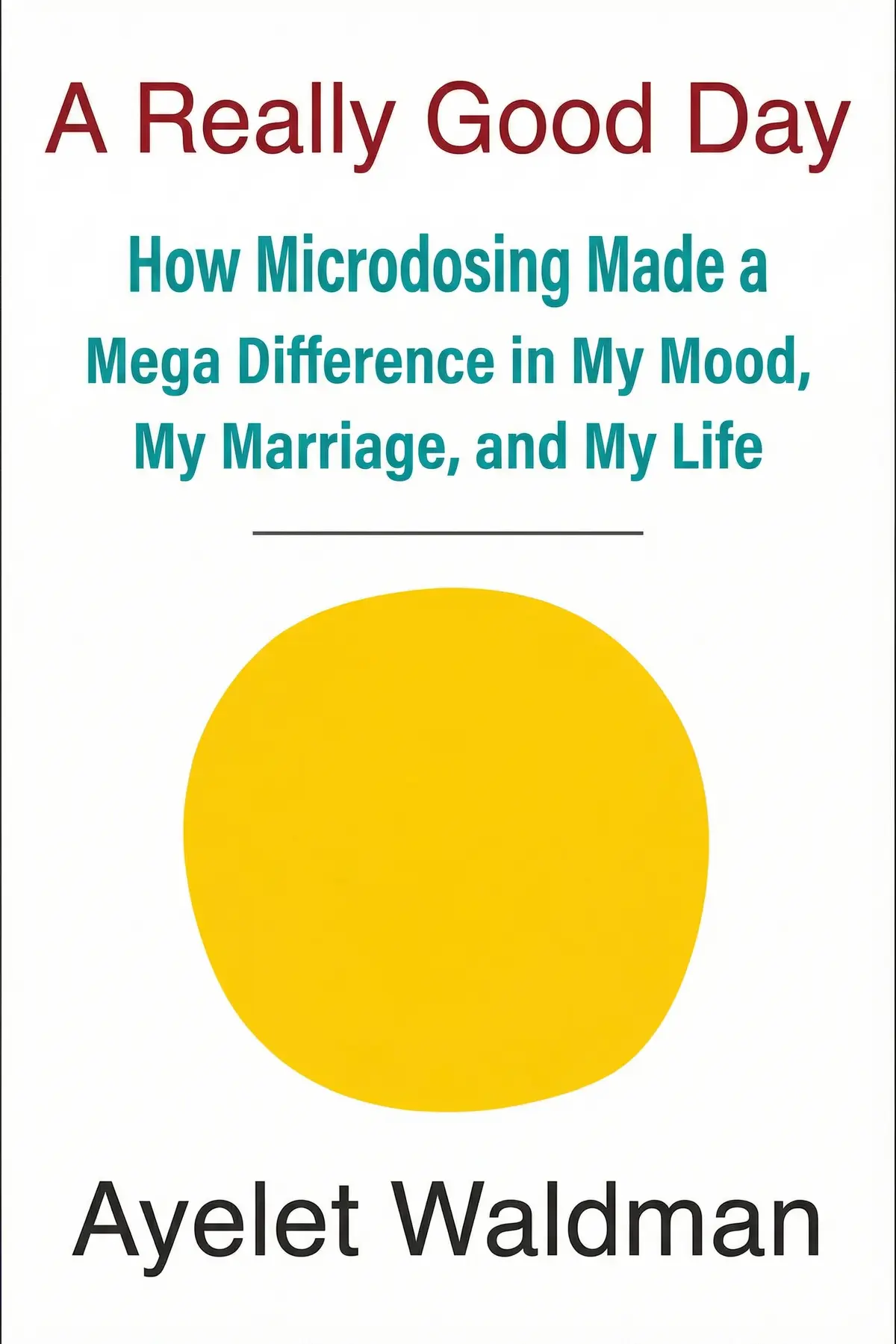
A Really Good Day follows author and former public defender Ayelet Waldman as she embarks on a month-long trial of microdosing LSD. Plagued by a severe mood disorder that traditional medications failed to treat, Waldman turns to the controversial protocol developed by James Fadiman. The book serves as part memoir and part investigative report, examining how sub-perceptual doses of a prohibited substance affected her marriage, her parenting, and her internal sense of peace. Beyond her personal story, Waldman provides a deep dive into the pharmacology of psychedelics, the history of their criminalization, and the systemic inequalities of the War on Drugs. She contrasts the safety profile of LSD with the far more dangerous legal alternatives many people use daily. The narrative promises a thoughtful look at what it means to seek mental wellness in a society that often prioritizes punishment over healing, asking whether a 'really good day' should be a radical pursuit.
Ayelet Waldman was a federal public defender and taught a class on drug policy at the University of California’s School of Law, before turning to a career in writing. Her published works include seven novels in the series Mommy-Track Mysteries, and the non-fiction Bad Mother (2009) – a collection of personal essays about her experience as an imperfect mother.
Listeners find this work extensively researched yet very easy to digest, with one note that it avoids being a heavy listen. They value the humor, which frequently causes them to laugh out loud, and the thought-provoking details that offer much to reflect upon. The writing is relatable and engaging, as one listener emphasizes its moving stories about mental health and another describes how it transformed their outlook on several issues. Listeners view the book as bold and uplifting, with one individual mentioning it is especially beneficial for those managing mood disorders.
Ayelet Waldman is a force of nature, and her writing style reflects that energy perfectly. This isn't just a clinical study; it’s a hilarious, fast-paced journey through the psyche of a woman who is tired of feeling like a "bad mother." Frankly, I was impressed by how she managed to make drug policy reform sound so engaging and necessary. The humor is sharp, sometimes biting, but always relatable to anyone who has struggled with their own mental health. It made me reconsider everything I thought I knew about LSD. You might not agree with all her conclusions, but you can't deny the courage it takes to put this all on paper. This book gave me so much to consider regarding my own approach to wellness.
Show moreAs a former public defender herself, Waldman brings a much-needed legal perspective to the conversation around psychedelics. She dismantles the racist origins of the war on drugs with surgical precision. But the heart of the book is her own brain—her quest to find a baseline of stability that her usual meds couldn't provide. I found the stories about her "frozen shoulder" and the immediate relief she felt from microdosing to be incredibly moving. It’s a powerful testament to the need for better mental health options. This book is a must-read for anyone who feels trapped by their own biology. It's courageous, inspiring, and changed how I view controlled substances.
Show moreRarely do you find an author this nakedly honest about her own brain. Waldman doesn't hide her flaws; she puts them center stage and then asks why our society makes it so hard to treat them. The way she blends her personal anecdotes with the history of the "war on drugs" is incredibly effective. Personally, I found the chapters on the racial disparities in drug sentencing to be the most impactful part of the whole narrative. It’s a courageous book that challenges the stigma surrounding mental health and substance use. I'm still thinking about it weeks later. If you want a book that is both educational and deeply human, this is it.
Show moreThe way Waldman weaves together policy and personal struggle is masterful. She manages to be both a meticulous researcher and a vulnerable storyteller. I was particularly struck by her exploration of how the pharmaceutical industry has failed people with complex mood disorders. This book isn't just about LSD; it's about the right to own your own consciousness and find a way to be a better spouse, parent, and human. It’s one of those rare books that is both deeply educational and incredibly entertaining. I’ve already recommended it to several friends who struggle with similar issues. Truly an enlightening and powerful read.
Show moreAfter hearing about microdosing on a podcast, I wasn't sure what to expect from a memoir about it, but Waldman's account is surprisingly grounded. She doesn't just talk about her 30-day experiment; she dives deep into the legal history and the science behind the "war on drugs." Truth is, her background as a public defender gives her a unique authority that most drug-culture books lack. I found myself giggling at her interactions with her husband, Michael Chabon, and their kids, which balanced out the heavier sections on her PMDD and mood swings. It’s a brave look at how far someone will go to find a "really good day." While some might find her tone a bit much, I appreciated the vulnerability. The research is thorough but doesn't feel like a textbook.
Show moreEver wonder what it's like to live with a literary power couple? Waldman gives us a front-row seat to her marriage with Michael Chabon, and it’s not all sunshine and roses. Her honesty about her temper and her "bad mother" moments is refreshing, if a little intense. The microdosing experiment provides the framework, but the book is really about the search for peace. I loved how she used her 30-day trial to explore broader themes like addiction and pharmaceutical failure. It’s funny, smart, and totally different from any other memoir I've read this year. A very readable account of a very controversial topic.
Show moreLook, I’ve never even touched a joint, let alone acid, but this book completely shifted my perspective on drug legalization. Waldman makes a compelling case for why we need to move past the "just say no" era. Her research is thorough without being dry, and her voice is consistently engaging. I found myself laughing out loud at her descriptions of her kids' reactions to her "experiment." It’s an inspiring read for anyone dealing with mood disorders who feels like they’ve run out of options. She shows that there might be another way, even if the legal system hasn't caught up yet. Definitely a conversation starter.
Show moreIt’s a strange hybrid of a book that doesn't quite know if it's a memoir or a legal manifesto. On one hand, you have Waldman's very personal struggles with her marriage and her temperament. On the other, you have dense chapters on the history of drug research. I actually preferred the research! Not gonna lie, the personal stuff felt a bit repetitive after the first fifty pages. Still, it’s a quick read and offers some thought-provoking insights into why certain substances are vilified while others are shoved down our throats by big pharma. Decent, but the structure is a bit messy and her privileged perspective can be grating at times.
Show morePicked this up on a whim after a podcast episode mentioned microdosing. It’s a very fast read, almost like a long-form article stretched into a book, but I enjoyed the ride. Waldman is definitely a "character"—she’s opinionated, loud, and doesn't care if you like her. Some might find that annoying, but I thought it made the book feel more authentic. My only gripe is that it feels a bit light on actual data compared to some other psychonaut literature. It’s more of a personal anecdote than a scientific study, so manage your expectations accordingly. Interesting, but I’m not sure I’d read it a second time.
Show moreI really wanted to like this, but I struggled to get past the constant navel-gazing. While the sections on the history of LSD and the systemic failures of our prison system were genuinely informative, they felt shoehorned into what was essentially a month-long diary of her own neuroses. To be fair, she’s a talented writer, but the "whining" mentioned in other reviews isn't entirely an exaggeration. It’s hard to stay sympathetic when the narrative feels so self-indulgent. I wanted more science and less about her specific mood on a Tuesday afternoon. Not for me. It felt more like a long Rolling Stone article that got stretched out too thin.
Show moreBen Macintyre
Steven C. Hayes

James Shapiro


Ben Macintyre
AUDIO SUMMARY AVAILABLE
Get the key ideas from A Really Good Day by Ayelet Waldman, plus 5,000+ more titles in English and Thai.







