
21 min 08 sec
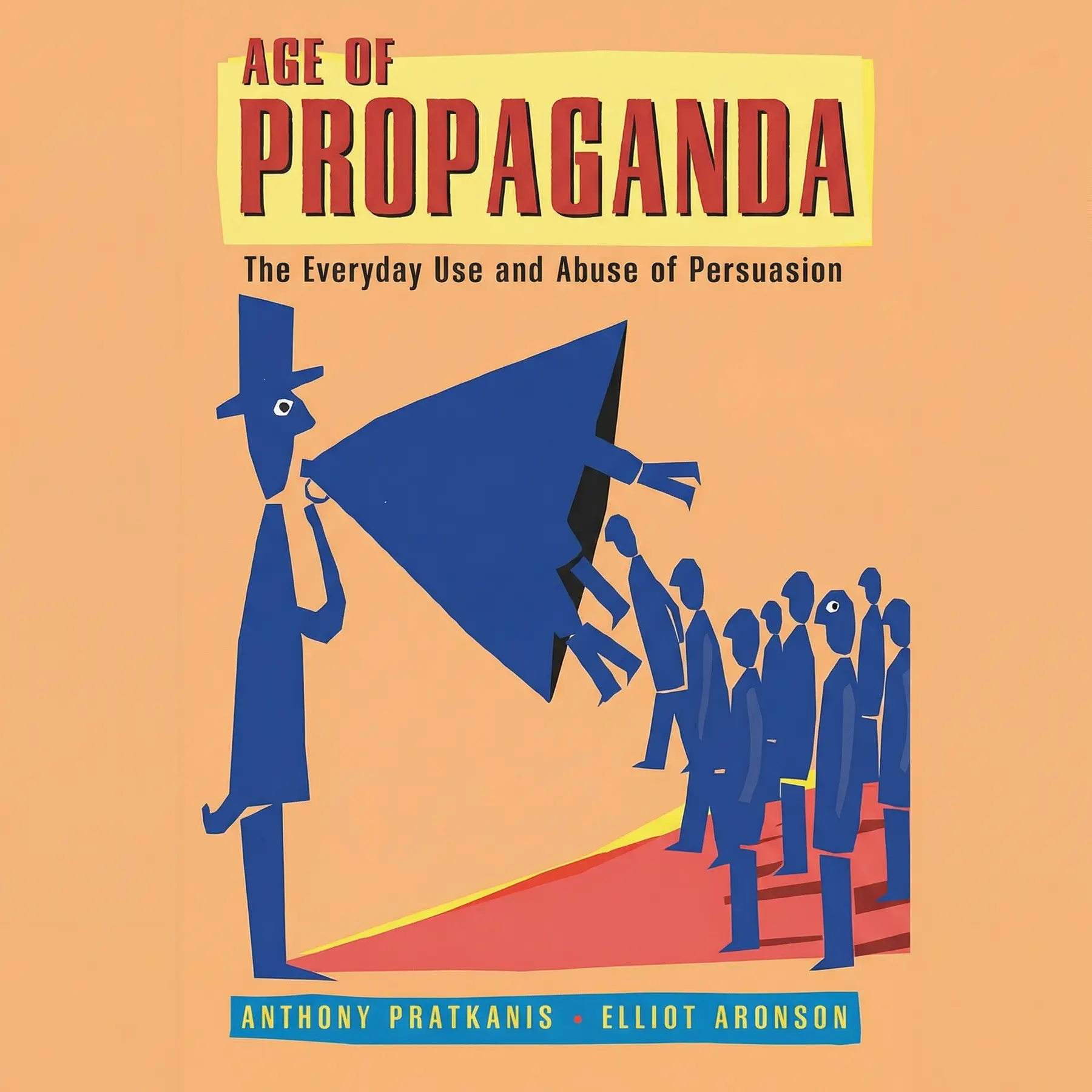
Age of Propaganda: The Everyday Use and Abuse of Persuasion
Examine the subtle and overt ways persuasion shapes our daily lives. This summary explores the psychological mechanisms behind propaganda and offers practical tools to reclaim your independent thinking in a message-heavy world.
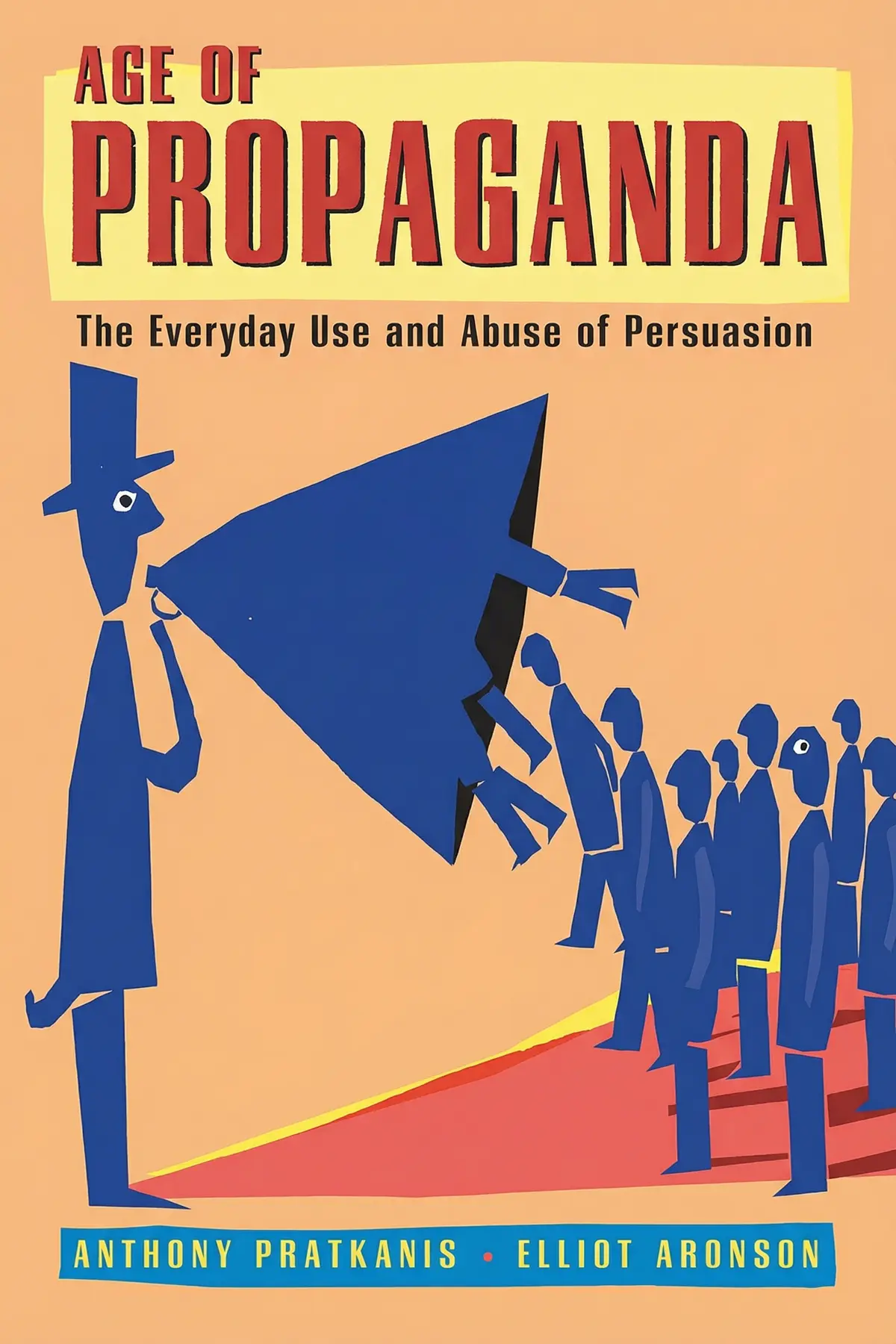
Table of Content
1. Introduction
2 min 04 sec
Every day, from the moment we wake up and check our phones to the time we turn off the television at night, we are swimming in a sea of influence. It’s easy to believe that we are the masters of our own minds—that every purchase we make, every vote we cast, and every opinion we hold is the result of a cool, calculated decision. But the reality is far more complex. In a world where power is often maintained not through force, but through the subtle art of persuasion, we are constantly being steered in directions we might not even recognize.
Think about the leaders of the world. In a democratic society, they cannot simply demand obedience. Instead, they must convince the public to follow their lead. This is where persuasion and propaganda come into play. While we often think of propaganda as something that only happens in distant dictatorships or during dark historical chapters, it is actually a pervasive part of modern life. It’s in the cereal your children beg for, the political sound bites that dominate the evening news, and the way social media groups make us feel like we belong.
The authors, Anthony Pratkanis and Elliot Aronson, invite us to look closer at these hidden forces. They argue that by understanding the techniques used by propagandists, we can transform from passive targets into active, critical thinkers. This isn’t just about avoiding a bad purchase or spotting a political lie; it’s about preserving the very foundations of a rational and free society. When we lose our ability to distinguish between a fair argument and a manipulative trick, we lose our autonomy.
In the following sections, we’re going to pull back the curtain on how the mind is targeted. We’ll explore the difference between being truly persuaded and being subconsciously pushed. We’ll look at how our emotions are used as levers and how our natural need for social belonging can be turned into a cage. Most importantly, we’ll discuss how to build a defense. By the end of this journey, you’ll have a new set of eyes for the world around you, allowing you to see the “hot air” for what it really is and make choices that are truly your own.
2. The Path of Rational Persuasion
1 min 47 sec
Discover why true persuasion relies on logic and the careful weighing of facts, offering a rare opportunity for genuine intellectual growth and informed decision-making.
3. The Silent Influence of Propaganda
2 min 10 sec
Uncover the deceptive mechanics of the peripheral route, where distraction and framing take the place of logic to influence your choices without your knowledge.
4. Source Credibility and the Art of the Message
2 min 07 sec
Learn how the appearance of authority and the clever phrasing of mediocre truths can make even the most basic products seem superior.
5. Prepersuasion and the Emotional Lever
2 min 05 sec
See how the media sets the stage for your decisions by creating specific mindsets, often using fear and guilt to drive your actions.
6. The Entertainment Trap and the Rise of the Sound Bite
2 min 13 sec
Explore how our addiction to entertainment has stripped detail from our news and turned complex politics into empty, catchy phrases.
7. Rationalization and the Power of the Group
2 min 14 sec
Discover how the human fear of being wrong and our need for belonging can trap us in cycles of bad decisions and rigid group identities.
8. Propaganda in the Theater of War
2 min 17 sec
Examine how governments use fear, dehumanization, and the psychological trap of sunk costs to build and maintain support for military conflict.
9. The Mechanics of Cults and Everyday Control
2 min 17 sec
Pull back the curtain on the three-step process cults use to recruit and isolate members, and see how these same tricks appear in daily life.
10. Conclusion
1 min 54 sec
The world of propaganda can feel overwhelming. When we realize how much of our environment is designed to manipulate our thoughts and feelings, it’s easy to become cynical or simply tune out. But apathy is exactly what the propagandist wants. If we stop paying attention, we become even easier to influence. The real solution lies in reclaiming our roles as active, critical thinkers. It starts with education—not just for ourselves, but for the next generation. We must teach our children to look at an advertisement for a toy and ask, “Why do I think this will make me happy? Is it the toy itself, or just the way the commercial made me feel?”
We also have the power to challenge those who seek to influence us. Instead of opting out of the political process, we can demand more from our leaders. We can write to politicians and insist that they back up their sound bites with hard facts and detailed plans. We can tell media outlets that we want in-depth coverage of important issues rather than sensationalist entertainment. When we engage with companies, we can question their claims. If a product’s response to a simple question is just more marketing fluff, we can take our business elsewhere.
Ultimately, the throughline of this exploration is empowerment. Propaganda thrives in the shadows of our subconscious, but it loses its power when we bring it into the light of our conscious, rational mind. By recognizing the four stratagems of influence—source credibility, message framing, prepersuasion, and emotional triggers—we can build a mental defense system. We don’t have to be victims of the age of propaganda. We can choose to be the masters of our own perspectives, making choices based on honesty, logic, and our true values. The fight against manipulation isn’t just about spotting a lie; it’s about choosing to live in a reality that we have carefully and rationally defined for ourselves.
About this book
What is this book about?
We live in an era where thousands of messages compete for our attention every single day. Some of these are honest attempts to share information, while others are calculated efforts to manipulate our behavior and beliefs without us even realizing it. This book dives deep into the psychology of persuasion, distinguishing between rational argument and the more insidious world of propaganda. From political campaigns and commercial advertisements to the extreme tactics used by cults and during wartime, the text breaks down the four main strategies used to influence the masses. By understanding how source credibility, emotional triggers, and social group identities are used against us, readers can learn to spot these tactics in real-time. The promise is simple: by pulling back the curtain on these psychological tricks, you can become a more discerning citizen and protect yourself and your family from being misled.
Book Information
About the Author
Anthony Pratkanis
Anthony Pratkanis is a professor at the University of California, Santa Cruz, as well as an advertising and political consultant. He is a coauthor of Weapons of Fraud: A Source Book for Fraud Fighters, among other titles. Elliot Aronson is one of the 100 preeminent psychologists of the twentieth century and the recipient of many awards, including the William James Award for Lifetime Achievement, awarded by the Association for Psychological Science.
Ratings & Reviews
Ratings at a glance
What people think
Listeners find the material educational and skillfully composed, highlighting its success in making complex media theories accessible. They characterize it as an excellent analysis of propaganda that attempts to clarify the topic, with one listener noting it serves as essential reading for mature thinkers. The book receives conflicting feedback regarding ease of use, as one listener found the text exceptionally hard to finish. Listeners also express disagreement over the writing quality, factual precision, and inherent bias.
Top reviews
Cherry
This book remains an essential deep dive into the psychological machinery behind social influence and mass persuasion. While some examples feel a bit anchored in the late 20th century, the underlying theories about how media manipulates our perceptions are still incredibly sharp. Pratkanis and Aronson manage to take high-level social psychology and make it digestible for anyone who watches the news or scrolls social media. It functions as a necessary defense manual against the constant bombardment of "factoids" and manufactured credibility we face daily. Honestly, if you want to understand why certain political slogans stick or why we buy things we don't need, this is the blueprint. It’s dense in parts but rewards the patient reader with a much clearer view of the world’s hidden agendas.
Show moreLeah
Wow. This is easily one of the most frighteningly relevant books I’ve ever read, despite being written decades ago. The authors perfectly describe how demagogues take power by exploiting the "willing" through a steady diet of lies and emotional manipulation. Reading about the "committed heart" and how requests slowly escalate makes you realize how easily any of us could be pulled into a cult or an extremist movement. It almost feels like a how-to manual that recent political leaders have been following to the letter. If you want to understand the current polarized landscape of "we-they" distinctions, you absolutely need to pick this up immediately. It’s a masterclass in social psychology that will change how you view every 30-second ad or political speech.
Show moreMoon
Finally got around to reading this classic, and I’m genuinely impressed by how well the authors explain high-end media theory without being overly condescending. It’s a great work of propaganda itself, in the sense that it persuasively argues for the necessity of a more skeptical and educated citizenry. The breakdown of how "one-sided" versus "two-sided" debates are used depending on the audience’s existing bias was a huge "aha" moment for me. It’s the kind of book that should be required reading in every high school civics class to help students separate news from entertainment. Even though it's an older text, the warnings about centralized communication and the erosion of democratic discussion feel more urgent today than ever before.
Show morePalm
Look, if you’ve ever felt like your emotions were being played on by a "free gift" or a "today only" deal, this book will tell you exactly why. It’s a fascinating look at the "everyday use and abuse of persuasion" that covers everything from cult recruitment to toothpaste advertisements. I loved the emphasis on monitoring your own emotional responses—if you feel a sudden surge of guilt or fear, someone is likely trying to sell you something. The authors don't just point out the problems; they provide actual solutions, like demanding better campaign spending reform and supporting media literacy. It’s a dense, brilliant, and ultimately empowering read that gives you the tools to fight back against the noise. A must-read for anyone who values their mental independence.
Show moreJiraporn
Ever wonder why you suddenly feel a weird sense of loyalty to a brand or a political group based on nothing but a shared hobby? That is the "Granfalloon" effect in action, and this book breaks it down with surgical precision. It’s a great piece of work that attempts to demystify the complex strategies used by advertisers and politicians to bypass our rational minds. I found the sections on emotional appeals—specifically how fear and guilt are weaponized—to be the most eye-opening and slightly terrifying. Some of the writing feels a little dry, and I did struggle with the pacing during the middle chapters, but the core message is vital. It’s required reading for any thinking adult who wants to maintain some level of autonomy in a world of constant spin.
Show moreAnna
After hearing Ramit Sethi mention this on a podcast, I decided it was time to finally understand how my own strings are being pulled. The book lives up to the hype by providing a comprehensive list of tactics used to cloud our judgment, from "lowballing" to the use of "gift" obligations. I particularly appreciated the practical checklist at the end for keeping yourself from being influenced by malicious propaganda. Gotta say, it really makes you rethink your media consumption habits and why you choose to trust certain sources over others. My only gripe is that it can feel a bit repetitive; the authors really hammer home the same points about communicator credibility. Still, it's a very valuable tool for anyone trying to navigate the modern information landscape.
Show moreSamroeng
The chapter on how scarcity is used to spark artificial interest was worth the price of the book alone. Pratkanis and Aronson do a fantastic job explaining how we are wired to want things simply because they are "limited" or "exclusive." I also enjoyed the deep dive into how "repair people" or experts use fear to manufacture a need for immediate, expensive services. Personally, I found the advice on teaching children to develop counterarguments against TV commercials to be incredibly practical for parents. The book is a bit long-winded at times, but the "Summary of What You Can Do" section is a goldmine of defensive strategies. It’s a solid 4-star read that will definitely make you a more skeptical consumer of information.
Show moreUdom
Picked this up because it’s frequently cited in persuasion circles, but I have to say it felt quite dated in 2024. Most of the case studies, like the tragedy of Jim Jones or old movie theater subliminal messaging, have been covered extensively in dozens of other books like "Mistakes Were Made." While the breakdown of the four persuasion phases—pre-persuasion, credibility, delivery, and emotional appeals—is solid, it didn't offer many fresh insights for someone already familiar with basic psychology. To be fair, the advice on how to protect children from exploitative marketing is still very relevant and well-argued. It's a decent foundational text, but if you’ve already read Cialdini or similar authors, you might find yourself skimming large portions of this one.
Show moreChamp
To be fair, the science behind the "Age of Propaganda" is rock solid, but the presentation is often quite tedious and academic. I found myself frequently losing interest during the long-winded explanations of research studies that felt like they belonged in a textbook rather than a book for the general public. While the information on "pre-persuasion" and setting the context is brilliant, the book desperately needs a modern update to account for social media and the internet. It was written in a time when TV ads were the primary threat, and while the principles apply today, the examples feel ancient. It’s an informative read if you can push through the dry prose, but it’s definitely not a page-turner by any stretch of the imagination.
Show moreAndrew
As someone who enjoys reading about media theory, I found this particular volume incredibly difficult to get through and arguably quite biased. The authors seem to have a specific political axe to grind, often framing anyone they disagree with as a purveyor of "Hitler-esque" propaganda while ignoring similar tactics from their own side. I found the "factoids" section ironically lacking in solid evidence, relying more on anecdotes than rigorous scientific data in several key chapters. Truth is, the book feels like it’s trying to be a scholarly text while behaving more like a partisan manifesto. If you’re looking for an objective, academic look at persuasion, there are much better, more modern resources available that don't feel so heavily slanted.
Show moreReaders also enjoyed
A Higher Loyalty: Truth, Lies and Leadership
James Comey



A Liberated Mind: How to Pivot Toward What Matters
Steven C. Hayes
A Promised Land
Barack Obama

A River in Darkness: One Man’s Escape from North Korea
Masaji Ishikawa
AUDIO SUMMARY AVAILABLE
Listen to Age of Propaganda in 15 minutes
Get the key ideas from Age of Propaganda by Anthony Pratkanis, plus 5,000+ more titles in English and Thai.
- 5,000+ titles
- Listen as much as you want
- 7-day free trial
- Cancel anytime







