
13 min 30 sec
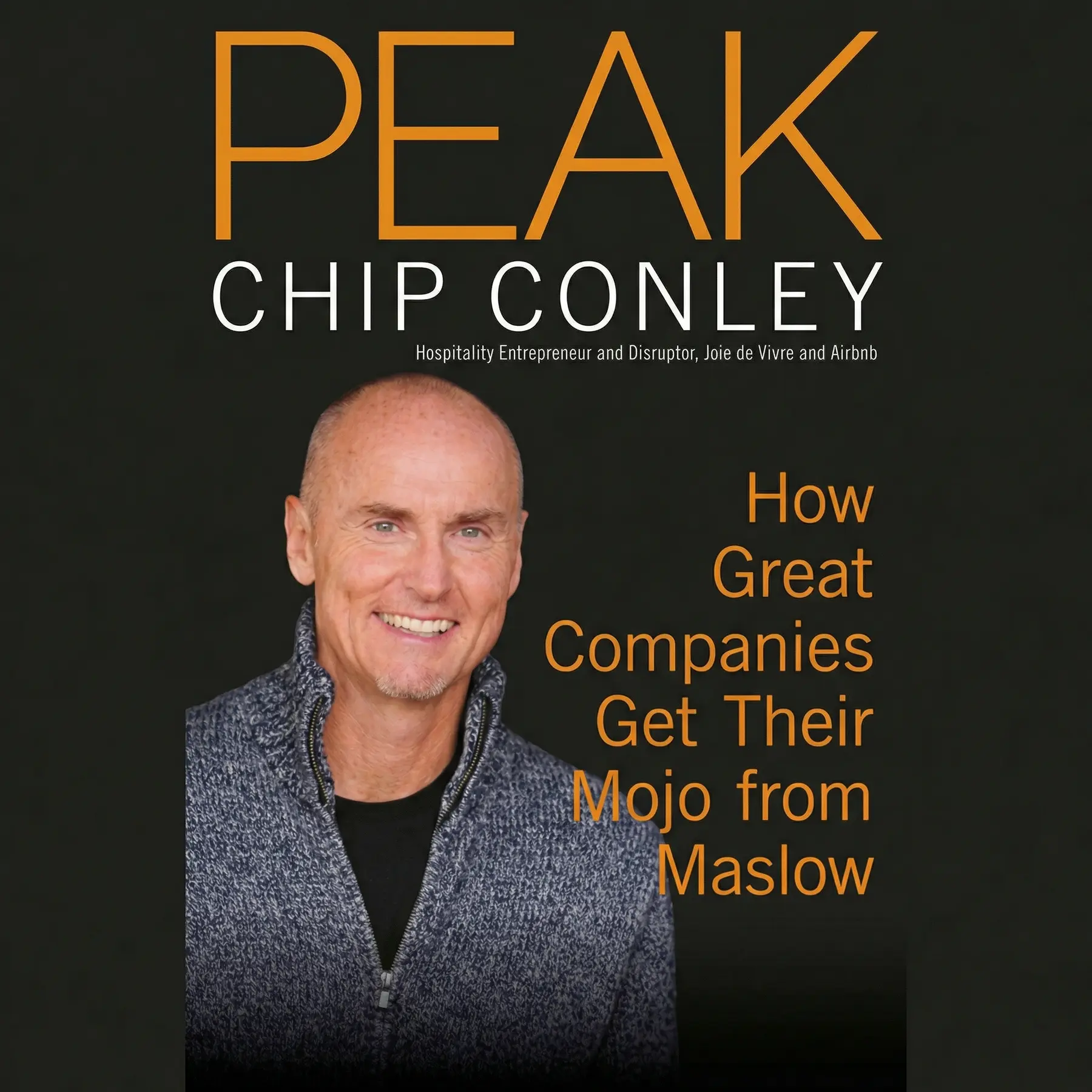
Peak: How Great Companies Get Their Mojo From Maslow
By Chip Conley
Discover how applying Maslow’s hierarchy of needs to business creates sustainable success. Chip Conley explores transforming relationships with employees, customers, and investors into a company’s greatest competitive advantage.
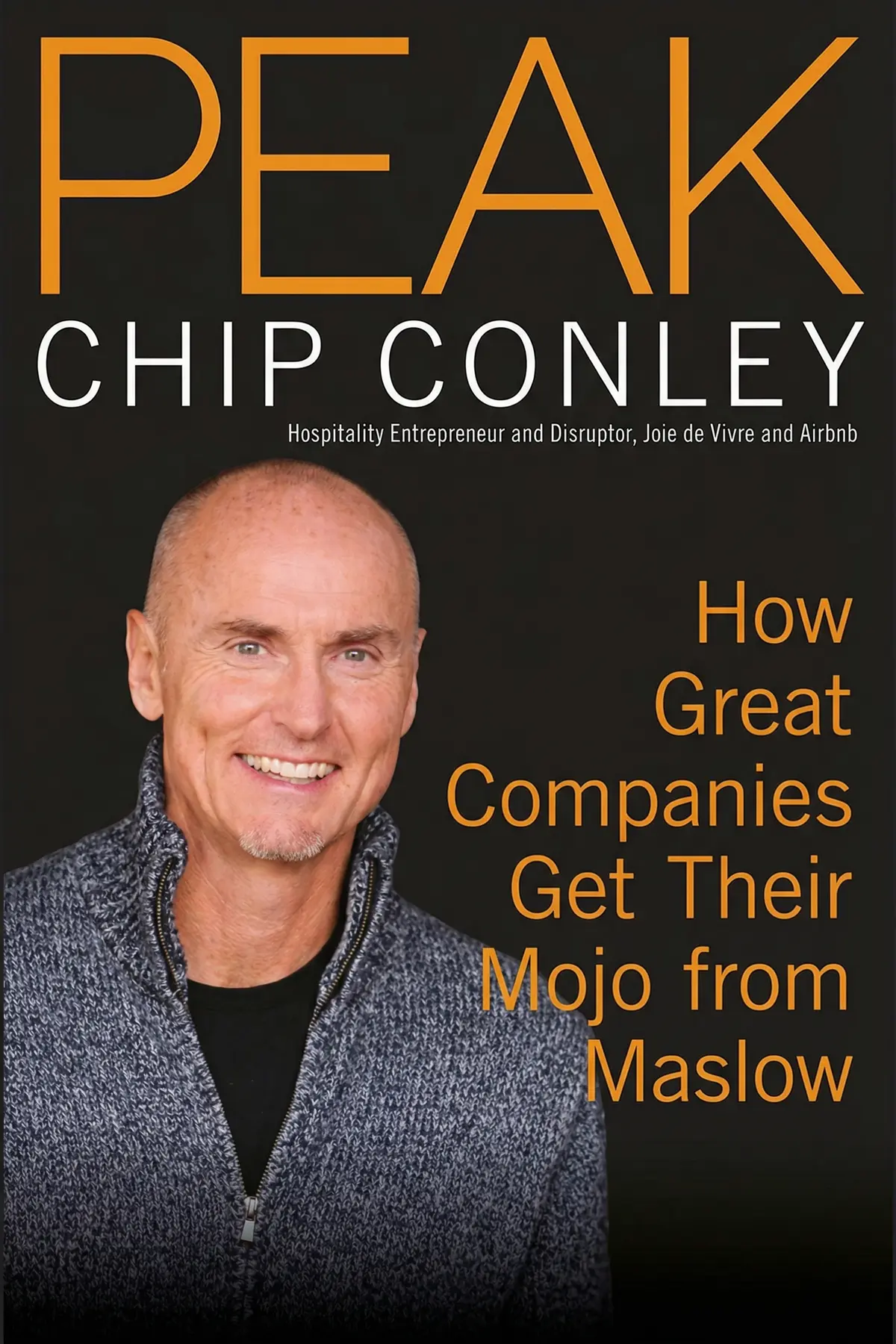
Table of Content
1. Introduction
1 min 37 sec
Every entrepreneur eventually faces a moment of reckoning. It’s that quiet, perhaps terrifying, realization that the old ways of doing things simply aren’t working anymore. Maybe the market has shifted, or perhaps the internal culture has grown stale. When the traditional metrics of success—revenue, growth, and market share—start to feel hollow or become harder to reach, what is a leader to do? This is the starting point for a profound shift in how we think about the very nature of commerce. Most of us are taught that business is a series of transactions, a cold exchange of value for money. But what if that perspective is fundamentally flawed? What if the real currency of a thriving company isn’t cash, but human connection?
In the following pages, we are going to explore a framework that bridges the gap between the boardroom and the human heart. We are looking at a philosophy that suggests the highest levels of corporate achievement are only possible when we address the highest levels of human need. This isn’t just about being ‘nice’ or having a pleasant workplace; it is about a strategic alignment with the way people are actually wired. We will look at how the famous psychological theories of Abraham Maslow can be repurposed to create a business that doesn’t just survive but reaches its absolute peak. This journey will take us through three distinct pyramids: one for the people who do the work, one for the people who buy the product, and one for the people who provide the capital. By the end, you’ll see how a shift from the tangible to the intangible can become your greatest competitive advantage in an unpredictable world. Let’s begin by looking at how a period of intense crisis can lead to a breakthrough in perspective.
2. The Catalyst of Crisis and the Wisdom of Maslow
2 min 17 sec
When a business faces a crushing economic downturn, the answer might not be in the spreadsheets but in a classic work of psychology that redefines human potential.
3. Redefining Success Through Intangible Value
2 min 12 sec
In a world obsessed with data, the most important drivers of loyalty and prosperity are often the things we cannot easily measure.
4. The Employee Pyramid: From Paycheck to Meaning
2 min 00 sec
True motivation doesn’t come from a bigger salary; it comes from feeling seen, appreciated, and connected to a larger purpose.
5. The Customer Pyramid: Meeting the Needs They Haven't Voiced
1 min 58 sec
Satisfying a customer’s basic expectations is the bare minimum; to create true advocates, you must fulfill their subconscious desires.
6. The Investor Pyramid: Beyond ROI to Shared Legacy
1 min 59 sec
Investors are humans too, and while they want a return on their money, they are also looking for a sense of partnership and purpose.
7. Conclusion
1 min 27 sec
The ultimate takeaway from Chip Conley’s journey is that the most profitable way to run a business is also the most human way. By taking the timeless psychological insights of Abraham Maslow and applying them to the modern corporate landscape, we can transform our organizations into engines of self-actualization. We’ve seen that it isn’t enough to simply satisfy the basic needs of our stakeholders. To reach the peak, we must look higher. We must provide our employees with a sense of calling, our customers with a sense of transformation, and our investors with a sense of legacy.
This framework offers a way out of the grind of transactional management. It suggests that if you take care of the people—really take care of their deepest, most intangible needs—the numbers will take care of themselves. The ‘mojo’ of a company is its greatest asset, a self-sustaining energy that attracts the best talent and the most loyal customers. As you move forward, consider yourself a ‘dreammaker.’ Whether you are leading a massive corporation or just starting a small project, ask yourself: How can I help the people around me reach their full potential? What unrecognized needs can I fulfill today? By aiming for the peak of the pyramid, you don’t just build a better business; you help build a world where work and commerce are meaningful expressions of our shared humanity. Start by looking beyond the spreadsheets and focusing on the hearts of the people who make your business possible. That is where the true peak resides.
About this book
What is this book about?
What does it take for a business to thrive when the economy is crumbling? Peak explores the intersection of human psychology and corporate strategy, using Abraham Maslow’s iconic hierarchy of needs as a blueprint for leadership. The book argues that the most successful companies don’t just focus on the bottom line; they focus on the self-actualization of every person involved in the enterprise. Chip Conley shares his personal journey of steering a boutique hotel chain through the 2001 dot-com crash by shifting from a transactional business model to a transformational one. You will learn how to move beyond basic satisfaction to create deep, emotional loyalty. The promise of the book is a practical framework for building a resilient organization where employees find meaning, customers find belonging, and investors find a shared purpose. By understanding the intangible needs of your stakeholders, you can unlock a level of peak performance that transcends traditional management techniques.
Book Information
About the Author
Chip Conley
Chip Conley is a seasoned entrepreneur who launched Joie de Vivre Hospitality in 1987 at the age of 26. Under his leadership, the firm evolved into a highly acclaimed boutique hotel group. Beyond his success in the hospitality industry, Conley is recognized as an influential public speaker and a bestselling author. His other notable literary works include The Rebel Rules and Marketing That Matters.
Ratings & Reviews
Ratings at a glance
What people think
Listeners enjoy the perceptive application of Maslow’s hierarchy of needs to the corporate landscape, viewing the framework as a practical guide for boosting workplace culture and consumer devotion. While some listeners suggest the psychological concepts are somewhat basic, many find great value in the book’s pragmatic leadership techniques and concrete examples. They also emphasize the importance of prioritizing human potential over purely financial indicators, with one listener highlighting how the text successfully clarifies the difference between "meaning at work" and "meaning in work." Furthermore, listeners see the investor pyramid as a specialized instrument for syncing capital with a company’s lasting mission and legacy.
Top reviews
Pun
Wow, the way Conley translates psychological theories into workplace culture is just brilliant. I’ve always felt that the best companies have an 'it' factor that you can't quite put your finger on, and this book finally gives that 'mojo' a name and a structure. By focusing on the transformation level of the pyramid, Conley shows how to turn employees into believers and customers into fans. The story about how Southwest flight attendants stay happy by not being treated like baggage handlers was a real lightbulb moment for me. It proves that the most valuable things in business are often the hardest to quantify. This isn't just a book about making money; it's a book about the miracle of human potential. I feel inspired to rethink my entire leadership style.
Show moreUbolrat
Finally got around to this classic and I’m genuinely surprised by how relevant it remains in today’s gig economy. The three separate pyramids for employees, customers, and investors provide a holistic view of what makes a business truly 'peak.' I loved the deep dive into 'unrecognized needs'—it’s that 'aha' moment when a customer realizes you’ve solved a problem they didn't even know they had. Conley writes with the heart of a psychologist and the brain of a CEO, which makes for a very unique reading experience. It’s rare to find a business book that discusses 'bliss' and 'capital' in the same sentence and actually makes it work. If you are a leader at any level, this is essential reading for creating a self-actualized organization.
Show moreWipada
After hearing Chip speak at a conference, I knew I needed the full roadmap provided in this book. He has an incredible way of making the 'soft' parts of leadership feel tangible and actionable. The hierarchy he presents—moving from survival to success to transformation—is a powerful tool for anyone looking to align their company’s mission with the human spirit. I was particularly struck by the investor section; seeing capital as a way to create a legacy rather than just liquidity is a game-changer for long-term planning. The writing is punchy, the examples are real-world, and the logic is sound. It’s a refreshing departure from the usual focus on deficits and 'fixing' what’s broken, choosing instead to focus on what’s possible. Truly a masterclass in leadership.
Show moreOak
The investor pyramid section was easily the most enlightening part of the entire text for me. Most business books completely ignore the psychology of the person providing the capital, assuming they only care about ROI and liquidity. Conley argues that at the peak, investors are actually seeking legacy and a sense of pride in ownership, which is a refreshing take. It’s a shrewd integration of psychological needs into a world that is usually dominated by cold, hard numbers. I did feel some of the chapters dragged on a bit, but the core message is vital. Shifting focus from financial metrics to human potential is how you build a company that actually feels alive. This book gives you a solid blueprint to start that climb, even if some steps feel a bit steep.
Show moreFah
Picked this up after a recommendation from a colleague who swears by Maslow's hierarchy for team building. Truth is, I’m usually skeptical of 'mojo' and 'transformation' talk, but the distinction between 'meaning at work' and 'meaning in work' really resonated with me. One is about the mission of the firm, while the other is about the daily tasks, and the synergy between the two is where productivity truly lives. The hospital study mentioned regarding happy nurses leading to better patient outcomes was a powerful piece of evidence. My only gripe is that the book can be repetitive at times, hammering home the pyramid structure until you’re seeing triangles in your sleep. Still, the actionable strategies for creating customer 'evangelism' are worth the price of admission alone.
Show moreLeah
Look, I’ve slogged through dozens of leadership titles that should have been five-page articles, but this one actually builds on its premise throughout. Conley takes the hierarchy of needs and applies it to the corporate ecosystem in a way that feels both intuitive and challenging. I particularly liked the focus on 'unrecognized needs' for customers, which is what moves a brand from mere satisfaction to true commitment. He mentions Apple and Zappos as examples, and while those are used a lot in business literature, he provides a different lens through Maslow’s work. The prose is clear, though it occasionally dips into some pretty heavy 'corporate-speak' that might irritate a more cynical reader. Overall, it is a compelling look at how to humanize the workplace for long-term success.
Show moreArnav
As a manager struggling with high turnover, this provided a much-needed perspective shift regarding how I view my team’s motivations. We often focus so much on the base of the pyramid—the salary and the benefits—that we completely forget about the recognition and calling that keep people inspired. Conley’s 'Relationship Truths' are a great reminder that people aren't just line items on a spreadsheet. The book is well-structured and moves quickly, though I would have liked more data to back up some of the broader psychological claims. It’s a great guide for anyone looking to move beyond 'management by the numbers' and into something more sustainable. It’s not perfect, but it’s definitely insightful and worth a spot on your professional development shelf.
Show moreDen
Not what I expected given how much I loved Conley's 'Wisdom at Work.' This felt like a collection of bland, generic remarks packaged as a revolutionary business manual, which was a bit of a letdown. To be fair, the sections on the employee pyramid—moving from survival to calling—are decent enough, but they aren't exactly groundbreaking if you've read Tony Hsieh. I did appreciate the anecdote about Southwest Airlines and why they avoid baggage fees to keep their flight attendants from becoming disgruntled handlers. It makes sense that happy staff lead to better retention. However, a lot of the 'transformative' advice felt like common sense dressed up in academic robes. It’s a quick read, but I’m not sure it lived up to the hype for me.
Show morePita
Ever wonder if we are overcomplicating the simple act of human connection in commerce? Conley’s exploration of 'Peak' attempts to answer that by using Maslow’s hierarchy to map out relationships with employees, customers, and investors. The writing is accessible, yet I found myself questioning the validity of the model when applied to the harsh reality of global markets. Is 'meaning at work' really enough to sustain a company when the 'survival' needs of the balance sheet aren't being met? The book spends a lot of time on the intangible stuff that business leaders usually ignore because it can’t be measured easily. It is an interesting philosophical exercise, but the application feels a bit thin in certain chapters. It’s a good starting point for a culture shift, but don’t expect a magic wand.
Show moreKaen
This book felt more like a snooze fest than a business guide, frankly. I usually have a high tolerance for corporate theory, but this one sent me into a deep slumber three times before I even hit the halfway point. While the attempt to link Maslow’s hierarchy to business is ambitious, the execution feels like a recycled version of 'Man’s Search for Meaning' without the same emotional weight. The framework suggests that everything in the commercial world is essentially an illusion designed to trigger our 'crocodile brains.' If I want to sell products, do I really need a pyramid to tell me to create a sense of prestige? The theories here are oversimplified and, in my experience, life is far messier than these neat little triangles suggest. It’s a bit too idealistic for the reality of the modern economy.
Show moreReaders also enjoyed
A Year with Peter Drucker: 52 Weeks of Coaching for Leadership Effectiveness
Joseph A. Maciariello
Acting with Power: Why We Are More Powerful Than We Believe
Deborah Gruenfeld
All In: How Great Leaders Build Unstoppable Teams
Mike Michalowicz
7 Powers: The Foundations of Business Strategy
Hamilton Helmer
AUDIO SUMMARY AVAILABLE
Listen to Peak in 15 minutes
Get the key ideas from Peak by Chip Conley, plus 5,000+ more titles in English and Thai.
- 5,000+ titles
- Listen as much as you want
- 7-day free trial
- Cancel anytime







