
16 min 29 sec
Picasso’s War: How Modern Art Came to America
By Hugh Eakin
Picasso's War details the dramatic decades-long struggle to introduce modern art to America, highlighting the visionaries like John Quinn and Alfred Barr who championed Picasso’s revolutionary genius against a wave of heavy cultural resistance.
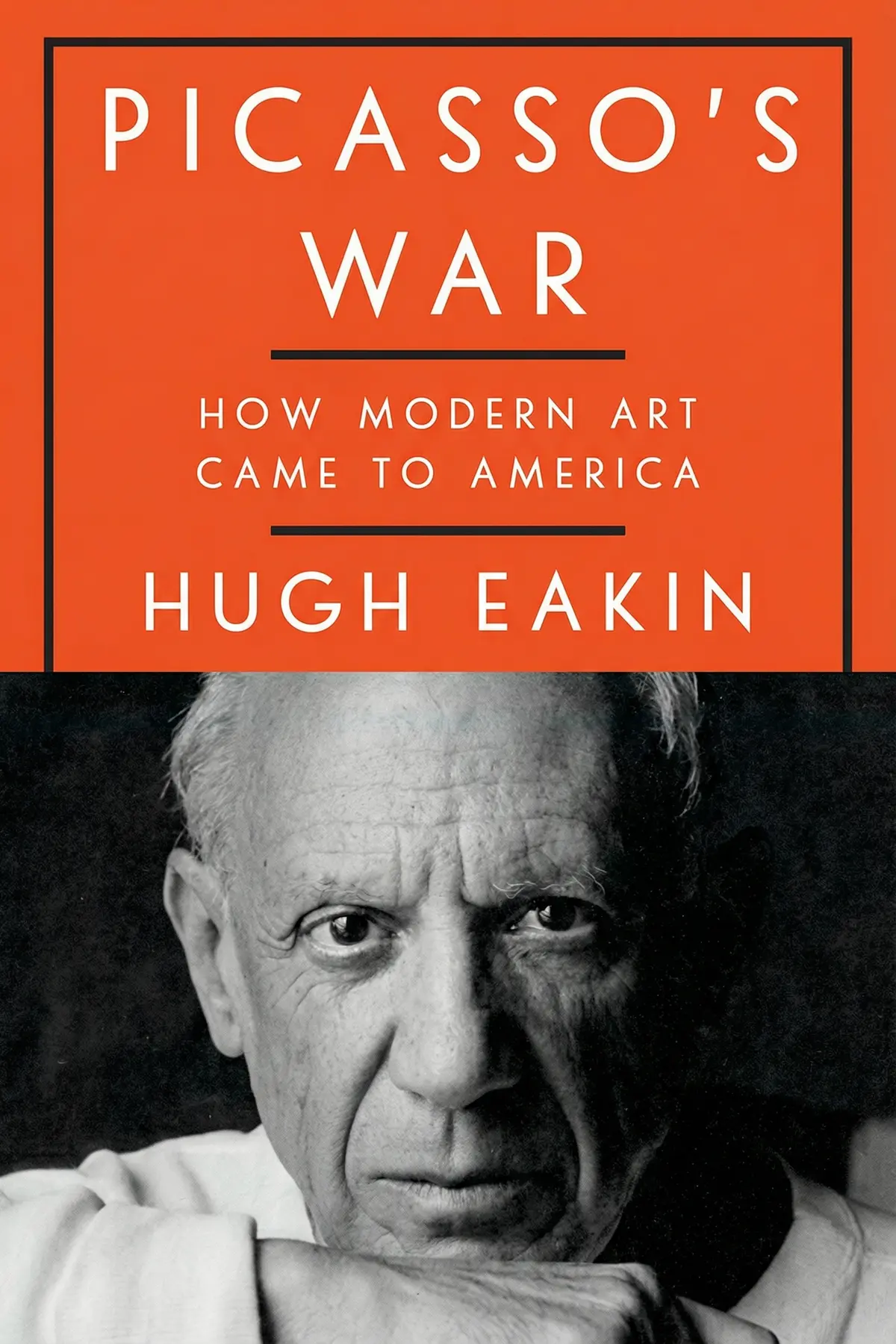
Table of Content
1. Introduction
1 min 50 sec
Imagine walking into an art gallery today. You likely expect to see splashes of color, fragmented shapes, and bold experiments that challenge your perspective. We live in a world where the name Pablo Picasso is synonymous with genius, and his works are the crown jewels of our most prestigious institutions. But it wasn’t always this way. In fact, for the first few decades of the twentieth century, the United States was effectively a fortress of tradition, almost entirely sealed off from the radical creative shifts happening across the Atlantic. To the American public of the early 1900s, modern art wasn’t just ‘different’—it was viewed as a dangerous, deranged, and even poisonous influence that threatened the moral and mental stability of the nation.
This is the throughline of our story: a decades-long struggle to bridge the gap between European innovation and American conservatism. It is a tale of a few stubborn individuals who saw something in Picasso that no one else in their country could yet grasp. These were people who risked their reputations and their fortunes to prove that the ‘Old Masters’ weren’t the only ones with something important to say. They had to fight not just against public taste, but against legal barriers, political hostility, and the devastating disruptions of two global wars.
In this summary, we will trace the journey of how America’s relationship with modern art was forged. We’ll meet the lawyer who spent his life savings on sketches that his peers called ‘fire escapes,’ the young museum director who changed how we look at paintings on a wall, and the French dealers who navigated the chaos of occupied Europe to save Picasso’s legacy. This isn’t just a history of art; it’s a history of a cultural revolution that eventually turned New York into the new Paris and made the once-hated shapes of Cubism a foundational part of the American identity.
2. The First Glimpse of the Avant-Garde
2 min 34 sec
In a tiny, soot-stained New York loft, a lone lawyer encountered a drawing that would change his life and start a cultural firestorm in a country obsessed with the past.
3. The Armory Show and the Legal War
2 min 39 sec
When a massive art exhibition sparked a national outrage, it revealed a hidden legal barrier that was intentionally keeping modern culture out of the hands of American collectors.
4. The Business of the Avant-Garde
2 min 42 sec
While Picasso’s fame grew in the messy studios of Paris, a rivalry between two very different art dealers determined how his work would eventually be sold to the world.
5. The Founding Mothers and the Young Director
2 min 38 sec
After the tragic loss of a world-class collection, three determined women and a twenty-seven-year-old visionary reinvented the very idea of what a museum should be.
6. The Victory Lap and the Legacy of War
2 min 35 sec
As Europe descended into the darkness of the Second World War, a landmark exhibition in New York finally cemented Picasso’s place as the defining artist of the age.
7. Conclusion
1 min 31 sec
The transformation of America from a conservative artistic backwater to the global epicenter of modernism is one of the most unlikely success stories of the twentieth century. It was a victory won not through a single event, but through a series of tactical maneuvers and a relentless belief in the value of the new. John Quinn provided the initial spark and the legal muscle; the founding mothers of MoMA provided the institutional home; and Alfred Barr provided the intellectual map that allowed the public to navigate Picasso’s challenging visions.
What we can take away from this journey is the reminder that culture is never static, and progress often requires a ‘war’ against the comfort of the familiar. The story of Picasso’s American arrival teaches us that the radical ideas of today are often the foundations of tomorrow. When we look at a Picasso painting now, we don’t see a ‘fire escape’ or a ‘lunatic fringe’; we see the work of a man who helped us understand a fragmented, modern world.
As you think about the creative risks being taken in our own time—whether in technology, art, or social thought—remember the lessons of 1913 and 1939. It takes courage to champion the misunderstood, and it takes time for the rest of the world to catch up. But as the throughline of this book proves, when visionaries persist, they don’t just change what we see on the walls of a museum; they change how we see the world itself. The battle for modern art was won, and in its wake, it left a nation that was finally ready to embrace the bold, the messy, and the brilliant future.
About this book
What is this book about?
Picasso's War tells the riveting story of how the United States, once a bastion of artistic conservatism, eventually became the global center for the avant-garde. The narrative follows a small group of defiant collectors, dealers, and curators who believed in the power of modernism when the rest of the country saw it as a threat to societal sanity. At the heart of this transformation is Pablo Picasso, whose work served as the ultimate test for American tastes. The book reveals that the acceptance of modern art wasn't an inevitable evolution, but a hard-fought battle. It required overturning federal tax laws, surviving the ridicule of presidents, and navigating the displacement of two world wars. From the cramped galleries of New York to the bohemian studios of Paris, this is a chronicle of cultural diplomacy and stubborn brilliance. It promises to show how the visual language we now take for granted was once a radical provocation that changed the American landscape forever.
Book Information
About the Author
Hugh Eakin
Hugh Eakin is a distinguished journalist and historian who serves as a senior editor at Foreign Affairs. He has been a frequent contributor to the New York Review of Books and has written extensively on the intersection of art, museums, and history for prestigious publications including The New Yorker and Vanity Fair. His expertise in the cultural world provides a deep, well-researched perspective on the institutional shifts that defined the twentieth-century art market.
Ratings & Reviews
Ratings at a glance
What people think
Listeners find the book remarkably educational and meticulously documented, with one review noting that it reveals obscure details. Furthermore, the prose receives high marks, and listeners describe the writing as being very accessible and captivating. The narrative quality is also praised, as one listener points out its fabulous story about the trials and tribulations of modern art.
Top reviews
Valentina
Picked this up on a whim after a friend recommended it, and I was completely blown away by the narrative drive. It isn't just a dry account of brushstrokes; it’s a high-stakes drama featuring lawyers like John Quinn and visionaries like Alfred Barr. The way Eakin describes the uphill battle to get the American public to even look at modern art without laughing is fascinating. I was surprised to learn that Germany and Russia were actually ahead of us in the early 20th century. The prose is clean and remarkably accessible for such a dense topic. If you love the MoMA, this provides the essential backstory you never knew you needed. It’s easily one of the best non-fiction books I’ve tackled this year. The history of how these paintings survived the era is truly gripping.
Show moreDarawan
Hugh Eakin has written a masterclass in cultural history that reads like a thriller. The truth is, I had no idea that the 'degenerate art' label used by the Nazis was echoed by American critics years earlier. It’s a chilling reminder of how radical Picasso’s work once felt to a world accustomed to traditional salon-style displays. The author brilliantly weaves together the lives of collectors, dealers, and the artists themselves to show how MoMA rose from a fragile idea to a global powerhouse. I particularly appreciated the sections on the Spanish Civil War and the creation of Guernica. It’s informative without ever feeling like a textbook. Every chapter reveals a new layer of the struggle to redefine what beauty means in the modern age. Essential for any art lover.
Show moreWachira
Finally got around to this after seeing rave reviews, and it definitely lived up to the hype. The way it tracks the movement of art from war-torn Europe to the United States is nothing short of gripping. I was particularly moved by the account of Picasso’s political awakening during the Spanish Civil War. Watching Guernica evolve from a mural for a pavilion to a global symbol of resistance was a highlight of the book. Eakin has a gift for making the complex maneuvers of art dealers like Paul Rosenberg feel like high-stakes espionage. It’s a stunning achievement that bridges the gap between art history and political history. I couldn't put it down, which is rare for a four-hundred-page nonfiction tome.
Show morePui
The level of detail here is staggering, yet the book never feels overwhelming. Eakin focuses on the 'war' for acceptance, highlighting how figures like John Quinn paved the way for the eventual triumph of modernism. I loved the insight into how museums changed their display styles—moving away from the cluttered 'salon style' to the eye-level, sequential storytelling we see today. It makes you realize that even the way we look at art was a hard-fought revolution. The book also doesn't shy away from the darker aspects of the era, including the rise of totalitarianism and its impact on creativity. It’s a dense, rewarding read that I’ll be thinking about every time I walk into a gallery. Truly a gem of historical writing.
Show moreWatcharin
Wow, what a revelation this was. Eakin draws a fascinating parallel between Picasso’s cubism and the shifts in physics brought about by Einstein, which really helped me grasp the intellectual weight of the movement. This isn't just a book about paintings; it's a book about a total shift in human perception. The account of Alfred Barr’s nervous breakdown while trying to save modernism from the Nazis was heart-wrenching. It really puts the 'war' in the title into perspective. The writing is elegant, thoughtful, and incredibly well-informed. It’s rare to find a book that handles such complex cultural history with such a light, engaging touch. I learned more here than in a semester of art history classes. Highly recommended for any history buff.
Show moreTim
As a frequent visitor to the MoMA, I thought I knew the story of modern art, but I was wrong. This book sheds light on the sheer persistence required to bring works like Les Demoiselles d'Avignon to New York. Alfred Barr comes across as such a complex, dedicated figure, fighting against both a skeptical board and his own health issues. The book does a wonderful job connecting the aesthetic shifts in Europe to the political turmoil of the time. My only minor gripe is that it occasionally bogs down in the logistics of art dealing, which can get a bit technical. Still, the research is top-notch and the storytelling is vivid enough to keep you turning pages. It's a deep dive into how culture is curated, sold, and eventually canonized.
Show moreNit
Ever wonder how America became the center of the art world? Eakin provides the answer in this meticulously chronicled account of the early 20th-century art scene. He frames the struggle for modernism as a literal battle, pitting forward-thinking individuals against a philistine public. The descriptions of the 1913 Armory Show and its disastrous reception were eye-opening. It’s fascinating to see how long it took for Picasso to be recognized as a genius on this side of the Atlantic. The book manages to be both academic in its depth and cinematic in its execution. I finished it with a much deeper appreciation for the courage it takes to champion something truly new, even if the sheer number of names can be hard to track.
Show moreNang
Look, I usually find art history a bit dry and stuffy, but this was surprisingly readable. It’s a fabulous story about the trials and tribulations of people who risked everything for paintings that most people thought were garbage at the time. The narrative flows smoothly, and the author does a great job of explaining why Picasso’s work was so revolutionary without using too much jargon. I did feel like some of the side characters got a bit more page time than necessary, making the book longer than it needed to be. However, the payoff at the end is worth it. It’s an engaging look at the intersection of money, power, and high art. Definitely worth the time if you're curious about the origins of the MoMA.
Show moreRosa
While the focus shifts away from Picasso himself at times, the exploration of the American art market is utterly compelling. I was particularly drawn to the tragic figure of John Quinn, whose massive collection was scattered to the winds because America wasn't ready for it. It’s a bittersweet story that makes the eventual success of the MoMA feel even more significant. Eakin’s writing is sharp and he has a great eye for the telling detail. My only complaint is that the title might lead some to expect more of a military history, but the metaphorical 'war' is just as intense. For anyone interested in how the 20th century was shaped, this is essential reading. It's a well-researched journey through the birth of modern taste.
Show moreIsabelle
Not what I expected based on the title, to be fair. I was looking for a straightforward biography of Picasso’s life and personal exploits, but this is much more about the infrastructure of the art world. It focuses heavily on the business side—dealers, lawyers, and museum directors—rather than the man behind the canvas. Also, for a book about visual art, the lack of high-quality illustrations throughout the text was a major letdown. I found myself constantly Googling the paintings being discussed just to follow the narrative. It’s well-researched, sure, but the pacing felt a bit slow in the middle sections. If you want a deep dive into 1920s art market logistics and the death of John Quinn, you’ll love it, but casual fans might find it a bit dry.
Show moreReaders also enjoyed
A Splendid Exchange: How Trade Shaped the World
William J. Bernstein
A Spy Among Friends: Philby and the Great Betrayal
Ben Macintyre
1491: New Revelations of the Americas Before Columbus
Charles C. Mann
A Year in the Life of William Shakespeare: 1599
James Shapiro
1929: Inside the Greatest Crash in Wall Street History--and How It
Andrew Ross Sorkin
AUDIO SUMMARY AVAILABLE
Listen to Picasso’s War in 15 minutes
Get the key ideas from Picasso’s War by Hugh Eakin, plus 5,000+ more titles in English and Thai.
- 5,000+ titles
- Listen as much as you want
- 7-day free trial
- Cancel anytime







