
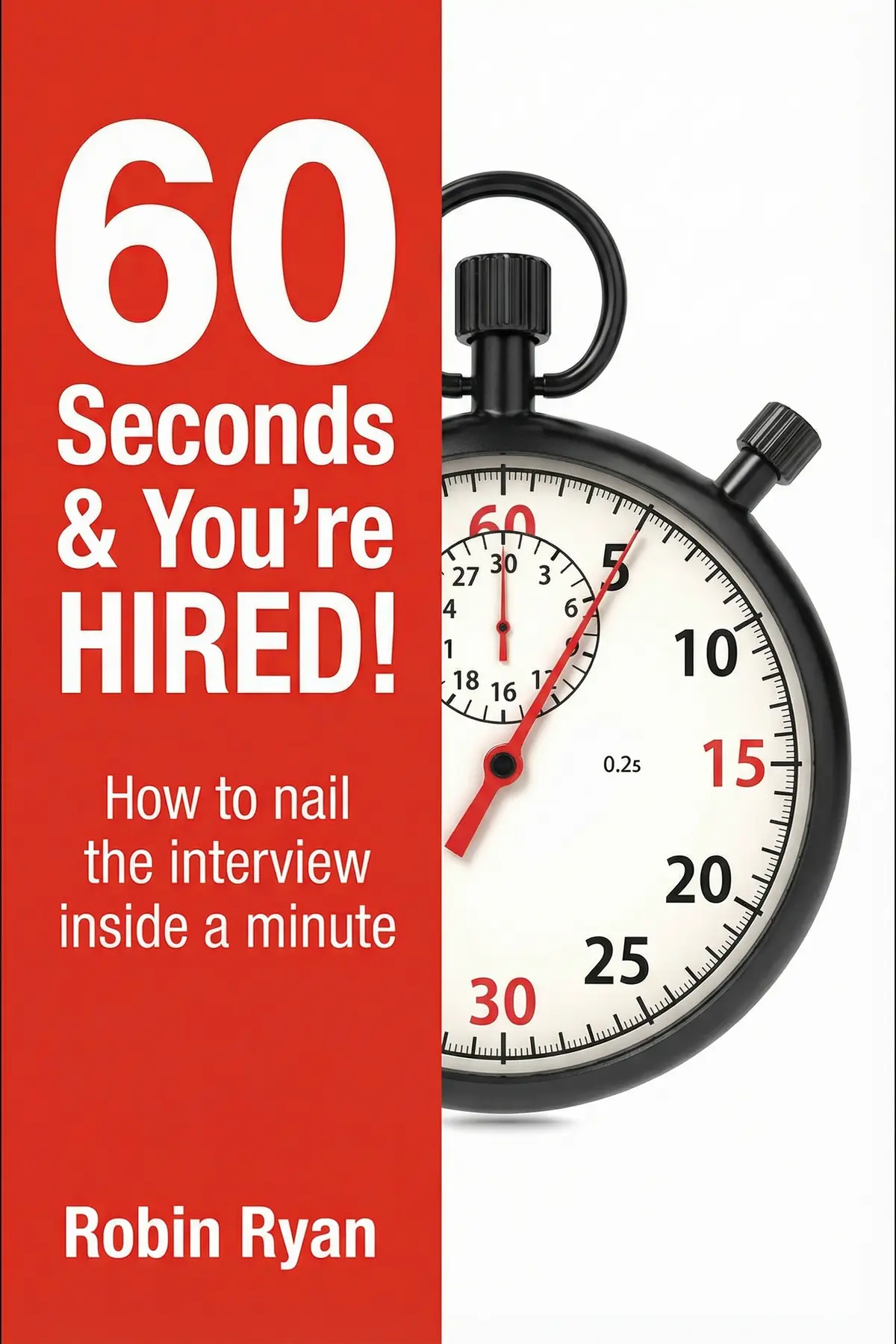
60 Seconds & You’re Hired!
Robin Ryan
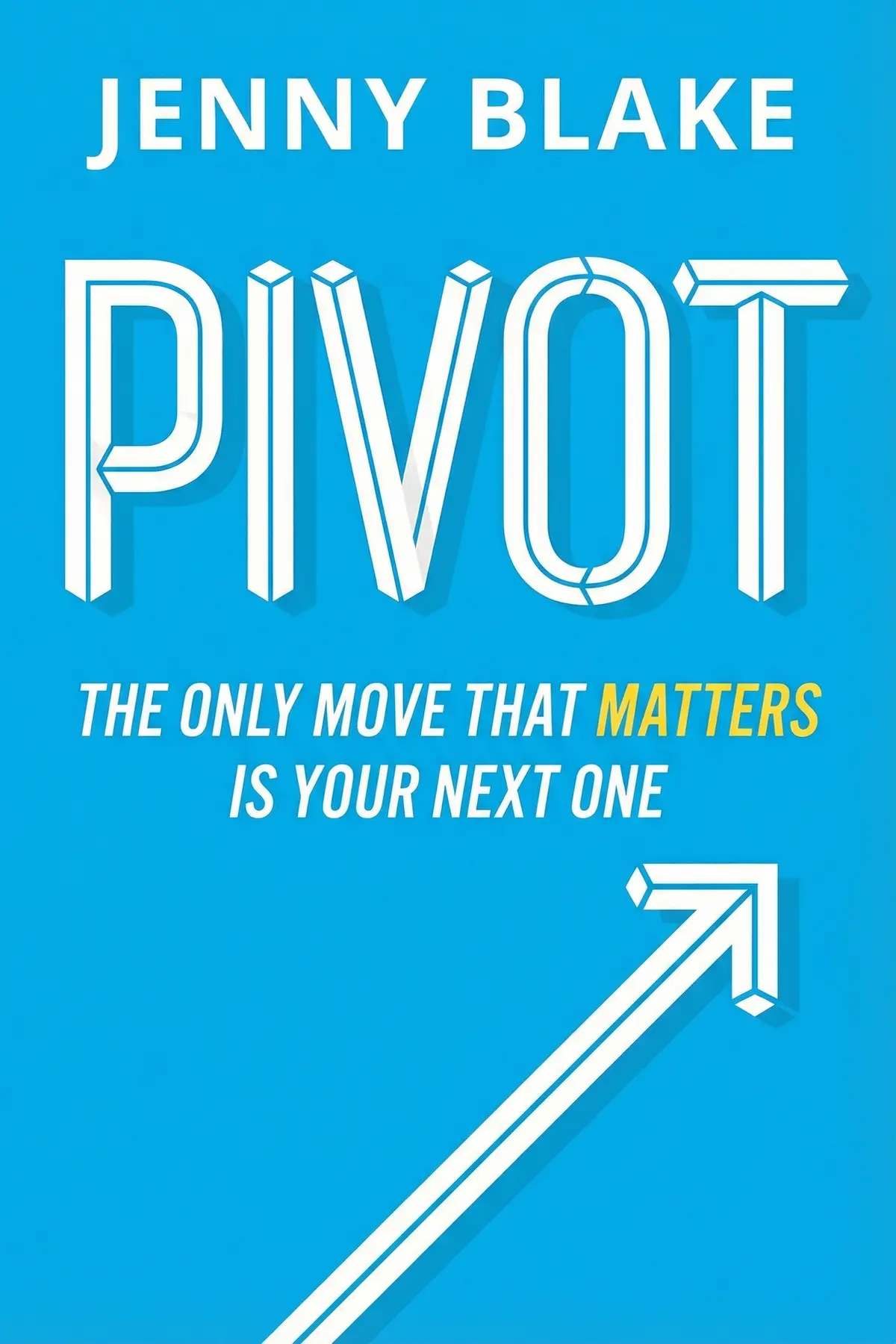
Pivot provides a practical four-step roadmap for navigating career transitions in a volatile job market. Jenny Blake shares strategies for leveraging your existing strengths to move confidently toward a more fulfilling professional future.
1 min 52 sec
Have you ever felt that nagging sense of restlessness in your professional life? Perhaps you’re staring at your computer screen, wondering if there is more to your workday than the repetitive tasks in front of you. Maybe you are dreaming of launching your own startup, or perhaps you just want to find a role that feels more aligned with who you are today. The reality is that the modern world of work is no longer a straight line. The old promise of staying with one company for forty years and retiring with a gold watch has vanished. Today, we are all in a state of constant motion.
But here is the challenge: making a major shift in your career direction is often terrifying. We worry about our financial security, we worry about what our friends and family will think, and we worry that we are essentially starting over from scratch. This fear can keep us paralyzed in roles that no longer serve us, leading to burnout and disengagement. However, what if you didn’t have to jump into the unknown? What if you could treat your career like a series of strategic moves—an agile process that leverages everything you’ve already learned to propel you into your next chapter?
This is the core philosophy of Jenny Blake’s approach. She calls it the pivot. A pivot isn’t a blind leap of faith; it’s a calculated, structured transition. It’s about being grounded in your strengths while reaching for something new. In this summary, we are going to explore a four-step method: plant, scan, pilot, and launch. We will look at how you can define your values, identify your unique advantages, and test your ideas before you ever quit your day job. Whether you are an individual looking for a new path or a manager trying to foster a more dynamic workplace, the following insights will provide the blueprint for your next big move. Let’s dive into how you can stop waiting for the right career to find you and start building it for yourself.
2 min 39 sec
The traditional long-term career is fading away as professionals embrace shorter tenures and more frequent transitions to find engagement and fulfillment in a shifting economy.
2 min 27 sec
A successful transition begins with a clear understanding of your personal values, providing a stable foundation for making difficult decisions about your future direction.
2 min 16 sec
Leveraging your existing talents and securing your finances reduces the fear of starting over and creates a safety net for your career experiments.
2 min 04 sec
Searching for your next move involves proactive networking and seeking out targeted, one-off advice from experts rather than waiting for long-term mentorship.
2 min 12 sec
Active visibility and creating a personal platform can draw opportunities toward you, turning hard work and skill into what appears to be a lucky break.
2 min 06 sec
Before making a permanent change, run small-scale experiments to validate your ideas and ensure they align with your expectations and strengths.
2 min 23 sec
Establishing clear benchmarks and launch criteria helps you overcome the fear of failure and know exactly when it is time to fully commit to your new path.
2 min 15 sec
Managers can reduce employee turnover by encouraging internal pivots, aligning individual career goals with the company’s evolving needs.
1 min 34 sec
Navigating a career today requires more than just hard work; it requires a new kind of agility. We have moved past the era of the ‘one-track’ career, and into an age where our ability to transition is our greatest competitive advantage. Through the four steps of the pivot method—planting your values, scanning for opportunities, piloting your ideas, and launching with clear criteria—you can turn the uncertainty of the job market into a strategic playground.
Remember that you are never starting over. Every job you’ve had, every mistake you’ve made, and every skill you’ve picked up along the way is an asset you can leverage. The goal isn’t necessarily to find the ‘perfect’ job that will last forever, but to ensure that your next move is always a conscious choice that brings you closer to your values.
As you move forward, try to define what Jenny Blake calls a ‘project-based purpose.’ Instead of worrying about your ‘life’s work’—which can feel impossibly heavy—focus on a specific project or goal you want to achieve in the next year. If you are a teacher who values creativity, your project-based purpose might be to redesign your after-school program. This allows you to see immediate results and keeps the momentum of your pivot alive. Whether you are seeking a total career overhaul or a small shift in your daily responsibilities, the key is to keep moving. By staying grounded in your strengths and open to new experiments, you’ll find that the only move that really matters is the one you make next. Start small, test your ideas, and trust that your values will lead you to a more fulfilling professional life.
In an era where the average professional changes jobs every few years, the traditional linear career path has become a relic of the past. Pivot explores how to embrace this constant state of flux not as a source of anxiety, but as an opportunity for strategic growth. The book introduces a methodology—Plant, Scan, Pilot, and Launch—designed to help individuals transition into new roles, industries, or entrepreneurial ventures without starting from zero. By focusing on values and existing assets, readers learn how to mitigate the risks associated with change. The promise of the book is a career that is as agile as the modern economy, ensuring that your next move is always grounded in what you do best. Whether you are an employee seeking a promotion, a freelancer looking to scale, or a manager trying to keep your best talent engaged, this guide offers the tools to make your next professional shift both smooth and successful.
Jenny Blake is a career and business strategist and international speaker who helps people build careers aligned with their talents and interests. After working as the first employee at a political polling start-up in Silicon Valley, she pivoted to training and career development at Google, where she cocreated the Career Guru Program. Blake became a full-time business consultant in 2011. She is also the author of Life After College.
Listeners find this career development guide superb and accessible, especially for those in business, offering extensive details and fantastic tools. This work is both motivating and stimulating, as one listener mentioned it assisted them in contemplating upcoming transitions. Listeners value the practical advice and layout, with one individual pointing out the effectiveness of its organized 5-stage plan.
If you feel stuck in a professional rut, this is the blueprint you need to start moving again. The Plant, Scan, Pilot, and Pivot framework provides a remarkably logical sequence for anyone terrified of making a blind leap into the unknown. It’s inspirational without being fluffy, though I did find some of the self-reflection exercises a bit tedious after the third chapter. To be fair, the tangible maneuvers suggested here are far more practical than your average career guide. I appreciated how Blake frames change as an asset rather than a failure. Not gonna lie, I was nodding along to every page about testing small experiments before committing to a full launch. This book gave me the confidence to treat my career like a series of adventures rather than a single track.
Show moreWow, I finally feel like someone understands the 'career explorer' mindset instead of judging it as a lack of focus. Jenny Blake validates the idea that constant change is the new normal in our modern economy. The book is packed with thought-provoking questions that helped me identify my existing strengths before I even looked at new opportunities. Personally, I found the 'Scan' section to be a game-changer for how I network and look for trends. Every chapter feels like a personal coaching session designed to minimize the anxiety of the unknown. Although it focuses on work, these principles could easily be applied to almost any area of life. Highly recommended for anyone who wants to stop fearing transitions and start leveraging them for growth.
Show moreFinally got around to reading this, and it’s essentially the 'Lean Startup' methodology but tailored for your own life and career. Blake encourages us to view our skills as a portfolio that we can constantly remix and improve. The book is intellectually stimulating and offers a unique perspective on why staying in one place for too long can be a risk. Not gonna lie, the sections on networking and scanning your environment changed how I view my current industry. It’s an easy read that manages to be both inspirational and grounded in reality. Even if you aren't planning to quit your job tomorrow, the mindset shifts suggested here are invaluable. It really helps you think about future changes before they are forced upon you.
Show moreJenny Blake draws heavily on her experience at Google to deliver a highly structured approach to professional transitions. Truth is, her background provides a fascinating lens, even if her specific path isn't achievable for everyone. The writing is accessible and remarkably smooth, making it easy to digest the core concepts over a single weekend. I especially loved the focus on the 'Pilot' phase, which encourages low-risk testing of new ideas. While the book is exceptionally well-organized, some of the case studies felt a bit repetitive by the halfway point. Nevertheless, the actionable strategies included are top-tier for anyone aiming to become their own boss. It’s a solid resource for those who want a calculated, data-driven way to navigate their next big move.
Show moreThis is less of a traditional narrative and more of a tactical workbook designed to get you moving immediately. The organization is fantastic, utilizing a well-structured plan that guides you through the messy middle of a transition. I appreciate the optimism Blake brings to the table, as it’s refreshing compared to the usual doom-and-gloom career advice. One minor gripe is that the sheer number of practices can feel like a full-time job in itself. You really have to pick and choose which exercises fit your specific needs rather than trying to do them all. That said, the focus on 'small pilots' is a genius way to reduce the risk of a major life change. It’s a very practical, down-to-earth guide for the modern worker.
Show moreThe methodology here is sound, but I struggled with how specific the examples felt to a very particular demographic. Most of the stories center on people leaving high-paying corporate roles to start lucrative consulting businesses. Look, if you’re currently unemployed or in a low-wage sector, these specific scenarios might feel out of reach or even a bit exclusionary. The four-step process is intellectually stimulating, yet it requires a significant amount of time and mental energy to implement properly. In my experience, the sheer volume of self-reflection prompts could easily overwhelm a person working a standard forty-hour week. It’s a decent read for entrepreneurs, but it lacks the brevity I usually look for in business books. It could have been much shorter without losing its primary impact.
Show moreWhile the 'Pivot' concept is brilliant, the book itself feels significantly longer than it actually needed to be. Gotta say, the first few chapters establish the core idea so well that the rest of the text starts to feel like padding. I was looking for a wider variety of examples that didn't just involve the tech industry or starting a personal brand. To be fair, the toolkit of supplemental materials provided is incredible and likely worth the price of admission alone. I just wish there were more clearly demarcated points for those of us who prefer skimming for the highlights. It’s a helpful tool if you have the patience to sift through the anecdotes to find the gold. Good for explorers, but perhaps too dense for the casual reader.
Show moreEver wonder why some people transition between roles so seamlessly while others flounder for years? This book attempts to answer that by providing a set of tools to develop a more agile mindset. While I enjoyed the optimistic tone, I found myself skimming through the parts that felt like a repeat of earlier chapters. The central idea of pivoting is strong, but it doesn’t quite sustain interest over the course of three hundred pages. To be fair, the resources mentioned are amazing and provide plenty of value for those who love deep-diving into data. I think this would have been a five-star read if it were condensed into a long-form article or a much shorter handbook. It’s helpful, but definitely requires some heavy lifting from the reader.
Show moreThe chapter on scanning your environment was particularly enlightening, even if the rest of the book felt a bit padded with unnecessary anecdotes. In my experience, business books often fall into the trap of repeating the main thesis far too many times. While I appreciate the 4-step framework, I think a more concise version would have been more effective for busy professionals. The tone is very encouraging, which is nice, but I wanted more 'meat' regarding transitions within large corporations. Most of the success stories seemed to follow the same trajectory of eventually leaving the traditional workforce. It’s a good tool to have in your collection, but it might not be the revolutionary guide some people claim it is. Decent, but not essential for everyone.
Show moreAfter hearing so much buzz about this, I found the actual content to be quite frustrating for anyone without a massive safety net. The author’s journey from a prestigious job at Google to her own business is impressive, but it’s a very specific paradigm. Frankly, the advice assumes a level of financial flexibility and professional network that many people simply don't possess. I was hoping for more diverse case studies that didn't always end in 'and then I started my own company.' The writing style is fine, but the repetitive nature of the exercises made it hard to stay engaged. If you’re not looking to become an entrepreneur, a lot of this content won't feel relevant to your situation. It’s just too narrow in its focus.
Show moreRobin Ryan
Marianne Cantwell
William Vanderbloemen
AUDIO SUMMARY AVAILABLE
Get the key ideas from Pivot by Jenny Blake, plus 5,000+ more titles in English and Thai.







