
15 min 39 sec
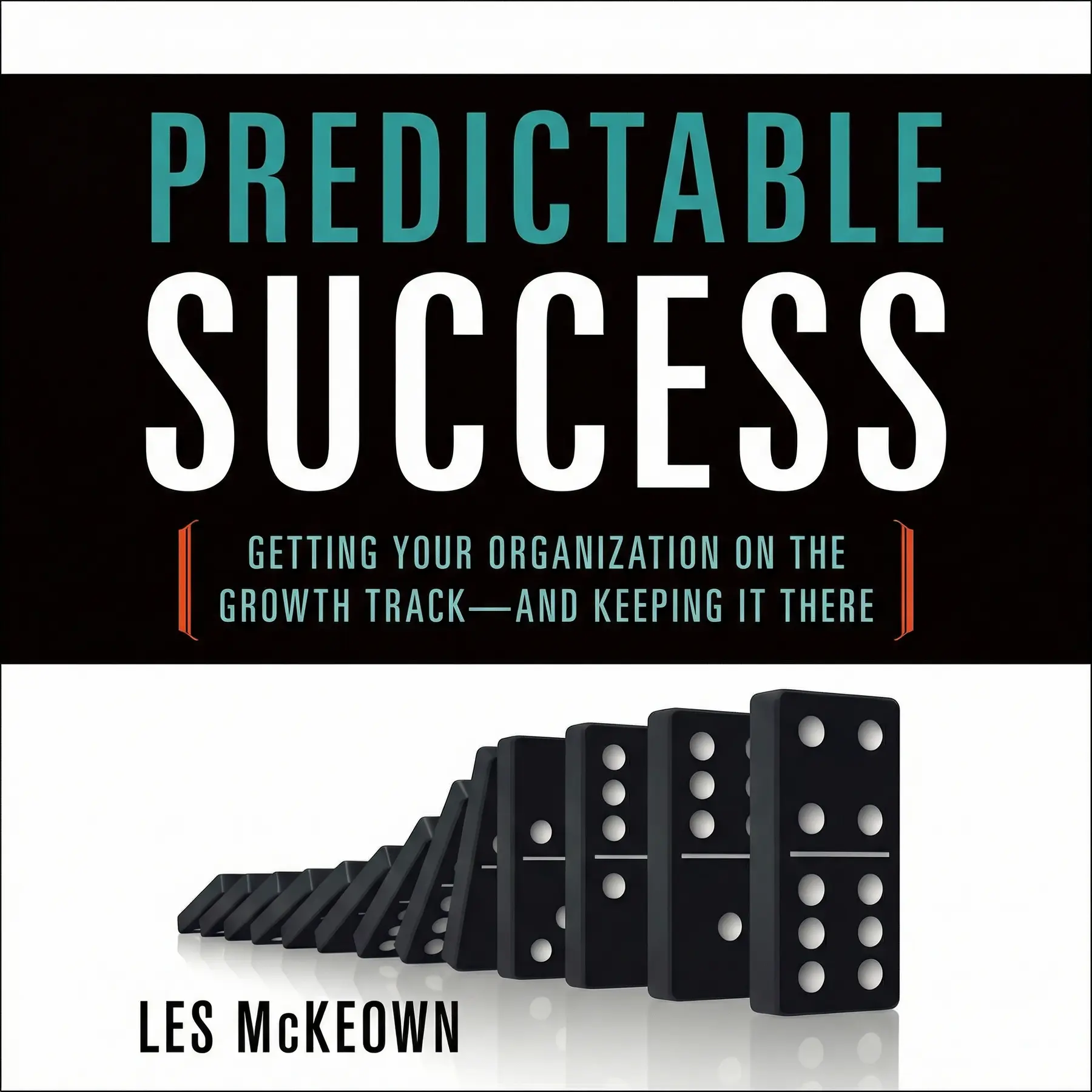
Predictable Success: Getting Your Organization on the Growth Track – and Keeping it There
By Les McKeown
Predictable Success provides a comprehensive framework for navigating the lifecycle of an organization, offering strategies to move from chaotic growth to a sustainable state of high performance and long-term stability.
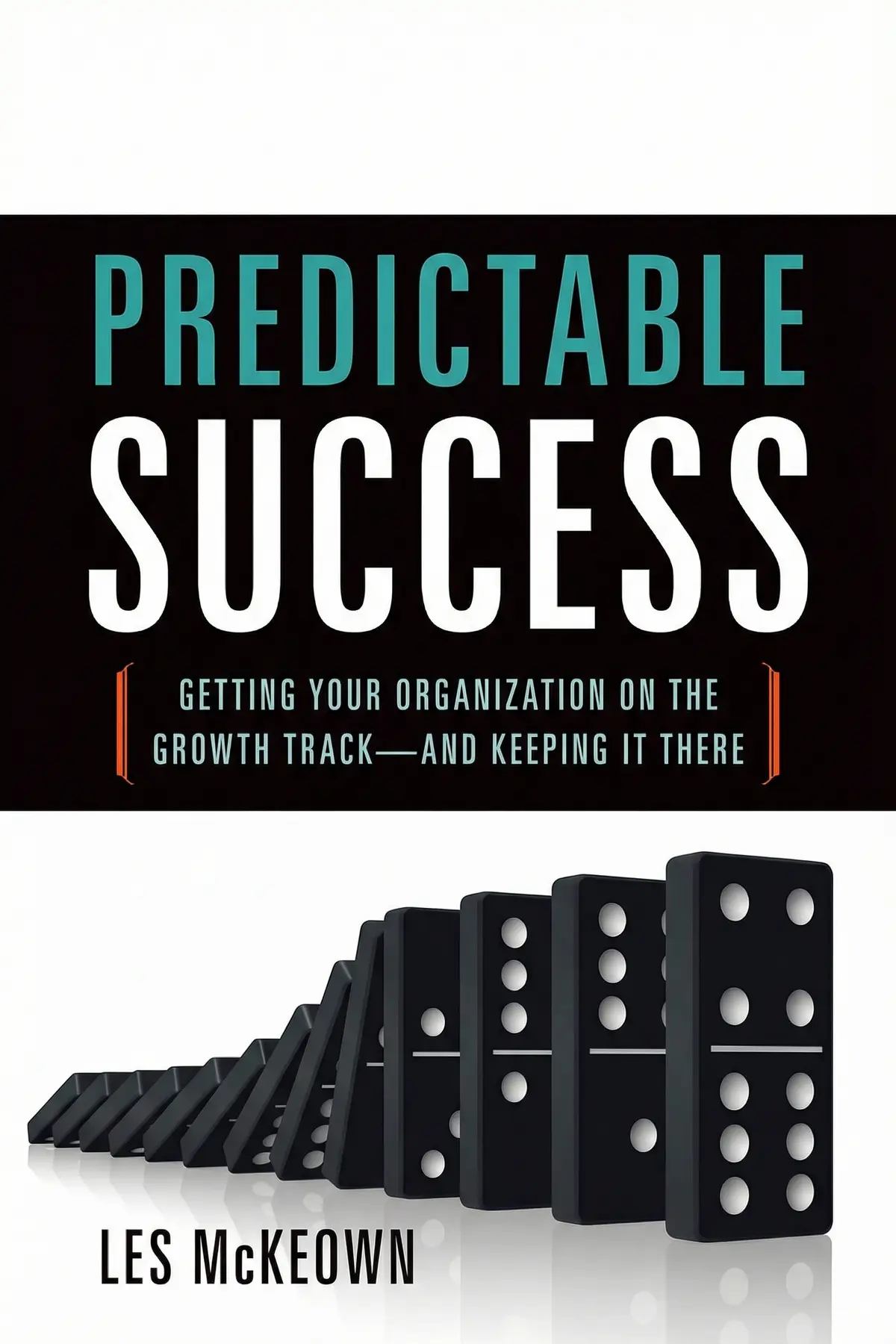
Table of Content
1. Introduction
1 min 43 sec
Have you ever wondered why some companies seem to glide through challenges with ease while others constantly feel like they are one bad month away from disaster? It often feels as though business success is a roll of the dice—a combination of being in the right place at the right time with the right product. But what if success wasn’t a matter of luck? What if you could build an organization that consistently hits its targets, manages its growth, and maintains its edge year after year?
This is the core premise of Les McKeown’s framework. He suggests that every organization, whether it’s a tiny startup or a global conglomerate, moves through a predictable lifecycle. Along this journey, there are specific traps that can derail progress and certain milestones that signal maturity. The ultimate goal is a state called ‘Predictable Success.’ This isn’t just a fancy term for making money; it’s a specific organizational stage where a company has found the perfect balance between two competing forces: the drive for innovation and the need for structured systems.
In this summary, we are going to explore the path to this elusive sweet spot. We’ll look at why many companies get stuck in the chaotic ‘whitewater’ of growth and why some of the most successful giants eventually crumble under the weight of their own bureaucracy. We will see how effective management, rather than just more money or a longer history, is the true engine of stability. Whether you are leading a team of five or five thousand, the journey toward consistent high performance begins with understanding where you are on the roadmap and what steps are needed to move to the next level. Let’s dive into the mechanics of building a business that doesn’t just survive the market but masters it.
2. Defining Predictable Success Beyond Size and Wealth
2 min 00 sec
Think age and capital are the keys to a stable company? Think again. Discover why management vision is the only true predictor of long-term organizational health.
3. Surviving the Early Struggle and the Trap of Fun
1 min 56 sec
The journey starts with a fight for survival and a honeymoon phase that can lead to disaster. Learn how to manage the transition from excitement to sustainability.
4. Navigating the Chaos of Whitewater
1 min 39 sec
When demand explodes, your internal systems might start to crumble. Find out how to align your teams to prevent growth from destroying your reputation.
5. The Dangers of Success: From Treadmill to the Death Rattle
1 min 46 sec
What happens after you reach the top? Without vigilance, your successful company could become a bureaucratic shell of its former self.
6. Streamlining Decisions to Realign the Vision
1 min 43 sec
Bureaucracy kills momentum. Learn how to decentralize authority and create a culture where every employee feels empowered to uphold the company’s core values.
7. Institutionalizing Risk to Maintain the Edge
1 min 40 sec
Stability shouldn’t mean playing it safe. Discover the secret to building ‘safe’ risks into your business model to ensure you never stop innovating.
8. The Human Element: Leading with Why Over What
1 min 50 sec
Is your management style suffocating your best people? Learn how to focus on qualitative growth and flexible systems to keep your team motivated.
9. Conclusion
1 min 22 sec
Building an organization that achieves predictable success is not a one-time event; it is a continuous process of calibration. We have seen that the journey begins with the grit of survival and the excitement of early growth, but the real test comes when complexity sets in. Navigating the ‘whitewater’ requires a shift from individual heroics to coordinated systems. However, the ultimate warning is that success itself can become a trap if it leads to the stagnation of bureaucracy.
The throughline of this framework is balance. You need enough structure to be efficient, but enough freedom to be creative. You need to hire the right people, but you also need to empower them to make decisions without waiting for permission. Most importantly, you need to remain a leader who is flexible enough to change your own systems when they no longer serve the mission.
If you find your organization is currently in the chaos of whitewater, start by aligning your sales and operations. If you feel you are sliding into the ‘treadmill’ of bureaucracy, look for ways to institutionalize new risks. Success doesn’t have to be a mystery or a matter of luck. By following these stages and being intentional about your management style, you can take your business to the growth track and, more importantly, keep it there for years to come. The roadmap is clear; the next step is yours to take.
About this book
What is this book about?
Every business owner dreams of reaching a point where success isn’t a fluke, but a standard. Predictable Success explores the evolution of a company through seven distinct stages, from the initial scramble for survival to the perilous decline of bureaucracy. It identifies the 'sweet spot' where an organization possesses enough scale to be impactful but retains the agility to remain innovative. This summary outlines the specific management shifts required to reach this stage and, more importantly, stay there. Readers will learn how to transition through the 'Whitewater' phase—a period of intense internal friction—by streamlining decision-making and realigning company values. The book promises a roadmap for leaders to stop reacting to crises and start executing a vision. By balancing systems with creativity and institutionalizing calculated risk, any organization, regardless of its industry or history, can achieve a state of consistent, scalable, and predictable growth.
Book Information
About the Author
Les McKeown
Les McKeown is the president and CEO of Predictable Success. He is a serial entrepreneur who has personally founded over 40 companies and established an incubation consulting firm that has launched hundreds of businesses across the globe. His extensive client list includes major institutions such as the US Army, Harvard University, Microsoft, and VeriSign. McKeown is a recognized thought leader in organizational development, with his insights featured on media outlets like CNN, ABC, BBC, USA Today, and the New York Times.
Ratings & Reviews
Ratings at a glance
What people think
Listeners find this business book exceptionally clear and simple to digest, with one remarking that it uses very plain language. Beyond that, the work delivers readily observable descriptions of business life cycles, and one listener emphasizes how it applies real-life experience into principles. They also admire its accuracy and professional worth, with one individual noting its comprehensive evaluation of business operations.
Top reviews
Wissanu
As someone running a scaling startup, I found the description of 'The Fun Stage' almost eerily accurate. It starts out as a pure survival game where every sale feels like a massive victory, but then growth brings this crushing complexity. Les McKeown captures that transition into 'Whitewater' with such precision that it’s almost uncomfortable to read. Truth is, I’ve been making the exact mistakes he warns about—adding staff without fixing the underlying communication bottlenecks. The writing style is surprisingly punchy for a business book, making it easy to digest during a busy week. While it might lack some academic rigour, the intuitive mapping of organizational phases provides a much-needed vocabulary for internal problems. I finally understand why our marketing department feels like a roadblock instead of an engine. This is a battle-ready manual for anyone tired of firefighting every single day.
Show moreChokdee
Can a one-person shop actually benefit from a book about corporate growth? Absolutely, especially if you are looking to shift focus or stop saying 'yes' to every low-value opportunity that comes your way. In order to learn to do better, I first had to conceive of my small business as an actual organization with its own life cycle. Predictable Success helped me anatomize past mistakes in light of the 'Early Struggle' phase, ensuring I won't repeat those dead ends. I've had the book for less than a week, and I already feel more battle-ready than I was last month. It’s a very deep and shrewd look at what happens when you decide to take a coherent approach to success. Even if you are a solopreneur, this is likely the book you need to read right now.
Show moreMikael
Look, if you're struggling to explain business growth to your team, just buy them this book. It serves as a road map, manual, and motivational guide all wrapped into one highly readable package. The summaries at the end of each chapter are perfect for the many who crave bullet points and quick takeaways during a hectic workday. I particularly appreciated the diagrams, which helped the visual learners in our office finally grasp the 'Whitewater' concept. Whether your business is currently in the 'Early Struggle' or cruising through 'Predictable Success,' these insights are invaluable. It has become one of my favorite books to give as a gift to business associates. There is a reason Les is considered such an authority on this subject, and his wisdom shines through on every page.
Show moreLucia
After hearing Les speak at a seminar, I knew the book would be a game-changer for our executive team. The way he breaks down the transition into 'Predictable Success' provides a clear, actionable framework for anyone in a leadership position. We have used his 7-phase model to identify exactly where our bottlenecks are occurring and how to optimize our people and processes. In my experience, most business books are heavy on theory but light on the actual 'how-to.' This book is a different animal because it pairs shrewd observations with practical tools you can implement immediately. Every chapter ends with a helpful summary that works great for quick reference during meetings. It’s a must-have for our bookshelf.
Show moreTuck
Finally got around to reading this after seeing it on every consultant’s bookshelf, and I can say the hype is largely justified. McKeown shares a 7-phase business life-cycle model that I could quickly match to almost every client in my current portfolio. It serves as a great look in the mirror for executives who are too close to the daily grind to see their own dysfunctions. Personally, I found it much more accessible than Adizes’ work, which can feel a bit too academic and dense for a quick turnaround. The simple terminology allows for an easy read while still delivering shrewd insights into how structure must evolve alongside people. My only gripe is that it feels a bit light on how to integrate modern technology into these older organizational frameworks. Still, it’s a very worthwhile addition to any professional library.
Show moreGabriel
This isn't your typical dry management textbook that you struggle to finish. McKeown uses simple terminology and a very detailed approach to explain how companies rise, peak, and eventually hit the 'Death Rattle' if they aren't careful. I am a strategy consultant with hundreds of books in my collection, and this is one of the few I finished cover to cover in two sittings. The focus on the perfect integration of people, process, and structure is spot on for the mid-sized business market. I would have liked to see more emphasis on how technology functions as a primary enabler in today's environment, but the core principles remain solid. It’s a great gift for clients who are struggling to understand why their once-simple business has become so complicated. Definitely a must-read for leadership teams.
Show morePairot
Ever wonder why your once-fun business suddenly feels like it's drowning in red tape? This book explains exactly why that happens as you move from 'The Fun Stage' into 'Whitewater.' McKeown’s writing is incredibly accessible, stripping away the jargon that usually clutters management books to reveal the core mechanics of growth. I was nodding along to every page, particularly the sections on how slower communication becomes an inevitable byproduct of increased complexity. It provides a very detailed road map that helps you identify where you’ve gotten off track. Personally, I think every founder who has surpassed the two-year mark needs to read this to prepare for the inevitable shift in dynamics. It turns survival instincts into a coherent strategy for long-term stability.
Show moreKan
To be fair, the book offers a lot of great problem identification for the various hurdles a scaling company will face. It gets to the core of fundamental root causes and gives you the specific language to discuss them with your leadership team. However, I found the lack of scientific research or peer-reviewed case studies a bit disappointing. It relies heavily on anecdotal evidence and McKeown's own consulting experiences, which are clearly extensive but don't always feel universal. Frankly, while the framework is helpful for self-reflection, I wouldn't call it a definitive scientific model for business growth. It's a great 'look in the mirror' exercise, but it lacks the depth of more academic works. It’s worth a read for the perspective, but take the generalizations with a grain of salt.
Show moreKofi
The framework McKeown builds is incredibly sturdy, yet it feels a bit dated regarding modern tech stacks. While I appreciate the simple terminology and the easy-to-read style, I found some of the advice to be a bit too anecdotal for my taste. The 7-phase model is helpful for broad strokes, but when it comes to the nitty-gritty of implementation, it leaves some gaps. Gotta say, the evaluation of business operations is comprehensive, but the lack of hard research makes it feel more like a collection of wisdom than a scientific method. It's a good evaluation of business, and I saw a lot of comparisons to my own organization, but it didn't solve every problem. It’s a helpful tool for awareness, but you might need additional resources to actually execute the changes required to stay in success.
Show moreSangduan
Maybe it’s just my specific niche in the non-profit world, but many of these applications simply didn't apply to our context. The book assumes a very specific trajectory of profit-driven growth that doesn't account for external regulatory hurdles or different funding models. Not gonna lie, I felt like I was reading a guide for a very specific type of mid-sized corporation. While the 'Death Rattle' and 'Early Struggle' phases are vividly described, the solutions offered felt repetitive and a bit too simplistic for complex modern organizations. I also think the book severely underestimates the role of technology as a primary driver of structure today. It’s an easy read, but it lacks the nuance required for businesses that don't fit the standard SMB mold. I was hoping for more actionable data and fewer generalizations.
Show moreReaders also enjoyed

A Bigger Prize: How We Can Do Better Than the Competition
Margaret Heffernan
A Year with Peter Drucker: 52 Weeks of Coaching for Leadership Effectiveness
Joseph A. Maciariello

Acting with Power: Why We Are More Powerful Than We Believe
Deborah Gruenfeld
All In: How Great Leaders Build Unstoppable Teams
Mike Michalowicz
AUDIO SUMMARY AVAILABLE
Listen to Predictable Success in 15 minutes
Get the key ideas from Predictable Success by Les McKeown, plus 5,000+ more titles in English and Thai.
- 5,000+ titles
- Listen as much as you want
- 7-day free trial
- Cancel anytime







