
29 min 32 sec
Presidents of War: The epic story, from 1807 to modern times
Examine the heavy burden of the American presidency during times of conflict. This account explores how leaders from Madison to Johnson navigated the moral and constitutional complexities of waging war.
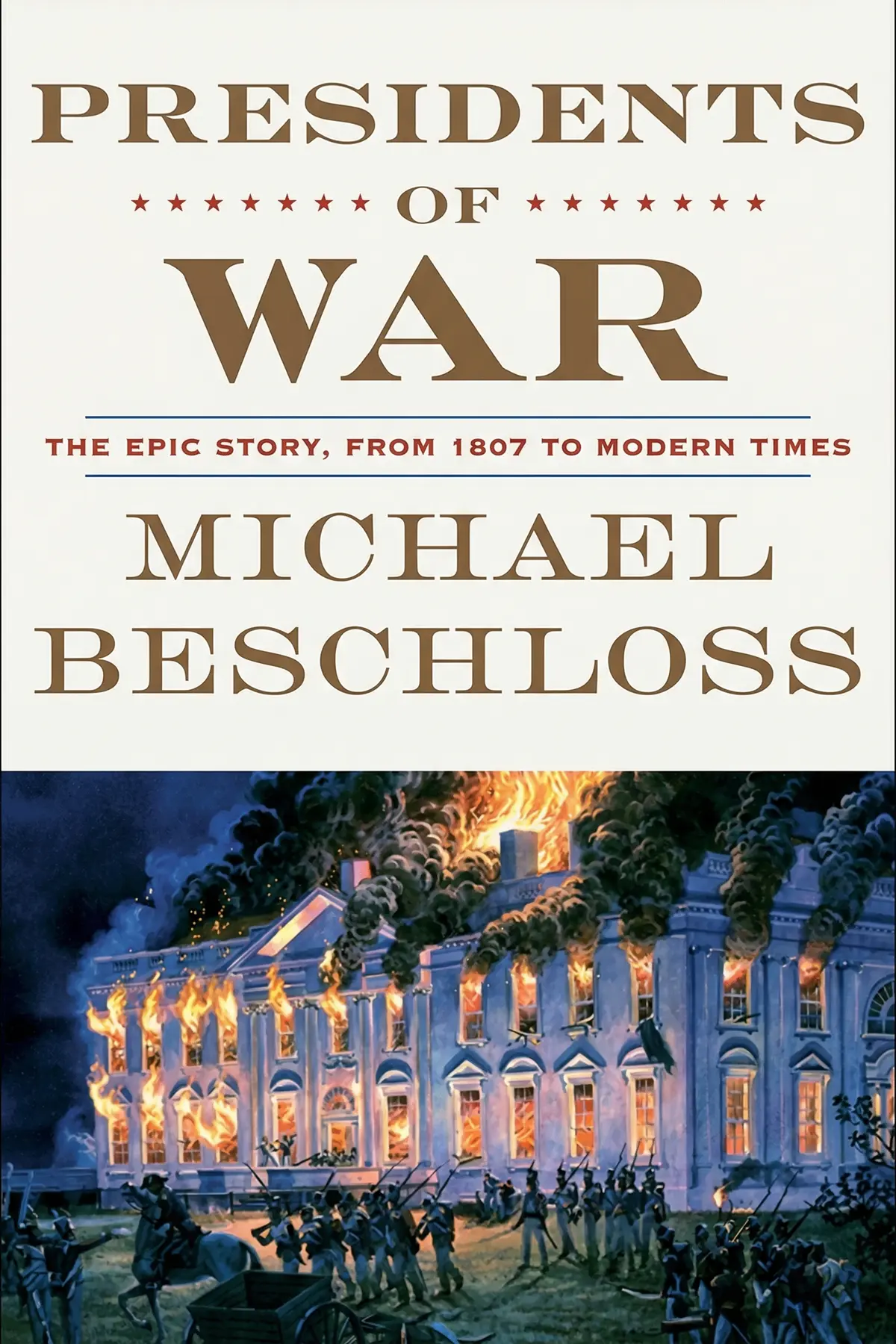
Table of Content
1. Introduction
1 min 49 sec
Every time an American president sits behind the Resolute Desk, they are shadowed by a heavy, invisible weight. It isn’t just the burden of policy or the pressure of the economy; it is the ultimate authority to command the nation’s military. Of all the choices a leader must face, none is more profound or potentially devastating than the decision to wage war. When a president moves the nation toward conflict, they aren’t just spending tax dollars or shifting diplomatic alliances; they are making a choice that will inevitably lead to the loss of life. They are deciding that a cause is worth the ultimate sacrifice of their citizens, leaving families forever changed and the nation’s future irrevocably altered.
In this exploration of American leadership, we are going to look at the evolution of this terrifying power. We’ll see how the vision of the Founding Fathers—who desperately wanted to prevent the rise of a war-making monarch—has slowly been eroded over two centuries. We will encounter presidents who demonstrated incredible restraint, and others who seemed almost eager to find a reason for combat. We’ll see how some leaders were pushed into battles they tried to avoid, while others manufactured the very crises that led to bloodshed.
Through the stories of ten different presidencies, a clear throughline emerges. It is the story of a democratic process being gradually replaced by executive will. From the early days of the Republic to the complex global stage of the twentieth century, the way America goes to war has changed. By looking at the mistakes, the manipulations, and the occasional moments of true courage, we can better understand the precarious balance between national security and democratic accountability. As we move through these historical turning points, notice how the reasons for war often shift, but the consequences remain just as heavy for those who serve on the front lines.
2. Jeffersonian Restraint and the Power of Diplomacy
2 min 51 sec
Discover how Thomas Jefferson navigated a national crisis in 1807, choosing a path of patience over the public’s loud demands for immediate military retaliation.
3. Madison and the Pressure of the War Hawks
2 min 50 sec
Explore the complex factors that pushed James Madison toward the War of 1812, illustrating how political pressure can overwhelm even a reluctant leader.
4. Polk and the Era of Manufactured Pretext
2 min 56 sec
Witness how James K. Polk utilized a calculated military provocation to achieve his goal of massive territorial expansion during the Mexican-American War.
5. Lincoln and the Weight of Civil Liberties
3 min 00 sec
Examine the difficult trade-offs Abraham Lincoln made during the Civil War, balancing the survival of the Union with the suspension of constitutional rights.
6. McKinley and the Birth of an American Empire
2 min 54 sec
Follow the shift from humanitarian concern to imperial ambition as William McKinley led the United States into the Spanish-American War.
7. Wilson and the Dangers of Presidential Silence
2 min 57 sec
Analyze the contradictions of Woodrow Wilson’s leadership during World War I, from his pledge of neutrality to his struggle for a global peace organization.
8. FDR and the Mastery of Crisis Leadership
2 min 50 sec
Trace Franklin D. Roosevelt’s path into World War II, examining both his strategic preparation for the inevitable and the ethical shadows of his domestic policies.
9. Truman and the Precedent of Undeclared War
2 min 32 sec
See how Harry S. Truman changed the landscape of American conflict by leading the nation into the Korean War without a formal congressional declaration.
10. Johnson and the Trap of Deception
2 min 50 sec
Observe the tragic consequences of Lyndon B. Johnson’s use of questionable intelligence to escalate the Vietnam War, leading to a long and divisive conflict.
11. Conclusion
2 min 03 sec
As we look back over these two hundred years of American history, a sobering pattern becomes clear. The men who gathered in Philadelphia to write the Constitution were deeply afraid of a presidency that could function like a monarchy. They had seen the kings of Europe lead their subjects into ruinous wars for personal glory or territorial gain, and they were determined to build a system where the decision to spill blood would be shared. They gave the power of the purse and the power to declare war to Congress, intending for it to be a slow, difficult, and highly public process.
But as we’ve seen, that vision has been steadily transformed. From Polk’s manufactured border crisis to Truman’s ‘police action’ and Johnson’s Gulf of Tonkin Resolution, the executive branch has consistently found ways to seize the initiative. The speed of modern warfare, the complexities of the nuclear age, and the constant pressure of global leadership have all served as justifications for a more powerful presidency. Today, the choice to go to war rests almost entirely in the hands of one person in the Oval Office, with Congress often relegated to the role of a bystander.
The stories of these presidents show us that leadership in wartime is a crucible that reveals the true character of a person and a nation. We see the brilliance of FDR, the moral weight of Lincoln, the restraint of Jefferson, but also the dangerous ambitions of Polk and the tragic deceptions of Johnson. The lesson is not that all wartime presidents are power-hungry, but that the office itself exerts a tremendous pressure to expand authority in times of crisis.
What does this mean for us today? It means that the most important quality in a president may be their wisdom and restraint in the use of force. It means that the democratic process requires an active, skeptical public and a Congress willing to assert its constitutional duties. The throughline of American history suggests that once power is surrendered to the executive, it is rarely returned. As citizens, understanding how we have arrived at this point is the first step in ensuring that the weight of the war-making power is handled with the gravity and the democratic accountability that the Founding Fathers—and the families of those who serve—rightfully demand.
About this book
What is this book about?
This exploration of American history dives into the most consequential decisions ever made in the Oval Office: the choice to enter a military conflict. Moving chronologically from the early nineteenth century to the modern era, it analyzes how various presidents balanced their constitutional duties with political pressure, personal ambition, and national crises. Through the lenses of leaders like Abraham Lincoln, Franklin D. Roosevelt, and Lyndon B. Johnson, the narrative reveals a steady shift in power. What began as a process strictly controlled by Congress has evolved into a realm where the executive branch wields nearly unilateral authority. It offers a sobering look at how the machinery of war has been triggered throughout history, sometimes through necessity and other times through calculated deception.
Book Information
About the Author
Michael Beschloss
Michael Beschloss is an American historian specializing in US presidential history. He is the NBC News presidential historian and the author of nine books including Eisenhower: A Centennial Life and Presidential Courage: Brave Leaders and How They Changed America, 1789-1989.
Ratings & Reviews
Ratings at a glance
What people think
Listeners find this historical work compelling and skillfully crafted, supported by extraordinary research that appeals to both history enthusiasts and students. The narrative offers an intriguing look at presidents during times of conflict, delivering deep perspectives on their individual leadership qualities. Listeners value the author's exhaustive research process and believe the book is a rewarding purchase.
Top reviews
Kom
Michael Beschloss has a gift for making dense constitutional history feel like a propulsive page-turner. This book is a sobering look at how the power to wage war shifted from the halls of Congress into the hands of the executive branch over two centuries. I was particularly struck by the sections on James Polk and the way he essentially manufactured a pretext for the Mexican-American War to seize territory. It makes you realize that the 'credibility gap' didn't start with Vietnam; it’s been a recurring theme in American leadership. Beschloss doesn't just give you dates and battles; he gives you the psychological toll on men like Lincoln, who felt he might not survive the 'bitterest anguish' of the Civil War. Frankly, it’s a masterclass in narrative history that every citizen should read to understand how our current system of undeclared wars became the norm.
Show moreBrooklyn
The sheer weight of the presidency is palpable in these pages. Seeing the physical and emotional decline of these men as they sent thousands to their deaths is heartbreaking. Look at Lincoln, who was literally 'wrung by anguish,' or LBJ, who was haunted by the very war he escalated. Beschloss is excellent at showing the 'wounded pride' that often drives us into conflict when sober judgment should prevail. The transition from 'don't send our kids' to 'defend our honor' happens so fast in these chapters, and it’s a pattern we see repeated from 1812 to today. It’s a massive book, but the short, punchy chapters make it very readable. I finished it feeling much more informed about the fragile nature of our democracy during wartime.
Show moreAnong
This is a masterclass in narrative history that doesn't shy away from the ugly parts of the American story. The way James Polk manipulated the public into the Mexican-American War is a chilling reminder of how easily a President can manufacture a crisis. I found the 'what if' moments throughout the book to be the most compelling parts. What if the Maine hadn't exploded? What if Wilson hadn't campaigned on keeping us out of war only to pivot immediately? Beschloss has a way of making you feel like you're in the room for these decisions. It’s a long book, but the prose is so smooth that it never feels like a chore. Absolutely essential reading for anyone interested in the evolution of American power.
Show moreDek
Finally got around to finishing this massive tome and it left me feeling both enlightened and a little bit cynical. The recurring pattern of presidents bypassing Congress to start wars is honestly terrifying when you see it laid out over 200 years. Beschloss is such a thorough researcher; the footnotes alone are worth an afternoon of your time. I especially appreciated the nuanced take on Eleanor Roosevelt’s influence during WWII compared to FDR’s more questionable moral choices. It’s rare to find a history book that is this comprehensive while still being this accessible. Whether you’re an armchair historian or just someone concerned about the state of our government, this book is well worth the investment. It’s a brilliant, haunting look at the cost of power.
Show morePloy
Ever wonder how we actually end up in these decades-long quagmires? This book provides a fascinating, if somewhat discouraging, answer. Beschloss highlights the 'butterfly effect' of military decisions, like how the explosion of the USS Maine—likely a boiler accident, not a torpedo—set off a chain reaction leading to the acquisition of the Philippines and eventually the conflict at Pearl Harbor. The writing style is engaging and filled with the kind of specific, humanizing details that keep you hooked. I loved the random trivia, like finding out Jim Morrison’s dad was a commander during the Gulf of Tonkin incident. My only minor gripe is that the book ends somewhat abruptly with Vietnam, only touching on Iraq and Afghanistan in a brief epilogue. I would have loved a deeper dive into the post-9/11 era using the same lens.
Show moreRin
Picked this up on a whim after seeing it on a recommended list for history buffs. I’m glad I did because the insights into the Spanish-American War alone were worth the price of admission. I hadn't realized how much McKinley was goaded into war by people like Theodore Roosevelt, or how much 'mission creep' played a role in seizing Puerto Rico and Guam. Beschloss is a gifted storyteller who manages to balance the grand strategy with small, intimate moments, like Captain Sigsbee writing a letter to his wife just before the Maine blew up. Personally, I think the book is most successful when it focuses on the lesser-known conflicts. While the Lincoln and FDR sections are good, so much has been written about them already that they felt a little less fresh than the chapters on Madison or Polk.
Show morePensuda
Truth is, I didn't know much about the War of 1812 until I sat down with this book. Seeing James Madison—the architect of the Constitution—struggle so mightily with the very powers he helped define was incredibly ironic. Beschloss does an amazing job showing how wartime turns even the most principled leaders into something else. FDR using the IRS as a weapon against political enemies was a shock to me, and it really humanized him in a way that wasn't always flattering. The book is timely because it reminds us that Congress has largely abdicated its duty to declare war, leaving us in a state of permanent executive-led conflict. It’s a heavy read, both in weight and subject matter, but it’s incredibly rewarding if you stick with it.
Show moreBunyarit
In my experience, books that try to cover nine different conflicts often feel spread too thin, but Beschloss manages to weave them together perfectly by focusing on the common threads of leadership and ego. The recurring theme of 'wounded pride' was especially eye-opening. We like to think we go to war for noble reasons, but often it’s a reaction to a perceived slight or an accident that gets spun into an attack. I was surprised by how much I enjoyed the chapter on Harry Truman and his battles with Douglas MacArthur. It really clarified why civilian control of the military is so vital, even when the General is a national hero. A few sections felt a bit repetitive, but the overall impact of the book is profound.
Show moreHunter
While the research here is undoubtedly top-notch, I felt the book lacked a central, driving thesis to tie all these disparate wars together beyond the fact that they were difficult. It’s a great collection of stories, but it feels more like a 'greatest hits' of presidential history than a groundbreaking new analysis. To be fair, Beschloss is a brilliant writer and his portraits of LBJ’s paralyzing fear and FDR’s occasional moral failings—like the internment of Japanese-Americans—are very well-done. However, the omission of the Indian Wars felt like a missed opportunity to discuss executive power in a different context. It’s a solid 'Dad book' for the holidays, but seasoned historians might find that it covers a lot of familiar ground without offering much in the way of new primary source discoveries.
Show moreKasemsan
Not exactly what I expected given the promise of 'Modern Times' on the cover. The truth is, the book basically stops in 1975. If you’re looking for a deep dive into the War on Terror or how the Bush or Obama administrations handled the executive power drift, you’ll be disappointed by the five-page epilogue. The prose is also a bit dry in the middle sections, particularly when discussing the War of 1812. It felt like a slog to get through the first 100 pages. I appreciate the research and the footnotes are genuinely interesting, but the pacing felt off. It’s a decent reference for students, but for a casual reader, it might feel like a repetitive cycle of presidents lying to Congress and then regretting it later.
Show moreReaders also enjoyed
1929: Inside the Greatest Crash in Wall Street History--and How It
Andrew Ross Sorkin
Alexander the Great
Philip Freeman
Abolish Rent: How Tenants Can End the Housing Crisis
Tracy Rosenthal

A Biography of Loneliness: The History of an Emotion
Fay Bound Alberti
Abortion: Our Bodies, Their Lies, and the Truths We Use to
Jessica Valenti
Adults in The Room: My Battle With Europe’s Deep Establishment
Yanis Varoufakis
21 Lessons for the 21st Century
Yuval Noah Harari
AUDIO SUMMARY AVAILABLE
Listen to Presidents of War in 15 minutes
Get the key ideas from Presidents of War by Michael Beschloss, plus 5,000+ more titles in English and Thai.
- 5,000+ titles
- Listen as much as you want
- 7-day free trial
- Cancel anytime







