
All In: How Great Leaders Build Unstoppable Teams
Mike Michalowicz
Explore how deep philosophical values like altruism and heroism drive the world's most successful businesses, proving that lasting corporate triumph requires much more than just a focus on short-term profits.
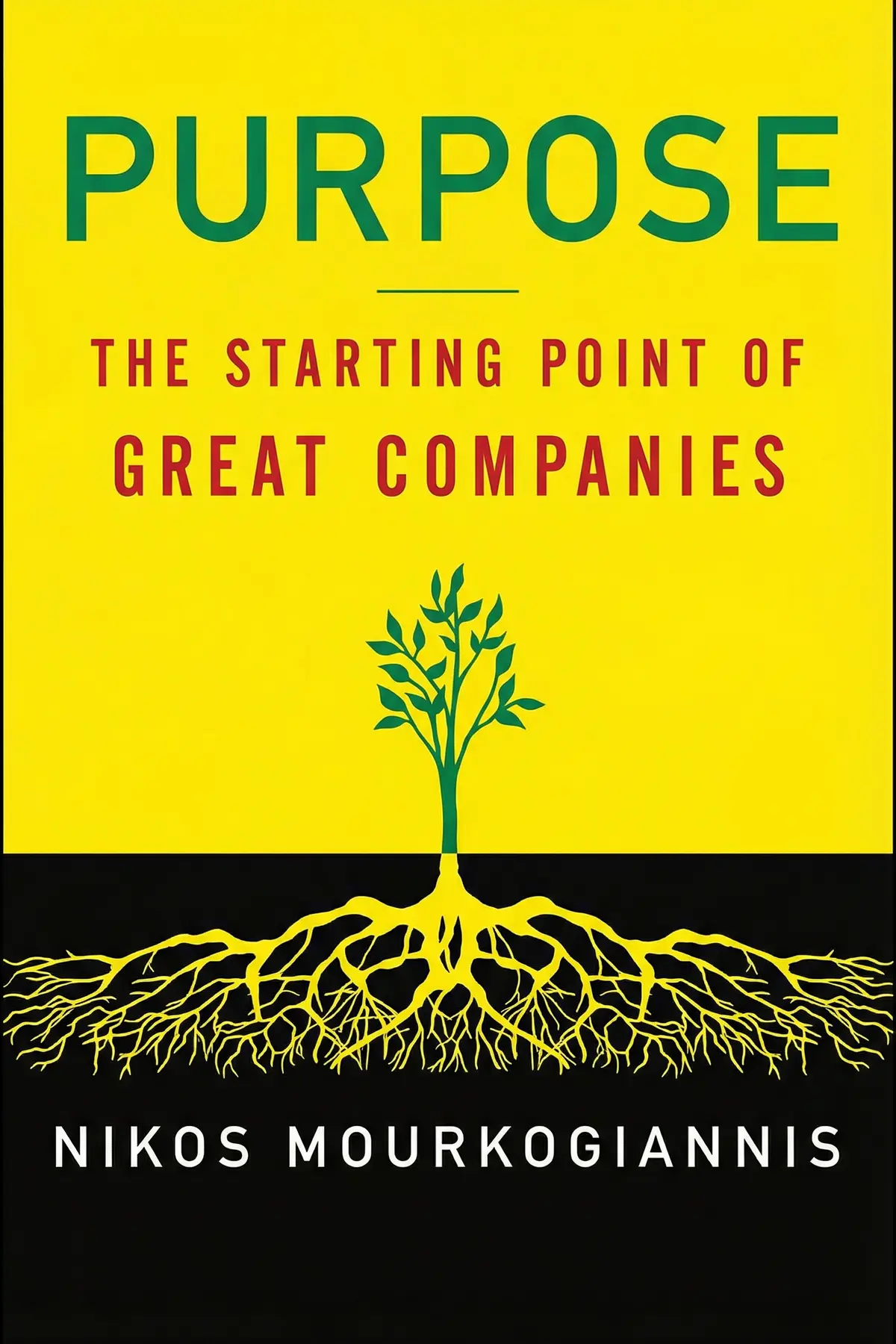
1 min 41 sec
In the public consciousness, the world of big business is often painted with a fairly cynical brush. We frequently imagine corporate corridors filled with leaders who are obsessed with nothing but the next quarterly earnings report—individuals who would happily sacrifice their employees, their customers, or the health of the planet if it meant squeezing out a few extra cents for the shareholders. This image of the cold-hearted, profit-driven machine is pervasive, but it overlooks a fundamental truth about what actually makes a company stand the test of time. As we will explore in this discussion of the ideas presented by Nikos Mourkogiannis, the most truly successful and resilient organizations are not actually driven by money alone. Instead, they are fueled by something much deeper: a core sense of purpose.
This purpose isn’t just a marketing slogan or a line in an annual report. It is a moral backbone, a set of values that provides a company with the internal drive to succeed when things get tough and the clarity to make difficult decisions when the path forward is unclear. Interestingly, these values aren’t new inventions of the modern business world. They are rooted in centuries of philosophical debate and ethical traditions, stretching from the thinkers of Ancient Greece to the existentialists of the modern era.
Over the course of this summary, we will break down the four primary forms that purpose takes in the business world: discovery, excellence, altruism, and heroism. We will see how global giants like IBM, Wal-Mart, and Ford have used these philosophical foundations to dominate their markets. By the end, you’ll see why a strategy without a moral compass is a recipe for disaster, and how finding your own purpose can be the ultimate competitive advantage. Let’s begin by looking at why purpose is the essential ingredient for any company’s long-term survival.
1 min 48 sec
What separates a temporary market winner from a permanent titan? Explore how a deep moral backbone serves as the invisible engine of corporate longevity and decision-making.
1 min 36 sec
If we are truly responsible for our choices, why do we hide behind rules? Learn how the existential drive for discovery forces leaders to reinvent their industries constantly.
1 min 39 sec
Success isn’t always about the bottom line; sometimes, it’s about the craft itself. Discover why the ancient pursuit of virtue is the secret behind the world’s greatest investors.
1 min 35 sec
Can empathy actually build a retail empire? We examine how the desire to help others can transform a business from a profit machine into a community pillar.
1 min 31 sec
What happens when a leader ignores every convention to follow their own will? Dive into the risky yet revolutionary world of the heroic business archetype and its impact.
1 min 45 sec
How does a simple adhesive company keep winning for decades? Uncover the link between high employee morale, constant innovation, and the specific purposes that drive internal teams.
1 min 40 sec
Why is a value-driven company harder to beat than a profit-driven one? Learn how purpose creates a unique market position that competitors find impossible to replicate.
1 min 24 sec
As we wrap up our exploration of Nikos Mourkogiannis’s insights, the central message is clear: the most powerful tool a business leader has is not a spreadsheet or a marketing plan, but a well-defined purpose. Whether that purpose is rooted in the existential quest for discovery, the Aristotelian pursuit of excellence, the utilitarian drive for altruism, or the Nietzschean will of heroism, it provides the vital spark that turns a standard corporation into an industry leader. These philosophical traditions offer more than just abstract ideas; they offer practical frameworks for building a company that is resilient, innovative, and deeply connected to its people.
If you want to apply these lessons to your own life or business, start by looking inward to uncover the purpose that truly drives you. Ask yourself: am I motivated by the thrill of finding something new? Do I seek to be the absolute best at my craft, regardless of the reward? Am I driven by a desire to help as many people as possible, or do I feel a calling to boldly change the world with my vision? Once you identify this core motivation, you can begin to align your actions and your organization with it. By transforming your business into a vehicle for a higher purpose, you don’t just increase your chances of financial success; you ensure that your work has a lasting meaning and a positive impact on the world around you.
Purpose explores the vital intersection of philosophical ethics and modern corporate strategy. It argues that the most enduringly successful companies are those driven by a core moral identity rather than just the pursuit of financial gain. By examining four distinct ethical traditions—discovery, excellence, altruism, and heroism—the narrative reveals how these frameworks provide leaders with the clarity and motivation necessary to outperform their competitors over the long haul. Through historical analysis and modern case studies, the summary promises to show how purpose acts as a moral backbone for decision-making. It illustrates how figures like Warren Buffett and Sam Walton utilized these values to build empires, and why a lack of purpose can lead to the downfall of even the largest corporations. Listeners will learn how to align their organizational strategies with deeper human values to foster innovation, boost employee morale, and achieve a sustainable competitive advantage in any industry.
Nikos Mourkogiannis is a globally recognized authority on leadership and corporate strategy. He currently serves as a senior partner at the high-level consultancy firm Panthea, where he provides strategic guidance to chief executives around the world. Throughout his distinguished career, Mourkogiannis has held numerous prominent positions, including serving as the chairman for several major international corporations. Furthermore, he previously acted as the Executive Advisor for Leadership at the renowned global consultancy Booz Allen Hamilton. His extensive experience across these elite organizations has established him as a premier thought leader in the realm of organizational purpose and executive excellence.
Listeners find that this work provides a stimulating look at how values-led purpose, instead of merely profit, drives enduring achievement. They value the author's categorization of the four key types of purpose—discovery, excellence, altruism, and heroism—with one listener highlighting that the examples of leaders like Sam Walton make these groupings easier to understand. Furthermore, they note that the text acts as a perceptive resource for self-improvement, assisting people in recognizing their own core drivers. Although perspectives differ regarding the strictness of the framework, many listeners believe the core theme is vital, with one listener remarking that "without Purpose, everything is pointless."
Mourkogiannis manages to articulate something many leaders feel but struggle to put into words. By categorizing business motives into discovery, excellence, altruism, and heroism, he provides a roadmap for sustainable success. Truth is, most companies are just chasing dollars, but this book proves that financial gain is a byproduct of a deeper mission. I found the examples of the Warburg family and Ford Motor Company particularly illuminating for my own career path. It is a dense read at times, but the philosophical grounding is exactly what the modern corporate world lacks right now. If you want to build something that lasts, start here.
Show moreFinally found a book that treats business like a human endeavor rather than just a series of spreadsheets and calculations. I was on the verge of a total career burnout when a mentor suggested I look into Mourkogiannis’s theories on personal motives. Identifying my own drive as "Altruism" completely changed how I approach my daily tasks and long-term goals. To be fair, you might want to skip some of the denser middle chapters, but the first half is life-changing. It’s not just about making money; it’s about why you bother to wake up and head to the office every morning. Purpose is the engine.
Show moreWithout purpose, everything is pointless, and this book hammers that truth home with incredible precision and historical context. I've been searching for a way to define my company’s culture, and the four archetypes provided the perfect vocabulary for those difficult conversations. We eventually settled on "Discovery" as our primary driver, and the clarity that followed has been nothing short of transformative for our internal morale. Gotta say, the writing style is a bit dry, but the insights are too valuable to dismiss based on prose alone. Every CEO needs to have a copy of this on their desk for constant reference.
Show moreThe core framework presented here is incredibly thought-provoking, though I have some reservations about how the author forces businesses into specific boxes. Personally, I think the four categories are a bit rigid for the messy reality of global commerce. That said, the central message—that meaning drives performance—is impossible to ignore and extremely well-argued. I spent a lot of time reflecting on the "Excellence" category and how it applies to my current team's output. If you can get past some of the academic tone, there is real gold in these pages for any aspiring manager who wants to lead with integrity.
Show moreEver wonder why some companies survive for a century while others burn out in a decade? Mourkogiannis argues that it all comes down to a singular, driving intent that transcends simple profitability. I was particularly struck by the way he dismantled the idea that money should be the primary goal of any serious enterprise. In my experience, the most successful projects I’ve led were the ones where the team felt they were part of something larger. The classification system is helpful for clarity, even if it feels a little artificial at times when applied to multi-faceted organizations. Definitely worth a deep dive.
Show morePicked this up during a transition period in my life and found it to be a surprisingly deep guide for personal development. Mourkogiannis doesn't just talk about corporate strategy; he talks about what makes a life worth living through the lens of our professional contributions. Not gonna lie, some of the sections on "Heroism" felt a bit dramatic for a business text, but the underlying logic is sound. It helped me realize that my previous roles lacked "Excellence," which is why I felt so unfulfilled despite the decent salary. It is a thought-provoking read that will stay with you long after the final page.
Show moreAfter hearing about the "four types of purpose" in a management seminar, I decided to dive into the source material to see the full data. Mourkogiannis provides a compelling argument that moral intent is the primary engine of long-term economic success. The chapters on the Warburgs were fascinating and provided a historical weight that many modern business books lack. My only gripe is that the middle sections drag on a bit too long with unnecessary jargon. However, the core takeaway—that money follows meaning—is a lesson that every modern entrepreneur needs to learn before starting their journey. Solid four stars.
Show moreWhile I appreciate the sentiment behind this work, it often feels like a long-form blog post that was stretched into a full-length book. Look, the ideas regarding "Heroism" and "Discovery" are fascinating, but the author repeats himself quite a bit to hit the page count. Frankly, you could probably read the first chapter and the conclusion and walk away with 90% of the value. I did enjoy the case study on Sam Walton, as it provided a concrete example of how values manifest in a massive retail environment. It is a decent addition to the genre, just not necessarily a groundbreaking one for me.
Show moreAs someone who has consumed dozens of leadership books over the last five years, I didn't find this to be particularly revolutionary. The stories about Ford and Walton are well-trodden ground in business literature, and I felt like I was reading a summary of things I already knew. To be fair, the specific breakdown of the four types of purpose is a nice touch, but it’s not enough to carry the entire volume. It is a solid 3-star read for a beginner, but seasoned executives might find the content a bit repetitive and overly simplistic. Skip to the end if you get bored.
Show moreNot what I expected based on the glowing reviews I had seen on various business blogs and LinkedIn feeds. The system of four categories is way too rigid and doesn't account for how actual businesses evolve and change their priorities over time. In the real world, you can't just pick one category and stay there; you need a mix of strengths to survive a volatile market. I also found the tone a bit elitist, as if only "purpose-driven" companies are worthy of respect. It is an interesting academic exercise, but I struggled to find practical applications for my own business.
Show moreMike Michalowicz

Hamilton Helmer

Margaret Heffernan
AUDIO SUMMARY AVAILABLE
Get the key ideas from Purpose by Nikos Mourkogiannis, plus 5,000+ more titles in English and Thai.







