
14 min 15 sec
Reminiscences of a Stock Operator
An exploration of the legendary trading career of Jesse Livermore, fictionalized as Larry Livingston. This summary details the psychological discipline and strategic evolution required to master the volatile world of stock speculation.
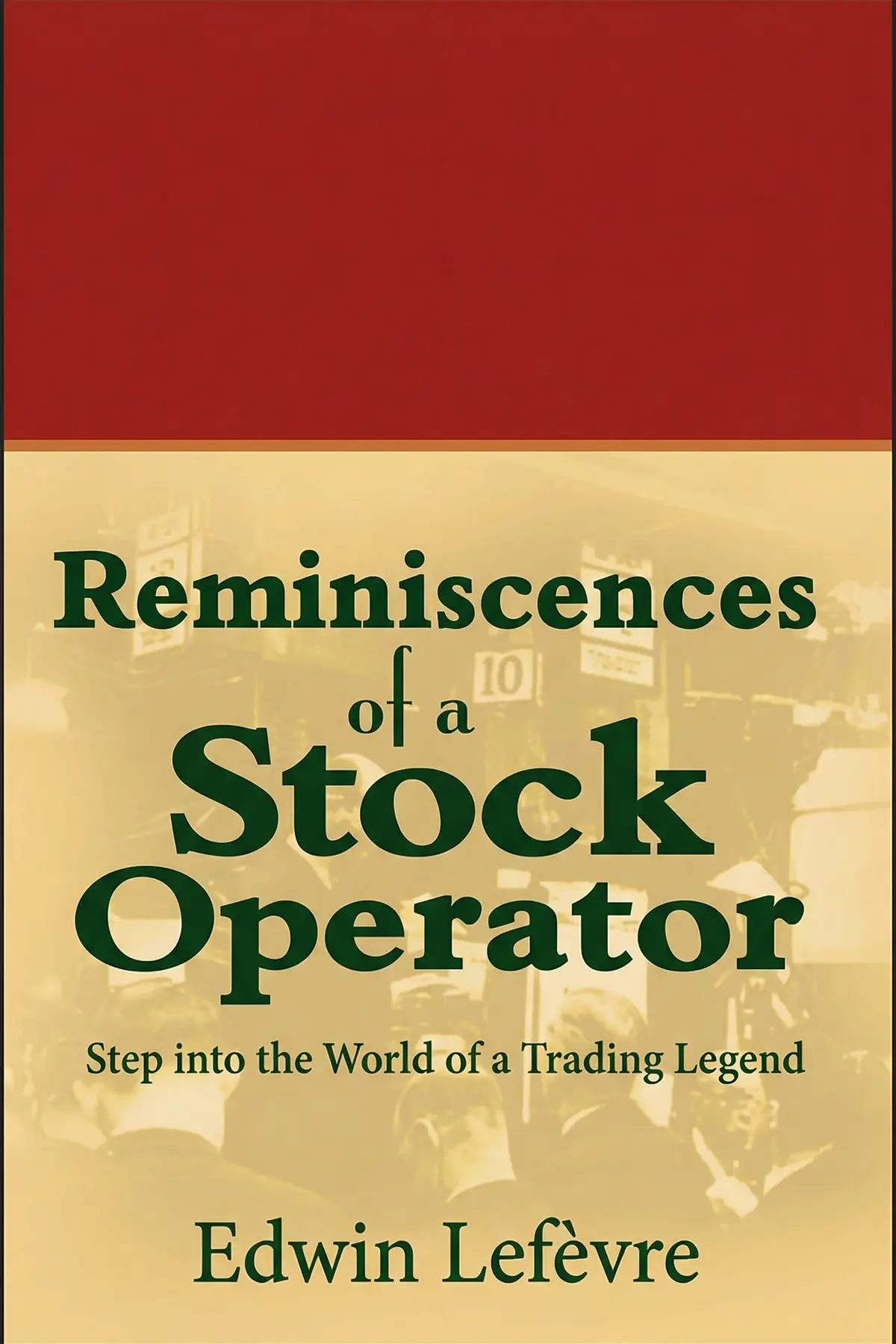
Table of Content
1. Introduction
1 min 28 sec
Step into the shoes of a man who lived and breathed the ticker tape. Have you ever wondered what separates a lucky gambler from a true market master? Reminiscences of a Stock Operator is not just a biography; it is a psychological roadmap through the chaotic world of finance. It follows the life of Larry Livingston—a thinly veiled version of the legendary Jesse Livermore—as he navigates the high-stakes environment of early 20th-century trading.
At its heart, this is a story about the evolution of wisdom. We see a young man with a preternatural gift for numbers realize that a quick wit isn’t enough to survive the brutal realities of the market. To truly succeed, he has to learn how to master his own impulses, understand the collective psychology of the crowd, and develop a level of patience that few possess. The throughline of this journey is the constant tension between the cold, hard logic of the market and the emotional fallibility of the human mind.
In the pages that follow, we will explore how Livingston transitioned from the small-time bets of back-alley bucket shops to the massive maneuvers that could sway the entire New York Stock Exchange. We will look at the hard-earned lessons he gathered from his greatest triumphs and his most crushing bankruptcies. By the end, you’ll understand why the strategies he developed over a century ago are still considered the bedrock of successful trading today. It’s a journey about more than just money; it’s about the pursuit of self-mastery in a world governed by uncertainty.
2. The Foundation of Tape Reading
1 min 55 sec
Discover how a young boy in a bucket shop learned to decode the secret language of price movements and why early success can be a double-edged sword.
3. Learning the Value of the Big Swing
1 min 56 sec
Move beyond the day-to-day fluctuations and learn why the real money in the market is made by those who have the patience to sit tight.
4. The Perils of Listening to Others
2 min 04 sec
In a world of “insider tips” and expert advice, discover why your own judgment is your most valuable asset and how easily it can be compromised.
5. Mastering Market Panics and Power
1 min 54 sec
Witness the immense pressure of a market crash and the ethical weight that comes with being a trader powerful enough to move the world.
6. The Weight of Emotional Allegiance
1 min 48 sec
Explore the dangerous intersection of friendship and finance, and why professional traders cannot afford the luxury of personal loyalty.
7. The Illusion of Manipulation
1 min 50 sec
Uncover the truth about “bear raids” and market corners, and why the “natural rhythm” of the market is stronger than any manipulator.
8. Conclusion
1 min 20 sec
The journey of Larry Livingston serves as a timeless reminder that the stock market is the ultimate mirror of the human soul. We have seen how a young man’s talent for numbers evolved into a profound understanding of global finance, not through a secret formula, but through the rigorous application of discipline and the painful lessons of experience. The core throughline remains: success in the markets is less about what you know and more about how you handle what you don’t know.
As we wrap up, reflect on the three pillars of Livingston’s wisdom. First, self-reliance. Your own analysis is the only tool you can truly trust. Second, patience. The big money is made in the waiting, not the trading. And third, emotional detachment. The market is not your friend, your enemy, or your partner; it is a fact of nature that you must observe with clinical objectivity.
Whether you are a seasoned investor or someone just beginning to look at the markets, the challenges of greed and fear will always be present. But by cultivating the resilience to learn from your failures and the courage to follow your own logic, you can navigate even the most turbulent financial seas. The tape is moving, the numbers are changing, but the principles of the game remain exactly the same. Now, it’s your turn to watch, to wait, and to act with the conviction of a true operator.
About this book
What is this book about?
This summary brings to life the classic tale of Larry Livingston, a character based on one of history’s most famous traders, Jesse Livermore. It traces his journey from a teenage “quotation boy” in unregulated bucket shops to a titan of the New York Stock Exchange. The narrative provides a deep look into the evolution of a trading mind, illustrating how early successes and devastating failures shaped a philosophy rooted in patience, trend-following, and emotional detachment. Beyond the historical anecdotes, this work promises to reveal the immutable laws of market psychology. It explains why the tape never lies, how to identify the line of least resistance, and the crucial difference between gambling on fluctuations and speculating on major market movements. Listeners will learn the high cost of following “tips” and the absolute necessity of self-reliance in a world where everyone has an opinion but few have a plan. It is a masterclass in resilience and the perpetual battle between human nature and financial logic.
Book Information
About the Author
Edwin Lefèvre
Edwin Lefèvre was a journalist, author, and statesman, best known for his writings on finance and the stock market and his ability to convey complicated financial strategies in an accessible manner. He wrote several other books, including The Making of a Stockbroker, which delve into the intricacies of the financial world.
Ratings & Reviews
Ratings at a glance
What people think
Listeners consider this work a famous essential read that offers a deep look into the psyche of investors while explaining the fundamentals of stock market trading and investment. Furthermore, the text is packed with many tips, and one listener points out how applicable it remains to current market conditions. They also enjoy the engaging narrative, historical details, and overall fun of the book, which one listener characterizes as having "never a dull moment."
Top reviews
Selin
Rarely does a book written a century ago feel so immediately applicable to my current portfolio. While the tech has moved from ticker tape to high-frequency algorithms, the underlying human engine remains fueled by greed and panic. Lefèvre perfectly captures the internal monologue of a man obsessed with the tape, making Larry Livingston feel like a modern-day trader trapped in a vintage suit. The truth is, the market doesn't change because people don't change. I found the segments on "sitting tight" to be more valuable than any technical indicator I've learned recently. It’s a compelling narrative that functions as both a history lesson and a psychological mirror. Every serious investor needs this on their shelf.
Show moreLandon
The pace of this fictionalized biography is absolutely relentless. From the moment young Livingston starts posting numbers as a kid, you are sucked into the high-stakes world of Wall Street's "Wild West" era. I've been searching for a book that explains investor psychology without using academic jargon, and this is it. The description of how fear keeps you from profit while hope keeps you in a losing trade is a masterclass in self-awareness. It’s not just about stocks; it’s about the discipline required to master your own impulses under pressure. Truly a must-read for anyone who has ever felt their heart race when a position goes red.
Show moreMint
There is a reason professional traders keep a dog-eared copy of this on their nightstand. Not gonna lie, I expected something much drier, but the narrative voice is incredibly engaging and clear. The central takeaway—that there is only one side to the market, the "right side"—should be tattooed on every investor's forearm. Lefèvre manages to distill complex market movements into relatable human dramas. I found the chapter on how he broke a commodity corner particularly gripping. It’s a brilliant study of how the unusual always happens, and how the successful operator must provide against his own human weaknesses. Best investment book I’ve read this year.
Show moreCharles
Edwin Lefèvre has a way of turning a dry series of trades into a high-stakes psychological thriller. I was constantly impressed by the protagonist’s ability to analyze his own failures without making excuses. He calls his losses his "tuition," which is a mindset every beginner needs to adopt. The writing style is punchy and direct, avoiding the fluff found in modern finance books. It feels like you’re sitting in a bar with a veteran trader who is finally telling you the truth about how the game works. I finished it in two sittings and immediately started highlighting passages for my own trading notes. Five stars for the entertainment value alone.
Show moreSudarat
After hearing about Livermore for years, I finally dipped into this 'trader's bible' to see if the hype was real. To be fair, the book is less of a tactical guide and more of a moral fable about the hazards of total obsession. The story is engrossing, especially the sections where he manipulates the market or gets cornered by his own hubris. However, knowing the tragic end of the real Jesse Livermore casts a dark shadow over the "brilliance" of his trades. It makes you realize that being right about the market isn't the same as winning at life. Still, the historical facts and the sheer atmosphere of the era make it a classic worth owning.
Show morePatcharaporn
Walking through the doors of a 1920s brokerage via Lefèvre’s prose is a sensory experience I didn't expect. You can almost smell the cigar smoke and hear the frantic clicking of the ticker tape machines as the characters chase their fortunes. The book provides a solid understanding of how market manipulation worked before the SEC came along to clean things up. I especially appreciated the nuanced look at how Livingston learned from his "tuition fees"—his massive losses. Some parts felt a bit repetitive, particularly the long-winded commodity trades, but the overall entertainment value remains high. It’s a fascinating glimpse into a vanished world that still somehow mirrors our own.
Show morePranee
Don't let the dated jargon about bucket shops and telegrams fool you. The core principles of human psychology discussed here are as relevant to a crypto trader today as they were to a cotton speculator in 1910. The truth is, the technology changes but the greed stays exactly the same. I liked how the book focuses almost exclusively on the trading floor, barely mentioning the protagonist's personal life until it impacts his margin. My only gripe is that it glosses over some of the more unethical aspects of his "operations" as if they were just part of the game. It’s a gritty, honest look at what it takes to survive in a zero-sum game.
Show moreRotjanee
Is it possible to enjoy a book about a man who loses his fortune multiple times? Surprisingly, yes. This memoir is a rollercoaster ride through the pre-SEC markets where the fixes were in and the risks were astronomical. Personally, I found the early chapters about the "boy plunger" in the bucket shops to be the most entertaining part of the whole journey. It’s a refreshing tour of a world where news was routinely withheld and rumors were the primary currency. Even though I’ll never trade on margin the way he did, the lessons on patience and observation were invaluable. It’s a classic for a very good reason, despite the tragic historical reality.
Show moreA
Maybe it's a classic, but I struggled with the sheer amount of repetition regarding 1900s cotton and wheat trades. Frankly, 300 pages of "I bought this, I sold that" can become a bit of a slog if you aren't a die-hard market historian. The unregulated "bucket shops" described early on are fascinating, yet the lack of modern context makes it hard to translate some of these maneuvers into 21st-century strategies. It's essentially an endless rant on speculation during a lawless era of finance. I respect the historical significance and the lessons on trader psychology, but the writing style feels a bit dated and dry for a casual reader looking for actionable advice.
Show moreKomsan
Call me a conservative investor, but I found this account of reckless speculation more terrifying than educational. It is essentially a 300-page confession of a man who treated the economy like a casino, fluctuating between extreme wealth and total bankruptcy. While the prose is sharp, the advice is dangerous for anyone who isn't a professional gambler. Look, if you want to learn how to lose your life savings on a "tip" or a "hunch," this is your roadmap. For the rest of us looking for financial literacy, it serves better as a cautionary tale than a manual. It's a bit of a 'hater' take, but I don't see the value for the modern index-fund crowd.
Show moreReaders also enjoyed

AUDIO SUMMARY AVAILABLE
Listen to Reminiscences of a Stock Operator in 15 minutes
Get the key ideas from Reminiscences of a Stock Operator by Edwin Lefèvre, plus 5,000+ more titles in English and Thai.
- 5,000+ titles
- Listen as much as you want
- 7-day free trial
- Cancel anytime







