
18 min 16 sec
The 4 Stages of Psychological Safety: Defining the Path to Inclusion and Innovation
Discover a transformative framework for fostering innovation through social security. This summary explores how leaders can build environments where team members feel safe to belong, learn, contribute, and eventually challenge the status quo.
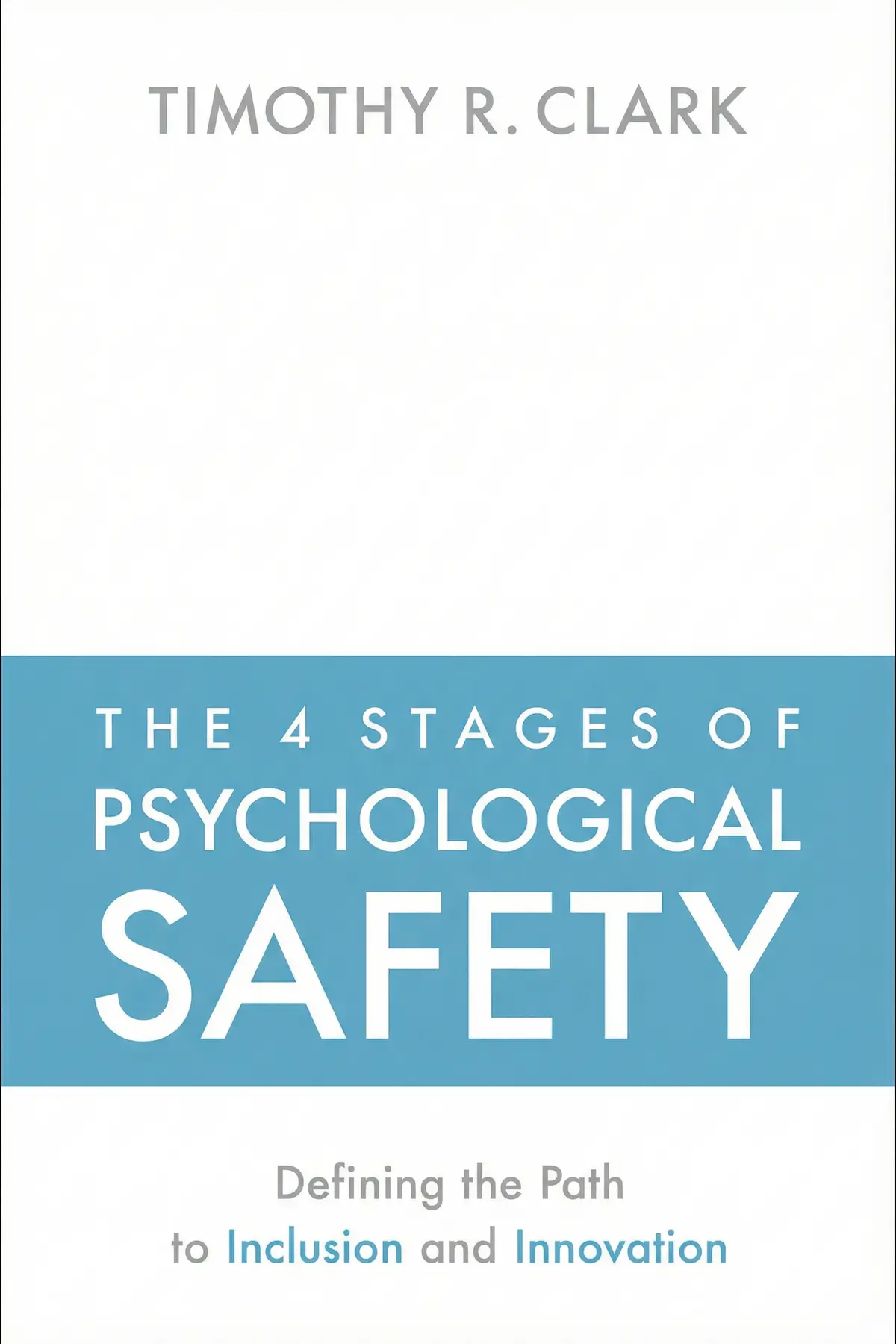
Table of Content
1. Introduction
2 min 09 sec
Imagine, for a moment, that you are standing at a crossroads in your career. You have two job offers on the table, and today, you’re visiting both offices to get a feel for the culture. At the first office, you walk into a room where the silence is heavy. It’s not the silence of deep focus, but rather the silence of apprehension. People are hunched over their desks, eyes darting toward the manager’s office. No one is laughing, no one is debating, and certainly, no one is asking for help. The atmosphere is thick with the fear of looking incompetent. You realize quickly that in this environment, keeping your head down is the only way to survive.
Then, you visit the second office. The energy here is night and day. There’s a low hum of conversation. You see a small group gathered around a whiteboard, passionately discussing a problem. Even the manager is there, not barking orders, but asking questions and listening intently. Someone makes a mistake, and instead of a reprimand, there’s a collective shrug followed by a discussion on what was learned. In this space, you feel an immediate sense of belonging and energy. It’s clear which team you’d choose to join.
But why is the second team so rare? The difference lies in a concept called psychological safety. It’s the belief that you won’t be punished or humiliated for speaking up with ideas, questions, concerns, or mistakes. In Timothy R. Clark’s work, we explore the idea that psychological safety isn’t just a binary switch you flip on or off. Instead, it’s a progressive journey that moves through four distinct stages. By understanding these stages—Inclusion Safety, Learner Safety, Contributor Safety, and Challenger Safety—we can begin to build environments that aren’t just pleasant places to work, but are engines of innovation and personal growth. Over the course of this summary, we will break down how to move through these levels, ensuring that every member of a team feels valued and empowered to give their very best.
2. The Foundation of Inclusion
2 min 56 sec
Discover why the first step toward a high-performing team is ensuring every member feels a fundamental sense of belonging before they ever produce a single result.
3. Creating Space for Learning and Vulnerability
2 min 46 sec
Learn how to transform your team’s relationship with failure by making the pursuit of knowledge safer than the pursuit of perfection.
4. The Exchange of Performance and Trust
2 min 50 sec
Explore the delicate balance of contributor safety, where autonomy is granted in exchange for the demonstrated ability to deliver results.
5. Encouraging the Courage to Challenge
3 min 04 sec
Unlock the highest level of psychological safety by rewarding those who have the bravery to question the way things have always been done.
6. The Leader as a Cultural Architect
3 min 01 sec
Understand your role not just as a manager of tasks, but as a designer of the social environment that dictates how your team performs.
7. Conclusion
1 min 30 sec
The journey through the four stages of psychological safety is not a one-time event, but a continuous cycle of building and maintaining trust. We live in a world that is increasingly complex and fast-paced, and no single leader can have all the answers. The organizations that succeed in this environment are the ones that can tap into the collective intelligence of their entire team. This only happens when people feel safe.
Remember the progression we’ve discussed. It starts with inclusion safety—the basic human right to belong. It moves to learner safety, where the fear of looking stupid is replaced by the excitement of discovery. Then comes contributor safety, where autonomy is granted and earned. And finally, we reach challenger safety, where the status quo is constantly questioned in the pursuit of something better.
As you move forward, take a moment to look at your own ‘social units’—your workplace, your volunteer group, or even your home. Which stage are you currently in? Where is the fear creeping in? By consciously working to reduce the social risk for those around you, you aren’t just making life more pleasant; you are laying the groundwork for innovation. Start today by asking more questions, admitting a mistake, or simply offering a sincere welcome to someone who feels like an outsider. Small shifts in leadership behavior can lead to massive shifts in culture. When safety is high, the possibilities are endless.
About this book
What is this book about?
Creating a high-performance culture requires more than just hiring talented individuals; it requires a foundation of psychological safety. This book provides a roadmap for leaders to cultivate an environment where interpersonal fear is replaced by trust and engagement. By moving through four distinct stages—inclusion, learner, contributor, and challenger safety—organizations can unlock the full creative potential of their workforce. The promise of this work is a practical path to innovation. It suggests that when people feel safe to be themselves and make mistakes, they become more invested in the collective success of the group. From the classroom to the boardroom, the principles of psychological safety allow for open communication and the kind of healthy friction that leads to breakthroughs. You will learn how to identify the barriers to inclusion and how to shift your leadership style to encourage participation and constructive dissent, ultimately leading to a more resilient and agile organization.
Book Information
About the Author
Timothy R. Clark
Timothy R. Clark is a renowned organizational consultant and the founder and CEO of LeaderFactor, a firm dedicated to leadership consulting. He holds a PhD in social science from the University of Oxford. A prolific writer on leadership and change, his previous works include EPIC Change: How to Lead Change in the Global Age and Leading with Character and Competence: Moving Beyond Title, Position, and Authority. Clark’s expertise focuses on helping global organizations cultivate high-performance cultures through the lens of psychological safety.
Ratings & Reviews
Ratings at a glance
What people think
Listeners find the book highly structured and accessible, viewing it as essential reading for those in leadership and management roles. They also value the practical content, with one listener noting it is backed by real-world experiential data. Additionally, listeners prize the book's observations, with one mentioning it offers reflective questions for more profound learning.
Top reviews
Pla
This book is a masterclass in organizational health. Clark doesn’t just toss around buzzwords like "inclusion"; he actually maps out a tangible trajectory from feeling welcomed to being empowered to challenge the status quo. I found the four-stage framework—Inclusion, Learner, Contributor, and Challenger—exceptionally intuitive and easy to implement. The truth is, many leaders think they are creating safety when they are actually just being "nice," which isn't the same thing at all. The real-world data and the reflective questions at the end of each section helped me realize where my own team was stalling. It’s a short, punchy read that packs a significant punch for anyone managing people. Even if you've studied leadership for years, the distinction between these stages provides a fresh lens that is immediately actionable.
Show moreManee
Wow, this wasn't just a business book for me—it was a life manual. I initially bought it to help with a project at work, but I ended up applying the principles to my family life and my volunteer coaching. The concept that inclusion safety must be "unconditional" changed the way I interact with new people in every social unit. It’s fascinating how we often justify exclusion as adults, and Clark calls that out with such clarity. Not gonna lie, the "Challenger Safety" section made me nervous because it requires letting go of so much control, but the results in my team’s creativity have been undeniable. This is a must-read for anyone who wants to foster an environment where people aren't afraid to be their authentic selves.
Show moreBank
Finally got around to reading this, and I’m kicking myself for waiting so long. The "Learner Safety" stage reminded me so much of my favorite teachers—the ones who made it okay to fail as long as you were trying. Bringing that same energy into a corporate environment is a game-changer. Clark uses real-world experiential data to back up his claims, which makes the advice feel much more credible than your average self-help book. The reflective questions at the end of each chapter are excellent for team-building exercises or personal journaling. If you want to move beyond the "diversity" buzzword and actually create an inclusive culture where people contribute their best work, you need to read this book. It is truly essential reading.
Show moreElias
After hearing Timothy Clark on a podcast, I knew I had to pick up a copy of his work. The book exceeded my expectations by providing a very clear, four-step ladder that any leader can follow. I specifically liked the advice on "assigning" dissent through things like internal hackers or rotating roles. It takes the pressure off the individual and makes innovation a part of the process. Personally, I think this should be required reading in business schools. It’s concise, supported by experiential data, and focuses on the humanity of the workforce. If you’re tired of the "stiff air" and "ice cold" atmosphere of traditional offices, this book offers the perfect antidote for building a warm, high-performing team.
Show moreBoy
As someone who has spent a decade in middle management, I’ve seen firsthand how a lack of safety kills innovation. Timothy Clark captures this perfectly by highlighting that safety isn't a binary switch but a progression. I particularly appreciated the section on "Learner Safety" and the emphasis on rewarding mistakes rather than just tolerating them. The idea of the "tell-to-ask ratio" was a huge wake-up call for me personally; I realized I was spending far too much time directing and not nearly enough time listening. The book is well-organized and the summaries make it easy to refer back to key points. My only minor gripe is that some of the transitions between business and social examples felt a little disjointed. Still, it’s a solid resource for building trust.
Show moreElan
Ever wonder why some teams seem to buzz with energy while others feel like they’re walking on eggshells? This book provides the answer through its breakdown of psychological safety. The distinction between "Contributor Safety" and "Challenger Safety" is particularly sharp. It explains why a team can be productive but still fail to innovate because they aren't allowed to disrupt the status quo. I loved the "tiger team" references and the practical tips on rotating meeting chairs to level the playing field. To be fair, the book is quite simple, but sometimes simplicity is exactly what you need when dealing with complex human emotions. It’s a pragmatic guide that avoids the fluff of typical management "guru" books, focusing instead on observable behaviors and cultural shifts.
Show moreSamroeng
The chapter on neurodivergence and sensitivity to fear was worth the price of the book alone. Most leadership books ignore the fact that people process stress and social cues differently, but Clark addresses this with real compassion. He shows how "Challenger Safety" is especially difficult for those who might have a higher sensitivity to negative feedback. I found the book's layout very user-friendly, with plenty of white space and clear headings that make it easy to skim and then dive deep into specific sections. In my experience, the biggest hurdle to safety is the ego of the leader, and this book provides a mirror for us to check our own biases. It’s a quick, actionable read that I’ve already recommended to several colleagues in my department.
Show moreKru
Picked this up after seeing it on several "must-read" lists for HR professionals. While the core concept of the four stages is undeniably brilliant and essential for modern workplaces, I felt the book dragged in several places. Frankly, the entire framework could have been summarized in a lengthy white paper or a detailed blog post without losing much of the substance. Clark provides some interesting anecdotes, like the calculus teacher example, but the writing often circles back to the same points. It’s a helpful guide if you need a step-by-step manual, but if you’re looking for deep, dense academic theory, this isn't it. It’s a quick read, which is a plus, but I wanted a bit more meat on the bones regarding the "how-to" for larger, more stubborn corporate cultures.
Show moreAndrei
Not what I expected given the high praise I’ve seen online. The 4 stages of psychological safety are definitely important, but the book feels like it’s stretching a very thin idea across 150 pages. I found the writing style to be a bit repetitive, and many of the "insights" felt like common sense dressed up in fancy terminology. For example, telling leaders to "get to know their team" isn't exactly groundbreaking advice. Look, the framework is a good mental model, but I think you can get 90% of the value from reading a summary of the stages online. If you have a long flight and want something easy to flip through, go for it, but don't expect a profound shift in your leadership philosophy. It's okay, just not revolutionary.
Show moreTanyaporn
Truth is, I’ve read a lot of books on "safety" in the workplace, but this one stands out because of its focus on the "Challenger" stage. Most people stop at making employees feel comfortable, but Clark argues that true safety means giving people the right to criticize the boss without fear of retaliation. That’s a tall order! The book provides a great roadmap for how to get there without causing a total breakdown in hierarchy. While I found the steel plant anecdote a bit dated, the core lessons about unhealthy competition and departmental silos are still incredibly relevant today. It’s a simple, effective read that doesn’t overcomplicate things with unnecessary jargon. It’s earned a spot on my shelf, even if it feels a bit light on new research.
Show moreFeatured in
Readers also enjoyed
7 Powers: The Foundations of Business Strategy
Hamilton Helmer

A Bigger Prize: How We Can Do Better Than the Competition
Margaret Heffernan
A Year with Peter Drucker: 52 Weeks of Coaching for Leadership Effectiveness
Joseph A. Maciariello
AUDIO SUMMARY AVAILABLE
Listen to The 4 Stages of Psychological Safety in 15 minutes
Get the key ideas from The 4 Stages of Psychological Safety by Timothy R. Clark, plus 5,000+ more titles in English and Thai.
- 5,000+ titles
- Listen as much as you want
- 7-day free trial
- Cancel anytime







